Dust Test Chambers vs Sand Chambers: What's the Difference
Understanding the distinction between dust simulation chambers and sand chambers proves essential when selecting appropriate environmental testing equipment for product validation. While both systems evaluate ingress protection and environmental resilience, they serve fundamentally different testing objectives. A dust simulation chamber replicates fine particulate exposure conditions using talcum powder or standardized dust particles measuring 50μm wire diameter with 75μm gaps, assessing IP5X and IP6X protection levels according to IEC 60529 standards. Sand chambers, conversely, utilize larger abrasive particles simulating desert environments, windblown sand, and erosive conditions specified in military standards like MIL-STD-810. The particle size, circulation methodology, test duration, and evaluation criteria differ substantially between these specialized environmental testing systems, making proper equipment selection critical for meaningful product certification.
A customer from Canada recently shared feedback after installing a LIB IP6X Dust Test Chamber. Darren mentioned that the equipment has been used several times and is performing well, with overall satisfaction regarding its functionality.This feedback reflects the reliability of dust testing equipment in real applications, helping laboratories carry out consistent environmental and protection performance verification with confidence.
What Is the Difference Between Dust Chambers and Sand Test Chambers?
|
DUST SIMULATION CHAMBER |
SAND TEST CHAMBER |
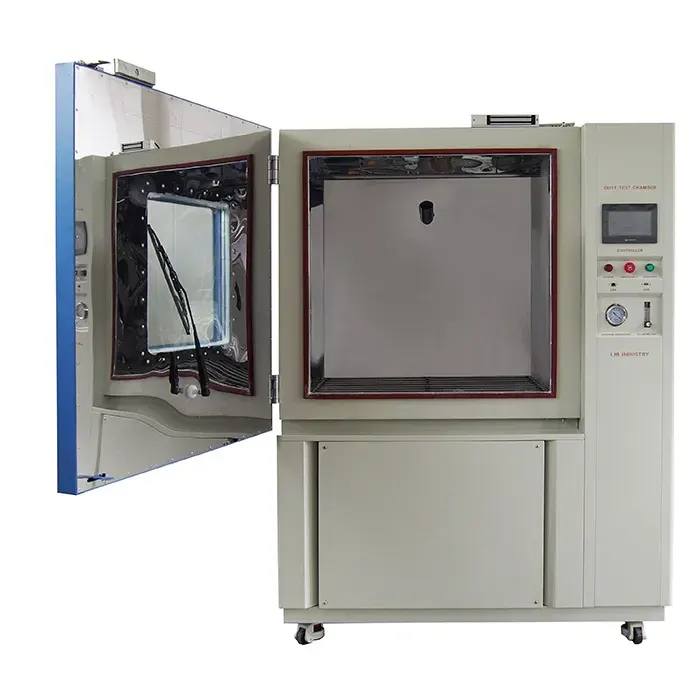
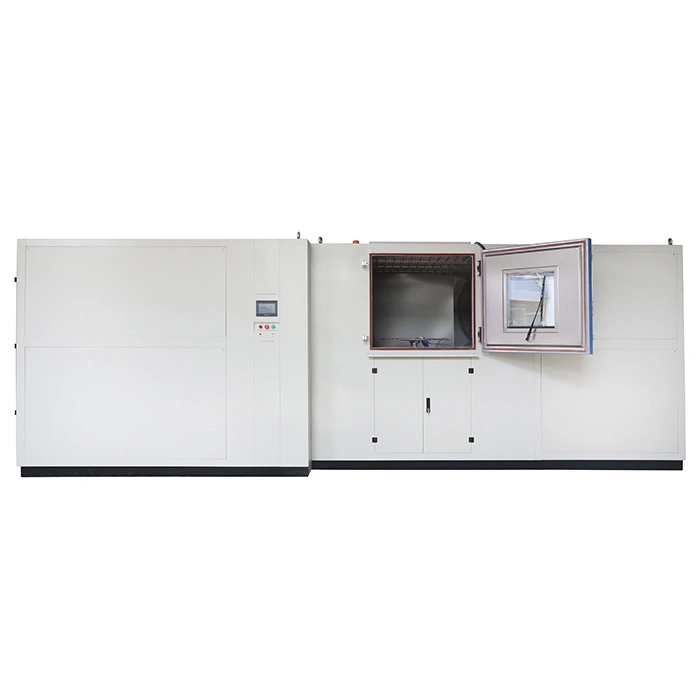
Primary Testing Purpose and Scope
Dust simulation chambers evaluate product resistance against fine particulate ingress, determining whether enclosures prevent internal contamination that could compromise electrical functionality or mechanical operation. These systems verify compliance with International Protection (IP) code ratings, specifically IP5X (dust protected) and IP6X (dust tight) classifications. Manufacturers test electronic devices, automotive components, and consumer products to ensure adequate sealing against everyday dust exposure encountered during normal product lifecycle usage.
Sand chambers focus on abrasive resistance and environmental durability under harsh conditions characteristic of desert climates, coastal environments, and military deployments. Testing protocols assess surface erosion, optical clarity degradation, mechanical wear, and continued functionality after sustained sand particle bombardment. The evaluation extends beyond simple ingress protection to encompass material degradation and performance sustainability under extreme environmental stress.
Particle Composition and Size Parameters
The fundamental distinction lies in particle characteristics utilized during testing. Dust chambers employ talcum powder (hydrous magnesium silicate) or standardized test dust specified in IEC 60529, featuring particles small enough to penetrate microscopic gaps and ventilation openings. The 50μm nominal wire diameter with 75μm gap spacing represents the filtration mesh preventing particle passage, establishing the baseline for IP5X testing criteria.
Sand test chambers utilize significantly larger particles, typically ranging from 150μm to 850μm depending on specific test standards. MIL-STD-810 Method 510 specifies particle size distributions matching naturally occurring windblown sand, with angular silica particles creating abrasive conditions that stress materials and finishes. This substantial size difference fundamentally alters circulation requirements, exposure duration, and damage mechanisms evaluated during testing.
Regulatory Framework and Standards Alignment
Dust simulation chamber operations align primarily with IEC 60529 for IP code verification, ISO 20653 for automotive applications, and various industry-specific standards requiring dust ingress protection validation. The controller features one-touch presets for these standards, automating test parameter configuration and ensuring compliance verification accuracy. The integrated vacuum system automatically maintains the required 2kPa pressure differential for IP6X dust-tight testing, meeting precise regulatory specifications.
Sand testing follows military specifications including MIL-STD-810 Method 510, automotive standards like SAE J575 for exterior lighting equipment, and aerospace specifications addressing harsh environment exposure. These protocols specify different particle compositions, velocity parameters, exposure durations, and post-test evaluation criteria compared to dust ingress testing, necessitating distinct chamber configurations and operational capabilities.
Particle Characteristics: Fine Dust vs Coarse Sand
 |
 |
Physical Properties and Behavior Patterns
Talcum powder used in dust simulation chambers exhibits hygroscopic tendencies, absorbing atmospheric moisture that causes clumping and compromises test consistency. The multi-stage circulation system with 75μm mesh filtration works with heated circulation chambers to keep particles consistently dry and flowing. This prevents test failures caused by moisture absorption while ensuring uniform distribution throughout every cycle. The soft, non-abrasive nature of talcum powder minimizes equipment wear while effectively identifying sealing vulnerabilities.
Sand particles possess angular geometries with sharp edges creating abrasive interaction with surfaces and materials. The harder crystalline structure of silica sand generates erosive forces absent in dust testing, requiring robust chamber construction and wear-resistant components. Sand particles resist moisture absorption better than talcum powder but present greater challenges for circulation systems due to their mass and tendency toward gravitational settling rather than sustained airborne suspension.
Penetration Mechanisms and Ingress Pathways
Fine dust particles exploit capillary action, electrostatic attraction, and pressure differentials to penetrate seemingly sealed enclosures. The vacuum system creating 2kPa negative pressure inside test specimens simulates breathing effects caused by temperature cycling during real-world operation. This pressure differential draws dust through gasket compression points, threaded interfaces, and ventilation pathways, revealing inadequate sealing that might escape detection under ambient conditions.
Coarse sand particles rely primarily on mechanical force and kinetic energy for ingress, impacting surfaces at velocities specified by test protocols. The larger particle size prevents penetration through microscopic gaps exploited by dust, shifting focus toward larger openings, damaged seals, and mechanical interface weaknesses. Wind velocity and particle trajectory become critical variables, with chamber design incorporating directional airflow systems rather than the uniform circulation characteristic of dust chambers.
Standardization and Traceability Requirements
Dust chamber operations require calibrated talcum powder meeting specific particle size distributions verified through sieve analysis. The standard configuration includes talcum powder (5kgs) with documented particle characteristics ensuring test repeatability and interlaboratory comparison validity. Regular verification of particle size distribution maintains testing accuracy across multiple test cycles, with contaminated or degraded dust requiring replacement to preserve certification validity.
Sand testing demands rigorous particle characterization including size distribution curves, angularity measurements, and composition verification. Different test standards specify distinct sand types - some requiring naturally occurring desert sand while others mandate manufactured silica particles with controlled size ranges. Traceability documentation proving sand characteristics match specification requirements becomes part of certification evidence packages, particularly for military and aerospace applications.
|
Characteristic |
Dust Simulation Chamber |
Sand Test Chamber |
|
Particle Size |
50μm wire / 75μm gap |
150μm - 850μm range |
|
Particle Material |
Talcum powder (hydrous Mg silicate) |
Silica sand, angular particles |
|
Primary Mechanism |
Ingress through seals and gaps |
Abrasive erosion and impact |
|
Test Standard |
IEC 60529, ISO 20653 |
MIL-STD-810, SAE J575 |
|
Pressure Differential |
2kPa vacuum (IP6X) |
Atmospheric or specified |
Test Objectives and Environmental Simulation Differences
Ingress Protection Validation Goals
Dust simulation chamber testing determines whether product enclosures achieve specified IP ratings preventing particulate contamination of internal components. The evaluation criteria distinguish between IP5X (dust protected - ingress not entirely prevented but insufficient quantity enters to interfere with operation) and IP6X (dust tight - no dust ingress whatsoever). Post-test inspection examines internal surfaces, circuit boards, and mechanical assemblies for dust deposits, with IP6X certification requiring complete absence of any particle penetration.
Sand chamber objectives extend beyond simple ingress assessment to evaluate continued functionality, optical performance retention, and mechanical integrity after abrasive exposure. Products may accumulate significant sand deposits yet still pass testing if operational parameters remain within specification. The acceptance criteria focus on performance degradation quantification rather than binary pass/fail ingress determination.
Environmental Condition Replication
Dust chambers simulate everyday exposure conditions encountered during manufacturing, storage, transportation, and normal operational environments. The temperature range of ambient to +50℃ with humidity below 30% RH represents typical conditions where dust accumulation occurs. The controlled environment emphasizes particulate concentration and exposure duration rather than extreme temperature or velocity conditions, matching real-world contamination scenarios.
Sand testing replicates extreme environmental conditions characteristic of desert deployments, beach environments, and high-wind situations. Chamber configurations may incorporate elevated temperatures simulating desert heat, varying wind velocities matching natural storm conditions, and extended exposure durations representing years of field deployment compressed into accelerated testing protocols. This comprehensive environmental simulation validates product survivability under worst-case scenarios rather than typical operational conditions.
Duration and Cycling Protocol Differences
Dust ingress testing follows prescribed exposure durations defined by IP code standards, typically ranging from 2 to 8 hours depending on specific test requirements. The programmable controller manages fight time (0~99H59M) and blowing time (0~99H59M) parameters, automating test cycle execution with precise timing control. Single-exposure protocols prove sufficient for most applications, with extended duration reserved for products claiming exceptional dust resistance.
Sand testing protocols frequently incorporate extended durations with cycling conditions simulating day-night temperature variations, wind pattern changes, and cumulative exposure effects. Multiple test cycles separated by functional verification intervals assess progressive degradation patterns, identifying failure mechanisms that manifest only after sustained environmental stress. Accelerated testing condenses months or years of field exposure into weeks of continuous chamber operation.
How Do Airflow and Circulation Systems Compare?
Dust Chamber Vertical Circulation Architecture
The vertical dust circulation system creates smooth airflow patterns that blow particles into the working room without creating turbulent dead zones where dust accumulates. This circulation methodology maintains consistent particulate concentration throughout the test volume, ensuring all specimen surfaces receive equivalent exposure regardless of position within the chamber. The sloped bottom chamber facilitates gravitational return of settled particles to the circulation system, maintaining sustained airborne concentration.
Traditional dust chambers suffer from clumping problems when moisture-laden particles agglomerate, blocking circulation pathways and creating inconsistent exposure conditions. The heated circulation chamber addresses this vulnerability by maintaining particle dryness, preserving flowability throughout extended test durations. The wear-resistant fan design and strategic positioning protect critical components from abrasive particles that would otherwise cause premature failure.
Sand Chamber Directional Airflow Systems
Sand testing requires focused airflow delivering particles at specified velocities and impact angles against test specimens. Unlike the uniform distribution objective of dust chambers, sand systems create concentrated particle streams simulating windblown conditions. Adjustable nozzles and airflow baffles direct particle trajectories, enabling testing from multiple angles matching real-world exposure patterns.
The greater mass of sand particles compared to dust demands higher airflow velocities maintaining particle suspension and achieving target impact energies. Circulation fans must generate sufficient force overcoming gravitational settling while maintaining controllable particle velocities. This requirement increases power consumption and mechanical stress compared to dust circulation systems, necessitating robust construction and maintenance protocols.
Filtration and Particle Management Strategies
The 75μm mesh filtration system prevents dust particles from escaping the chamber while allowing air circulation maintaining pressure equilibrium. This filtration approach protects laboratory environments from contamination while supporting the 2kPa pressure differential required for IP6X testing. The multi-layer door sealing system contains all dust particles inside the chamber, maintaining clean laboratory conditions while providing constant test environments.
Sand chambers require more substantial filtration systems managing larger particles and higher airflow volumes. Collection systems capture particles completing circulation cycles, returning them to the particle delivery mechanism for continued testing. The quick-release drainage system allows complete sand changeover in minutes without equipment disassembly, supporting protocols requiring different particle size distributions or fresh abrasive media for successive test phases.
|
System Component |
Dust Chamber Configuration |
Sand Chamber Configuration |
|
Airflow Pattern |
Vertical circulation, uniform distribution |
Directional streams, focused delivery |
|
Particle Velocity |
Low velocity, sustained suspension |
Higher velocity, impact energy |
|
Filtration Mesh |
75μm precision screening |
Larger mesh, collection systems |
|
Heating System |
Heated circulation preventing clumping |
Optional thermal conditioning |
|
Drainage Design |
Sloped bottom, quick 5-minute changeover |
Collection hoppers, recirculation |
Industry Applications for Each Type of Chamber
Electronics and Consumer Product Testing
Consumer electronics manufacturers rely on dust simulation chambers for IP rating certification of smartphones, tablets, wearable devices, and smart home products. Marketing claims regarding water and dust resistance require validated IP67 or IP68 ratings, with dust testing confirming sealed enclosures prevent particulate contamination affecting circuit board functionality. The specimen power outlet (dust-proof socket 16A) enables powered operation during testing, verifying gasket integrity under thermal expansion conditions.
Automotive electronics including infotainment systems, sensor modules, and electronic control units undergo dust ingress testing validating performance across vehicle lifespans. ISO 20653 compliance ensures these components withstand dusty road conditions, unpaved terrain exposure, and contaminated air intake scenarios. The heavy-duty sample capacity supports testing large automotive components, industrial equipment, or multiple samples simultaneously on the reinforced stainless steel rack system.
Military and Aerospace Validation
Military equipment destined for desert deployment undergoes sand chamber testing verifying operational capability under Middle Eastern, African, and Central Asian environmental conditions. Optical systems, weapon platforms, communication equipment, and vehicle components face MIL-STD-810 Method 510 protocols assessing degradation from windblown sand exposure. Post-test evaluation examines optical clarity retention, mechanical operation smoothness, and continued functionality after particle bombardment.
Aerospace applications demand both dust and sand testing addressing distinct operational phases. Ground support equipment faces dust ingress concerns during hangar storage and runway operations, while aircraft components require sand resistance validation for desert airfield compatibility. Specialized testing protocols simulate rotor wash-induced particle suspension, jet exhaust recirculation, and takeoff/landing erosion scenarios unique to aviation environments.
Automotive Exterior Component Qualification
Exterior lighting assemblies, sensor housings, and charging port covers require IP protection validation ensuring long-term functionality despite road dust exposure. Headlight and taillight assemblies claiming IP67 ratings undergo dust testing confirming sealed optical chambers prevent internal condensation and particulate accumulation degrading light output. The observation window with interior lighting and double-layer thermo stability silicone rubber sealing enables visual inspection monitoring during extended test cycles.
Paint systems, windshield coatings, and external finishes face sand abrasion testing quantifying durability under harsh environmental conditions. Accelerated erosion protocols predict appearance retention over vehicle ownership periods, supporting warranty claims and marketing representations. Manufacturers test coating formulations, application techniques, and protective treatments optimizing resistance to environmental degradation.
Selection Criteria Based on Testing Requirements
Regulatory Compliance Drivers
Products requiring IP code certification for market access necessitate dust simulation chambers meeting IEC 60529 specifications. European Union markets, international electronics standards, and automotive regulations reference IP ratings extensively, making validated dust testing equipment essential for certification. The one-touch presets for IEC 60529 (IP5X/IP6X) and ISO 20653 standards simplify compliance verification, reducing testing complexity and operator training requirements.
Military contractors and defense suppliers require sand testing capabilities addressing MIL-STD specifications contractually mandated for equipment qualification. Government procurement specifications explicitly reference environmental testing protocols, with non-compliance potentially disqualifying products from consideration. Maintaining both dust and sand testing capabilities supports diverse customer requirements across commercial and defense sectors.
Product Category and Application Environment
Electronic devices, medical equipment, and precision instruments prioritize dust ingress prevention, directing investment toward dust simulation chambers. The controlled environment emphasizing particulate concentration and exposure duration matches operational scenarios these products encounter. Interior applications, climate-controlled facilities, and consumer environments align with dust testing protocols rather than extreme sand exposure.
Heavy equipment, outdoor infrastructure, and field-deployed systems require sand resistance validation addressing harsh operational environments. Construction equipment, renewable energy installations, and telecommunications infrastructure face sustained abrasive particle exposure demanding specialized testing beyond simple ingress assessment. Products marketed for desert climates, coastal installations, or military applications necessitate sand chamber capabilities demonstrating durability under extreme conditions.
Budgetary Considerations and Testing Volume
Organizations conducting occasional dust testing for product development may find contracted laboratory services more economical than capital equipment investment. Testing laboratories offering accredited dust and sand testing provide certification support without ongoing maintenance obligations. Chambers ranging from DI-800 through DI-2000 models accommodate varying budget levels and physical space constraints.
High-volume manufacturers with continuous testing requirements justify dedicated equipment investment through reduced per-test costs and shortened development cycles. Multiple chambers supporting parallel testing accelerate product qualification timelines, compressing time-to-market for competitive advantage. Custom services integrating chambers into production lines enable automated testing within manufacturing workflows, supporting quality assurance programs and continuous improvement initiatives.
|
Selection Factor |
Dust Chamber |
Sand Chamber |
|
Primary Standard |
IEC 60529, ISO 20653 compliance |
MIL-STD-810, SAE specifications |
|
Product Category |
Electronics, medical, consumer goods |
Military, automotive exterior, infrastructure |
|
Environment |
Indoor, controlled, typical dust |
Outdoor, desert, coastal, extreme |
|
Test Objective |
Ingress prevention, IP rating |
Abrasion resistance, durability |
|
Particle Concern |
Fine contamination, seal effectiveness |
Erosion, mechanical wear, optical clarity |
LIB Industry Expertise in Dust and Sand Environmental Testing Systems
 |
 |
|
| Test Area | LAN and USB | Controller |

Proven Track Record with Global Industry Leaders
LIB Industry's 16-year expertise serving partners including Apple, Intel, and Mercedes-Benz demonstrates proven capabilities delivering laboratory-grade accuracy with industrial reliability. This experience base encompasses diverse applications across consumer electronics, automotive engineering, and aerospace qualification programs. Customer relationships spanning multiple product generations validate equipment longevity, measurement accuracy, and ongoing technical support quality.
The global support network ensures responsive service regardless of installation location, with 24/7 assistance addressing technical questions and troubleshooting challenges. Multi-language support streamlines testing workflows for international teams operating across geographic regions. Remote access capabilities enable expert diagnostics and parameter adjustment without site visits, minimizing downtime during critical testing programs.
Comprehensive Testing Solutions and Customization
The dust simulation chamber represents one component within comprehensive environmental testing portfolios addressing temperature, humidity, vibration, corrosion, altitude, and pressure combined testing. Customers requiring integrated testing capabilities benefit from coordinated chamber specifications, unified control systems, and compatible data management platforms. This systems approach supports complex qualification protocols demanding sequential or simultaneous environmental stressors.
Custom services accommodate unique testing requirements beyond standard chamber configurations. Specialized reinforced sample holders support heavy or unusually shaped specimens, while custom testing software integrates with laboratory information management systems. LIB builds complete IP testing laboratories incorporating products and solutions tailored to specific industry requirements, delivering turn-key facilities ready for immediate certification work.
Advanced Control and Data Management Features
The programmable color LCD touchscreen controller with Ethernet connection eliminates complexity from testing protocols through intuitive interfaces and automated parameter management. Real-time monitoring displays dust concentration, pressure levels, and exposure duration with automatic data logging supporting certification documentation requirements. The system alerts maintenance needs and provides detailed testing reports for regulatory submissions.
Pre-programmed test sequences ensure repeatable results while automated fault detection prevents equipment damage and test interruptions. USB data download capabilities and PC connectivity facilitate integration with broader quality management systems. The electromagnetic door lock prevents accidental chamber opening during active testing cycles, protecting test integrity while maintaining operator safety.
Conclusion
Selecting between dust test chambers and sand chambers depends fundamentally on testing objectives, regulatory requirements, and product application environments. Dust simulation chambers excel at IP code certification and ingress protection validation using fine particles matching everyday contamination scenarios. Sand chambers address abrasion resistance and harsh environment durability through larger particles simulating extreme conditions. Understanding these distinctions ensures appropriate equipment investment supporting meaningful product qualification and market success across diverse industries and applications.
FAQ
Can the same chamber perform both dust and sand testing protocols?
While theoretically possible with extensive cleaning between tests, dedicated chambers prove more practical and cost-effective. The particle size differences, circulation system requirements, and filtration specifications optimize each chamber type for its intended application. Contamination risks and cleaning complexity typically justify separate equipment for dust versus sand testing programs.
How long do dust chamber tests typically require for IP6X certification?
IP6X dust-tight certification testing typically requires 8 hours continuous exposure under 2kPa vacuum conditions as specified by IEC 60529. The programmable controller automates exposure duration while maintaining precise environmental parameters. Post-test inspection and documentation extend total process time, though actual chamber operation follows standardized protocols ensuring consistent certification validity.
What maintenance requirements differentiate dust chambers from sand testing equipment?
Dust chambers demand regular particle replacement when talcum powder absorbs moisture or becomes contaminated, typically every 20-30 test cycles. Sand chambers require more frequent filtration system cleaning and wear component inspection due to abrasive particle characteristics. Both systems benefit from annual calibration verification ensuring measurement accuracy and regulatory compliance throughout operational lifespans.
Elevate your environmental testing capabilities with precision-engineered ingress protection chambers. LIB Industry, a trusted dust simulation chamber manufacturer and supplier, delivers comprehensive solutions supporting IEC 60529, ISO 20653, and MIL-STD compliance verification. Contact our environmental testing specialists at ellen@lib-industry.com for customized chamber recommendations matching your specific validation requirements.