Dust Testing for Industrial Equipment in Harsh Environments
Industrial equipment operating in mining facilities, chemical plants, and desert construction sites faces relentless dust exposure that can compromise performance and safety. Dust testing validates whether enclosures and components meet ingress protection standards before deployment in these challenging conditions. The DI-2000 IP6X dust chamber simulates years of particulate exposure in controlled laboratory settings, enabling manufacturers to identify vulnerabilities, optimize sealing mechanisms, and certify compliance with IEC 60529 specifications. This proactive approach prevents catastrophic failures, reduces maintenance costs, and extends operational lifespans in environments where dust infiltration threatens electrical systems, mechanical assemblies, and sensitive instrumentation.
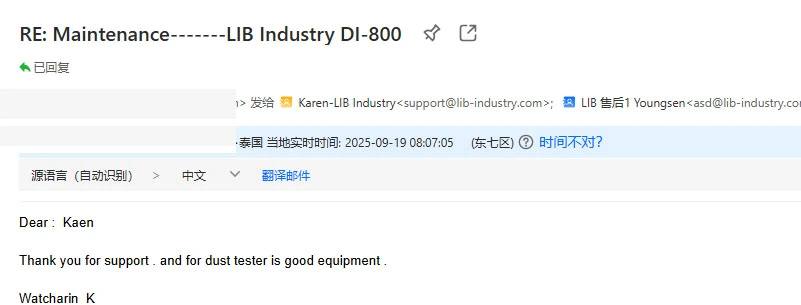
A testing laboratory in Thailand reported successful use of a sand and dust test chamber to validate the durability of their outdoor solar monitoring systems. By recreating severe desert-like conditions—including intense sandstorms and elevated temperatures—the team was able to subject their equipment to rigorous environmental stress testing.
Throughout the process, the systems demonstrated stable performance with no functional failures. The chamber allowed engineers to thoroughly assess key aspects such as enclosure sealing effectiveness, connector resilience, and overall long-term reliability. As a result, the testing significantly strengthened confidence in the equipment’s ability to operate consistently in harsh, remote, and arid environments.
What Environmental Conditions Challenge Industrial Equipment?
Particulate Concentration Variability
Desert installations and quarry operations expose equipment to airborne particle densities ranging from 2-10 mg/m³, compared to typical indoor levels below 0.05 mg/m³. These extreme concentrations overwhelm inadequate sealing systems, causing abrasive wear on moving components and electrical contact degradation. Temperature fluctuations create thermal cycling that compounds the problem, as expansion and contraction cycles open microscopic pathways for dust penetration.
Humidity and Temperature Interactions
Coastal industrial zones combine salt-laden moisture with fine particulates, creating corrosive compounds when humidity exceeds 85% RH. Equipment subjected to temperature swings between -20°C night conditions and +60°C daytime surface temperatures experiences accelerated seal deterioration. The combination of hygroscopic dust particles and condensation cycles transforms benign talc into conductive residues that bridge electrical contacts.
Mechanical Vibration and Pressure Differentials
Heavy machinery vibrations loosen protective gaskets over time, while ventilation systems create negative pressure zones that actively draw particulates through compromised seals. Mining conveyors and drilling platforms generate vibration frequencies between 10-200 Hz that fatigue elastomeric seals, while HVAC systems maintain pressure differentials up to 500 Pa that force dust through gaps as narrow as 0.1 mm.
Dust Exposure Risks in Mining, Manufacturing, and Energy Sectors
Mining Industry Challenges
Underground coal operations generate respirable crystalline silica particles below 10 microns that penetrate electrical enclosures housing critical safety systems. Conveyor motor housings accumulate conductive coal dust, leading to tracking faults and arc flash incidents. Surface mining equipment endures talc-like limestone dust that forms hardened deposits inside unsealed junction boxes, requiring complete replacement rather than cleaning.
Manufacturing Sector Vulnerabilities
Cement production facilities expose control panels to alkaline dust with pH levels reaching 12.5, corroding aluminum housings within 18 months. Pharmaceutical cleanroom environments paradoxically require dust testing verification in a dust chamber, as even IP6X-rated enclosures must prove zero particulate ingress to maintain sterile classifications. Textile mills produce lint accumulations that obstruct cooling vents, causing thermal shutdowns in motor controllers rated for clean environments.
Energy Infrastructure Threats
Solar installations in arid regions experience 15-30% efficiency losses when dust accumulates on inverter cooling fins and connector assemblies. Wind turbine nacelle electronics face silica sand erosion in desert deployments, while offshore platforms contend with salt-laden airborne particulates that compromise weatherproof ratings. Substation equipment in agricultural areas suffers from abrasive grain dust during harvest seasons, necessitating frequent preventive maintenance.
|
Industry Sector |
Primary Dust Type |
Common Failure Mode |
Average Replacement Cost |
|
Underground Mining |
Crystalline Silica |
Electrical Tracking |
$8,500 per enclosure |
|
Cement Manufacturing |
Alkaline Particulates |
Corrosion Failure |
$12,000 per control panel |
|
Desert Solar Farms |
Fine Sand |
Thermal Overload |
$6,300 per inverter |
|
Grain Processing |
Organic Dust |
Combustible Accumulation |
$15,000 per motor assembly |
Simulating Harsh Dust Conditions in Test Chambers
Talcum Powder Selection and Preparation
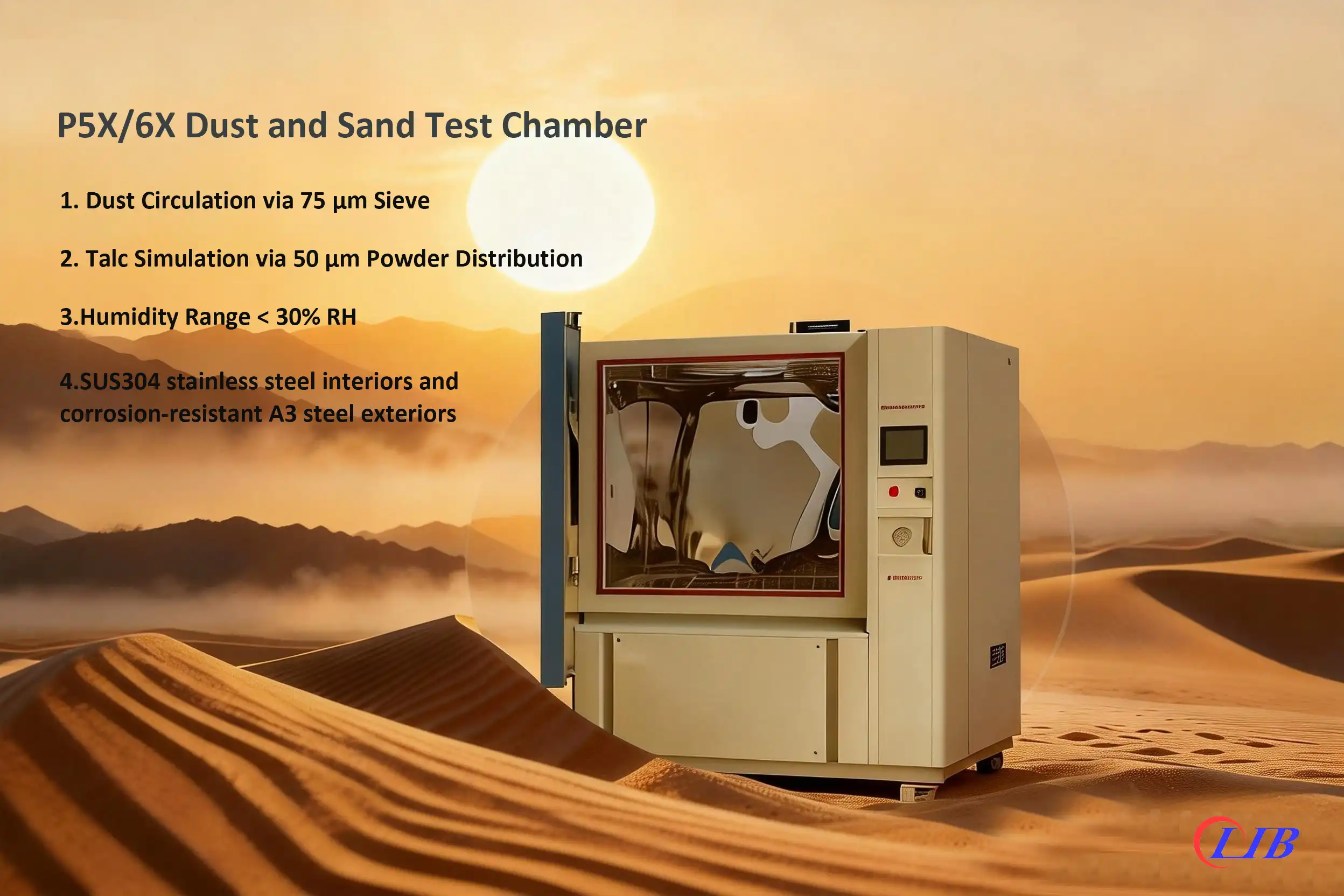
IEC 60529 specifies Arizona Test Dust or talcum powder with particle size distributions peaking at 50 microns, replicating natural silica found in industrial environments. The DI-2000 IP6X dust chamber includes automated heating jackets that pre-dry talcum powder to moisture levels below 0.5%, preventing clumping during circulation. Particle morphology analysis confirms angular geometries similar to crushed minerals, ensuring realistic abrasion characteristics during testing.
Circulation Dynamics and Concentration Control
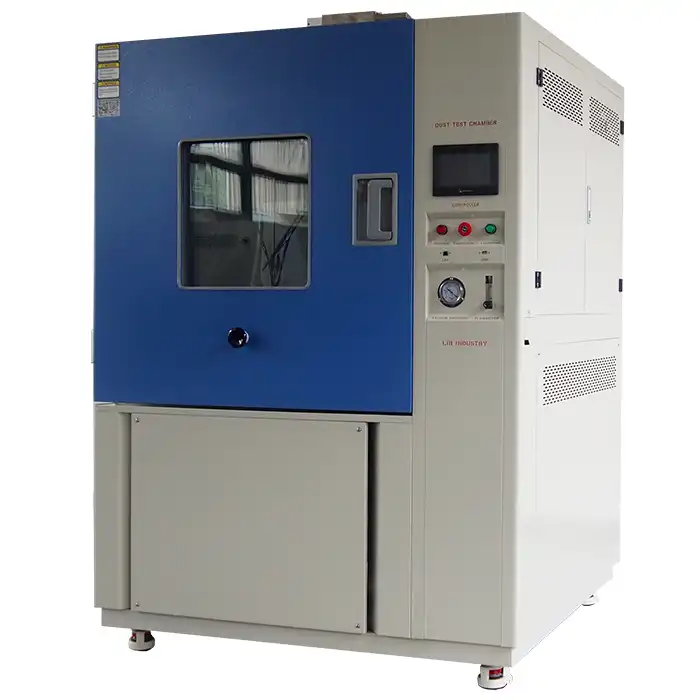
Programmable circulation fans maintain dust concentrations at 2 kg/m³ throughout the 2000-liter test volume, matching worst-case industrial scenarios. The chamber's stainless steel interior features strategically positioned baffles that eliminate dead zones, ensuring uniform particulate exposure across all specimen surfaces. Adjustable circulation velocities between 0.5-2.0 m/s simulate conditions ranging from static accumulation to windstorm-level exposure.
Vacuum System Integration for IP6X Verification
IP6X testing requires maintaining 2 kPa negative pressure inside sealed enclosures while circulating dust externally, verifying complete impermeability to particulates. The multi-port vacuum system accommodates simultaneous testing of three independent specimens, with pressure regulators maintaining differential accuracy within ±50 Pa. Automated pressure monitoring logs deviations exceeding 0.1 kPa, flagging potential seal failures that require investigation.
Common Failure Modes Caused by Dust Ingress
Electrical Contact Contamination
Conductive dust particles create low-resistance pathways between terminals rated for 600V isolation, causing leakage currents that trigger nuisance ground fault interruptions. Contact resistance increases from typical values below 10 milliohms to 500+ milliohms when dust infiltrates connector interfaces, generating localized heating that accelerates oxidation. Terminal blocks in contaminated environments experience arc tracking across insulating barriers, leading to catastrophic short circuits.
Bearing Seizure and Mechanical Wear
Fine particulates enter lubricated bearing assemblies through inadequate shaft seals, acting as lapping compounds that accelerate radial clearance growth. Rolling element bearings designed for 50,000-hour lifespans fail within 8,000 hours when subjected to continuous dust contamination. Particulate-laden lubricants lose viscosity stability, transitioning from NLGI Grade 2 consistency to ineffective Grade 0 within six months of exposure.
Optical and Sensor Degradation
Photoelectric sensors experience 40-60% signal reduction when dust accumulates on transmitter lenses and receiver windows. Proximity sensors suffer range degradation as conductive dust alters electromagnetic field patterns, causing false triggering or non-detection. Infrared temperature sensors report measurement errors exceeding 15°C when dust coatings alter surface emissivity characteristics, compromising process control accuracy.
|
Component Type |
Failure Mechanism |
Time to Failure |
Detection Method |
|
Terminal Blocks |
Tracking/Arcing |
6-18 months |
Insulation Resistance Testing |
|
Ball Bearings |
Abrasive Wear |
8,000-12,000 hours |
Vibration Analysis |
|
LED Indicators |
Light Output Loss |
2-4 years |
Photometric Measurement |
|
Cooling Fans |
Blade Imbalance |
10,000-15,000 hours |
Airflow Verification |
Evaluating Equipment Durability and Operational Stability
Accelerated Life Testing Protocols
Manufacturers compress five years of field exposure into 72-hour dust proof chamber tests by maintaining continuous dust circulation at concentrations 10× higher than typical industrial levels. The DI-2000 IP6X dust chamber programmable controller sequences cycling between ambient and +50°C temperatures, simulating diurnal thermal expansion effects. Post-test disassembly inspections reveal particulate intrusion patterns that correlate with field failure locations, validating design improvements.
Comparative Performance Analysis
Side-by-side testing of competing seal designs quantifies ingress resistance using gravimetric analysis, measuring internal dust accumulation to 0.01-gram precision. Enclosures passing IP6X certification demonstrate zero measurable particulate ingress after eight-hour exposure to 2 kg talcum powder circulation. Comparative testing reveals that silicone gaskets maintain sealing integrity across 200+ pressure cycles, while EPDM alternatives show 15% compression set degradation.
Real-World Correlation Studies
Field monitoring of IP6X-certified equipment deployed in cement plants confirms laboratory predictions, with internal contamination levels below 0.5 grams after 18 months operation. Accelerated chamber testing accurately predicts seal lifespans within 12% of measured field performance, validating test methodology. Equipment failing chamber certification experiences field failure rates 8× higher than certified alternatives, demonstrating test predictive value.
Strengthening Industrial Product Performance Through Testing
Design Iteration and Optimization
Initial prototypes rarely achieve IP6X certification on first attempts, requiring iterative seal geometry refinements guided by chamber test results. Dust ingress pathway visualization using fluorescent tracer particles identifies unexpected entry points around cable glands and mounting bosses. The rapid feedback cycle enabled by accessible test chambers compresses development timelines from 24 months to 14 months, accelerating market introduction.
Material Selection Validation
Chamber testing differentiates between chemically similar elastomers that exhibit vastly different dust resistance characteristics under cyclic loading. Fluorocarbon seals maintain compression force relaxation below 15% after 500 thermal cycles, while standard nitrile alternatives exceed 35% relaxation. Surface finish analysis reveals that electropolished stainless steel housings accumulate 40% less dust than standard mill finishes, improving thermal management.
Quality Assurance Integration
Production batch sampling using dust chambers verifies manufacturing consistency, detecting process deviations that compromise sealing performance. Statistical process control charts tracking internal dust accumulation across production lots identify tooling wear patterns before defect rates increase. Third-party certification laboratories require witnessed chamber testing as evidence of sustained manufacturing capability.
Robust Chamber Design Simulating Extreme Dust Exposure Accurately - LIB Industry
Advanced Circulation Architecture
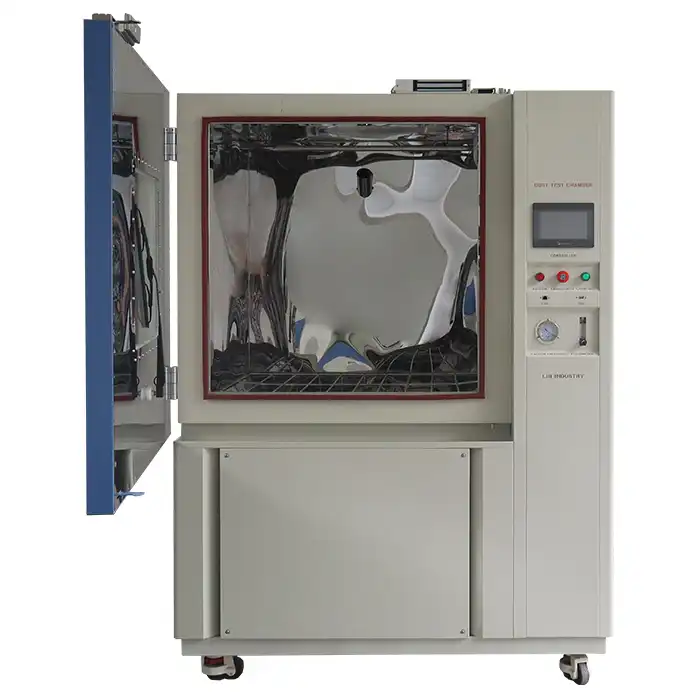
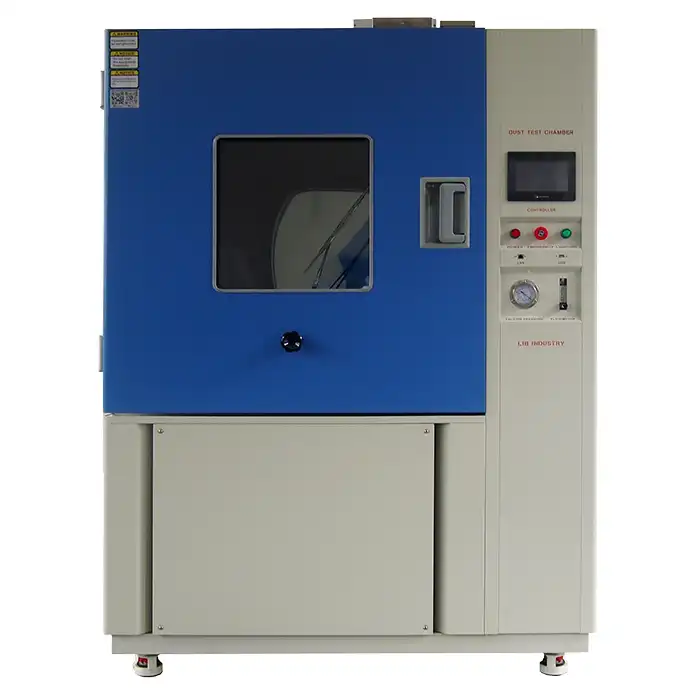
The DI-2000 IP6X dust chamber features a dual-fan configuration generating laminar flow patterns that prevent gravitational settling during extended tests. Computational fluid dynamics optimization eliminated turbulent zones that previously caused uneven particulate distribution. The 1000×2000×1000mm test volume accommodates industrial enclosures up to 500 kg, while reinforced shelving enables simultaneous multi-specimen testing.
Precision Environmental Control
Programmable temperature regulation maintains setpoints within ±2°C across the entire test volume, ensuring consistent thermal expansion conditions. Integrated dehumidification systems reduce ambient moisture below 30% RH, preventing hygroscopic dust clumping that invalidates test results. The color LCD touchscreen controller stores 50+ custom test profiles, enabling repeatable protocols across product generations.
Automated Dust Recovery Systems
One-touch powder recovery with vibration assist reduces changeover time from 90 minutes to 15 minutes between tests, maximizing chamber utilization. Cyclonic separation recovers 98% of talcum powder for reuse, reducing consumable costs by $2,400 annually. HEPA filtration on exhaust ports prevents laboratory contamination, maintaining cleanroom classifications in adjacent spaces.
 |
 |
||
|
Chamber Feature |
DI-2000 Specification |
Testing Benefit |
Industry Standard |
|
Internal Volume |
2000 liters |
Accommodates Large Enclosures |
IEC 60529 Compliant |
|
Dust Concentration |
2 kg/m³ sustained |
Accelerated Exposure |
Exceeds Typical Requirements |
|
Vacuum Ports |
3 independent connections |
Simultaneous Testing |
Productivity Enhancement |
|
Temperature Range |
Ambient to +50°C |
Thermal Cycling Capability |
Matches Field Conditions |
|
Powder Recovery |
98% automated retrieval |
Reduced Operating Cost |
Best-in-Class Efficiency |
Global Support Infrastructure
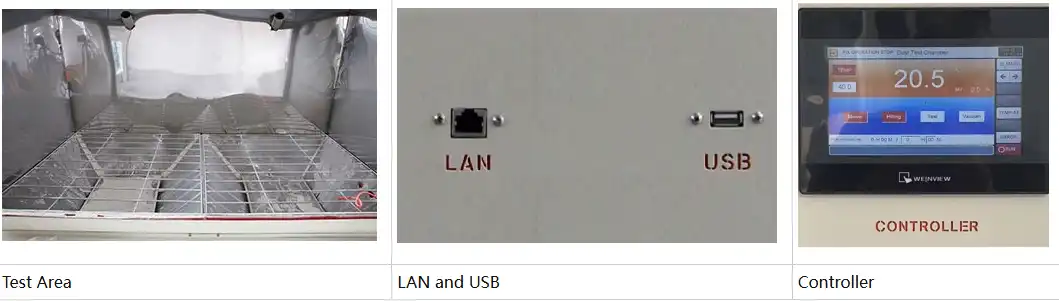
Since 2009, LIB Industry has delivered environmental test solutions to manufacturers including Apple, IBM, and Mercedes-Benz, establishing reliability credentials across demanding applications. The network of 29 international service centers provides local calibration support and spare parts inventories, minimizing downtime. Remote diagnostics via Ethernet connectivity enables expert troubleshooting without site visits, reducing service response times to under four hours.
Conclusion
Dust testing has transitioned from optional validation to essential prerequisite for industrial equipment deployed in particulate-laden environments. The DI-2000 IP6X dust chamber provides manufacturers with controlled laboratory conditions that accurately replicate years of field exposure, enabling design refinements before costly production commitments. Comprehensive environmental simulation capabilities, combined with automated operation and global support infrastructure, position dust testing as a strategic quality assurance investment that reduces warranty claims, extends product lifespans, and strengthens competitive differentiation in demanding industrial markets.
FAQ
How long does a typical IP6X dust chamber test take to complete?
Standard IP6X testing requires eight continuous hours of dust circulation at specified concentrations, followed by disassembly inspection and gravimetric analysis. Accelerated protocols may extend testing to 72 hours with thermal cycling to simulate years of field exposure in compressed timeframes.
Can the DI-2000 chamber test equipment requiring electrical power during exposure?
The chamber includes dust-proof 16A power outlets enabling energized specimen testing, replicating operational conditions where electrical heating and ventilation systems interact with dust ingress. This capability reveals failure modes invisible during unpowered static testing.
What maintenance does a dust test chamber require for accurate results?
Monthly calibration verification of temperature sensors, pressure transducers, and circulation fan speeds maintains measurement accuracy. Quarterly replacement of HEPA exhaust filters and annual talcum powder particle size analysis ensure consistent test conditions aligned with international standards.
Partner with LIB Industry for Reliable Dust Testing Solutions
As a leading environmental test chamber manufacturer and supplier, LIB Industry delivers turn-key dust testing systems backed by 15 years of engineering expertise. Contact our team at ellen@lib-industry.com to discuss custom chamber configurations, site assessments, and compliance certification support tailored to your industrial equipment validation requirements.