How Aerospace Manufacturers Use Sand Dust Test Chambers?
Aerospace manufacturers rely on sand dust test chambers to evaluate the durability of aircraft components, avionics modules, sensors, and structural assemblies under simulated airborne particle exposure. Inside these chambers, engineers recreate harsh desert environments, sandstorms, and dusty runway conditions with precise control over particle concentration, wind speed, temperature, and humidity. This testing process follows stringent military and aviation standards such as MIL-STD-810 and RTCA DO-160, ensuring every part meets strict survivability thresholds before field deployment. Components ranging from UAV electronics to jet engine air intakes undergo thorough dust ingress evaluation. By identifying sealing weaknesses and material vulnerabilities early, manufacturers reduce costly in-service failures and safeguard mission-critical operations across diverse operating theaters.
A technology testing lab in Thailand shared their experience with the sand and dust test chamber. By simulating harsh desert storms and high-temperature conditions, their rugged outdoor solar monitoring equipment underwent intensive durability testing without any issues. The chamber enabled engineers to evaluate enclosure integrity, connector stability, and long-term performance under extreme environmental stress, greatly boosting confidence in their products’ reliability for deployment in remote, arid locations.
Why Sand and Dust Testing Is Critical for Aerospace Systems?
Protecting Mission-Critical Hardware from Particle Ingress
Airborne particles pose a tangible threat to sensitive aerospace hardware. Even microscopic dust grains can infiltrate electrical enclosures, degrade thermal interfaces, and compromise signal integrity. A sand dust test chamber allows engineers to subject components to controlled particulate environments, revealing ingress pathways invisible during standard inspection. Without this validation step, deployed systems face elevated failure risks in operational theatres characterized by persistent dust exposure - military desert bases, unpaved airstrips, and arid coastal regions where fine silica particles remain perpetually suspended in ambient air.
Preventing Premature Wear and Mechanical Failure
Abrasive particles accelerate surface erosion on rotating machinery, bearing assemblies, and articulating joints. When dust accumulates inside moving parts, friction coefficients rise and lubricant integrity deteriorates rapidly. Dust chamber testing simulates years of accumulated particle exposure within compressed timeframes, enabling engineers to quantify wear rates and predict maintenance intervals with greater precision. This proactive approach helps aerospace manufacturers extend component service life while reducing unscheduled downtime - a factor that directly impacts fleet readiness and operational cost.
Meeting Regulatory and Contractual Compliance
Defense procurement contracts and civil aviation certification pathways mandate environmental qualification testing. Sand and dust evaluation is non-negotiable for equipment destined for deployment in particulate-rich environments. Compliance with standards like MIL-STD-810H Method 510 or RTCA DO-160G Section 12 is typically a contractual prerequisite. Manufacturers who invest in capable dust testing infrastructure demonstrate due diligence, streamline certification timelines, and position themselves favorably during competitive bidding processes.
Dust Exposure Challenges for Aircraft and UAV Components
Desert and Arid Operating Environments
Military and civilian aircraft operating in desert regions encounter extreme particulate loads. Sand particles ranging from 150 to 850 micrometers impinge on fuselage surfaces, erode rotor blades, and clog ventilation pathways. Unmanned aerial vehicles deployed across the Middle East, North Africa, and Central Asia face continuous exposure during extended surveillance missions. Testing chambers equipped with adjustable wind speeds up to 29 m/s accurately replicate these abrasive conditions, giving engineers reliable degradation data before equipment reaches the field.
Ground-Level Dust During Takeoff and Landing
Rotorcraft and vertical takeoff aircraft generate powerful downwash that churns surface dust into dense clouds - a phenomenon known as "brownout." Fixed-wing aircraft operating on unpaved strips similarly ingest substantial particulate matter through engine intakes and cooling systems during taxi, takeoff, and landing phases. This ground-level dust, typically below 150 micrometers in diameter, penetrates enclosures through gaps and seals that appear adequate under static conditions but fail under dynamic pressure differentials.
High-Altitude Fine Particle Encounters
Volcanic ash, stratospheric dust layers, and lofted desert particles can reach cruise altitudes. While concentrations are lower than ground level, prolonged exposure during transcontinental flights introduces fine particulates into pressurization systems, avionics cooling circuits, and pitot-static instruments. Sand and dust test chambers configured for fine particle simulation - using talcum powder with particle sizes around 50 micrometers - enable manufacturers to evaluate component resilience against these subtle but persistent high-altitude threats.
Aerospace Environmental Test Standards for Sand and Dust
MIL-STD-810 Method 510 - Blowing Sand and Dust
This U.S. Department of Defense standard remains the benchmark for military environmental testing. Method 510 prescribes two distinct procedures: blowing dust (particles below 150 μm at wind speeds of 1.5-8.9 m/s) and blowing sand (particles 150-850 μm at velocities up to 29 m/s). Each procedure targets different degradation mechanisms - dust tests assess ingress and clogging, while sand tests evaluate abrasion and erosion resistance. Aerospace manufacturers align their chamber configurations to match these precise parameters.
RTCA DO-160 Section 12 - Particle-Laden Environment Testing
RTCA DO-160G governs environmental test conditions for airborne electronic equipment. Section 12 addresses sand and dust exposure requirements specific to avionics and onboard instrumentation. Equipment categories determine severity levels, with tests prescribing dust concentrations, exposure durations, and post-test performance verification. Civil aviation authorities worldwide recognize DO-160 compliance as an essential prerequisite for airworthiness certification, making it a mandatory checkpoint for avionics manufacturers seeking global market access.
IEC 60529 - IP Rating Verification for Aerospace Enclosures
The IP (Ingress Protection) rating system defined by IEC 60529 quantifies enclosure effectiveness against solid particles and moisture. Aerospace enclosures targeting IP5X or IP6X ratings undergo dust chamber testing to verify protection levels. IP5X permits limited dust ingress that does not interfere with operation, while IP6X demands complete dust-tightness. Chambers with precise particle delivery systems and sealed observation windows allow technicians to assess enclosure integrity against these well-defined benchmarks.
|
Standard |
Particle Size |
Wind Speed Range |
Primary Application |
|
MIL-STD-810H Method 510 |
<150 μm (dust); 150-850 μm (sand) |
1.5-29 m/s |
Defense systems, military aircraft |
|
RTCA DO-160G Section 12 |
Fine dust particles |
Defined per category |
Civil avionics, onboard instruments |
|
IEC 60529 (IP Code) |
Talcum powder ~75 μm |
N/A (settling dust) |
Aerospace enclosures, connectors |
|
|
|
Simulation of Airborne Particle Impact on Aerospace Equipment
Controlling Wind Speed and Particle Velocity
Accurate airflow regulation is essential for meaningful test outcomes. Modern sand dust test chambers employ variable-speed blower systems that generate wind velocities from gentle 1.5 m/s drafts to aggressive 29 m/s gusts. This range allows engineers to simulate everything from ambient dust settling to violent sandstorm conditions. Precision airflow control ensures repeatable test conditions across multiple specimens - vital when qualifying batches of identical components for production acceptance.
Managing Dust Concentration and Distribution
Maintaining uniform particle density throughout the test volume presents a genuine engineering challenge. Advanced chambers incorporate real-time concentration monitoring with feedback sensors that adjust particle feed rates dynamically. Anti-clogging vibration mechanisms keep powder flowing consistently, while pre-heating systems prevent moisture-related clumping. These features collectively ensure that every square centimeter of the specimen faces identical particulate loading, eliminating uneven exposure patterns that can invalidate results.
Temperature and Humidity Conditioning During Tests
Environmental parameters extend beyond particle dynamics. MIL-STD-810 specifies elevated temperatures (up to +50°C) and reduced humidity (below 30% RH) during dust exposure tests, reflecting actual desert conditions. Chambers equipped with integrated heating and humidity control maintain these baselines throughout extended test cycles lasting up to 99 hours and 59 minutes. This multi-parameter approach produces holistic qualification data that accounts for thermal expansion, material softening, and desiccation effects alongside particle ingress.
|
Parameter |
Specification |
Aerospace Relevance |
|
Temperature Range |
Ambient to +50°C |
Simulates desert operating conditions |
|
Humidity Range |
< 30% RH |
Mimics arid climate moisture levels |
|
Blowing Time |
0 - 99H 59M |
Supports extended endurance protocols |
|
Normal Wire Diameter |
50 μm |
Controls particle filtration threshold |
|
Gap Between Wires |
75 μm |
Defines minimum particle passage size |
|
Wind Speed Capability |
Up to 29 m/s |
Covers MIL-STD-810 sand test requirements |
Testing Avionics, Sensors, and Air Intake Systems
Avionics and Circuit Board Enclosures
Avionics units house processors, memory modules, and communication transceivers that demand pristine internal environments. Dust infiltration onto circuit boards can cause short circuits, thermal hotspots, and signal degradation. Engineers place sealed enclosures inside sand and dust chambers, exposing them to prescribed particulate concentrations for defined durations. Post-test inspection reveals ingress points, seal failures, and gasket deficiencies. Internal power supply interfaces within the chamber allow powered operation during testing, simulating realistic thermal and electromagnetic conditions.
Optical Sensors and Navigation Equipment
LiDAR units, infrared cameras, and GPS antennas are particularly susceptible to dust contamination. Particle accumulation on optical surfaces degrades detection range and measurement accuracy. Navigation instruments exposed to sustained dust environments may deliver erroneous positional data - a hazardous condition during autonomous flight. Chamber-based testing enables manufacturers to evaluate protective lens coatings, wiper mechanisms, and self-cleaning systems under controlled particle loads, verifying that optical performance remains within acceptable tolerances throughout the equipment's rated service life.
Engine Air Intake and Filtration Units
Turbine engines ingest massive air volumes, making intake filtration a paramount design concern. Dust entering the compressor section causes blade erosion, tip clearance degradation, and eventual performance loss. Sand dust test chambers allow manufacturers to evaluate barrier filter efficiency, inertial separator performance, and bypass door sealing under realistic particle-laden airflow. Test data directly informs maintenance schedules, filter replacement intervals, and inlet design modifications - contributing to engine longevity across dusty operational environments.
Enhancing Aerospace Component Reliability Through Environmental Qualification
Accelerated Life Cycle Simulation
Environmental qualification condenses years of operational exposure into weeks of controlled chamber testing. By running components through extended dust exposure cycles at elevated concentrations, engineers extrapolate long-term degradation trends without waiting for real-world failure data. This accelerated approach enables proactive design modifications, reduces prototype iteration cycles, and shortens time-to-certification - giving manufacturers a competitive advantage in fast-moving defense and commercial aerospace programs.
Cross-Referencing with Other Environmental Tests
Dust testing rarely occurs in isolation. Comprehensive qualification programs combine particulate exposure with thermal cycling, vibration, altitude simulation, and humidity testing. Components that pass dust chamber evaluation must also demonstrate resilience under these complementary stressors. Multi-environment test sequencing reveals synergistic failure modes - situations where dust ingress compounds thermal stress or vibration-induced loosening. This integrated approach produces qualification packages that genuinely reflect the multi-hazard reality of aerospace service environments.
Data-Driven Design Improvements
Every chamber test generates quantifiable data: particle mass accumulated, ingress locations, performance degradation curves, and seal integrity metrics. Engineering teams analyze this information to refine gasket profiles, modify baffle geometries, select superior coating materials, and optimize ventilation architectures. Over successive design-test-improve iterations, component dust resistance improves measurably. This empirical feedback loop transforms environmental testing from a compliance checkbox into a genuine design optimization tool - elevating product quality and operational dependability.
Advanced Sealing Technology for Critical Aerospace Parts - LIB Industry
|
|
|
||
|
Model |
Internal Dimension (mm) |
Volume (L) |
Overall Dimension (mm) |
|
DI-800 |
800 × 1000 × 1000 |
800 |
1040 × 1450 × 1960 |
|
DI-1000 |
1000 × 1000 × 1000 |
1000 |
1330 × 1450 × 1960 |
|
DI-1500 |
1000 × 1500 × 1000 |
1500 |
1330 × 1950 × 1990 |
|
DI-2000 |
1000 × 2000 × 1000 |
2000 |
1330 × 2450 × 1990 |
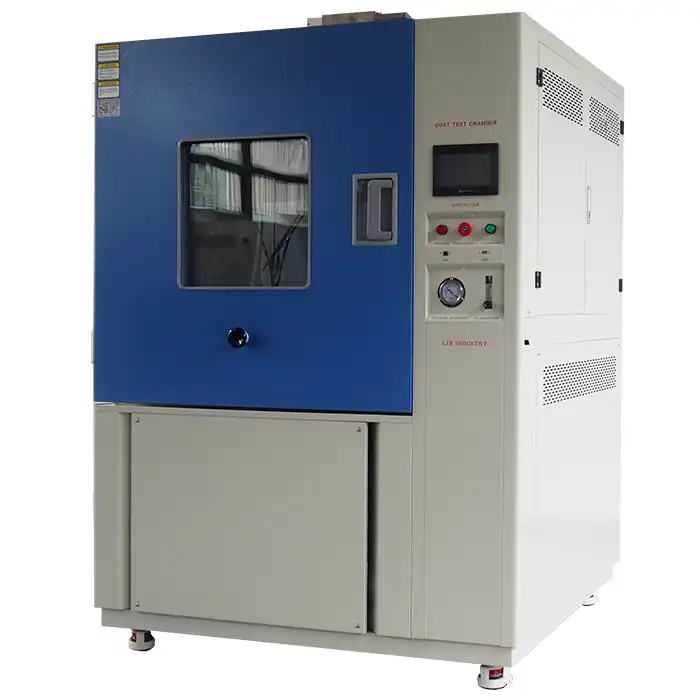
Precision Dust Simulation with LIB Chambers
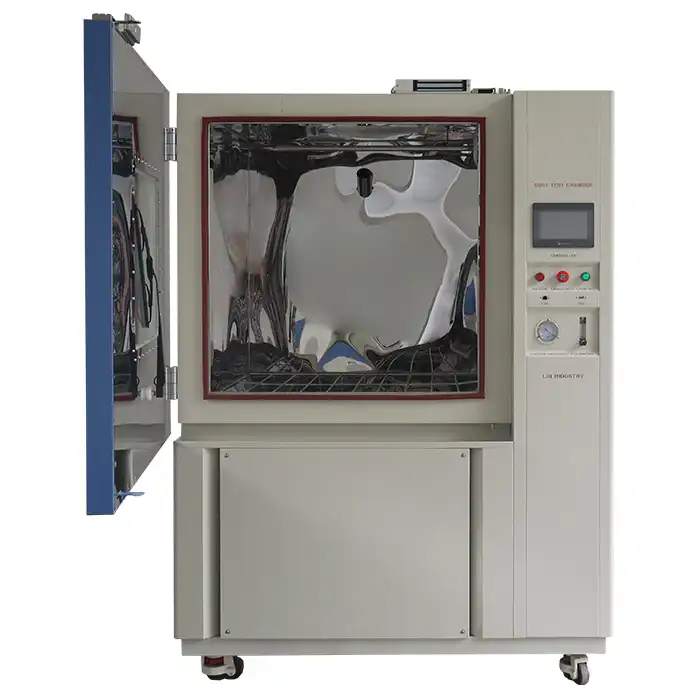
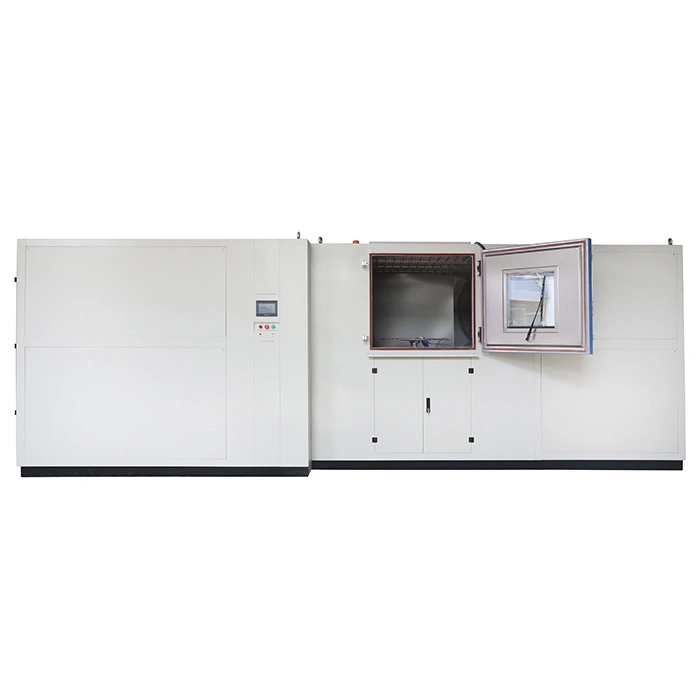
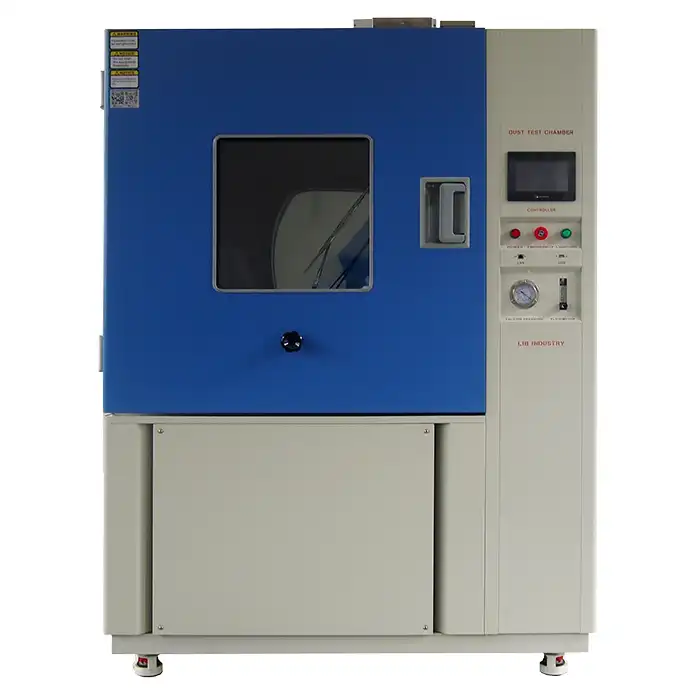
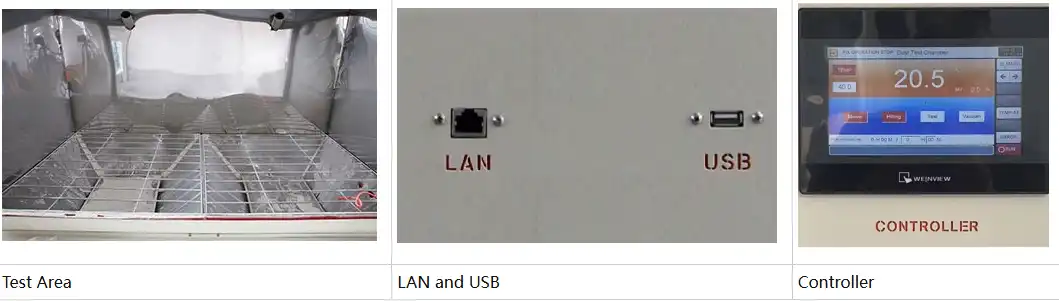
LIB Industry designs and manufactures sand dust test chambers engineered for rigorous aerospace qualification programs. With capacities spanning 800L to 2000L and beyond, these chambers accommodate components ranging from compact avionics modules to large structural assemblies. Programmable color LCD touch screen controllers with Ethernet connectivity enable precise parameter management, while electromagnetic door locks and multiple safety devices - including over-temperature, over-current, and earth leakage protection - ensure secure, uninterrupted test operations throughout extended exposure cycles.
Customizable Chamber Configurations for Aerospace Programs
Aerospace testing demands often exceed standard specifications. LIB's engineering team specializes in custom development, tailoring internal dimensions, airflow velocities, particle delivery systems, and instrumentation interfaces to match unique program requirements. SUS304 stainless steel interiors resist corrosion from abrasive particles, while double-layer silicone rubber sealed observation windows with integrated wipers maintain clear specimen visibility. Built-in dustproof LED lighting and single-phase 16A internal power interfaces support powered test configurations across diverse equipment types.
Global Partnerships and Quality Certifications
LIB Industry operates under ISO 9001 Quality Management System protocols, with CE certification and third-party verification from SGS and TUV authorities. Trusted by global leaders including Apple, Intel, Mercedes-Benz, and BYD, LIB maintains dedicated service centers across 29 countries. Every chamber ships with a 3-year warranty and lifetime service commitment, backed by 24/7 worldwide technical support. Standard configurations include sample shelves, dust wipers, and 5 kg of talcum powder - ready for deployment upon installation.
Conclusion
Sand dust test chambers serve as indispensable tools within aerospace manufacturing, enabling engineers to validate component resilience against the relentless threat of airborne particles. From avionics enclosures and optical sensors to turbine air intakes, every dust-sensitive subsystem benefits from controlled laboratory evaluation before entering operational service. Adherence to standards such as MIL-STD-810, RTCA DO-160, and IEC 60529 ensures that qualification data carries regulatory weight and contractual validity. As aerospace platforms expand into increasingly austere operating environments, the demand for precise, repeatable dust simulation capabilities continues to intensify - making investment in capable test chamber infrastructure a strategic imperative.
FAQ
What particle sizes are used in aerospace sand dust test chambers?
Aerospace dust testing typically employs fine particles below 150 μm for ingress evaluation, while sand abrasion tests use particles ranging from 150 to 850 μm, aligned with MIL-STD-810 specifications.
How long does a standard aerospace dust exposure test last?
Test durations vary by standard and severity level. Most aerospace dust chamber tests range from several hours to multiple days. Modern chambers support continuous operation up to 99 hours and 59 minutes, accommodating both short qualification cycles and extended endurance protocols.
Can sand dust test chambers simulate both desert and high-altitude particle conditions?
Yes. Chambers with adjustable wind speeds, fine particle delivery, and temperature/humidity control can replicate ground-level desert sandstorms and high-altitude fine dust exposure within a single programmable test platform.
Looking for a reliable sand dust test chamber manufacturer for your aerospace qualification program? LIB Industry is a professional supplier and factory delivering turnkey environmental testing solutions tailored to your exact specifications. Contact us at ellen@lib-industry.com to discuss your project requirements.