Thermal Cycling Equipment for PCB and Semiconductor Testing
Thermal cycling equipment subjects printed circuit boards (PCBs) and semiconductor packages to controlled, repetitive temperature swings that expose latent defects long before products reach end users. By ramping between sub-zero lows and elevated highs at rates of 5 °C to 15 °C per minute, these chambers replicate the cumulative thermo-mechanical stress that electronic assemblies absorb over years of field operation - compressed into hours or days of laboratory exposure. Engineers across consumer electronics, automotive ECU production, aerospace avionics, and power-module manufacturing rely on thermal cycling validation to qualify solder joints, wire bonds, die-attach layers, and conformal coatings. The resulting data drives material selection, process optimization, and warranty-risk reduction with measurable confidence.
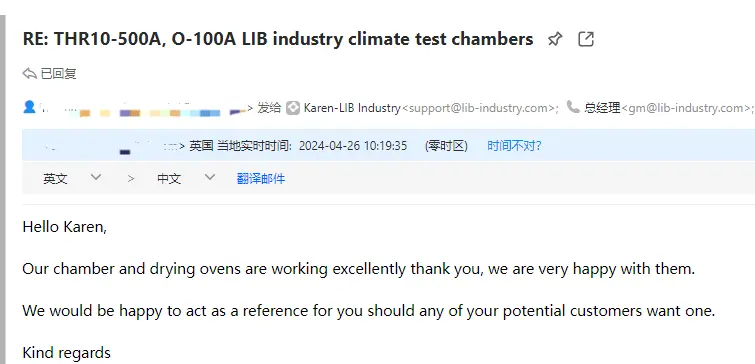
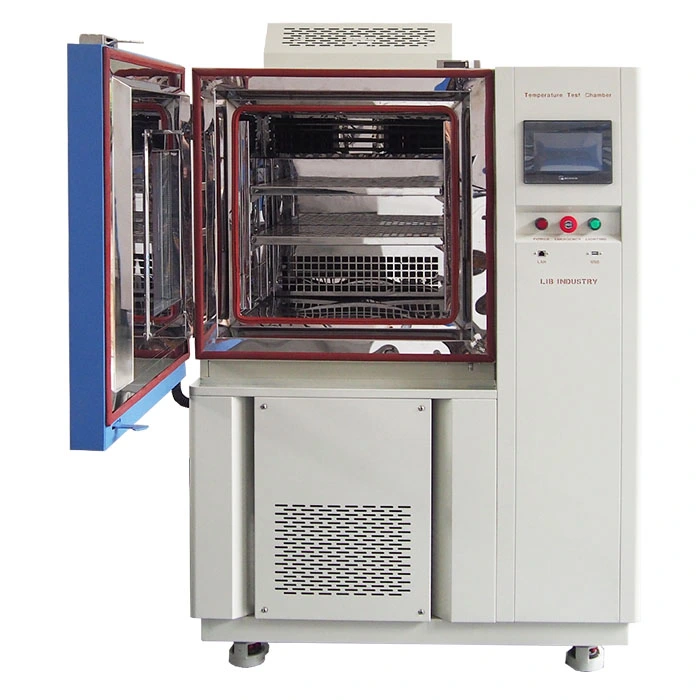
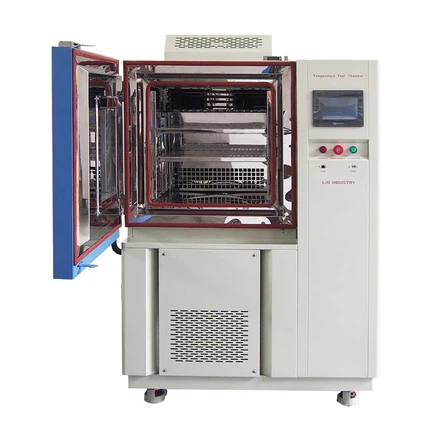
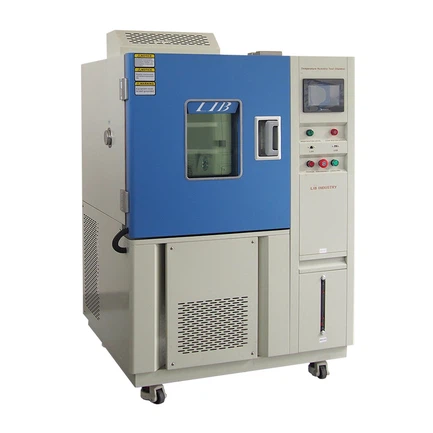
A leading electronics testing lab recently shared their experience with the LIB industry THR10-500A thermal cycling equipment: "Our THR10-500A chamber is working excellently, thank you. We are very happy with it." The chamber’s stable performance during intensive thermal cycling allowed the team to carry out extended burn-in procedures and repeated rapid temperature changes without interruption. This reliability gave them confidence in accurately evaluating the thermal resilience and durability of automotive electronics, sensors, and control modules. In addition to electronics, the equipment has proven highly effective for materials testing, plastic component aging, and battery performance assessments, enabling teams to efficiently replicate real-world thermal conditions and enhance product longevity.
Why PCBs and Semiconductor Devices Require Thermal Cycling Tests?
Coefficient of Thermal Expansion Mismatch
Every material in an electronic assembly - silicon die, copper trace, FR-4 laminate, molding compound - expands and contracts at a different rate. When temperature shifts, these mismatched expansions generate internal shear and tensile forces. Thermal cycling equipment amplifies this phenomenon under repeatable conditions, revealing weak interfaces that would otherwise escape static temperature testing.
Operational Temperature Extremes in the Field
An automotive engine-bay controller may swing from -40 °C at winter start-up to +125 °C near exhaust manifolds. Consumer handsets cycle between body-heat proximity and cold outdoor pockets. Replicating these real-world excursions inside a controlled chamber enables reliability engineers to quantify cumulative fatigue damage and predict mean-time-between-failure (MTBF) with statistical rigor.
Accelerated Lifetime Qualification
Running products under normal ambient conditions for thousands of hours is impractical during compressed development schedules. Accelerated thermal cycling multiplies the stress per cycle, enabling engineers to accumulate equivalent field damage in a fraction of the calendar time. Acceleration factors derived from Coffin-Manson and Norris-Landzberg models link laboratory cycles to projected service life.
Thermal Stress Effects on Solder Joints and Chip Packaging
Solder-Joint Fatigue and Crack Propagation
Lead-free solder alloys such as SAC305 undergo creep-fatigue interactions during each temperature swing. Micro-cracks nucleate at high-stress corners of BGA pads and propagate across the joint cross-section with continued cycling. Thermal cycling chambers with precise dwell-time programming let metallurgists isolate creep-dominant and fatigue-dominant regimes to optimize reflow profiles.
Wire-Bond Lift-Off and Heel Cracking
Gold and copper wire bonds endure flexural strain as the mold compound and lead-frame expand at different rates. Repeated cycling weakens the bond heel - the thin neck where the wire exits the capillary impression - until electrical continuity is lost. Controlled ramp rates inside the thermal cycling test chamber ensure that each cycle delivers a consistent strain amplitude for meaningful Weibull analysis.
Die-Attach Voiding and Delamination
Silver-filled epoxy and solder preforms bonding the silicon die to the substrate can delaminate when entrapped moisture vaporizes during high-temperature excursions - a phenomenon known as "popcorn cracking." Thermal cycling combined with pre-conditioning at elevated humidity replicates this failure sequence, allowing packaging engineers to qualify moisture-sensitive-level (MSL) ratings.
Industry Standards for PCB and Semiconductor Thermal Cycling Testing

IPC-9701 and JEDEC JESD22-A104
IPC-9701 prescribes thermal cycling profiles for surface-mount solder-joint evaluation, while JEDEC JESD22-A104 defines condition letters (e.g., Condition G: -40 °C to +125 °C) for semiconductor package qualification. Both standards specify ramp rates, soak times, and cycle counts that thermal cycling equipment must reproduce with tight tolerance.
AEC-Q100 and AEC-Q200 for Automotive Grade Components
Automotive Electronics Council standards demand 1 000 or more cycles across aggressive temperature ranges. AEC-Q100 (integrated circuits) and AEC-Q200 (passive components) require documented evidence of zero-failure performance. Chambers capable of sustaining extended unattended runs with automatic data logging satisfy the traceability mandates embedded in these specifications.
MIL-STD-883 for Military and Aerospace Devices
Method 1010 of MIL-STD-883 outlines thermal cycling and thermal shock procedures for high-reliability military semiconductors. Temperature extremes can reach -65 °C to +200 °C with transfer times under one minute. Equipment selection must match these stringent transition-speed and low-temperature requirements to maintain test validity.
|
Standard |
Typical Temperature Range |
Minimum Cycles |
Target Application |
|
JEDEC JESD22-A104 (Cond. G) |
-40 °C to +125 °C |
500-1000 |
Commercial / Industrial ICs |
|
AEC-Q100 Grade 1 |
-40 °C to +125 °C |
1000 |
Automotive ICs |
|
IPC-9701 (TC1) |
0 °C to +100 °C |
6000 |
SMT solder joints |
|
MIL-STD-883 Method 1010 |
-65 °C to +150 °C |
100-1 000 |
Military / Aerospace |
Simulating Rapid Temperature Variations in Electronic Devices
Controllable Ramp Rates for Application-Specific Profiles
Not every product needs the same ramp speed. A medical implant might experience gentle diurnal fluctuations, while an industrial inverter near a furnace endures abrupt thermal transients. Modern thermal cycling test equipment offers selectable ramp rates - 5 °C, 10 °C, or 15 °C per minute - so test engineers can tailor profiles to actual deployment conditions without compromising repeatability.
Mechanical Compression Refrigeration for Deep-Cold Excursions
Reaching -70 °C demands cascade or single-stage compressor architectures with high-efficiency refrigerants. French-engineered TECUMSEH compressors paired with optimized evaporator coils deliver stable pull-down performance even under continuous cycling. The refrigeration system's high-pressure protection circuitry prevents compressor damage during long unattended campaigns.
Uniform Air Circulation Inside the Test Zone
Centrifugal fans distribute conditioned air at high velocity across all specimen surfaces, minimizing spatial temperature deviation to ±2.0 °C. Uniform airflow ensures that every BGA package, every connector, and every capacitor on a loaded rack receives identical thermal exposure - a prerequisite for valid comparative analysis between sample positions.
 |
 |
|
Parameter |
Specification |
|
Temperature Range |
-20 °C / -40 °C / -70 °C to +150 °C |
|
Heating Rate |
5-15 °C/min (selectable) |
|
Cooling Rate |
5-15 °C/min (selectable) |
|
Temperature Fluctuation |
± 0.5 °C |
|
Temperature Deviation |
± 2.0 °C |
|
Available Volumes |
100 L, 225 L, 500 L, 800 L, 1000 L |
|
|
|
|
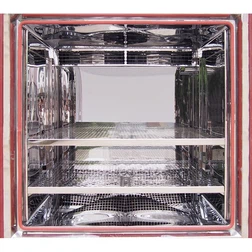
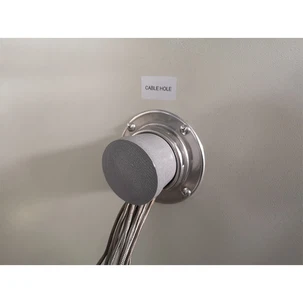
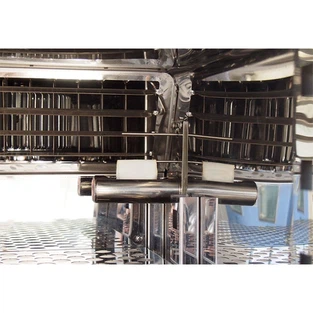
| Robust Workroom | Cable Hole | Temperature and Humidity Sensor |






Detection of Interconnect Failures and Delamination
In-Situ Electrical Resistance Monitoring
Routing daisy-chain or four-wire Kelvin connections through the chamber's cable ports allows continuous resistance measurement during cycling. A sudden spike signals crack initiation in a solder joint or wire bond, pinpointing the exact cycle count at failure. The standard 50 mm cable hole - with optional 100 mm or 200 mm upgrades - accommodates multi-channel harnesses without compromising chamber seal integrity.
Cross-Section and Acoustic Microscopy After Exposure
Post-cycling metallographic cross-sections reveal crack morphology, intermetallic growth, and void migration within solder balls. Scanning acoustic microscopy (SAM) maps sub-surface delamination across large panel areas. Correlating these physical findings with cycle count data extracted from the chamber's data logger builds a robust failure-analysis narrative.
Accelerated Stress Screening Versus Qualification Testing
Stress screening uses limited cycles at moderate ranges to precipitate infant-mortality defects on production units. Qualification testing pushes samples to far higher cycle counts to establish design margins. The same thermal cycling chamber serves both purposes by switching between stored programs - 120 independent programs with 100 steps each provide ample flexibility.
Enhancing Electronic Component Reliability Through Thermal Cycling Validation
Building Weibull Failure Distributions
Running multiple identical samples to failure generates life-data sets that fit Weibull distributions. Shape and scale parameters extracted from these curves predict field failure rates at target confidence levels. Consistent thermal cycling machine performance - tight ramp-rate accuracy and uniform soak temperatures - reduces statistical scatter and strengthens predictive power.
Comparing Lead-Free Solder Alloys
The transition from SnPb to SAC alloys introduced new fatigue behaviors. Thermal cycling benchmarks across alloy variants (SAC105, SAC305, SAC405, SnBi) quantify trade-offs between drop-shock resistance and thermal-fatigue endurance. Laboratories cycle coupon boards under identical profiles and rank alloys by characteristic life, guiding assembly-line material decisions.
Validating Conformal Coating and Underfill Performance
Protective coatings on PCBs and capillary underfills beneath flip-chip packages must survive thermal excursions without cracking or loss of adhesion. Cycling coated assemblies and inspecting for micro-cracks or delamination under UV fluorescence validates coating cure schedules and material compatibility, ultimately extending deployed-product longevity.
High-Precision Control for Delicate Component Analysis - LIB Industry
Programmable Controller With Ethernet Connectivity
LIB Industry thermal cycling equipment features a color LCD touch-screen controller supporting complex multi-step programs. Ethernet connectivity enables PC-based operation and remote monitoring, while USB ports allow one-click data download. Engineers can review temperature curves, dwell durations, and cycle counts from any networked workstation - streamlining reporting and audit preparation.
Robust Safety Architecture
Over-temperature, over-current, refrigerant high-pressure, and earth-leakage protection circuits safeguard both the chamber and specimens during unattended overnight runs. An explosion-proof door, observation window, smoke detector, and water-spray fire-suppression module add layers of personnel protection in laboratories handling lithium-cell or volatile-compound testing.
Scalable Volume Range and Custom Configurations
Five standard models span 100 L to 1 000 L, covering single-component evaluation through full-board and multi-board batch qualification. Larger 2 000 L and 3 000 L variants accommodate oversized assemblies or high-throughput production screening. LIB's engineering team also designs non-standard chambers with custom interior dimensions, specialized racks, and application-specific cable-port configurations.
Conclusion
Thermal cycling remains an indispensable gatekeeper in PCB and semiconductor reliability programs. By exposing solder joints, wire bonds, die-attach layers, and protective coatings to controlled, repetitive temperature swings, engineers uncover latent defects that static testing overlooks. Selecting equipment with precise ramp-rate control, deep sub-zero capability, and robust data-logging architecture ensures that every test cycle delivers actionable intelligence. When the chamber's performance is trustworthy, the qualification data it produces carries weight - in design reviews, customer audits, and field-reliability predictions alike.
FAQ
What ramp rate should I use for PCB solder-joint thermal cycling?
Most standards like IPC-9701 specify ramp rates between 5 °C/min and 15 °C/min. LIB Industry chambers offer selectable rates across this range to match your target specification.
Can thermal cycling equipment reach -70 °C for semiconductor qualification?
Yes. LIB Industry's TR5 series achieves -70 °C using mechanical compression refrigeration, meeting JEDEC and MIL-STD-883 deep-cold profile requirements for advanced semiconductor packages.
How many cycles are typical for automotive-grade component qualification?
AEC-Q100 Grade 1 demands a minimum of 1 000 cycles between -40 °C and +125 °C. LIB chambers support extended unattended runs with automatic data logging for full traceability.
Need a reliable thermal cycling equipment manufacturer and supplier for your electronics testing lab? LIB Industry provides turnkey environmental test solutions - from chamber design through installation and operator training. Reach out at ellen@lib-industry.com to discuss standard or custom configurations.