Why Rain Testing Matters for Ruggedized Products?
Ruggedized products face relentless environmental challenges, and water ingress remains one of the most destructive failure modes in field deployments. Rain testing validates protective design features before equipment reaches harsh operational environments where moisture can compromise electronics, degrade connectors, and trigger catastrophic system failures. Manufacturers rely on controlled laboratory evaluations using specialized equipment such as a MIL STD 810 G rain test chamber to simulate years of exposure in compressed timeframes, ensuring their products survive wind-driven precipitation, tropical downpours, and sustained humidity. Proper validation through standardized rain testing protocols not only prevents costly warranty claims but also builds customer confidence by demonstrating measurable resilience against real-world moisture threats that ruggedized equipment will encounter throughout its operational lifespan.
Defining Ruggedized Products and Their Environmental Challenges
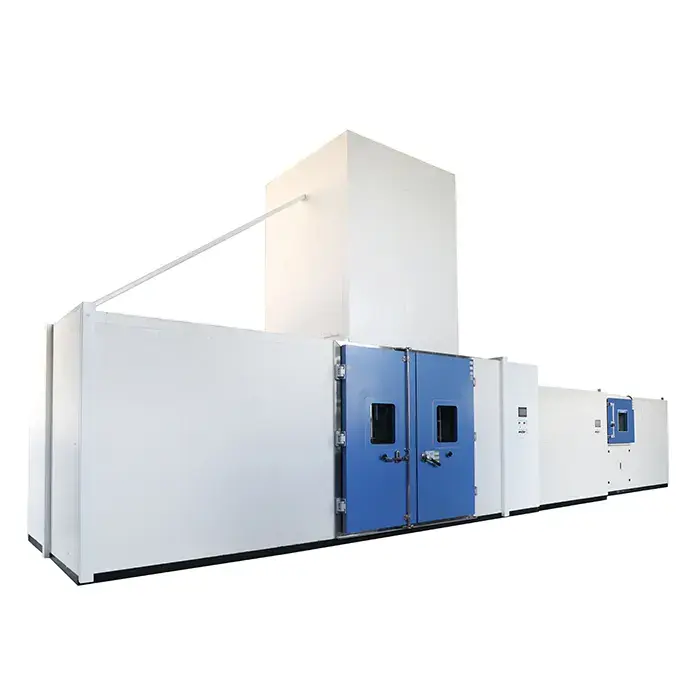
Mission-Critical Equipment Operating in Hostile Conditions
Ruggedized products serve applications where conventional consumer-grade devices would fail within hours. Military communications systems, aerospace instrumentation, offshore drilling platforms, and emergency response equipment all require exceptional durability. These products incorporate reinforced housings, sealed connectors, conformal coatings, and specialized gaskets to withstand temperature extremes, shock loads, vibration, and moisture intrusion simultaneously.
Moisture as a Primary Degradation Mechanism
Water penetration initiates multiple degradation pathways that compromise electronic functionality. Conductive contamination creates unwanted electrical paths between circuit traces, causing signal interference and power leakage. Corrosion attacks metal contacts, solder joints, and component leads, increasing resistance and eventually creating open circuits. Humidity promotes fungal growth on organic materials and accelerates chemical reactions that degrade insulation properties.
Environmental Complexity Beyond Simple Water Exposure
Real-world moisture threats combine rain, wind pressure, temperature differentials, and particle contamination in ways that simple immersion testing cannot replicate. A military vehicle traversing muddy terrain experiences high-velocity water impacts containing abrasive particles. Telecom infrastructure on mountain peaks endures freezing rain driven horizontally by gale-force winds. These complex exposure scenarios demand sophisticated testing methodologies that accurately reproduce field conditions.
Common Moisture-Induced Failures in Rugged Electronics
Connector Degradation and Contact Resistance
Connector interfaces represent critical vulnerability points where sealed and unsealed domains meet. Water infiltration past O-rings or backshells creates electrolytic cells between dissimilar metals, accelerating galvanic corrosion. Increased contact resistance from oxide formation causes signal degradation in data communications and voltage drops in power distribution circuits. Intermittent connections develop as corrosion products physically separate mating surfaces.
Circuit Board Contamination and Leakage Currents
Moisture penetrating enclosures deposits onto populated circuit boards, creating thin electrolyte films across component leads and PCB traces during testing in a blowing rain test chamber. Even clean water becomes conductive when dissolved ionic contaminants are present. Leakage currents between adjacent traces cause logic errors in digital circuits, offset drift in analog systems, and accelerated battery drain in portable devices. Conformal coatings provide protection only when applied without voids or pinholes.
Component Package Breaching and Internal Corrosion
Hermetic sealing protects sensitive components from environmental exposure, but compromised packages allow moisture ingress directly to die surfaces. Condensation forming inside breached packages cannot escape, creating sustained high-humidity conditions that corrode bond wires and degrade die metallization. Plastic-encapsulated components suffer similar degradation when moisture diffuses through molding compounds and reaches internal structures.
|
Failure Mode |
Typical Onset Time |
Detection Method |
|
Connector corrosion |
50-200 hours exposure |
Contact resistance measurement |
|
Leakage current increase |
10-50 hours exposure |
Insulation resistance testing |
|
Component package breach |
100-500 hours exposure |
Hermeticity testing, X-ray inspection |
Rain Testing Standards for Ruggedized Equipment
MIL-STD-810H Method 506 Requirements
The military standard establishes three distinct procedures addressing different moisture exposure scenarios. Procedure I evaluates resistance to wind-driven rain with droplet velocities reaching 18 meters per second, simulating equipment transported on open vehicles or mounted on external platforms. Procedure II applies exaggerated rainfall intensities exceeding natural precipitation rates to accelerate testing and reveal marginal seal designs. Procedure III addresses drip conditions for equipment installed in sheltered locations where overhead leakage might occur.
International Standards Complementing Military Protocols
IEC 60529 ingress protection ratings provide internationally recognized classifications for enclosure effectiveness against water penetration. IP65 and IP66 ratings specifically address water jet resistance relevant to rain exposure. Automotive standards like ISO 20653 incorporate road-specific conditions including spray from adjacent vehicles and pressure washing during maintenance. Aerospace specifications such as RTCA DO-160 Section 11 define precipitation and spray requirements for airborne equipment.
Parameter Selection Matching Operational Environments
Effective rain testing requires aligning test parameters with anticipated field conditions. Equipment deployed in tropical regions needs validation against sustained high-intensity rainfall exceeding 100mm per hour. Desert platforms face less frequent but more intense monsoon-season precipitation. Arctic deployments encounter freezing rain creating ice accumulation challenges. Temperature differential between test specimens and applied water simulates thermal shock from cold rain impacting sun-heated surfaces.
Designing Effective Test Profiles for Rugged Products
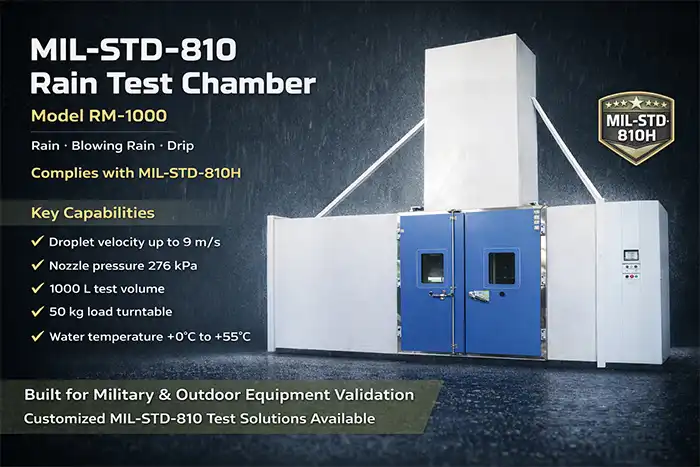
Establishing Representative Exposure Scenarios
Test profile development begins with comprehensive environmental data collection from intended deployment locations. Historical weather records, field failure analyses, and user operational reports identify critical exposure combinations. A portable communications device might require testing against sustained moderate rainfall, intense short-duration cloudbursts, and wind-driven precipitation from multiple approach angles. Testing only vertical rainfall would miss vulnerabilities in horizontally-oriented connector interfaces.
Incorporating Worst-Case Stress Conditions
Conservative testing applies environmental stresses exceeding expected field exposure to provide design margin and account for manufacturing variability. Exaggerated rainfall rates generated by a blowing rain test machine compress months of cumulative exposure into feasible test durations while maintaining relevant failure mechanisms. Combined stresses like simultaneous rain exposure and temperature cycling reveal interactive degradation pathways that sequential testing might miss. Pressure differentials across enclosure walls increase water intrusion driving forces beyond ambient conditions.
Duration Determination Balancing Acceleration and Relevance
Accelerated testing reduces validation time but must preserve failure mode relevance to field conditions. Rainfall intensities 5-10 times natural rates provide reasonable acceleration without introducing unrealistic failure mechanisms like hydroplaning effects or structural damage from droplet impact forces. Test durations spanning 4-24 hours capture both immediate seal failures and time-dependent degradation from sustained moisture exposure. Multiple test cycles with intermediate drying periods simulate diurnal weather patterns.
|
Test Parameter |
Standard Exposure |
Accelerated Testing |
|
Rainfall rate |
50-100 mm/h |
250-300 mm/h |
|
Droplet velocity |
9-12 m/s |
15-20 m/s |
|
Test duration |
30 minutes per orientation |
60-120 minutes comprehensive |
Evaluating Test Results to Improve Product Durability
Comprehensive Post-Test Inspection Protocols
Visual examination identifies obvious water penetration paths including droplets inside enclosures, corrosion initiation on exposed surfaces, and seal displacement from pressure differentials. Disassembly reveals hidden moisture accumulation in connector backshells, cable entry points, and ventilation paths. Moisture-sensitive indicator papers strategically placed inside enclosures quantify penetration severity even when liquid water has evaporated. Electrical continuity checks and insulation resistance measurements detect degradation invisible to visual inspection.
Functional Performance Verification Requirements
Ruggedized equipment must maintain full operational capability during and after rain exposure. Live testing under simulated precipitation confirms displays remain readable, controls respond correctly, and electronic subsystems maintain specifications. Power-on testing immediately following exposure reveals moisture-induced short circuits before drying occurs. Extended functional testing over 24-48 hours post-exposure identifies latent failures from corrosion initiation or trapped moisture migrating to sensitive areas.
Failure Analysis Driving Design Improvements
When rain testing reveals vulnerabilities, detailed failure analysis identifies root causes and guides corrective actions. Dye penetrant testing traces water intrusion paths through labyrinthine seal geometries. Cross-sectional microscopy examines seal compression and surface finish at critical interfaces. Material analysis determines whether gasket compounds maintain sealing properties after environmental exposure. Iterative testing validates design modifications before production implementation.
Ensuring Field Reliability and Customer Confidence Through Rain Testing
Quantifying Protection Levels for Procurement Specifications
Documented rain testing results provide objective evidence supporting ingress protection claims and military standard compliance. Procurement specifications reference specific test procedures and acceptance criteria, creating contractual obligations for demonstrated performance. Test reports become qualification documentation proving equipment suitability for intended environments. Certification by third-party laboratories adds credibility for customers requiring independent verification.
Reducing Warranty Costs Through Early Defect Detection
Comprehensive pre-production rain testing identifies seal deficiencies and design weaknesses before manufacturing commitments. Catching failures during development costs thousands in redesign efforts but prevents millions in field replacements and reputation damage. Warranty claim data shows moisture-related failures account for 30-40% of ruggedized electronics returns. Robust rain testing reduces this failure population by validating protective features under controlled conditions.
Building Market Differentiation on Proven Durability
Manufacturers demonstrating superior rain resistance through rigorous testing create competitive advantages in demanding markets. Marketing materials referencing specific test standards and achieved protection levels resonate with customers managing risk in harsh environments. Case studies documenting field survivability in extreme conditions reinforce testing claims with real-world performance data. Industry reputation for reliability creates pricing power and customer loyalty.
|
Business Impact |
Before Comprehensive Testing |
After Implementation |
|
Warranty claim rate |
8-12% annual failure rate |
2-4% annual failure rate |
|
Customer confidence |
Moderate specification trust |
High documented assurance |
|
Market positioning |
Commodity pricing pressure |
Premium validated reliability |
Prove Ultimate Durability with LIB Industry MIL STD 810 G Rain Test Chambers
|
|
|
|
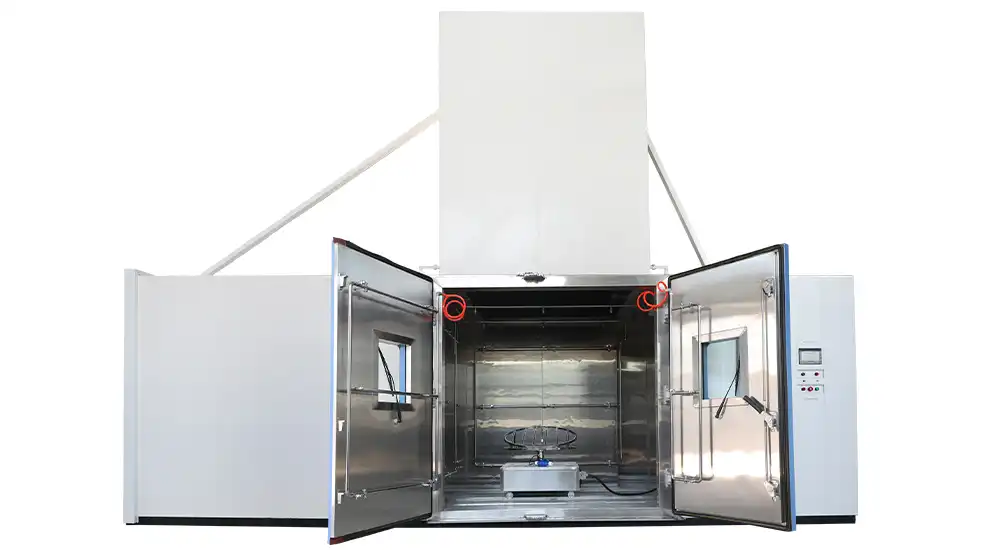
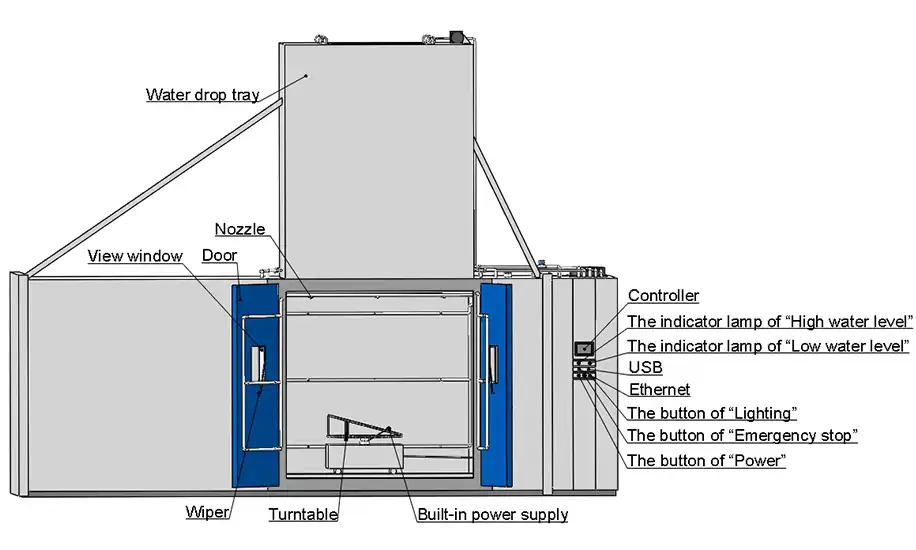
Model: RIM-1000 Interior Volume: 1000 L Turntable Load: 50 kg Turntable Diameter: 800 mm Door Lock: Electromagnetic lock Interior Material: SUS304 stainless steel Test Standard: MIL-STD-810H Test Time: 0 – 999 min, adjustable |
|
|
Rain & Blowing Rain Final Rain Droplet Velocity: 9 m/s on test item Rainfall Rate≥ 1.7 mm/min Droplet Size: 0.5 – 4.5 mm Water Temperature: +10°C to max. +55°C |
|
|
Drip Drip Area Dimensions: 1600 × 1000 mm, height adjustable Drip Hole Diameter: 20 – 25.4 mm Distance Between Holes: 25 mm Water Volume: ≥ 280 L/m²/h Water Temperature: +10°C to max. +55°C |
|
|
Exaggerated Rain Nozzle Pressure: 276 kPa Rainfall Rate: 20.8 L/min Nozzle Arrangement: One nozzle per 0.56 m² of surface area, approx. 48 cm from test surface Droplet Size:0.5 – 4.5 mm |
|
Comprehensive Testing Capability Spanning All Procedures
LIB Industry MIL STD 810 G rain test chambers support complete MIL-STD-810H Method 506 validation through integrated subsystems addressing each procedure's unique requirements. Procedure I implementation features high-velocity blowers generating wind speeds up to 18m/s combined with precision nozzle arrays delivering droplets at 9m/s final velocity. Procedure II exaggerated rain capability reaches 20.8L/min through high-pressure nozzles at 276kPa, simulating storm conditions that exceed natural precipitation intensity. Procedure III drip testing provides uniform coverage across 1600x1000mm areas with controlled droplet formation.
Precision Environmental Control Ensuring Repeatable Results
Advanced monitoring systems maintain specified test conditions throughout extended evaluation periods. Integrated flow meters and rain gauges provide closed-loop feedback controlling rainfall rates within ±5% tolerance. Water temperature regulation systems maintain specified differentials between applied moisture and test specimens, simulating thermal shock from temperature contrasts. The 360-degree rotating turntable with 1-7 RPM variable speed ensures complete surface exposure across all product orientations while supporting loads up to 50kg.
Global Support Network Delivering Technical Expertise
Since 2009, LIB Industry has established partnerships with world-renowned organizations including Apple, IBM, Amazon, Intel, SGS, TUV, and Mercedes-Benz. Twenty-nine global agents and service centers across Malaysia, Canada, the United Kingdom, and United States provide localized technical assistance ensuring rapid response times. Every chamber includes CNAS/ILAC traceable calibration certificates guaranteeing measurement accuracy and supporting regulatory compliance requirements. Complete documentation packages facilitate quality system integration and audit processes.
Conclusion
Rain testing represents an indispensable validation methodology for ruggedized products operating in moisture-threatened environments. Comprehensive evaluation across wind-driven precipitation, exaggerated rainfall, and drip scenarios identifies vulnerabilities before field deployment, preventing costly failures and warranty claims. Manufacturers implementing rigorous testing protocols according to established military and international standards demonstrate measurable commitment to product durability, building customer confidence and competitive market differentiation through documented performance evidence.
FAQ
How does rain testing differ from standard water immersion testing?
Rain testing evaluates dynamic water exposure including droplet impact forces, wind-driven trajectories, and pressure differentials that immersion testing cannot replicate. Rainfall simulates realistic environmental exposure where seals must resist penetration under kinetic energy and directional forces rather than simple hydrostatic pressure.
What rainfall intensity qualifies as exaggerated testing under military standards?
Exaggerated rain testing typically applies intensities of 200-300mm per hour, significantly exceeding even tropical storm conditions. This acceleration compresses months of cumulative natural exposure into practical test durations while maintaining relevant failure mechanisms without introducing unrealistic stress levels that damage test specimens.
Can rain testing predict long-term seal degradation from aging?
While rain testing validates immediate seal effectiveness, long-term aging requires additional environmental stress testing including thermal cycling, UV exposure, and chemical resistance evaluation. Combined testing protocols incorporating rain exposure after accelerated aging provide comprehensive durability predictions accounting for material property changes over operational lifetimes.
Partner with LIB Industry for Uncompromising Rain Testing Solutions
As a leading environmental test chamber manufacturer and supplier, LIB Industry delivers turn-key rain testing solutions backed by global technical support and traceable calibration certification. Our engineering team provides comprehensive assistance from initial specification development through installation, commissioning, and operator training. Contact our specialists at ellen@lib-industry.com to discuss your ruggedized product validation requirements and discover how our MIL STD 810 G rain test chambers ensure ultimate field reliability.


