Why Salt Spray Testing Is Critical for Metal and Coating Durability?
Why Salt Spray Testing Is Critical for Metal and Coating Durability?
Metal corrosion represents a multibillion-dollar challenge across manufacturing, automotive, aerospace, and marine industries. Salt spray testing, conducted within a salt mist test chamber, emerges as the definitive method for evaluating how metals and protective coatings withstand corrosive environments. This accelerated corrosion technique simulates years of exposure within days, enabling manufacturers to identify vulnerabilities before products reach customers. By creating a controlled saline fog environment, engineers obtain quantifiable data on material performance, coating effectiveness, and potential failure points. Understanding salt spray testing mechanics isn't just technical knowledge - it’s essential intelligence that determines product longevity, customer satisfaction, and brand reputation in competitive markets.
How Chloride Ions Trigger Corrosion on Metal Surfaces?
The Electrochemical Nature of Corrosion
Corrosion fundamentally operates as an electrochemical process where metals lose electrons and oxidize when exposed to moisture and electrolytes. Chloride ions, abundant in saline environments, accelerate this degradation dramatically. These negatively charged particles penetrate protective oxide layers that naturally form on metal surfaces, disrupting the passive film that typically shields the substrate. Once chloride ions breach this barrier, they establish localized galvanic cells where anodic and cathodic reactions occur simultaneously, creating rust, pitting, and structural weakening.
Penetration Mechanisms Through Protective Layers
Chloride ions possess unique properties that make them particularly aggressive against metallic substrates. Their small ionic radius allows infiltration through microscopic defects in coatings - pinholes, cracks, or areas of poor adhesion. Once embedded at the metal-coating interface, chloride accumulation creates osmotic pressure, causing blistering and delamination. The hygroscopic nature of chloride salts means they attract moisture, maintaining a perpetually wet condition that sustains corrosive activity even after the initial exposure ends.
Accelerated Degradation in Marine and Industrial Atmospheres
Real-world environments containing salt - coastal regions, chemical processing facilities, road surfaces treated with de-icing agents - demonstrate accelerated metal deterioration. Chloride concentration directly correlates with corrosion rate; higher salinity environments produce faster degradation. Temperature elevation further intensifies this effect, explaining why tropical coastal installations experience more severe corrosion than temperate regions. Testing chambers replicate these harsh conditions systematically, providing reproducible data that field exposure cannot match in terms of consistency or time efficiency.
Assessing Protective Coating Integrity Under Accelerated Conditions
Identifying Weaknesses Before Market Release
Protective coatings serve as the primary defense against environmental attack, yet not all formulations perform equally. Salt fog exposure reveals coating vulnerabilities that ambient storage would take years to detect. Manufacturers utilize this accelerated methodology to compare different coating systems, application techniques, and curing processes. A salt mist test chamber generates consistent, repeatable conditions where temperature, humidity, and salt deposition rates remain precisely controlled, eliminating variables that complicate field testing.
Quantifying Coating Performance Metrics
Testing protocols establish specific performance criteria: salt fog deposition rates of 1-2 ml per 80 cm² per hour, temperature maintenance at 35°C (±2°C), and continuous or periodic spray cycles. These parameters mirror aggressive corrosive environments while providing measurable endpoints. Inspectors evaluate coated samples at predetermined intervals, documenting rust percentage, blister formation, and coating adhesion loss. This data translates directly into product specifications, warranty periods, and application suitability for specific environments.
Correlation Between Laboratory and Field Performance
While accelerated testing in a salt mist test chamber cannot perfectly predict actual service life, extensive research establishes strong correlations between salt spray resistance and field durability. Studies demonstrate that materials withstanding 1000 hours in a salt fog environment typically survive 5-10 years in moderate coastal exposure. This relationship allows engineers to make evidence-based decisions about material selection, coating thickness requirements, and maintenance schedules. The key lies in understanding that testing provides comparative performance data rather than absolute lifetime predictions.
|
Test Duration |
Equivalent Field Exposure |
Application Suitability |
|
48-96 hours |
1-2 years (moderate climate) |
Interior components, sheltered environments |
|
240-480 hours |
3-5 years (coastal regions) |
Exterior hardware, automotive parts |
|
1000+ hours |
7-10 years (marine/industrial) |
Marine equipment, chemical processing |
Evaluating Paint Adhesion, Blistering, and Surface Degradation
Adhesion Failure as an Early Warning Signal
Paint adhesion represents the most critical performance characteristic for protective coatings. Even chemically resistant formulations fail when they cannot maintain contact with the substrate. Salt spray testing exposes adhesion weaknesses resulting from inadequate surface preparation, contamination during application, or incompatibility between coating and substrate. Evaluators use cross-hatch adhesion tests before and after salt exposure, measuring the percentage of coating removed when pressure-sensitive tape is applied and peeled. Significant adhesion loss indicates fundamental system failure.
Blister Formation and Osmotic Pressure Development
Blistering occurs when moisture and ions accumulate at the coating-substrate interface, creating localized pressure domes. This phenomenon signals that the coating barrier has been compromised. Salt spray environments accelerate blister development because chloride ions enhance moisture transport and create osmotic gradients. Blister size, density, and frequency correlate with coating quality - premium systems show minimal blistering even after extended exposure, while inferior coatings develop extensive damage within hours. Standard evaluation methods classify blistering on scales from 0 (no blisters) to 10 (severe, widespread blistering).
Rust Creep and Coating Delamination Patterns
When coatings fail completely, rust formation begins at defect sites and spreads laterally beneath the coating film - a process called creep. Measuring creep distance from a scribed line provides quantifiable data on coating protective ability. High-performance coatings limit creep to 1-2 mm after hundreds of hours, while poor systems allow rapid undercutting. Delamination patterns also reveal application problems: edge failures suggest inadequate coverage, while centerpoint failures indicate contamination or cure issues.
Comparison of Corrosion Resistance Among Different Coating Types
Organic Coatings: Epoxies, Polyurethanes, and Acrylics
Different coating chemistries offer varying corrosion protection levels. Epoxy coatings provide excellent adhesion and chemical resistance, making them standard for industrial applications. Two-component epoxy systems typically achieve 500-1000 hours salt spray resistance, while advanced formulations exceed 2000 hours. Polyurethane topcoats offer superior weathering resistance and gloss retention but may not provide equivalent barrier properties. Acrylic systems deliver cost-effective protection for moderate exposure environments, typically rating at 240-480 hours before significant corrosion appears.
Metallic Coatings: Zinc, Aluminum, and Sacrificial Protection
Metallic coatings function through sacrificial protection - the coating metal corrodes preferentially, protecting the underlying substrate. Hot-dip galvanizing (zinc coating) represents the gold standard for steel protection, with properly applied zinc layers providing decades of maintenance-free service. Salt spray testing on galvanized steel shows white rust formation (zinc corrosion products) but substrate protection remains intact for 1000+ hours. Aluminum-rich coatings offer similar benefits with improved high-temperature stability. Testing helps optimize coating thickness; each 25 microns of zinc typically provides 100-200 additional hours of salt spray protection.
Conversion Coatings and Multi-Layer Systems
Phosphate, chromate, and modern trivalent chromium conversion coatings create thin, tightly adherent layers that enhance paint adhesion and provide inherent corrosion resistance. These treatments show limited standalone protection (72-168 hours) but dramatically improve performance when combined with organic topcoats. Multi-layer systems - conversion coating plus epoxy primer plus polyurethane topcoat - routinely exceed 3000 hours in salt mist test chamber salt spray testing. This layered approach provides redundant protection; if the topcoat fails, underlying layers continue defending the substrate.
|
Coating System |
Typical Salt Spray Resistance |
Primary Applications |
Key Advantages |
|
Single-layer acrylic |
240-480 hours |
Consumer products, indoor use |
Cost-effective, easy application |
|
Epoxy primer + topcoat |
1000-1500 hours |
Automotive, industrial equipment |
Strong adhesion, chemical resistance |
|
Hot-dip galvanizing |
1500-3000 hours |
Structural steel, outdoor infrastructure |
Sacrificial protection, decades of service |
|
Multi-layer system |
3000+ hours |
Marine, aerospace, chemical processing |
Maximum protection, redundant barriers |
Failure Mechanisms Revealed by Neutral Salt Spray (NSS) Tests
Pitting Corrosion and Localized Attack
Neutral salt spray (NSS) testing, conducted at pH 6.5-7.2, reveals pitting corrosion - a particularly insidious failure mode where small surface defects develop into deep cavities. Stainless steels and aluminum alloys, despite their general corrosion resistance, prove vulnerable to pitting in chloride environments. Testing exposes alloy composition effects; higher chromium content in stainless steel improves pitting resistance, while aluminum alloys containing copper show increased susceptibility. Engineers use pit density and maximum pit depth measurements to rank material performance and establish quality control specifications.
Stress Corrosion Cracking Susceptibility
Certain materials develop cracks when simultaneously exposed to tensile stress and corrosive environments - stress corrosion cracking (SCC). While standard salt spray tests don't apply external stress, residual stresses from manufacturing (welding, forming, heat treatment) can trigger SCC during testing. Cracks often propagate perpendicular to stress direction, creating catastrophic failure without obvious surface corrosion. This failure mechanism particularly affects high-strength alloys used in aerospace and automotive applications. Modified salt spray tests incorporating applied stress help identify SCC-susceptible materials before they enter service.
Galvanic Corrosion at Dissimilar Metal Junctions
Products often combine different metals - aluminum housings with steel fasteners, copper conductors with steel terminals. When these dissimilar metals contact in the presence of an electrolyte, galvanic corrosion accelerates deterioration of the more active metal. Salt spray testing reveals these incompatibilities; the less noble metal (often aluminum or zinc) shows severe corrosion adjacent to contact points with nobler metals (stainless steel, copper). Proper design incorporates insulating barriers or sacrificial layers at junctions, effectiveness of which testing validates before production.
Predicting Long-Term Durability Through Accelerated Corrosion Data
Establishing Service Life Correlations
Accelerated testing compresses time but doesn't eliminate it - manufacturers need mathematical models correlating test hours with field service years. These relationships depend on multiple factors: actual environmental severity, temperature fluctuations, wet-dry cycling frequency, and contamination levels. Coastal marine environments might correlate at 100:1 (100 hours testing = 1 year service), while moderate industrial atmospheres show 50:1 ratios. Conservative engineering applies safety factors, typically designing for 2-3 times the minimum required test performance to account for real-world variability.
Statistical Analysis and Quality Control Integration
Modern manufacturers don't test single samples - they evaluate production batches using statistical methodologies. Random sampling from production runs undergoes salt spray testing, with results analyzed for mean performance and standard deviation. This data feeds quality control systems; if batch performance drops below specifications, process adjustments occur before defective products reach customers. Trend analysis identifies gradual degradation in coating quality, enabling preventive maintenance on application equipment. This proactive approach transforms testing from simple pass-fail evaluation into comprehensive process optimization.
Warranty Period Determination and Risk Management
Salt spray performance data directly influences warranty offerings. Products demonstrating 1000-hour resistance might carry 5-year corrosion warranties in moderate climates, while 500-hour performance might justify only 2-year coverage. Financial teams use this data for risk assessment; warranty claims cost money, so conservative warranty periods based on testing reduce exposure. Conversely, superior test performance becomes a marketing advantage - longer warranties signal confidence and attract quality-conscious customers. This intersection of technical testing and business strategy demonstrates why corrosion evaluation matters beyond the laboratory.
Engineered for Precision: LIB Industry's Salt Mist Test Chamber Delivers Accurate Corrosion Data
Advanced Design Features for Reproducible Results
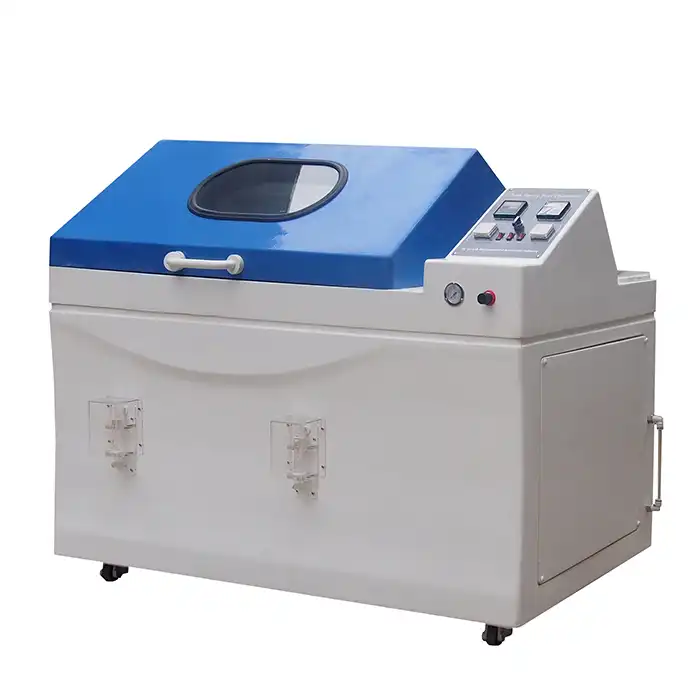
LIB Industry's salt mist test chamber incorporates glass fiber reinforced plastic construction that resists the same corrosive environment it creates. Unlike metal chambers that gradually degrade and contaminate test atmospheres, this non-corrosive material maintains integrity across thousands of test cycles. The system features dual spray towers with quartz nozzles positioned for uniform salt fog distribution across the 110-750 liter test volume. Temperature control via PID systems maintains ±0.5°C stability at the 35°C test standard, while saturated air preheating in a 31-liter barrel ensures consistent humidity delivery. These precision elements eliminate variables that compromise data quality in lesser equipment.
Compliance with International Testing Standards
Testing validity requires adherence to recognized standards - ASTM B117 and ISO 9227 define specific parameters for neutral salt spray evaluation. LIB chambers meet these specifications precisely: 5% sodium chloride solution concentration, continuous or periodic spray capabilities, salt fog deposition rates of 1-2 ml per 80 cm² per hour, and temperature maintenance at 35°C ±2°C. The transparent cover allows sample monitoring without environment disruption, while hydrostatic hood seals prevent salt fog leakage. PT100Ω temperature sensors provide Class A accuracy, ensuring measurements meet metrology standards. This compliance means test results gain acceptance across industries and international markets.
Operational Efficiency and Long-Term Reliability
Beyond technical specifications, practical considerations matter. LIB chambers feature intuitive controls that reduce operator training time and minimize setup errors. Front access to all components simplifies maintenance - cleaning, nozzle replacement, and sensor calibration proceed quickly without specialized tools. The 30-liter solution tank capacity supports extended testing without frequent refilling, while automated safety systems (dry-combustion protection, over-temperature shutdown, water shortage alarms) prevent damage and ensure personnel safety. Three-year warranty coverage and lifetime maintenance support demonstrate manufacturer confidence in reliability. These factors reduce total cost of ownership while maximizing testing throughput.
|
Chamber Model |
Internal Volume |
Internal Dimensions (mm) |
Ideal Application |
|
S-150 |
110 liters |
470 × 590 × 400 |
Small component testing, research labs |
|
S-250 |
320 liters |
640 × 1000 × 500 |
Production quality control, batch testing |
|
S-750 |
410 liters |
750 × 1100 × 500 |
Large assemblies, high-volume testing |
Conclusion
Salt spray testing stands as the cornerstone methodology for evaluating metal and coating durability in corrosive environments. This accelerated technique provides quantifiable, reproducible data that informs material selection, process optimization, and warranty determination. Understanding chloride-driven corrosion mechanisms, coating failure modes, and test-to-field correlations empowers engineers to design products that meet performance expectations throughout their service lives. As industries face increasing pressure to deliver reliable, long-lasting products while controlling costs, salt spray testing delivers the critical intelligence needed for evidence-based decision making.
FAQs
How does salt spray testing differ from real-world outdoor exposure?
Salt spray testing creates a continuously aggressive environment with controlled temperature, humidity, and salt concentration, accelerating corrosion that would occur over years in field conditions. Outdoor exposure includes variable weather, dry periods, and contamination differences that make comparison difficult. Testing provides faster, reproducible results for material comparison, though correlation factors must be applied when predicting actual service life in specific environments.
Can salt spray test results predict performance in non-marine environments?
Salt spray testing primarily evaluates chloride-driven corrosion resistance. While this correlates well with coastal and road-salt environments, industrial atmospheres containing sulfur compounds, acidic rain, or other contaminants may produce different corrosion mechanisms. Manufacturers often supplement salt spray testing with other evaluations - humidity cycling, sulfur dioxide exposure, or UV weathering - to comprehensively assess performance across varied service conditions and environmental challenges.
Why do some materials pass salt spray testing but still corrode in service?
Testing provides accelerated comparative data under specific conditions but cannot replicate every real-world variable. Unexpected galvanic coupling, mechanical damage to coatings, improper installation, or exposure to chemicals not present in salt spray environments can cause field failures. Additionally, some manufacturers optimize coatings specifically for salt spray performance without addressing other durability factors, creating products that test well but underperform in actual applications requiring broader protection.
Ready to enhance your corrosion testing capabilities? LIB Industry, a leading manufacturer and supplier of environmental test equipment, offers precision-engineered salt mist test chambers that deliver accurate, standards-compliant results.
Contact our technical team at ellen@lib-industry.com to discuss your specific testing requirements and discover how our solutions support your quality objectives.