Applications of Water Immersion Tanks in Automotive Testing
Modern vehicles incorporate thousands of electronic components that must withstand harsh environmental conditions, including water exposure from rain, flooding, pressure washing, and road spray. Water immersion tanks serve as critical testing equipment for validating the waterproof integrity of automotive parts before they reach production vehicles. These specialized chambers simulate various water exposure scenarios, enabling manufacturers to identify potential failure points and ensure components meet stringent IPX7 and IPX8 waterproof ratings. Through controlled immersion testing at depths up to 50 meters, automotive engineers can guarantee that sensors, connectors, control modules, and sealed enclosures will perform reliably throughout a vehicle's operational lifetime, preventing costly recalls and enhancing driver safety.
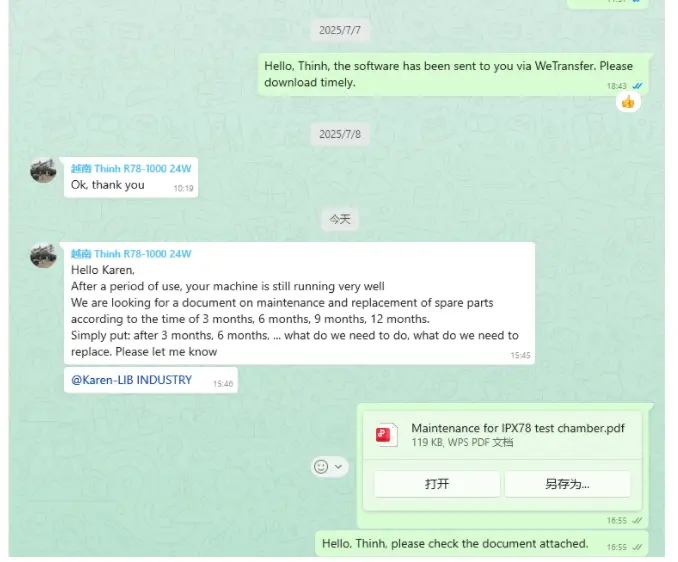
A customer in Vietnam using the LIB industry R78-1000 water immersion test system recently shared their experience with extended operational use. They reported that the equipment consistently delivered stable and accurate immersion testing, reliably verifying sealing performance throughout their production validation. After several months, the client reached out for guidance on preventive maintenance and spare parts planning, demonstrating both their trust in the system and confidence in its long-term reliability. This feedback underscores LIB industry’s dedication to providing durable IPX7 and IPX8 immersion testing solutions that combine dependable performance, easy maintenance support, and effective waterproof validation for manufacturers worldwide.
Why Automotive Components Require Water Resistance Testing?
Protection Against Environmental Hazards
Automotive components face relentless exposure to moisture throughout their service life. Rain penetration through body seams, underbody splash from wet roads, and steam from engine compartments create aggressive environments where unprotected electronics quickly fail. Water immersion testing reveals vulnerabilities in gasket designs, seal placements, and housing geometries that might allow moisture ingress under pressure or prolonged submersion.
Compliance with International Standards
Global automotive suppliers must demonstrate adherence to IP (Ingress Protection) ratings specified by vehicle manufacturers. IPX7 certification requires components to survive immersion in one meter of water for 30 minutes, while IPX8 demands resistance to continuous submersion under manufacturer-specified conditions, often simulating flooding scenarios. Testing in a water immersion tank provides documented evidence of compliance for regulatory approvals and customer specifications.
Preventing Warranty Claims and Field Failures
Electronic failures due to water damage represent a significant portion of automotive warranty expenses. A single compromised connector in a critical system can trigger cascade failures affecting safety features, engine management, or infotainment systems. Comprehensive immersion testing during development phases identifies design weaknesses before mass production, dramatically reducing field failure rates and associated warranty costs.
Common Components Tested: Sensors, Connectors, and Modules

Sensor Arrays and Transducers
Advanced driver assistance systems (ADAS) depend on radar sensors, ultrasonic parking sensors, and camera modules mounted in vulnerable exterior locations. These devices require hermetic sealing to maintain calibration and functionality. Water immersion tanks evaluate sensor housings under pressure conditions that exceed normal service requirements, ensuring backup camera modules, blind-spot detection radar, and rain sensors maintain signal integrity even after temporary submersion.
Electrical Connectors and Wiring Harnesses
Automotive electrical architectures contain hundreds of connectors linking power distribution, data networks, and control signals. Multi-pin connectors under the hood, beneath seats, and in door panels must resist water penetration while maintaining low contact resistance. Immersion testing validates connector seal designs, terminal plating quality, and housing material selections that prevent corrosion and electrical shorts.
Electronic Control Modules
Engine control units (ECUs), transmission control modules (TCMs), and body control computers represent high-value components requiring absolute protection from moisture. These sealed aluminum or plastic enclosures undergo pressure testing in water immersion tanks to verify O-ring compression, housing weld integrity, and connector interface sealing. Testing at pressures equivalent to 50-meter depths simulates extreme conditions far exceeding normal vehicle operation.
Test Parameters for Automotive Water Immersion Testing
  |
 |
 |
Immersion Depth and Duration Settings
|
Test Standard |
Immersion Depth |
Duration |
Application |
|
IPX7 |
1 meter |
30 minutes |
General exterior components |
|
IPX8 (Level 1) |
1.5 meters |
60 minutes |
Underbody-mounted modules |
|
IPX8 (Level 2) |
3 meters |
4 hours |
Fording capability validation |
Automotive specifications often exceed standard IP ratings to account for safety margins and worst-case scenarios. Components installed in wheel wells or rocker panels may require certification to withstand high-pressure water jets combined with submersion, necessitating sequential testing protocols.
Pressure Simulation Capabilities
The R78-600 water immersion tank generates pressures equivalent to 50-meter water depths, far exceeding typical automotive requirements. This capacity allows testing of specialized components for amphibious vehicles, submersible equipment compartments, and military applications. Programmable pressure profiles simulate gradual submersion, sudden immersion shock, and sustained pressure exposure to reveal time-dependent seal failures.
Temperature and Water Chemistry Variables
Real-world water exposure involves varied temperatures and contamination levels. Testing protocols incorporate heated water for tropical climate simulation, near-freezing temperatures for cold-weather performance validation, and saltwater solutions for corrosion assessment. The automated water supply system in industrial immersion tanks maintains consistent water quality and temperature throughout extended test cycles.
Simulating Real-World Conditions in Water Tanks
Dynamic Pressure Cycling
Static immersion represents only one aspect of moisture exposure. Vehicles experience dynamic water pressure changes during acceleration through puddles, pressure washing, and driving through flooded areas. Advanced testing sequences program the pneumatic lid system to create controlled pressure fluctuations, simulating the hydraulic shock of water impact and the pressure variations encountered during fording operations.
Combined Environmental Stressing
|
Environmental Factor |
Test Combination |
Validation Purpose |
|
Temperature + Immersion |
-40°C to +85°C cycling with submersion |
Seal material expansion/contraction |
|
Vibration + Pressure |
Shake table testing during immersion |
Connector retention under movement |
|
Aging + Water Exposure |
UV pre-conditioning followed by immersion |
Long-term seal degradation |
Automotive components endure multiple stressors simultaneously. Sequential testing protocols expose samples to thermal cycling, mechanical vibration, and chemical exposure before immersion testing, revealing degradation mechanisms that single-factor testing might miss.
Post-Test Functional Verification
Water resistance means maintaining operational performance, not merely excluding visible moisture. Testing protocols include electrical continuity measurements during immersion using specialized feedthroughs in the tank wall. The Ethernet connection and USB data download capabilities of modern water immersion tanks enable real-time monitoring of sensor outputs, resistance measurements, and functional status throughout submersion cycles.
Interpreting Test Data for Vehicle Component Reliability
Leak Detection Methodologies
Visual inspection after immersion provides initial pass/fail assessment, but sophisticated analysis requires quantitative measurements. Helium leak testing following water immersion detects microscopic seal defects that slowly accumulate moisture. Desiccant humidity indicators placed inside sealed housings reveal moisture penetration levels. The programmable touch screen controller records pressure decay rates that indicate seal integrity degradation.
Statistical Analysis of Failure Modes
|
Failure Mode |
Typical Occurrence |
Root Cause |
Design Correction |
|
Connector seal extrusion |
15-25 minutes immersion |
Improper compression |
Seal geometry revision |
|
Housing crack propagation |
Pressure cycling >30 bar |
Material brittleness |
Polymer grade change |
|
Adhesive delamination |
Temperature extremes |
Coefficient mismatch |
Adhesive formulation |
Analyzing failure patterns across sample populations identifies systematic design weaknesses versus random manufacturing defects. Accelerated testing protocols using elevated pressures and extended durations predict field performance over 10-15 year vehicle lifespans.
Correlation with Field Performance Data
Water immersion test results gain validation through comparison with warranty claim data and field failure reports. Components passing rigorous tank testing but experiencing field failures indicate gaps in test protocols, suggesting additional environmental factors require simulation. Conversely, components with marginal test performance but excellent field reliability may indicate overly conservative testing, allowing design optimization for cost reduction.
Reducing Field Failures Through Controlled Water Immersion Tests
Early Design Validation
Incorporating immersion testing during prototyping stages reveals design flaws before tooling investment. Rapid iteration using the 600mm diameter, 1500mm height cylindrical chamber accommodates various component sizes for parallel testing. The A3 steel plate construction with 15mm wall thickness ensures repeatable test conditions across development cycles, providing consistent data for design comparison.
Supplier Quality Assurance Programs
Automotive OEMs require component suppliers to demonstrate water resistance compliance through third-party testing or witnessed validation. The storage water tank and automatic water supply system enable unattended testing of large sample quantities for incoming inspection programs. Documented test data from the programmable controller provides traceability for quality management systems and regulatory audits.
Production Process Optimization
Manufacturing variations in seal installation torque, adhesive cure conditions, and housing weld parameters affect water resistance. Periodic production sampling using immersion tanks identifies process drift before defective components reach vehicle assembly. Statistical process control charts tracking immersion test pass rates guide preventive maintenance schedules and operator training requirements.
Robust Automotive Component Testing with LIB Industry Water Immersion Tanks
 |
|
|
Model |
R78-600 |
|
Internal Dimension (mm) |
Diameter 600mm * Height 1500 mm |
|
Overall Dimension (mm) |
Diameter 800mm * Height 1800 mm |
|
Pressure |
50m water depth pressure |
|
Open mode |
Pneumatic lid |
|
Material |
A3 steel plate, wall thickness 15mm |
|
Controller |
Programmable color LCD touch screen controller, Ethernet connection |
|
Water Supply System |
Storage water tank, Automatic water supply |
 |
 |
| Test Area | Footstand |
 |
 |
| Control Panel | Safety Lock |
Advanced Control Systems
LIB Industry's water immersion tank features a programmable color LCD touch screen controller with Ethernet connectivity, enabling remote test monitoring and data integration with laboratory information management systems. The pneumatic lid operation ensures operator safety during high-pressure testing, while the 304 stainless steel hydraulic rod with mirror-finish surfaces resists corrosion from extended water exposure and chemical additives.
Customization Capabilities
Automotive testing requirements vary across manufacturers, component types, and regional specifications. LIB Industry provides tailored solutions including custom sample fixtures, multi-station testing configurations for parallel evaluation, and specialized pressure profiling for unique validation protocols. The tripod-supported cylindrical design accommodates facility floor loading constraints while maintaining structural integrity during 50-meter equivalent pressure testing.
Comprehensive Support Infrastructure
Beyond equipment supply, LIB Industry delivers turn-key solutions encompassing installation, operator training, and calibration services. Technical support includes test method development assistance, failure analysis consultation, and periodic verification testing to maintain measurement accuracy. This comprehensive approach ensures automotive laboratories achieve reliable, repeatable results that withstand customer audits and regulatory scrutiny.
Conclusion
Water immersion tanks represent indispensable tools for automotive component validation, providing controlled environments that simulate years of moisture exposure in accelerated test cycles. By identifying seal deficiencies, connector vulnerabilities, and housing weaknesses before production, manufacturers protect brand reputation, reduce warranty expenses, and enhance vehicle reliability. As automotive electrification intensifies and autonomous systems proliferate, water resistance testing becomes increasingly critical for ensuring electronic component longevity in demanding environmental conditions.
FAQ
What is the difference between IPX7 and IPX8 testing for automotive components?
IPX7 requires components to withstand immersion in one meter of water for 30 minutes without water ingress. IPX8 involves continuous submersion under manufacturer-specified conditions, typically deeper depths and longer durations, simulating extreme flooding scenarios beyond standard IPX7 requirements.
How does pressure testing in water immersion tanks prevent automotive component failures?
Pressure testing simulates hydraulic forces experienced during vehicle fording, pressure washing, and deep-water exposure. By applying pressures equivalent to 50-meter depths, testing reveals seal compression failures, housing deformation, and connector leakage that might not appear during atmospheric-pressure immersion alone.
Can water immersion tanks test multiple automotive components simultaneously?
Modern immersion tanks with 600mm diameter chambers accommodate multiple samples using custom fixture racks. Parallel testing increases throughput while maintaining consistent environmental conditions across all specimens, enabling efficient supplier qualification and production sampling programs for high-volume automotive manufacturing.
Partner with LIB Industry for Your Automotive Testing Needs
As a leading water immersion tank manufacturer and supplier, we deliver precision-engineered testing solutions backed by comprehensive technical support. Contact our team at ellen@lib-industry.com to discuss customized immersion testing equipment for your automotive component validation requirements.