Applications of Rain Test Chambers in Outdoor Electronics Testing
Rain test chambers play a pivotal role in validating the weatherproofing capabilities of outdoor electronics before market deployment. These specialized environmental testing systems simulate various precipitation conditions - from gentle drizzle to wind-driven storms - enabling manufacturers to identify vulnerabilities in seals, housings, and component protection. By subjecting devices to controlled rainfall scenarios that mirror real-world exposure, engineers can assess water ingress resistance, verify IP ratings, and ensure long-term reliability. The MIL STD 810 G rain test chamber offers standardized testing protocols that replicate extreme environmental conditions, providing quantifiable data on product durability and helping manufacturers meet regulatory requirements while reducing costly field failures.
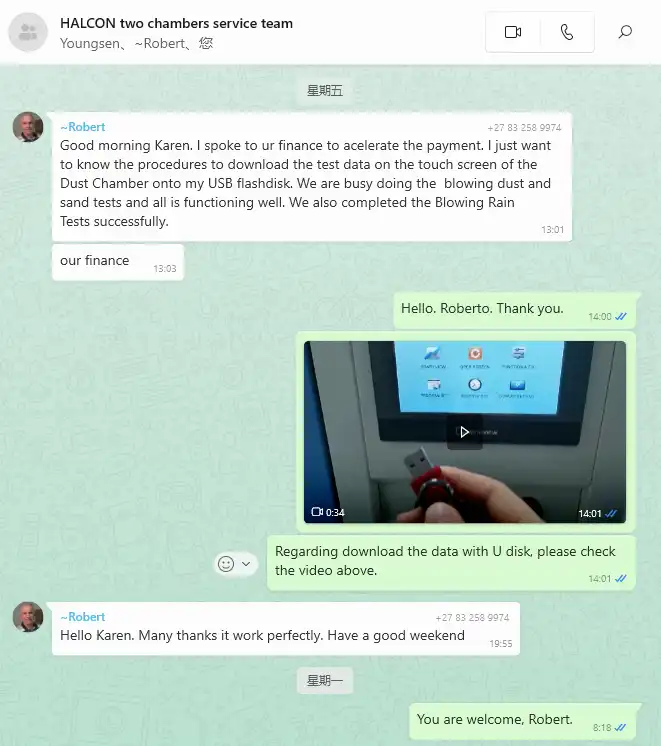
Customers have shared positive experiences with LIB industry rain test chambers, noting how smoothly their testing runs even under busy schedules with multiple environmental simulations. Engineers appreciate the intuitive touch-screen interface, which makes accessing test data straightforward, while LIB industry’s support team is praised for being responsive and helpful whenever guidance is needed. This seamless combination of reliable performance and attentive service gives manufacturers confidence that their devices are being accurately tested and that any questions along the way will be promptly addressed.
How Rain Exposure Impacts Outdoor Electronic Devices?
Corrosion Mechanisms in Electronic Components
Water penetration initiates electrochemical reactions on circuit boards and metal contacts, creating oxidation pathways that degrade conductivity. Even minute moisture accumulation can establish galvanic cells between dissimilar metals, accelerating material breakdown. Solder joints become particularly vulnerable as water acts as an electrolyte, facilitating ion migration that weakens structural integrity and electrical connections.
Signal Degradation from Water Infiltration
Moisture intrusion into connectors and cable assemblies increases impedance and introduces signal attenuation. Water droplets on antenna surfaces alter radiation patterns and reduce transmission efficiency. High-frequency circuits experience significant performance losses as dielectric properties change with water absorption, compromising data integrity and communication reliability.
Thermal Cycling Effects During Wet Conditions
Temperature fluctuations combined with moisture create expansion-contraction stress cycles that compromise protective seals. Condensation forms inside enclosures when ambient temperatures drop, creating internal humidity that persists long after external rainfall ceases. This trapped moisture accelerates aging processes and can cause catastrophic failures in power management circuits.
Common Outdoor Electronics Vulnerabilities to Moisture
Seal and Gasket Deterioration
Rubber gaskets and O-rings undergo aging when exposed to UV radiation and temperature extremes, losing elasticity and creating microscopic gaps. Compression set - the permanent deformation after prolonged sealing force - reduces the effectiveness of weatherproofing barriers. Testing reveals that gasket materials require periodic evaluation, as manufacturers often discover seal failures occurring well before anticipated product lifespans.
Connector Port Weaknesses
USB ports, ethernet jacks, and power connectors represent critical ingress points for moisture. Thread engagement depth, cap retention force, and mating interface geometry all influence water resistance. Capillary action can draw water along cable exteriors into connector bodies, bypassing surface-level protective measures and reaching sensitive electronics through backdoor pathways.
Display and Lens Fogging Issues
Optical components face unique challenges as water vapor condenses on interior glass surfaces, obscuring visibility. Anti-fog coatings degrade over time, and pressure equalization vents - necessary for preventing pressure differential damage - can inadvertently allow moisture entry, a vulnerability often evaluated in a blowing rain test chamber under wind-driven precipitation conditions. Temperature differentials between display backlighting and ambient air exacerbate condensation formation, particularly during rapid weather transitions.
Designing Rain Test Profiles for Outdoor Applications
Matching Environmental Exposure Patterns
Geographic deployment locations dictate specific testing requirements. Tropical regions demand high-intensity rainfall simulation with temperatures approaching 55°C, while temperate zones require testing across broader temperature ranges with lower rainfall rates. Historical weather data informs test duration and intensity, ensuring validation matches decades-long exposure expectations compressed into accelerated testing timeframes.
Wind-Driven Rain Simulation Requirements
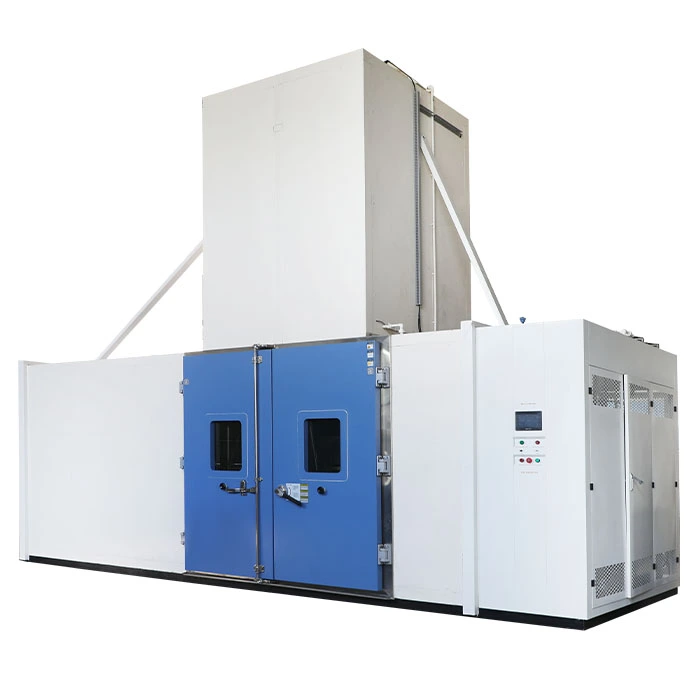
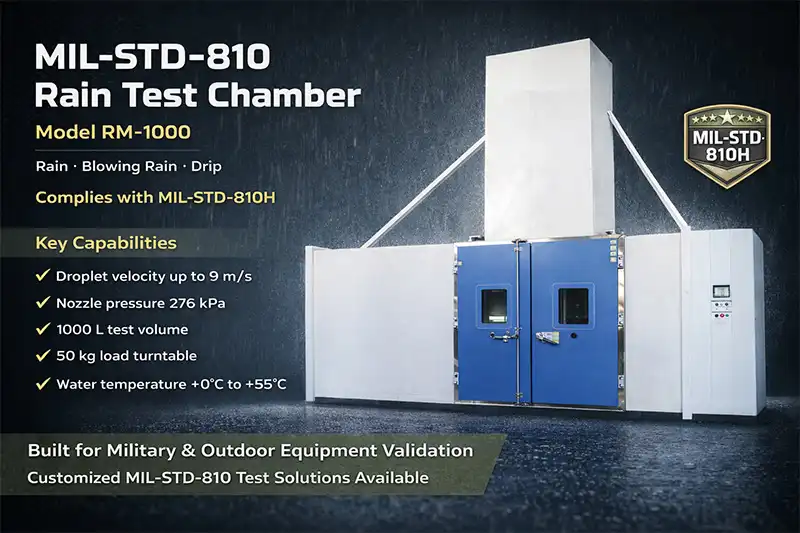
The MIL STD 810 G rain test chamber incorporates blower systems generating wind speeds up to 18 m/s, replicating horizontal rain impact on vertical surfaces. This capability proves essential for evaluating building-mounted equipment, outdoor cameras, and communication infrastructure. Droplet velocity reaching 9 m/s on test specimens simulates storm conditions that reveal vulnerabilities invisible during static water exposure.
Exaggerated Testing for Margin Validation
Procedure II testing employs nozzle pressures of 276 kPa and rainfall rates of 20.8 L/min, exceeding natural precipitation extremes. This exaggerated approach identifies design margins and exposes marginal sealing that might survive typical conditions but fail during extreme weather events. One nozzle per 0.56 m² of surface area positioned 48 cm from test specimens ensures comprehensive coverage without creating unrealistic local flooding.
|
Test Procedure |
Rainfall Rate |
Wind Speed |
Primary Application |
|
Procedure I (Rain and Blowing Rain) |
≥1.7 mm/min |
Up to 18 m/s |
General outdoor equipment |
|
Procedure II (Exaggerated Rain) |
20.8 L/min |
Variable |
High-reliability critical systems |
|
Procedure III (Drip) |
≥280 L/m²/h |
None |
Overhead-mounted devices |
Monitoring Performance of Sensors, Displays, and Housings
Real-Time Electrical Continuity Verification
During testing, continuous monitoring circuits detect resistance changes indicating water penetration before visible damage occurs. Strategically placed moisture sensors inside enclosures provide early warning of seal breaches. Current leakage measurements on powered circuits reveal insulation degradation, enabling immediate test termination to preserve failure evidence for root cause analysis.
Optical Performance Degradation Assessment
Illuminance meters quantify light transmission losses through fogged lenses and display covers. Camera systems undergo image quality analysis, measuring contrast reduction and resolution degradation during and after water exposure. Infrared thermography identifies temperature anomalies suggesting moisture accumulation in specific enclosure regions, guiding design refinement efforts.
Mechanical Integrity Evaluation
Dimensional measurements before and after testing reveal housing deformation from water pressure or thermal stress. Force-displacement curves for buttons and switches detect performance changes from moisture absorption in mechanical components. Rotation turntables operating at 1-7 rpm ensure all surfaces experience equivalent exposure, preventing localized testing artifacts that misrepresent product capabilities.
Mitigating Water-Induced Failures in Electronics
Conformal Coating Application Strategies
Acrylic, silicone, and urethane coatings provide direct circuit board protection, though material selection depends on operating temperature ranges and chemical exposure. In applications requiring environmental validation, coated assemblies may be evaluated using a blowing rain test machine to verify resistance against wind-driven moisture intrusion. Coating thickness critically affects performance - insufficient coverage leaves vulnerabilities while excessive application creates stress concentrations during thermal cycling. Automated dispensing systems ensure uniform thickness across component topography, maintaining protection without compromising heat dissipation.
Advanced Sealing Technologies
Ultrasonic welding creates molecular bonds between thermoplastic housings, eliminating mechanical fasteners that create potential leak paths. Laser welding offers precision for complex geometries, though material compatibility limits applications. Overmolded gaskets integrate sealing elements directly into plastic components, reducing assembly steps and improving consistency compared to discrete gasket installations.
Pressure Equalization Without Moisture Entry
Gore-Tex vents and similar breathable membranes allow air passage while blocking liquid water, preventing pressure differential damage during altitude or temperature changes. Strategic vent placement considers internal air circulation patterns and condensation accumulation zones. Proper integration requires balancing pressure equalization rates against moisture exclusion performance across operating temperature ranges.
|
Protection Method |
Effectiveness |
Cost Impact |
Maintenance Requirements |
|
Conformal Coating |
High for PCBs |
Low |
Reapplication after repairs |
|
Ultrasonic Welding |
Very High |
Medium |
None (permanent seal) |
|
O-Ring Seals |
Moderate-High |
Low |
Periodic replacement |
|
Gore-Tex Vents |
High |
Medium |
Inspection for contamination |
Enhancing Product Lifespan Through Controlled Rain Testing
Accelerated Life Testing Methodologies
Compressed testing schedules simulate years of environmental exposure within weeks through elevated stress levels. The 0-999 minute adjustable test duration capability enables customized aging profiles matching anticipated product lifecycles. Cycling between wet and dry conditions with controlled heating - water temperature adjustable to +10°C above ambient, maximum 55°C - replicates diurnal patterns that stress materials differently than continuous exposure.
Failure Mode Identification and Prevention
Systematic testing reveals failure mechanisms before mass production, enabling design corrections at minimal cost. Statistical analysis of multiple test specimens identifies manufacturing process variations affecting water resistance. Failure documentation creates institutional knowledge preventing recurrence of resolved issues in subsequent product generations.
Design Validation Across Product Variants
Platform-based product lines benefit from testing representative configurations, establishing baseline performance expectations. Component substitutions - different display suppliers, alternative connector manufacturers - require revalidation to ensure equivalent water resistance. The 1000L chamber volume accommodates full-scale assemblies, eliminating uncertainties from component-level testing that may not predict system-level performance.
Verify Electronics Weatherproofing with LIB Industry MIL STD 810 G Rain Test Chambers
|
|
|
|
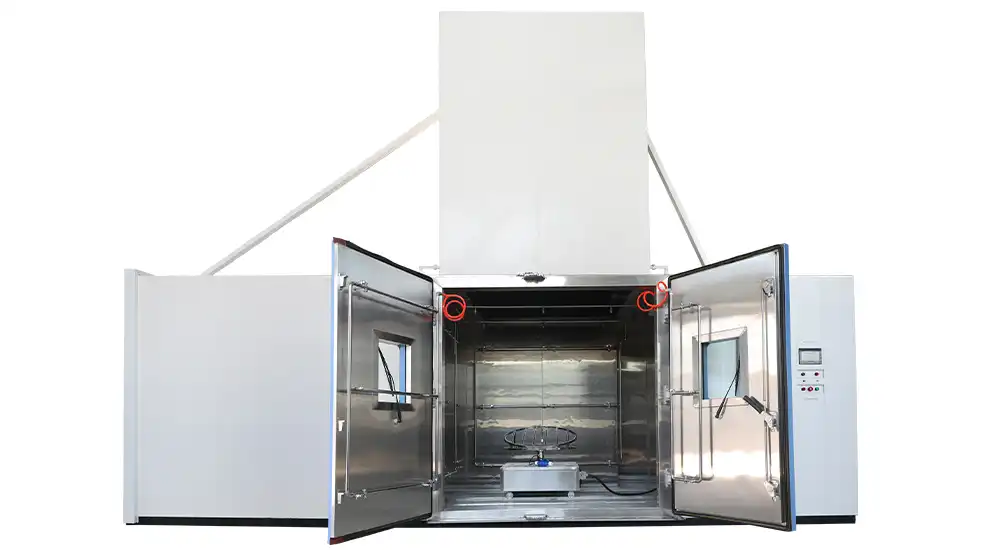
Model: RIM-1000 Interior Volume: 1000 L Turntable Load: 50 kg Turntable Diameter: 800 mm Door Lock: Electromagnetic lock Interior Material: SUS304 stainless steel Test Standard: MIL-STD-810H Test Time: 0 – 999 min, adjustable |
|
|
Rain & Blowing Rain Final Rain Droplet Velocity: 9 m/s on test item Rainfall Rate≥ 1.7 mm/min Droplet Size: 0.5 – 4.5 mm Water Temperature: +10°C to max. +55°C |
|
|
Drip Drip Area Dimensions: 1600 × 1000 mm, height adjustable Drip Hole Diameter: 20 – 25.4 mm Distance Between Holes: 25 mm Water Volume: ≥ 280 L/m²/h Water Temperature: +10°C to max. +55°C |
|
|
Exaggerated Rain Nozzle Pressure: 276 kPa Rainfall Rate: 20.8 L/min Nozzle Arrangement: One nozzle per 0.56 m² of surface area, approx. 48 cm from test surface Droplet Size:0.5 – 4.5 mm |
|
Comprehensive Testing Capability Integration
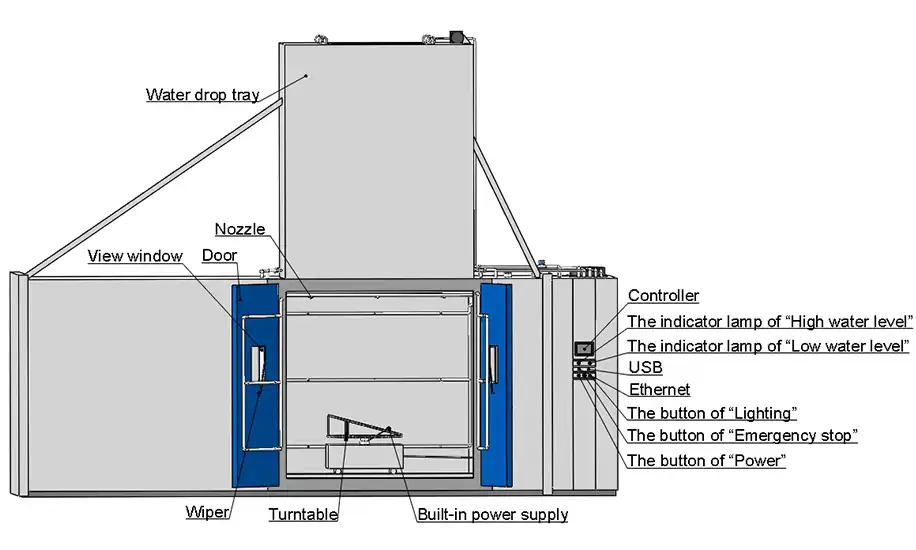
The RIM-1000 model features internal dimensions of 1000×1000×1000 mm, accommodating substantial test articles while maintaining precise environmental control. The 800 mm diameter turntable supports 50 kg payloads, enabling testing of complete outdoor installations including mounting hardware. 304 stainless steel construction throughout the MIL STD 810 G rain test chamber resists corrosion from continuous water exposure, ensuring measurement accuracy over decades of operation.
Precision Water Delivery Systems
Specialized shower nozzles produce droplet sizes ranging from 0.5 mm to 4.5 mm diameter, matching natural rainfall distributions specified in MIL-STD-810H. Integrated flow meters and rain gauges provide closed-loop feedback maintaining rainfall rates within ±5% of setpoints. The drip tray system with 20-25.4 mm holes spaced at 25 mm intervals delivers ≥280 L/m²/h for Procedure III testing, covering a 1600×1000 mm adjustable-height area.
Global Support Network and Calibration Assurance
CNAS/ILAC traceable calibration certificates accompany each chamber, documenting measurement uncertainty and ensuring regulatory compliance. LIB Industry's partnerships with Apple, IBM, Amazon, Intel, SGS, TUV, and Mercedes-Benz since 2009 demonstrate proven reliability in demanding applications. Service centers in Malaysia, Canada, the United Kingdom, and United States provide localized technical support with rapid response times for maintenance and operational assistance.
|
Specification |
Value |
Testing Standard |
|
Final Droplet Velocity |
9 m/s |
MIL-STD-810H Procedure |
|
Rainfall Rate (Standard) |
≥1.7 mm/min |
MIL-STD-810H Procedure I |
|
Rainfall Rate (Exaggerated) |
20.8 L/min |
MIL-STD-810H Procedure II |
|
Nozzle Pressure |
276 kPa |
MIL-STD-810H Procedure II |
|
Water Temperature Range |
Ambient +10°C (max 55°C) |
MIL-STD-810H |
Conclusion
Rain test chambers serve as indispensable tools for outdoor electronics manufacturers seeking to validate weatherproofing before field deployment. Through systematic evaluation using standardized protocols like MIL-STD-810H, engineers identify design vulnerabilities, optimize sealing strategies, and ensure long-term reliability. The controlled testing environment reveals failure modes that would otherwise manifest as costly warranty claims and brand reputation damage. Investing in comprehensive rain testing ultimately reduces development cycles while delivering products that withstand decades of environmental exposure.
FAQ
What is the difference between IP rating water tests and MIL-STD-810 rain testing?
IP ratings evaluate static water resistance at specific angles and pressures, while MIL-STD-810 simulates dynamic environmental conditions including wind-driven rain, temperature variations, and extended exposure durations. Military standards provide more comprehensive validation for products facing harsh outdoor environments requiring proven long-term reliability beyond basic ingress protection certifications.
How long should outdoor electronics undergo rain chamber testing?
Testing duration depends on anticipated product lifespan and deployment environment severity. Typical protocols range from 30 minutes for basic water resistance to 24-hour cycles for critical infrastructure components. Accelerated testing with exaggerated conditions compresses years of exposure into manageable timeframes while maintaining correlation to real-world performance through validated acceleration factors.
Can rain test chambers identify condensation issues inside sealed enclosures?
Advanced chambers incorporate temperature control allowing test specimens to be heated relative to water temperature, simulating conditions that generate internal condensation. Monitoring internal humidity sensors and visual inspection through transparent windows detect fogging and moisture accumulation. Post-test teardown reveals hidden moisture pathways that external observation alone cannot identify.
Contact LIB Industry for Rain Test Chamber Solutions
LIB Industry, a leading environmental test chamber manufacturer, delivers turn-key solutions from design through installation and training. Our global service network ensures your testing requirements are met with precision and reliability. Contact our team at ellen@lib-industry.com to discuss your outdoor electronics testing needs.