Boost Cosmetic Stability with Small Climatic Chamber Testing
Environmental testing chambers revolutionize how cosmetic manufacturers validate product stability and shelf-life predictions. A small climatic chamber simulates diverse temperature and humidity conditions that cosmetics encounter during storage, transportation, and consumer use. These compact testing solutions enable formulators to identify potential stability issues - such as phase separation, color changes, viscosity shifts, and microbial growth - before products reach market shelves. By exposing formulations to accelerated stress conditions, manufacturers can predict long-term performance within weeks rather than waiting years for real-time data. This proactive approach safeguards brand reputation, ensures regulatory compliance, and delivers consistent quality that consumers expect from premium cosmetic products.
This feedback highlights a customer’s experience using our compact climatic chambers for real-world electronic product testing. Their satisfaction underscores the reliability, precision, and consistent performance of our solutions, instilling confidence in manufacturers across automotive, aerospace, telecommunications, and consumer electronics industries.

How Temperature and Humidity Affect Cosmetic Formulations?
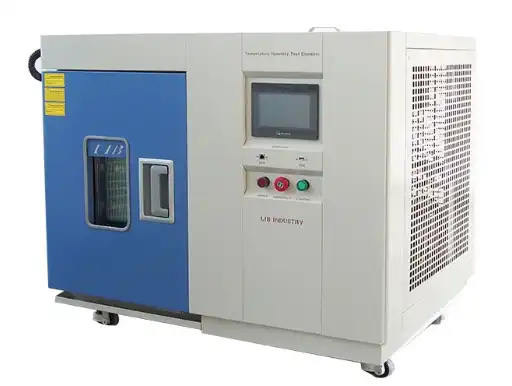 Understanding environmental impacts on cosmetic stability forms the foundation of effective product development and quality assurance strategies.
Temperature-Induced Phase Separation in Emulsions
Emulsion-based cosmetics like creams and lotions contain oil and water phases stabilized by emulsifiers. Temperature fluctuations weaken these molecular bonds, causing visible separation. Cold conditions increase viscosity and may crystallize certain oils, while heat accelerates chemical degradation and reduces emulsion stability. Testing across temperature ranges reveals formulation weaknesses before consumer complaints arise.
Humidity's Role in Microbial Proliferation
High humidity environments create ideal conditions for bacterial and fungal contamination, particularly in water-based formulations. Moisture ingress through packaging compromises preservative systems, reducing product safety. Conversely, low humidity conditions can cause moisture loss from products, altering texture and efficacy. Controlled humidity testing validates preservative effectiveness and packaging integrity.
Oxidative Degradation Under Heat Stress
Elevated temperatures accelerate oxidation reactions in cosmetic ingredients, particularly oils, fragrances, and active compounds. This chemical breakdown manifests as rancid odors, discoloration, and reduced therapeutic benefits. Antioxidant systems require validation under realistic thermal stress to ensure adequate protection throughout the product lifecycle.
Standard Test Profiles for Stability Evaluation in Cosmetics
Regulatory bodies and industry organizations establish specific testing protocols that ensure consistent evaluation methods across the cosmetics sector, often conducted in a small environmental test chamber to maintain controlled and repeatable conditions.
ICH Guidelines Adapted for Cosmetics
While originally designed for pharmaceuticals, International Council for Harmonisation (ICH) guidelines provide valuable frameworks for cosmetic stability testing. The Q1A guideline recommends storage at 25°C/60% RH for long-term studies and 40°C/75% RH for accelerated testing. These conditions predict shelf-life and identify degradation pathways efficiently.
Cyclic Temperature Testing Protocols
Real-world storage rarely maintains constant conditions. Cyclic testing alternates between temperature extremes to simulate seasonal variations and transportation scenarios. A typical protocol cycles between -20°C and +50°C over 24-hour periods, repeated for 30 cycles. This rigorous evaluation exposes vulnerabilities that static testing might miss.
Freeze-Thaw Cycle Requirements
Products distributed in cold climates must withstand repeated freezing without permanent damage. Freeze-thaw testing typically involves five cycles between -10°C and +25°C, with extended hold times at each extreme. Successful formulations return to original consistency and appearance after thawing, indicating robust emulsion systems.
Accelerated Aging Studies Using Climatic Chambers
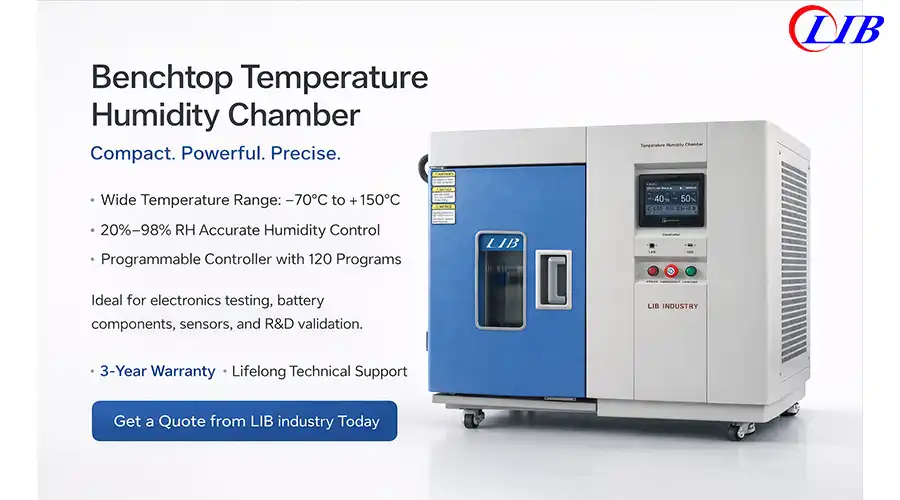
Time-compressed testing methodologies allow rapid shelf-life predictions without compromising accuracy or reliability.
Arrhenius Equation Applications
The Arrhenius relationship establishes mathematical connections between temperature and reaction rates. Each 10°C temperature increase approximately doubles chemical reaction speeds. By testing at elevated temperatures, formulators calculate equivalent aging at room temperature. A three-month study at 40°C approximates two years at typical storage conditions.
Real-Time Versus Accelerated Comparison
Parallel testing strategies combine accelerated conditions with real-time monitoring to validate predictive models. Samples stored at 25°C/60% RH provide baseline data, while identical batches at 40°C/75% RH generate accelerated results. Correlation between datasets confirms prediction accuracy and establishes confidence intervals for shelf-life claims.
Challenge Testing for Preservative Efficacy
Accelerated microbial challenge tests evaluate preservative system performance under stress. Samples inoculated with specific bacterial and fungal strains undergo incubation at 30-35°C in a small humidity chamber to maintain controlled environmental conditions. Growth inhibition demonstrates adequate preservation, while proliferation indicates formulation weaknesses requiring reformulation.
|
Test Condition |
Temperature |
Humidity |
Duration |
Purpose |
|
Long-term stability |
25°C |
60% RH |
12-36 months |
Real-time aging baseline |
|
Accelerated stability |
40°C |
75% RH |
3-6 months |
Rapid shelf-life prediction |
|
Stress testing |
50°C |
75% RH |
1-3 months |
Identify degradation pathways |
|
Freeze-thaw |
-10°C to +25°C |
Ambient |
5 cycles |
Cold climate suitability |
Evaluating Packaging and Product Interactions Under Environmental Stress
Container materials significantly influence product stability through chemical interactions and barrier properties that require thorough evaluation.
Material Compatibility Under Temperature Extremes
Plastic containers expand and contract with temperature changes, potentially causing leakage or contamination. Glass packaging remains dimensionally stable but may crack under thermal shock. Testing various packaging materials under temperature cycling identifies optimal container choices for specific formulations and distribution channels.
Moisture Vapor Transmission Rate Testing
Packaging barrier properties determine how quickly products lose or gain moisture. High moisture vapor transmission rates (MVTR) allow water evaporation from products or humidity ingress from environment. Testing MVTR under various humidity conditions ensures packaging maintains product integrity throughout shelf-life expectations.
Chemical Migration Between Product and Container
Certain formulation ingredients extract plasticizers, stabilizers, or colorants from packaging materials, causing contamination and structural weakening. Extended storage at elevated temperatures accelerates migration, revealing incompatibilities. Gas chromatography-mass spectrometry (GC-MS) analysis identifies migrated compounds and guides packaging selection.
Data Interpretation for Cosmetic Shelf-Life Prediction
Converting raw testing data into actionable shelf-life determinations requires statistical analysis and regulatory expertise.
Critical Quality Attribute Identification
Manufacturers establish specific parameters that define product acceptability - color specifications, pH ranges, viscosity limits, and microbial counts. Monitoring these critical quality attributes (CQAs) throughout testing reveals which properties degrade fastest, establishing shelf-life limitations.
Statistical Modeling for Degradation Kinetics
Zero-order, first-order, and Arrhenius kinetic models describe different degradation patterns. Plotting CQA changes over time identifies applicable models. Extrapolating these mathematical relationships predicts when products exceed acceptable limits, establishing defensible shelf-life claims.
Safety Margin Incorporation
Conservative shelf-life declarations account for manufacturing variability, distribution uncertainties, and consumer storage habits. Applying 0.8 or 0.9 multiplication factors to calculated shelf-life provides safety margins. This approach ensures products remain within specifications even under suboptimal handling conditions.
|
Parameter |
Specification Range |
Test Frequency |
Failure Criteria |
|
pH |
5.0-7.0 |
Weekly |
Outside ±0.3 units |
|
Viscosity |
8,000-12,000 cPs |
Bi-weekly |
±20% from initial |
|
Color (ΔE) |
<2.0 |
Monthly |
Visible change ΔE >3.0 |
|
Microbial count |
<100 CFU/g |
Monthly |
>1000 CFU/g |
|
Preservative level |
>90% of initial |
Monthly |
<80% of initial |
Optimizing Cosmetic Formulations Through Controlled Environmental Testing
Iterative testing cycles drive formulation improvements that enhance stability, performance, and consumer satisfaction.
Emulsifier System Refinement
Comparing multiple emulsifier blends under identical stress conditions identifies superior stabilization systems. Testing various hydrophilic-lipophilic balance (HLB) values and concentrations reveals optimal combinations. Mini thermal chambers enable parallel testing of numerous formulation variants efficiently.
Antioxidant Selection and Optimization
Natural and synthetic antioxidants offer varying protection levels against oxidative degradation. Testing formulations containing different antioxidant systems at elevated temperatures quantifies protective efficacy. Synergistic combinations often outperform single antioxidants, requiring systematic evaluation.
Preservative System Development
Broad-spectrum preservation requires careful preservative selection and concentration optimization. Challenge testing under accelerated conditions validates microbial protection across pH ranges and formulation types. Adjusting preservative boosters and chelating agents enhances system robustness.
|
Chamber Model |
Internal Volume |
Temperature Range |
Humidity Range |
Ideal Applications |
|
TH-50 |
50L |
-20°C to +150°C |
20-98% RH |
Small-batch formulation testing |
|
TH-80 |
80L |
-40°C to +150°C |
20-98% RH |
Multiple sample parallel testing |
Ensure Product Stability with LIB Industry Small Climatic Chambers
|
Parameter |
Typical Range |
Critical Impact |
|
Temperature Range |
-40°C to +150°C |
Validates operation across consumer, industrial, military specifications |
|
Humidity Control |
20% to 98% RH |
Simulates coastal, tropical, and controlled storage environments |
|
Ramp Rate |
1-5°C/min |
Controls thermal shock severity and stress accumulation speed |
|
Temperature Uniformity |
±0.5°C |
Ensures consistent exposure across multiple test samples |
|
Recovery Time |
<30 minutes |
Maximizes testing throughput and reduces cycle duration |
  |
  |
|
Temperature Setpoint Accuracy and Stability
Professional-grade environmental testing equipment provides the precision and reliability that cosmetic manufacturers require for comprehensive stability programs.
Compact Design for Space-Constrained Laboratories
Modern formulation laboratories often operate within limited floor space. The TH-50 model occupies minimal area while delivering full testing capabilities. Its 320×350×450mm internal chamber accommodates multiple sample sets simultaneously, maximizing testing efficiency without sacrificing workspace.
Precision Control for Reproducible Results
Advanced PID algorithms maintain temperature stability within ±0.5°C and humidity within ±2.5% RH. PT100 Class A sensors deliver 0.001°C resolution, ensuring consistent conditions throughout testing cycles. Centrifugal fans guarantee uniform air circulation, eliminating hot spots or humidity gradients that compromise data quality.
Programmable Touch Screen Interface
Intuitive controllers simplify complex testing protocol setup. Users program multi-step temperature and humidity profiles, including ramp rates, hold times, and cycle repetitions. Ethernet connectivity enables remote monitoring and data logging, facilitating compliance documentation and trend analysis across multiple test batches.

Conclusion
Environmental testing chambers serve as indispensable tools for cosmetic manufacturers committed to delivering stable, safe, and effective products. Small climatic chambers provide accessible stability testing capabilities that predict long-term performance through accelerated methodologies. Understanding temperature and humidity impacts, implementing standard testing protocols, and interpreting data accurately transform raw testing results into actionable formulation improvements. Investment in professional-grade testing equipment protects brand reputation, ensures regulatory compliance, and ultimately delivers superior products that meet consumer expectations throughout their intended shelf-life.
FAQ
What temperature range should I use for cosmetic stability testing?
Long-term studies typically use 25°C/60% RH, while accelerated testing employs 40°C/75% RH. Stress testing at 50°C identifies degradation pathways. The specific range depends on your product's intended market climate and distribution conditions.
How long should accelerated stability studies run for cosmetics?
Accelerated studies generally run 3-6 months at elevated conditions (40°C/75% RH). This timeframe provides sufficient data for shelf-life extrapolation using Arrhenius calculations, predicting 2-3 years of real-time aging equivalency.
Can small climatic chambers test multiple formulations simultaneously?
Absolutely. The TH-50 and TH-80 models feature adjustable shelving supporting up to 50kg per level. This capacity accommodates numerous samples, enabling parallel comparison testing of formulation variants under identical environmental conditions.
Ready to enhance your cosmetic stability testing program? LIB Industry, a leading manufacturer and supplier of small climatic chamber, provides comprehensive solutions tailored to cosmetic testing requirements. Contact our team at ellen@lib-industry.com to discuss how our small climatic chambers can elevate your quality assurance processes.