EV Battery Enclosure Testing via Salt Spray Equipment
EV battery enclosures act as the critical barrier between high-voltage cells and the outside world. Road salt, coastal aerosol, and de-icing chemicals relentlessly attack these housings, threatening both structural integrity and electrical insulation. Salt spray test equipment replicates aggressive saline environments inside a controlled chamber, compressing months of real-world corrosion into measurable hours of accelerated data. By subjecting enclosure materials, welds, seals, and coatings to a regulated salt mist at precise temperature and humidity, engineers pinpoint vulnerabilities well before production. This testing method remains indispensable for automakers who must certify that battery housings withstand the harshest climate scenarios - protecting passengers and preserving the long-term viability of every electric vehicle on the road.
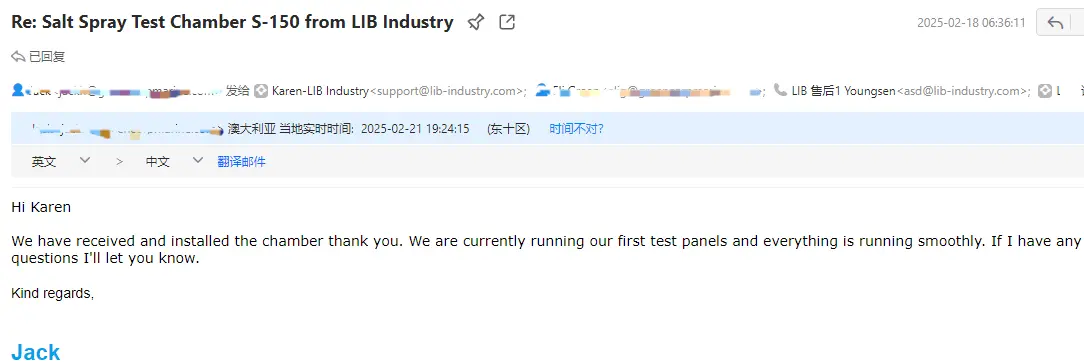
Building on this capability, an Australian coating manufacturer recently integrated a salt spray corrosion test system into its marine coating validation workflow. After installation, their engineering team quickly began testing coated panels for offshore and coastal applications.As they noted: “We have received and installed the chamber… we are currently running our first test panels and everything is running smoothly.”
During initial testing, the chamber maintained stable fog distribution and consistent environmental control, enabling reliable simulation of harsh marine conditions. This allowed engineers to evaluate coating performance such as blister resistance and edge protection.With a smooth startup and dependable operation, the team confidently moved into extended testing and formulation comparison—demonstrating how the system can accelerate validation while ensuring repeatable results.
Why Corrosion Resistance Matters for EV Battery Enclosures?
High-Voltage Isolation Demands Zero Compromise
Battery packs operate at 400 V or 800 V. A corrosion-induced breach in a housing wall or gasket seat can expose conductors to moisture, establishing a short-circuit pathway. Salt spray test equipment allows engineers to verify that enclosure alloys retain dielectric integrity after prolonged saline contact, revealing micro-failures that optical inspection cannot detect.
Structural Loads Amplify Corrosion Risks
Road vibrations, thermal cycling, and crash loads impose unrelenting mechanical stress on enclosure joints. Corrosion at weld seams or fastener points undermines load-bearing capacity and hastens fatigue cracking. Accelerated salt fog evaluation flags these stress-corrosion synergies early, enabling design revisions that safeguard crash-worthiness throughout a vehicle's warranty tenure.
Warranty and Recall Cost Implications
A single corrosion-linked battery recall can burden an automaker with hundreds of millions of dollars in remediation costs. Rigorous salt spray evaluation during the design validation phase markedly reduces field failure rates, shielding brand equity and trimming lifecycle expenses for manufacturers and consumers alike.
Environmental Challenges Facing EV Battery Systems
Road Salt and De-Icing Chemical Exposure
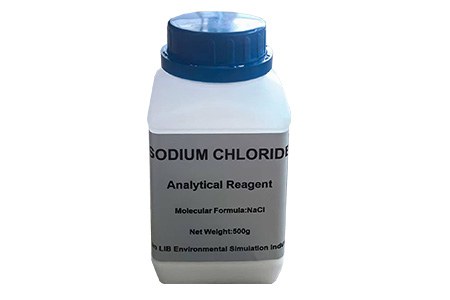
Vehicles in northern climates encounter calcium chloride, magnesium chloride, and sodium chloride solutions sprayed on highways each winter. These agents accumulate on the underbody, infiltrating every crevice. Salt spray chambers recreate this chemical cocktail - typically a 5 % NaCl solution - at controlled concentrations to quantify enclosure resilience under worst-case road conditions.
Coastal and Humid Climate Degradation
Oceanic salt aerosol paired with elevated humidity deposits a persistent corrosive film on metallic surfaces. Salt spray chambers simulate alternating wet-dry periods that mirror authentic coastal environments, providing a more representative assessment than continuous spray alone and revealing blistering or filiform attack patterns.
Temperature Extremes and Condensation Cycles
Battery enclosures endure rapid temperature swings triggered by fast charging and regenerative braking. Condensation forms inside joints during cool-down phases, trapping moisture against bare substrate. Equipment operating from ambient to +60 ℃ lets engineers reproduce these condensation dynamics with precision, capturing data that static-temperature tests would miss.
Salt Spray Testing for Sealed and Welded Enclosures
Weld Seam Integrity Assessment
Friction-stir, laser, and MIG joints on aluminum enclosures each exhibit distinct corrosion profiles. Placing welded coupons inside a fog chamber at 95-98 % relative humidity for 500 to 2 000 hours exposes intergranular attack, pitting, or crevice corrosion hidden beneath surface oxide layers - information essential for qualifying new weld procedures.
Gasket and Sealant Durability Verification
Silicone and EPDM gaskets degrade under sustained saline contact. A salt mist deposition rate of 1-2 ml / 80 cm² · h, maintained by precision atomizer towers and spray nozzles, ensures consistent solution contact with sealant surfaces, yielding reproducible degradation data across multiple test runs.
Fastener and Hardware Corrosion Mapping
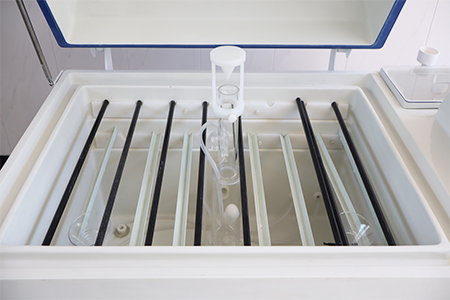
Bolts, rivets, and threaded inserts generate galvanic couples wherever dissimilar metals converge. V-shaped sample holders and round bars inside the chamber position fasteners at standardized angles, guaranteeing uniform mist exposure and enabling side-by-side comparison of zinc-plated, nickel-plated, and stainless-steel hardware.
Table 1 - Salt Spray Test Equipment Specifications (LIB Industry)
|
Model |
Internal Dimensions (mm) |
Interior Volume (L) |
Overall Dimensions (mm) |
|
S-150 |
590 × 470 × 400 |
110 |
1460 × 760 × 1140 |
|
S-250 |
1000 × 640 × 500 |
320 |
1850 × 960 × 1350 |
|
S-750 |
1100 × 750 × 500 |
410 |
1950 × 1030 × 1350 |
|
S-010 |
1000 × 1300 × 600 |
780 |
2000 × 1300 × 1600 |
|
S-016 |
900 × 1600 × 720 |
1030 |
2300 × 1300 × 1700 |
|
S-020 |
1000 × 2000 × 800 |
1600 |
2700 × 1300 × 1900 |
> All models feature glass-fiber-reinforced-plastics construction, PID control, temperature deviation of ± 2.0 ℃, temperature fluctuation of ± 0.5 ℃, and continuous or periodic spray modes.
Evaluating Protective Coatings and Surface Treatments
E-Coat and Powder Coat Performance
Electrodeposition and powder coatings form the primary shield on steel and aluminum enclosures. Cross-hatch adhesion tests followed by salt fog exposure reveal blistering, undercutting, and delamination rates, helping coating formulators refine film thickness and cure parameters before mass production commences.
Anodizing and Conversion Coating Analysis
Type III hard anodizing and chromate-free conversion coatings on aluminum alloys require exacting salt spray validation. Chamber uniformity - held within ± 2.0 ℃ deviation and ± 0.5 ℃ fluctuation - ensures that test results reflect genuine coating quality rather than environmental inconsistency within the apparatus.
Multi-Layer Coating Systems Comparison
Modern EV enclosures frequently employ a primer, basecoat, and clearcoat stack. Salt spray test chambers with programmable PLC controllers execute multi-step cyclic protocols - continuous spray, dry-off, and humidity soak - stressing each layer independently and isolating the weakest link in the protective architecture.
Table 2 - Common EV Enclosure Coatings and Typical Salt Spray Durations
|
Coating Type |
Substrate |
Typical Test Duration (h) |
Key Failure Mode |
|
Cathodic E-Coat |
Steel |
480 - 1000 |
Undercutting at scribe |
|
Powder Coat |
Aluminum |
500 - 1500 |
Blistering |
|
Type III Anodize |
6061-T6 Al |
336 - 750 |
Pitting |
|
Chromate-Free Conversion |
Die-Cast Al |
168 - 500 |
Filiform corrosion |
|
Multi-Layer (Primer + Clear) |
Steel / Al |
720 - 2000 |
Delamination at interface |
Compliance Standards for EV Corrosion Testing
ASTM B117 and ISO 9227 Protocols
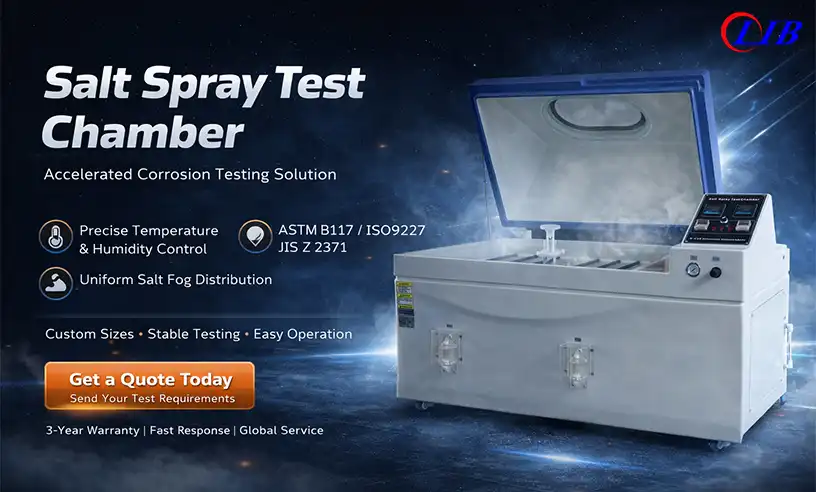
ASTM B117 and ISO 9227 establish the neutral salt spray baseline employed worldwide. Both specify a 5 % NaCl solution, 35 ℃ chamber temperature, and fog collection of 1-2 ml / 80 cm² · h. Accredited test facilities rely on calibrated salt spray test equipment that maintains these parameters without drift.
Automotive OEM-Specific Requirements
Major automakers overlay proprietary cyclic corrosion protocols atop ASTM/ISO baselines. GM GMW 14872, Ford CETP 00.00-L-467, and VW PV 1210 each prescribe unique combinations of salt spray, humidity, and drying phases tailored to brand-specific field corrosion datasets, raising the bar beyond generic standards.
IEC and SAE Standards for Battery Systems
IEC 62660 and SAE J2464 address module- and pack-level environmental durability. Enclosures tested under these frameworks must demonstrate IP67 ingress protection after salt spray exposure, confirming that corrosion has not compromised sealing integrity or high-voltage isolation under real-service conditions.
Improving Safety and Longevity in Electric Vehicles
Extending Battery Pack Service Life
Corrosion erodes thermal interface materials and coolant channels within the enclosure, degrading heat dissipation over time. Validating housing materials through accelerated salt fog testing preserves consistent cell temperatures and prolongs battery cycle life - directly influencing range retention over years of ownership.
Reducing Thermal Runaway Risk
A corroded enclosure wall invites moisture ingress that damages cell insulation, potentially initiating thermal runaway. Salt spray qualification verifies that, even after years of environmental assault, the enclosure upholds the hermetic barrier separating external elements from high-energy cells and busbars.
Building Consumer Confidence
Vehicle buyers scrutinize warranty terms and reliability ratings more than ever. Manufacturers who substantiate rigorous salt spray test protocols during development earn elevated safety scores and cultivate trust among fleet operators and private owners, translating laboratory diligence into marketplace advantage.
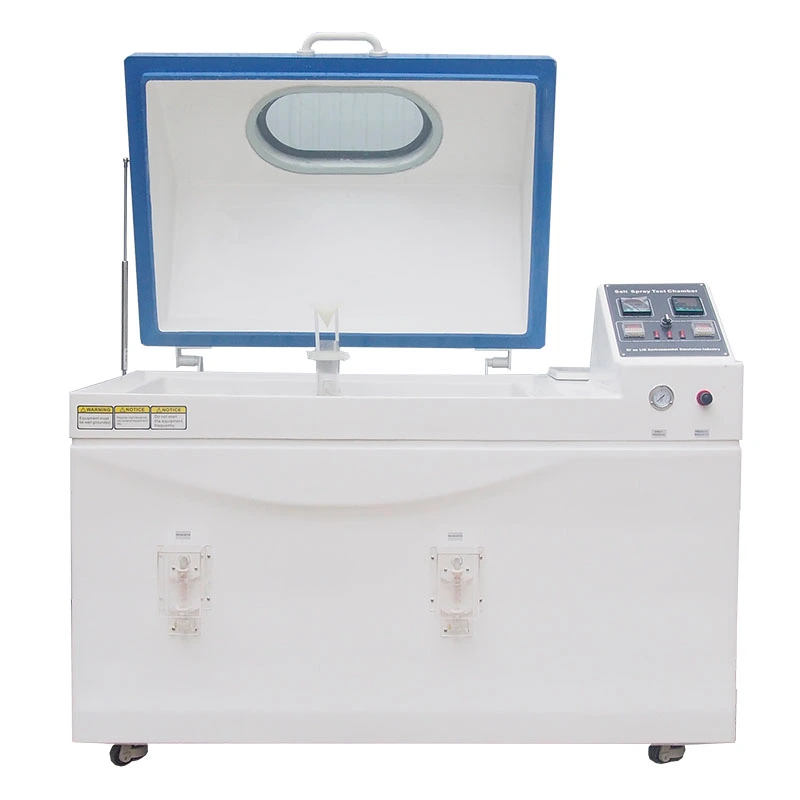
Reliable Corrosion Simulation for High-Voltage Safety Standards - LIB Industry
 |
 |
|
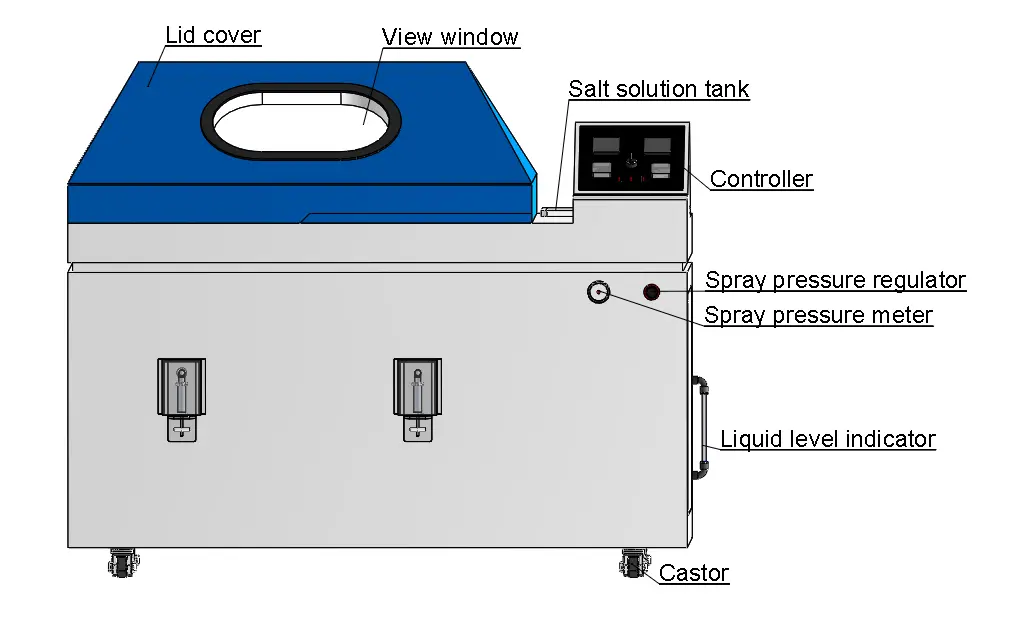
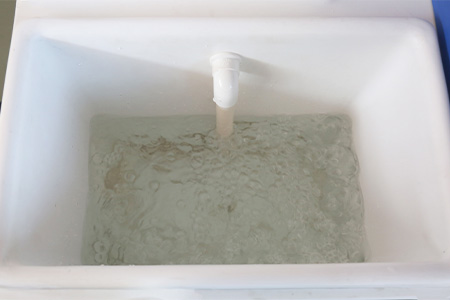
Durable, Leak-Resistant Workspace |
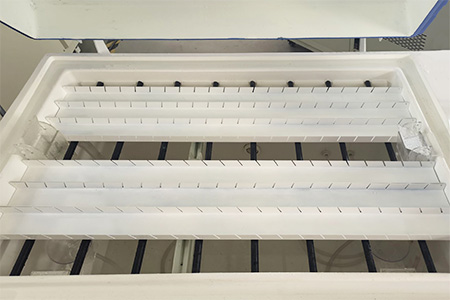
Flexible Sample Rack System |
|
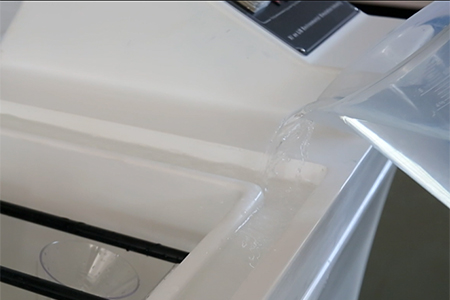
Water-Sealed Lid Design |
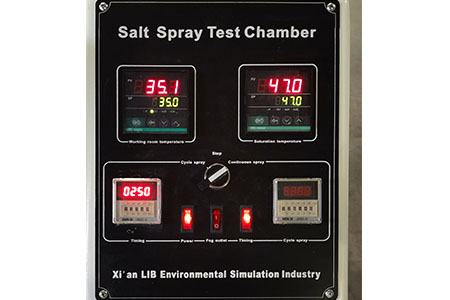
Intelligent Controller |
|
Uniform Salt Solution Agitation |
|
Turnkey Chamber Solutions from Design to Commissioning
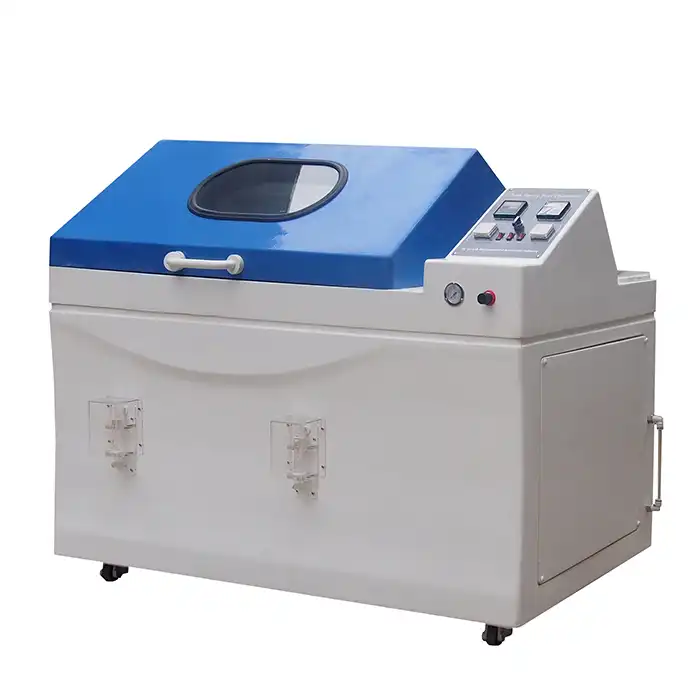
LIB Industry delivers a complete lifecycle service: research, design, production, commissioning, installation, and operator training. Every salt spray test chamber - from the compact S-150 (110 L) to the expansive S-020 (1 600 L) - ships with OMRON relays, Schneider contactors, Danfoss electromagnetic valves, and RKC temperature controllers for dependable, long-term operation.
Customization for Complex Testing Demands
Non-standard chamber dimensions, multiple test zones, and SO₂ gas corrosion capabilities are all available upon request. LIB's engineering team tailors equipment to exact laboratory specifications, enabling facilities to consolidate several corrosion protocols into a single versatile platform without sacrificing accuracy or repeatability.
Quality Certifications and Global Support
Manufactured under an ISO 9001 quality management system and audited by SGS and TUV, every unit carries CE certification. A 3-year warranty with lifetime technical support - plus 24/7 global assistance and full replacement during warranty if repair proves unfeasible - minimizes downtime and maximizes return on investment.
Conclusion
EV battery enclosure corrosion testing is no longer optional - it is a prerequisite for high-voltage safety and long-term vehicle reliability. Salt spray test equipment condenses years of environmental exposure into controlled, repeatable chamber cycles, empowering engineers to validate welds, coatings, seals, and fasteners before a single vehicle leaves the production line. Partnering with an experienced equipment manufacturer like LIB Industry ensures that your laboratory operates with certified, customizable, and globally supported chambers built to meet every relevant standard from ASTM B117 to SAE J2464.
FAQ
How long should a salt spray test run for EV battery enclosures?
Test durations vary by standard and coating type, typically ranging from 336 to 2 000 hours. OEM-specific protocols like GMW 14872 may prescribe cyclic phases that extend total exposure time beyond continuous-spray baselines such as ASTM B117.
Can salt spray chambers simulate both coastal and road-salt conditions?
Yes. Modern cyclic corrosion chambers alternate between continuous salt fog, humidity soak, and drying phases. Adjustable NaCl concentrations and programmable temperature profiles replicate coastal aerosol, winter road-salt, and mixed-climate scenarios within a single test program.
What chamber size suits full-scale battery enclosure testing?
Large enclosures require chambers with interior volumes of 780 L or above, such as the LIB S-010 or S-020 models. Selecting the correct chamber size ensures proper mist circulation and uniform salt fog deposition across the entire test specimen surface.
Looking for a trusted salt spray test equipment manufacturer and supplier? LIB Industry provides turnkey environmental test chamber solutions - from design to installation and training. Contact us at ellen@lib-industry.com to discuss your testing requirements today.