Salt spray testing fortifies marine coating durability by replicating aggressive saltwater conditions inside a controlled chamber. Atomized saline solution envelops coated specimens at regulated temperature and humidity, compressing months of oceanic exposure into measurable laboratory hours. This accelerated timeline exposes vulnerabilities-blistering, adhesion loss, substrate infiltration-before coatings ever reach a vessel hull. Engineers refine formulations, calibrate layer thickness, and benchmark protective systems with quantifiable confidence. Modern salt spray test equipment sustains fog deposition rates of 1-2 ml/80 cm²·h and humidity between 95%-98% RH, producing repeatable outcomes aligned with ISO 9227 and ASTM B117 protocols. The result: marine coatings validated against real oceanic punishment.
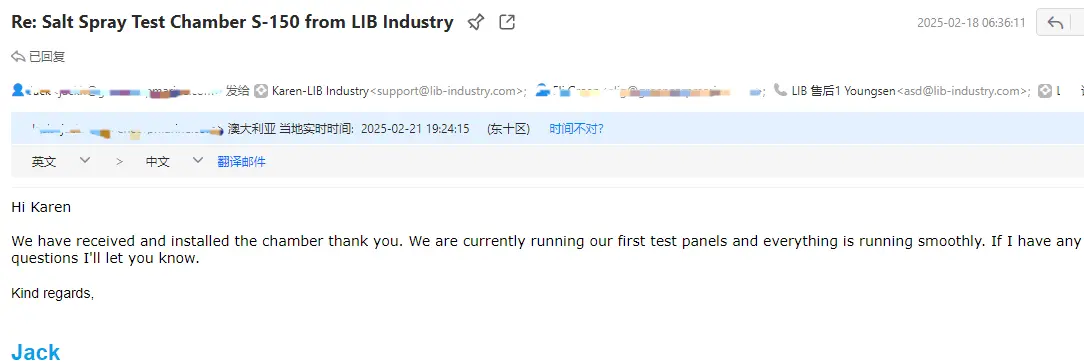
Building on this capability, a coating manufacturer in Australia recently integrated a salt spray corrosion test system into their marine coating validation workflow. After installation, their engineering team immediately began testing coated panels designed for offshore and coastal applications. As they reported: “We have received and installed the chamber, thank you. We are currently running our first test panels and everything is running smoothly.”
During the initial testing phase, the chamber maintained stable fog distribution and consistent temperature-humidity conditions, allowing the team to simulate harsh ocean exposure without interruption. Early results enabled them to observe coating behavior under continuous saline attack, including surface blister resistance and edge protection performance. The seamless startup and reliable operation gave the engineers confidence to proceed with extended exposure cycles and comparative testing across multiple coating formulations. This practical feedback highlights how a well-designed salt spray system can quickly integrate into real production environments, accelerating validation timelines while ensuring dependable, repeatable results.
What Causes Coating Failure in Marine Environments?
Chloride Ion Penetration and Electrochemical Breakdown
Seawater carries concentrated chloride ions that infiltrate micro-pores within protective films. Once these ions reach the metal substrate, they destabilize passive oxide layers and ignite localized corrosion cells. Even high-build epoxy barriers succumb when chloride migration pathways form through application defects or mechanical damage, underscoring the necessity of rigorous pre-deployment evaluation through accelerated corrosion testing.
Ultraviolet Degradation and Thermal Cycling
Prolonged solar irradiation severs polymer chains in topcoat resins, producing chalking and micro-fissures. Simultaneous thermal cycling-surfaces heated by midday sun then cooled by ocean spray-amplifies crack propagation. These concurrent stressors erode the barrier integrity that separates moisture from reactive metal surfaces beneath, gradually rendering the entire coating system porous.
Mechanical Abrasion from Oceanic Forces
Wave impact, floating debris, and ice contact strip coating material at high-wear zones like waterlines and bow sections. Each abrasion event exposes bare substrate, spawning initiation sites where corrosion advances beneath the remaining film and undermines overall protective coverage faster than anticipated by static laboratory models alone.
Key Corrosion Mechanisms in Saltwater Exposure
Marine corrosion operates through several interconnected electrochemical and physical pathways. Understanding these mechanisms clarifies why laboratory salt fog chambers remain indispensable tools for predicting coating longevity.
|
Corrosion Mechanism |
Driving Force |
Typical Location |
|
Galvanic Corrosion |
Electrode potential difference |
Dissimilar metal joints |
|
Osmotic Blistering |
Osmotic pressure gradient |
Coating-substrate interface |
|
Crevice Corrosion |
Differential aeration |
Fastener heads, overlapping plates |
Galvanic Corrosion Between Dissimilar Metals
When metals with disparate electrode potentials share a saltwater electrolyte, the less noble alloy corrodes preferentially. Marine structures frequently join steel to aluminum or bronze fittings, creating galvanic couples that coatings must electrically isolate. Salt fog testing quantifies how long a coating system maintains that galvanic barrier under sustained saline attack and identifies premature failure points.
Osmotic Blistering and Moisture Ingress
Water molecules permeate semi-permeable coating layers driven by osmotic pressure differentials. Soluble salts trapped at the coating-substrate interface draw additional moisture inward, nucleating blisters that detach the film and expose bare metal. Salt spray chamber exposure identifies blister-prone formulations well before immersion service or real marine deployment reveals them.
Crevice Corrosion in Concealed Geometries
Narrow gaps beneath fasteners or between lap joints restrict oxygen replenishment, establishing differential aeration cells. The oxygen-starved zone becomes anodic, and corrosion intensifies invisibly inside the crevice. Properly designed salt spray protocols expose these hidden failure modes under controlled, reproducible conditions that outdoor panels cannot consistently replicate.
How Salt Spray Testing Simulates Harsh Marine Conditions?
Controlled Salt Fog Atmosphere Generation
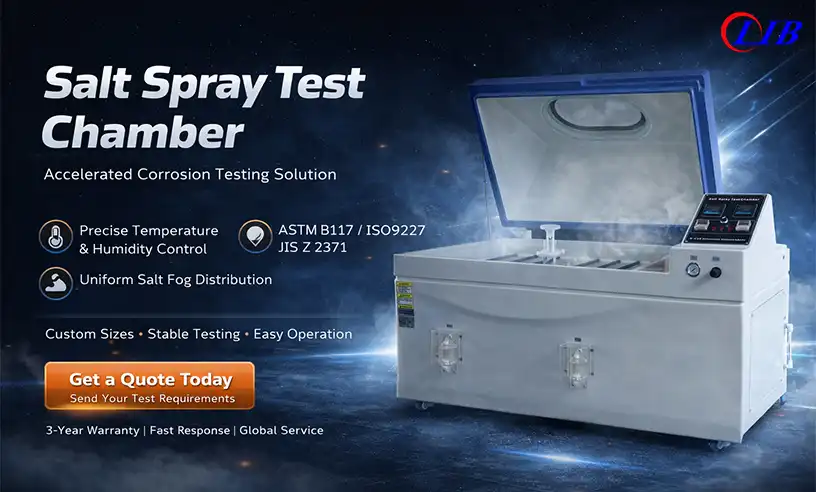
Salt spray chambers atomize a 5% sodium chloride solution through corrosion-resistant quartz glass nozzles positioned within a spray tower. The resulting mist uniformly envelops specimens mounted on V-shaped racks and round bars inside chambers constructed from glass fiber reinforced plastics, reproducing the persistent saline atmosphere that marine coatings encounter at sea with laboratory-grade precision.
Precise Temperature and Humidity Regulation
PID controllers hold chamber temperatures from ambient to +60 °C with ±0.5 °C fluctuation and ±2.0 °C deviation. Saturated air barrels preheat incoming compressed air, stabilizing humidity between 95% and 98% RH. This tight environmental control ensures that test-to-test variability remains negligible, a prerequisite for meaningful coating comparisons.
Continuous Versus Cyclic Spray Modes
Continuous neutral salt spray (NSS) per ASTM B117 delivers unbroken fog exposure, while cyclic programs alternate wet and dry phases to mirror tidal and atmospheric transitions. Cyclic protocols frequently predict field performance more faithfully because they reproduce the wetting-drying oscillations that accelerate real-world degradation patterns encountered along coastlines and offshore platforms.
Accelerated Corrosion Testing for Marine Coatings
Time Compression and Its Practical Value
A 500-hour salt spray cycle can approximate months of oceanic exposure, enabling rapid screening of coating candidates. R&D teams iterate formulations within weeks instead of waiting for multi-year outdoor panels. This tempo advantage translates directly into shorter development cycles and faster market entry for validated marine coating products.
Compliance with ASTM B117 and ISO 9227
Both standards prescribe chamber geometry, solution concentration, fog collection rates, and temperature tolerances that salt spray test chamber must satisfy. Chambers constructed from glass fiber reinforced plastics-equipped with calibrated fog collectors and measure cylinders-meet these mandates, producing data that withstands regulatory audit and customer scrutiny worldwide.
Cyclic Protocols for Realistic Durability Ranking
Combined standards such as ASTM D5894 and ISO 12944-9 integrate salt fog with UV exposure and condensation phases. Cyclic corrosion chambers with programmable test sequences replicate complex environmental transitions, generating durability rankings that correlate tightly with marine field observations and long-term asset protection outcomes.
|
Model |
Internal Dimensions (mm) |
Interior Volume (L) |
Spray Type |
|
S-150 |
590 × 470 × 400 |
110 |
Continuous / Periodic |
|
S-250 |
1000 × 640 × 500 |
320 |
Continuous / Periodic |
|
S-750 |
1100 × 750 × 500 |
410 |
Continuous / Periodic |
|
S-010 |
1000 × 1300 × 600 |
780 |
Continuous / Periodic |
|
S-016 |
900 × 1600 × 720 |
1030 |
Continuous / Periodic |
|
S-020 |
1000 × 2000 × 800 |
1600 |
Continuous / Periodic |
Performance Metrics for Coating Durability Evaluation
Blister Rating and Rust Grade Assessment
Evaluators apply ASTM D714 blister size and frequency scales alongside ASTM D610 rust grade charts to quantify degradation after salt fog exposure. These standardized visual assessments convert subjective field observations into comparable numerical ratings, enabling consistent cross-laboratory communication and objective decision-making when selecting marine coating systems.
Scribe Creep and Adhesion Loss Measurement
A deliberate scribe line scratched through the coating before testing gauges how far corrosion migrates beneath the film from a simulated defect. Post-test pull-off adhesion tests per ASTM D4541 reveal residual bond strength, indicating whether a coating retains meaningful protective value after localized mechanical damage during marine service.
Hours-to-Failure Benchmarking
Recording the exposure duration at which coatings exhibit blistering, rust breakthrough, or delamination establishes quantitative endurance baselines. Comparing hours-to-failure across product lines and competing systems drives data-informed specification writing and procurement decisions in shipbuilding, offshore platform construction, and port infrastructure projects.
|
Metric |
Test Standard |
What It Measures |
|
Blister Rating |
ASTM D714 |
Blister size and frequency |
|
Rust Grade |
ASTM D610 |
Surface rust percentage |
|
Scribe Creep |
ASTM D1654 |
Under-film corrosion spread from scribe |
|
Adhesion Loss |
ASTM D4541 |
Pull-off bond strength reduction |
|
Hours to Failure |
Per specification |
Time to defined degradation threshold |
Enhancing Long-Term Protection Through Test Insights
Coating Formulation Optimization
Salt spray data pinpoints which pigment volumes, crosslink densities, and inhibitor loadings yield superior barrier characteristics. Formulators adjust resin chemistry and additive packages based on chamber-derived evidence rather than empirical conjecture, reducing trial-and-error waste in development pipelines and accelerating the path to robust marine-grade coating formulations.
Comparative Analysis of Protective Systems
Running multiple systems-epoxy primers, polyurethane topcoats, zinc-rich primers-under identical chamber conditions produces head-to-head durability rankings. These controlled comparisons eliminate the environmental variability that confounds outdoor panel studies and empower asset owners to select coating architectures backed by reproducible, laboratory-verified performance data.
Production-Level Quality Control
Batch-to-batch consistency verification through salt fog chambers catches process deviations before coated products ship. Incoming raw material qualification and final acceptance testing close the quality loop from supplier through production to end user, safeguarding brand reputation and reducing costly field-failure warranty claims.
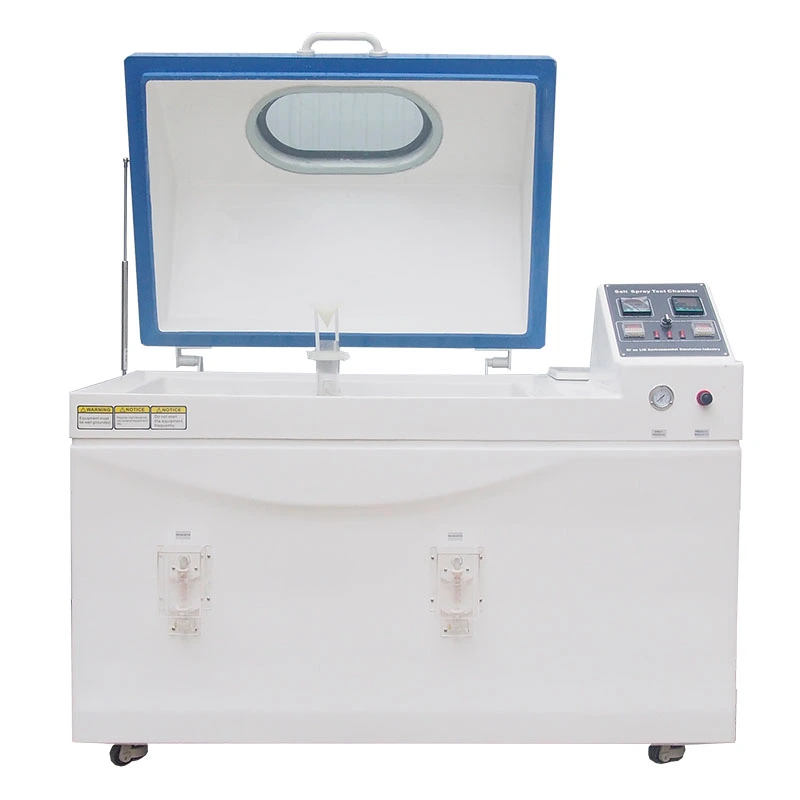
Precision Testing Backed by LIB Industry's Expertise
 |
 |
|
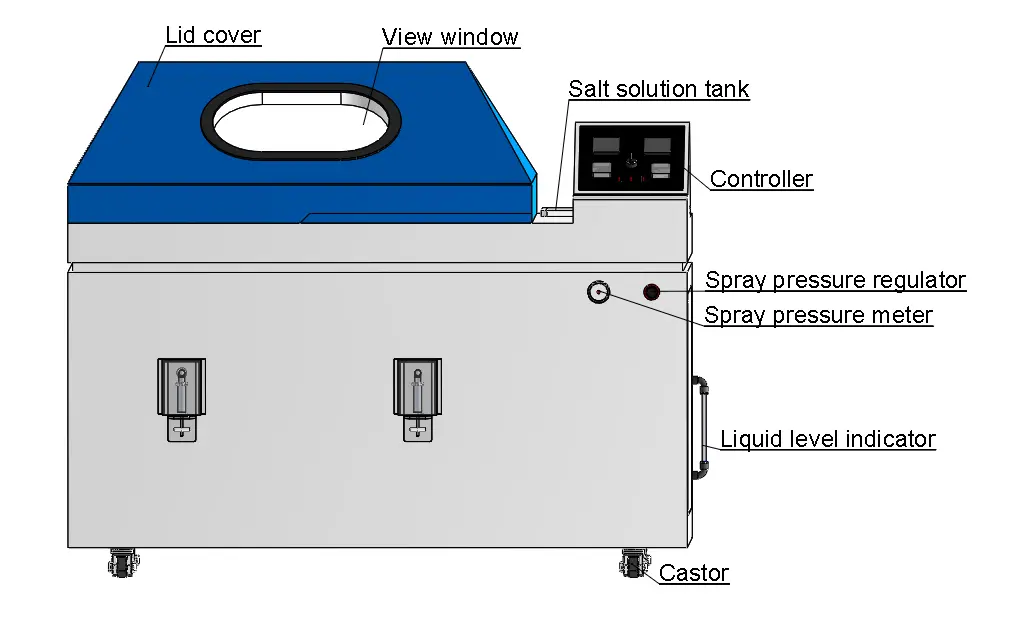
Durable, Leak-Resistant Workspace |
Flexible Sample Rack System |
|
Water-Sealed Lid Design |
Intelligent Controller |
|
Uniform Salt Solution Agitation |
Included Industrial-Grade Salt |
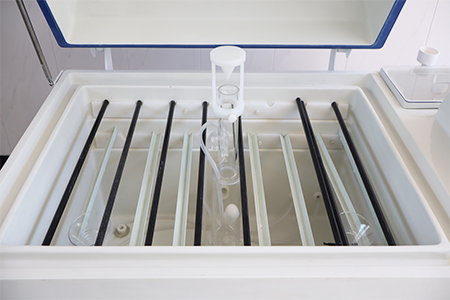
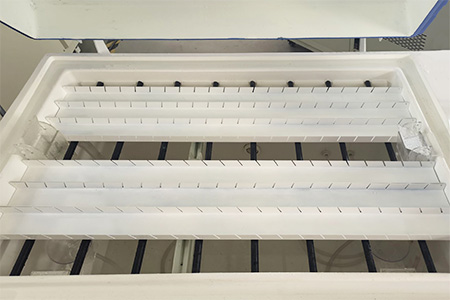
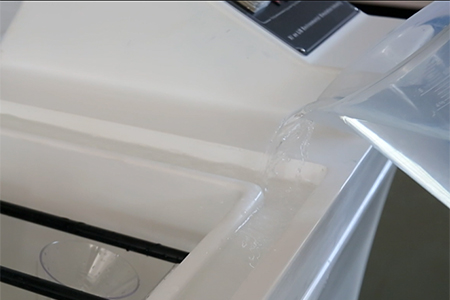
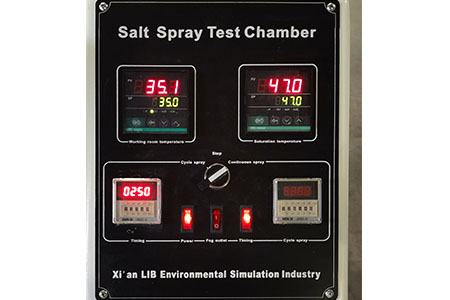
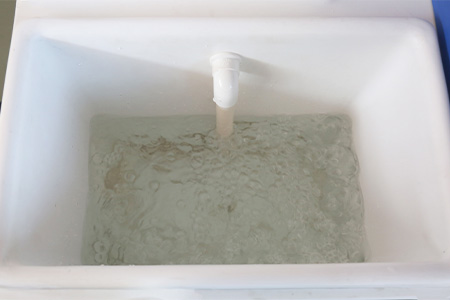
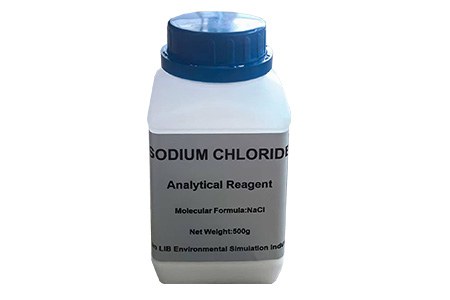
Uniform Spray Distribution and Fog Collection
LIB salt spray test chambers integrate quartz glass spouts engineered to resist clogging and crystallization. A dual-cup fog collection system captures salt mist from opposing directions, verifying that deposition rates stay within the 1-2 ml/80 cm²·h window stipulated by ISO 9227 throughout extended test campaigns.
Premium Components for Dependable Operation
OMRON relays, Schneider contactors, Danfoss electromagnetic valves, and RKC temperature controllers constitute the control backbone of LIB salt spray test equipment. These globally sourced, brand-name components curtail unplanned downtime and simplify spare part procurement across international facilities-supported by a 3-year warranty and lifetime service commitment.
Tailored Configurations for Specialized Mandates
LIB's engineering team designs non-standard chambers with custom dimensions, multiple test zones, and SO₂ gas corrosion capabilities. Whether a shipyard requires a 1600-liter cyclic chamber or a compact 110-liter bench unit, every configuration scales to match precise testing obligations and laboratory space constraints.
Conclusion
Salt spray testing remains one of the most pragmatic tools available for validating marine coating durability. By compressing years of saltwater exposure into controlled laboratory hours, it reveals coating weaknesses-blistering, scribe creep, adhesion degradation-well before deployment. Pairing accelerated corrosion data with standardized performance metrics empowers coating manufacturers and specifiers to make defensible material choices. When backed by precision-engineered chambers that maintain tight environmental tolerances, these tests generate results that regulatory bodies, shipyards, and asset owners can trust without reservation.
FAQ
How long should a salt spray test run for marine coatings?
Typical marine coating evaluations range from 500 to 3,000 hours depending on the coating system, service environment severity, and applicable specification requirements such as ISO 12944 or NORSOK M-501.
Can cyclic corrosion testing replace continuous salt spray testing?
Cyclic testing complements rather than replaces continuous salt spray exposure. Many marine specifications now mandate both protocols, as cyclic wet-dry transitions more faithfully replicate atmospheric marine conditions while continuous testing benchmarks baseline corrosion resistance.
What salt concentration is used in standard salt spray test equipment?
The neutral salt spray test per ASTM B117 and ISO 9227 uses a 5% sodium chloride solution prepared with reagent-grade salt and deionized or distilled water, maintained at 35 °C inside the chamber.
Looking for a reliable salt spray test equipment manufacturer? LIB Industry is a professional supplier and factory of environmental test chambers, delivering turnkey salt spray testing solutions worldwide. Contact us at ellen@lib-industry.com for custom configurations and expert technical guidance.