Small Climatic Chambers: Space-Saving Solutions for R&D
Research and development laboratories face a persistent challenge: maximizing testing capabilities within constrained physical spaces. Small climatic chambers address this dilemma by delivering comprehensive environmental simulation in compact footprints. These precision instruments enable temperature and humidity testing without monopolizing valuable laboratory real estate. Modern R&D facilities increasingly adopt these space-efficient solutions to conduct rigorous product validation while maintaining flexible workspace configurations. The chambers accommodate diverse testing protocols - from material durability assessments to electronic component reliability studies - making them indispensable assets for organizations balancing thorough testing requirements with spatial limitations.
Advantages of Compact Climatic Chambers in Laboratory Settings

Enhanced Laboratory Space Utilization
Compact environmental test equipment transforms how laboratories allocate their floor space. Units measuring approximately 820×1160×950mm occupy minimal area compared to walk-in chambers, yet deliver equivalent testing precision. Benchtop installation eliminates the need for dedicated testing rooms, allowing researchers to position equipment adjacent to workstations. This proximity streamlines sample handling and monitoring procedures while freeing square footage for analytical instruments or collaborative work areas.
Cost-Effective Environmental Testing
Budget-conscious laboratories appreciate the financial advantages these chambers provide. Lower initial acquisition costs compared to large-scale alternatives make environmental testing accessible to smaller organizations and startups. Reduced energy consumption - typically drawing from standard single-phase power - translates to decreased operational expenses. Maintenance requirements remain straightforward, with accessible components that minimize service costs throughout the equipment lifecycle.
Rapid Deployment and Installation Flexibility
Setting up a compact climatic chamber requires minimal preparation. Standard electrical connections (220V/110V) eliminate infrastructure modifications that delay larger installations. Laboratories can relocate these chambers to accommodate shifting research priorities or facility reconfigurations. This mobility proves particularly valuable during facility expansions or when testing protocols change, allowing organizations to adapt quickly without major capital reinvestment.
Space and Energy Efficiency Considerations for Small Chambers
Optimized Thermal Management Systems
Modern compact chambers employ sophisticated refrigeration technology within constrained dimensions. Mechanical compression systems utilizing environmentally responsible refrigerants achieve cooling rates of 1°C per minute while maintaining energy efficiency. Polyurethane foam insulation combined with specialized cotton materials minimizes thermal loss, reducing power consumption during extended test cycles. The 1000W heat load capacity ensures adequate conditioning power without excessive energy draw.
Strategic Footprint Design
Engineers design these small humidity chambers with every cubic centimeter purposefully allocated. Interior volumes of 50L to 80L accommodate substantial sample quantities while external dimensions remain manageable. The ratio between internal working space and overall footprint demonstrates intelligent engineering - a 50L chamber utilizes approximately 40% of its total volume for testing, with remaining space dedicated to insulation and mechanical systems.
Power Consumption Analysis
|
Chamber Model |
Internal Volume |
Cooling Power |
Heating Power |
Annual Energy Estimate |
|
TH-50 |
50L |
~800W |
1000W |
2,400 kWh |
|
TH-80 |
80L |
~900W |
1000W |
2,600 kWh |
Based on 8 hours daily operation, 250 working days
Flexible Test Profiles for Diverse R&D Applications
Programmable Temperature and Humidity Sequences
Advanced touchscreen controllers enable researchers to create complex environmental profiles. Multi-step programs simulate real-world conditions products encounter during storage, transportation, and use. Temperature ranges spanning -70°C to +150°C accommodate extreme testing scenarios from arctic electronics validation to high-temperature material studies. Humidity control between 20% and 98% RH replicates conditions from arid deserts to tropical environments.
Industry-Specific Testing Applications
Electronics manufacturers utilize these chambers to verify solder joint reliability under thermal cycling. Pharmaceutical researchers validate packaging integrity across humidity gradients. Automotive component suppliers assess material degradation under combined temperature-moisture stress. Cosmetic companies evaluate product stability throughout shelf-life conditions. Each application benefits from customizable testing parameters that address specific qualification standards.
Accelerated Aging and Reliability Studies
Compressed testing timelines become achievable through controlled environmental stress. Chambers enable accelerated aging protocols that predict years of field performance within weeks. Researchers apply elevated temperature and humidity levels following established acceleration factors, generating reliability data that informs design improvements and warranty predictions. This capability proves essential for industries where product lifespans extend beyond practical real-time testing periods.
 |
|
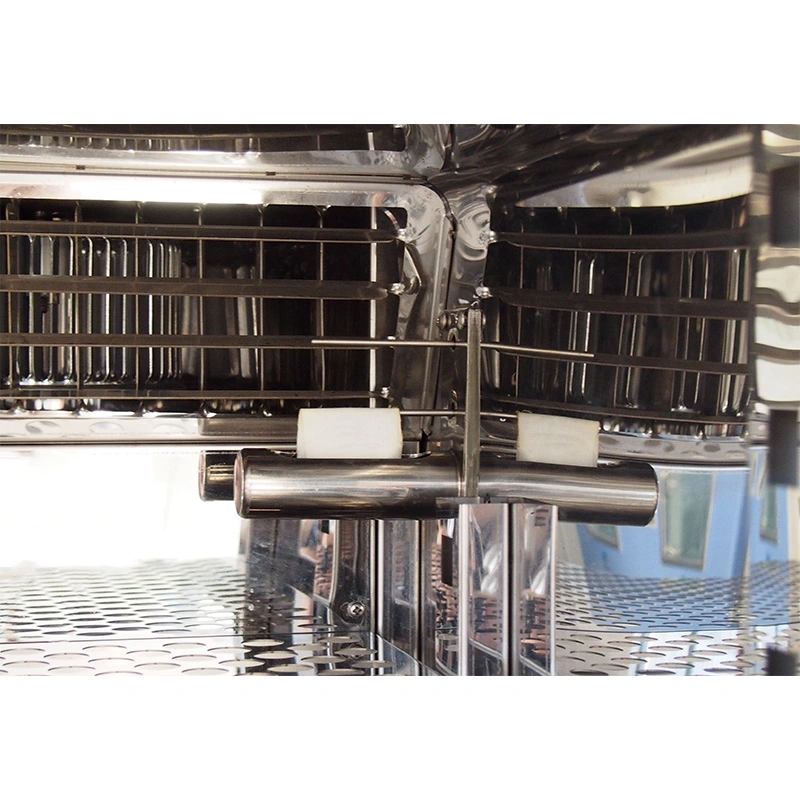 |
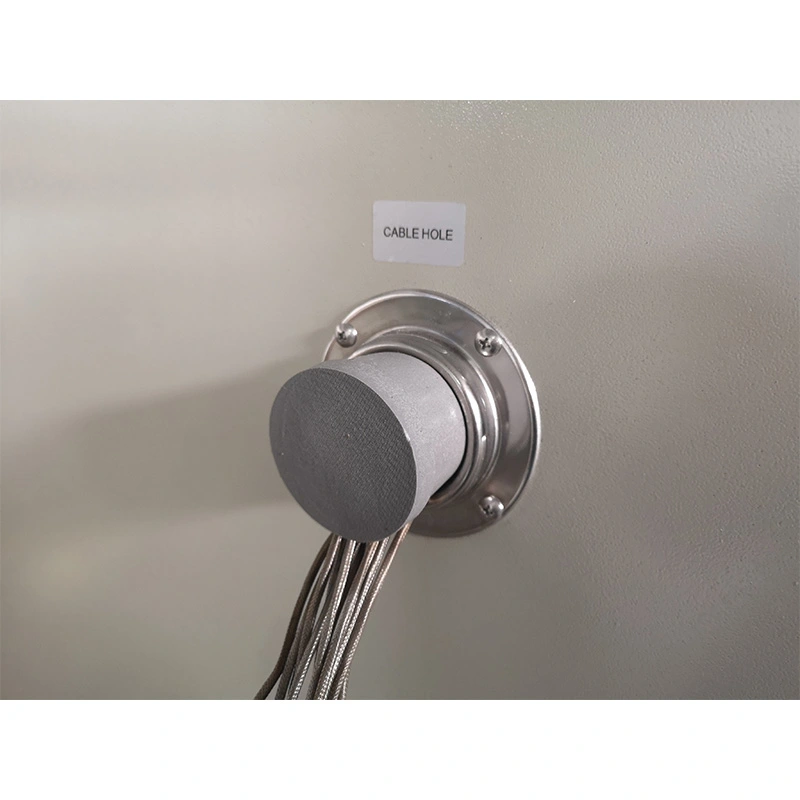
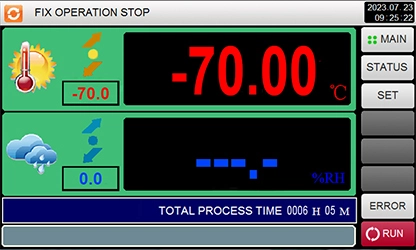
| Cable Hole | Controller | Temperature and HUmidity Sensor |
Integration with Other Environmental Testing Equipment
Complementary Testing Ecosystems
Small climatic chambers function as components within comprehensive testing strategies. Organizations pair them with vibration tables for combined mechanical-environmental stress screening. Salt spray chambers provide corrosion testing that complements humidity aging studies. Thermal shock chambers address rapid temperature transition requirements that gradual-change climatic chambers cannot replicate. This modular approach allows laboratories to build testing capabilities incrementally.
Data Acquisition and Laboratory Information Systems
Ethernet connectivity facilitates integration with laboratory management software. Real-time temperature and humidity data streams to centralized databases, creating comprehensive test records. Automated alerts notify researchers when parameters deviate from specifications or test cycles complete. This connectivity supports regulatory compliance documentation and enables remote monitoring, particularly valuable for unattended overnight testing.
Calibration and Metrology Infrastructure
Precision testing demands verified measurement accuracy. These chambers accommodate reference sensors alongside test samples, enabling in-situ calibration verification. PT100 Class A sensors providing 0.001°C resolution maintain traceability to national standards. Regular calibration schedules ensure measurement integrity, with many organizations maintaining dedicated metrology chambers that verify portable sensor accuracy before field deployments.
Sample Loading and Test Monitoring in Small Chambers
Adjustable Shelving Configurations
Interior layouts accommodate diverse sample geometries through customizable rack systems. Each shelf supports up to 50kg loading, suitable for dense material samples or multiple electronic assemblies. Vertical spacing adjustments allow researchers to optimize internal volume utilization based on specimen dimensions. Stainless steel construction resists corrosion during high-humidity exposures while providing easy cleaning between test campaigns.
Observation and Access Features
Double-layer viewing windows enable visual monitoring without disturbing internal conditions. Interior LED lighting illuminates samples during inspections, reducing the need to open the chamber and compromise environmental stability. A standard 50mm cable penetration accommodates sensor wires for direct product monitoring. Silicone rubber sealing maintains environmental integrity while providing tool-free access for routine sample exchanges.
Real-Time Condition Monitoring
|
Parameter |
Measurement Range |
Display Resolution |
Control Accuracy |
|
Temperature |
-70°C to +150°C |
0.1°C |
±0.5°C |
|
Humidity |
20% to 98% RH |
0.1% RH |
±2.5% RH |
|
Time |
0-9999 hours |
1 minute |
Programmable segments |
Programmable touchscreen interfaces display real-time conditions alongside setpoint targets. Graphical trend displays reveal conditioning stability over time, helping researchers identify potential system issues before they compromise test validity. Historical data logging supports troubleshooting and provides documentation for quality audits.
Optimizing Laboratory Workflow Using Compact Climatic Chambers
Parallel Testing Strategies
Multiple small environmental chambers enable simultaneous testing at different conditions, accelerating development cycles. Rather than sequentially running temperature profiles in a single large unit, laboratories conduct parallel experiments that compress project timelines. This approach proves particularly effective during design optimization phases when multiple material formulations or component configurations require comparative evaluation.
Dedicated Application Assignment
Organizations assign specific chambers to recurring test protocols, eliminating time-consuming setup between different applications. One unit might focus exclusively on packaging validation while another handles electronic component screening. This specialization reduces contamination risks between incompatible materials and streamlines technician training, as personnel develop expertise with specific chamber configurations and testing procedures.
Maintenance and Downtime Management
Smaller equipment inventories create vulnerability when chambers require service. Organizations mitigate this risk through strategic redundancy - acquiring multiple compact units rather than single large chambers. When one unit undergoes calibration or repair, testing continues using backup equipment. The whisper-quiet operation below 55 decibels allows placement throughout laboratory environments without noise disruption, increasing deployment flexibility.
Compact and Efficient R&D Solutions with LIB Industry Small Climatic Chambers
Technical Specifications and Performance
LIB Industry's TH-50 and TH-80 models exemplify modern compact chamber design. The TH-50's 320×350×450mm interior provides 50L capacity within an 820×1160×950mm footprint, while the TH-80 expands to 80L using 400×400×500mm working dimensions. Both achieve 3°C/min heating rates and 1°C/min cooling, supporting efficient test cycling. Temperature uniformity of ±2.0°C and fluctuation within ±0.5°C ensure consistent sample exposure across the working volume.
Safety and Reliability Features
Comprehensive protection systems safeguard both operators and equipment. Humidifier dry-combustion prevention avoids fire hazards during extended humidity operations. Refrigerant high-pressure protection prevents compressor damage under abnormal conditions. Earth leakage detection and over-current protection address electrical safety concerns. Water shortage alarms prevent humidifier damage while over-temperature shutdown protects samples from runaway heating scenarios.
Quality Assurance and Support
ISO 9001 certification demonstrates systematic quality management throughout manufacturing processes. CE compliance confirms adherence to European safety directives, facilitating international equipment deployment. Third-party validation from SGS and TUV provides independent performance verification. The three-year warranty with lifetime service support reflects manufacturer confidence in product durability. Twenty-four-hour global assistance through service centers across Malaysia, Canada, the United Kingdom, and the United States ensures prompt technical support regardless of installation location.
|
Feature Category |
TH-50 Specification |
TH-80 Specification |
Application Benefit |
|
|
Working Volume |
50 liters |
80 liters |
Accommodates varying sample quantities |
|
|
Temperature Options |
-20°C, -40°C, -70°C to +150°C |
-20°C, -40°C, -70°C to +150°C |
Addresses diverse thermal testing requirements |
|
|
Humidity Range |
20% to 98% RH |
20% to 98% RH |
Simulates environmental extremes |
|
|
Controller |
Programmable LCD touchscreen |
Programmable LCD touchscreen |
Intuitive operation and complex profiling |
|
|
Construction |
SUS304 stainless steel interior |
SUS304 stainless steel interior |
Corrosion resistance and longevity |
|
 |
 |
|||
Conclusion
Small climatic chambers deliver essential environmental testing capabilities without consuming excessive laboratory space or budgets. These instruments provide temperature and humidity control precision comparable to larger alternatives while offering superior installation flexibility and operational efficiency. Organizations gain the ability to conduct comprehensive product validation, accelerated aging studies, and reliability assessments within space-constrained facilities. The combination of compact design, sophisticated control systems, and robust construction makes these chambers valuable assets across electronics, pharmaceutical, automotive, and consumer product industries.
FAQ
What sample sizes can small climatic chambers accommodate?
Chambers with 50L to 80L capacity accept diverse sample configurations. Adjustable shelving supports specimens from small electronic components to packaged consumer products, with each shelf rated for 50kg loading. Custom rack configurations accommodate irregular geometries.
How do compact chambers maintain temperature uniformity across different sample positions?
Centrifugal fan systems ensure continuous air circulation throughout the working volume. Combined with strategic duct placement and insulation design, this achieves ±2.0°C temperature deviation between locations, ensuring consistent environmental exposure regardless of sample positioning.
Can these chambers operate continuously for extended reliability testing?
Robust mechanical refrigeration systems and comprehensive safety interlocks support unattended operation during multi-week test protocols. Remote monitoring via Ethernet connectivity enables condition verification without physical presence, while automated alerts notify personnel of any parameter deviations.
Partner with LIB Industry, your trusted small climatic chamber manufacturer and supplier, for customized environmental testing solutions tailored to your R&D requirements. Contact our technical team at ellen@lib-industry.com to discuss specifications and receive a detailed quotation for your laboratory.