Xenon Arc Weatherometer Applications in Plastics and Polymers
Plastics and polymers undergo significant transformations when exposed to outdoor conditions, making weathering simulation critical for product development. A xenon arc weatherometer replicates natural sunlight, moisture, and temperature fluctuations to predict material behavior over extended service periods. This accelerated testing approach enables manufacturers to evaluate color retention, mechanical integrity, and surface characteristics before commercial release. Understanding these degradation patterns helps engineers select appropriate stabilizers, optimize formulations, and establish realistic warranty periods. The controlled environment provided by xenon arc testing delivers reproducible data that correlates strongly with real-world performance across diverse climate zones.
 |
|
Why Are Plastics and Polymers Sensitive to UV and Thermal Exposure?
Photochemical Reactions in Polymer Chains
Ultraviolet radiation initiates free radical formation within polymer molecules, breaking covalent bonds and triggering chain scission. This photodegradation process weakens the molecular structure, reducing tensile strength and elongation properties. Chromophoric groups within the polymer absorb specific wavelengths, accelerating decomposition at predictable rates. Additives like colorants and residual catalysts can amplify these reactions, creating localized degradation zones. The xenon arc weatherometer delivers controlled UV dosages that simulate years of outdoor exposure within weeks, revealing vulnerable formulations before field deployment.
Thermal-Oxidative Degradation Mechanisms
Elevated temperatures accelerate oxidation reactions, particularly when combined with UV exposure and atmospheric oxygen. Heat cycles cause polymer chains to mobilize, allowing reactive species to interact more readily with structural components. This thermal stress produces carbonyl groups, hydroperoxides, and other oxidation products that compromise material integrity. Surface cracking, embrittlement, and discoloration signal advanced degradation stages. Weathering chambers maintain precise black panel temperatures between 35°C and 85°C, capturing the thermal extremes encountered in automotive dashboards, building facades, and outdoor equipment.
Synergistic Effects of Moisture and Light
Water vapor penetrates polymer matrices, plasticizing certain regions while promoting hydrolytic cleavage in others. The combination of moisture and UV radiation creates a synergistic degradation effect more severe than either factor alone. Humidity cycles between 30% and 98% RH in testing chambers replicate dew formation, rainfall, and arid conditions. This moisture ingress accelerates colorant fading, surface chalking, and stress crack development. Testing protocols alternate between dry irradiation and humid dark cycles to mirror diurnal weather patterns experienced globally.
Evaluating Color Stability, Gloss Retention, and Surface DegradationQuantifying Color Change Through Spectrophotometry
Color stability remains paramount for consumer products, architectural materials, and automotive components. Xenon arc exposure causes chromophore destruction and polymer yellowing, quantified through Lab color space measurements. Spectrophotometers capture subtle shifts in hue, lightness, and chroma that indicate degradation progression. Testing standards specify exposure intervals - typically 200, 500, and 1000 hours - with periodic color assessments. Delta E values below 2.0 generally indicate acceptable color fastness, though specific industries maintain tighter tolerances for premium applications.
Gloss Measurement and Surface Roughening
Specular gloss deterioration signals surface microcracking and matrix decomposition. Initial gloss readings establish baseline values, with subsequent measurements revealing retention percentages after weathering cycles. Polymers containing inadequate UV stabilizers may lose 50% or more of their gloss within 500 hours of accelerated exposure. Surface profilometry complements gloss measurements, detecting micron-scale roughness changes invisible to naked observation. These combined assessments predict aesthetic lifespan and maintenance requirements for exterior applications.
Chalking, Crazing, and Physical Appearance Assessment
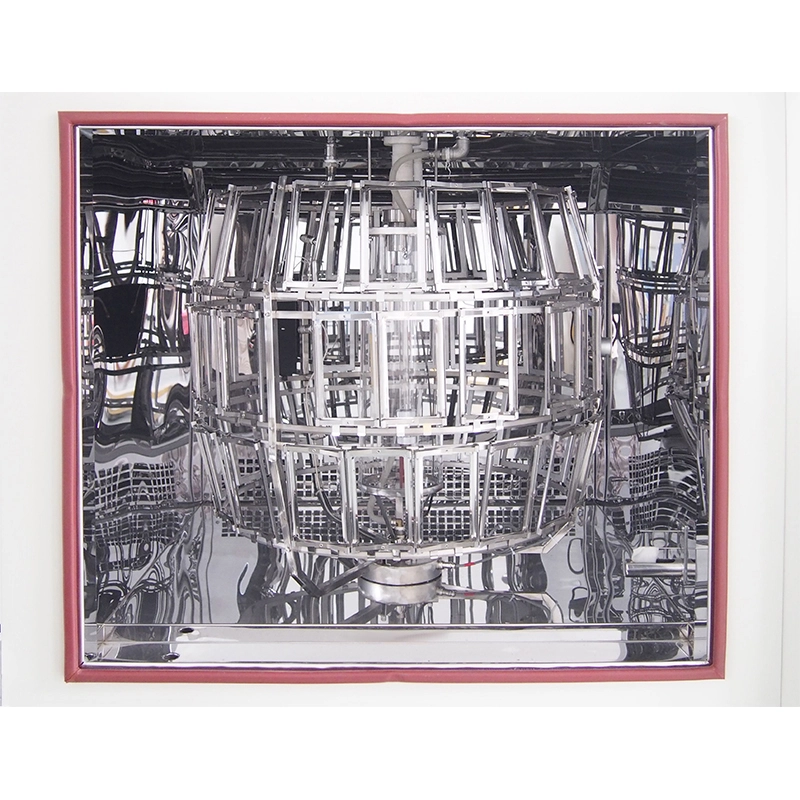
Surface degradation manifests through visible chalking - a powdery residue resulting from polymer breakdown and pigment exposure. Crazing produces networks of fine surface cracks that scatter light and trap contaminants. Visual grading scales (0-5 or 0-10) provide standardized evaluation criteria, though subjective interpretation requires trained personnel. Digital imaging with controlled illumination offers objective tracking of appearance changes. The rotating sample holder in weatherometers ensures uniform exposure, eliminating positional bias in degradation assessment.
|
Degradation Indicator |
Measurement Method |
Acceptable Threshold |
Testing Frequency |
|
Color Change (ΔE) |
Spectrophotometry |
< 2.0 units |
Every 200 hours |
|
Gloss Retention |
60° Gloss Meter |
> 80% of initial |
Every 250 hours |
|
Surface Chalking |
Visual Rating Scale |
Grade 3 or better |
Every 500 hours |
How Xenon Arc Weatherometers Assess Mechanical Property Changes?Tensile Strength and Elongation Monitoring
Weathering-induced chain scission directly reduces tensile strength and ultimate elongation capacity. Specimens extracted from xenon arc weatherometers undergo mechanical testing according to ASTM D638 or ISO 527 protocols. Strength retention percentages indicate material robustness, with many applications requiring 80% retention after specified exposure periods. Brittle failure modes replace ductile behavior as degradation advances, signaling end-of-service conditions. Comparative testing between weathered and control samples quantifies performance degradation rates.
|
|
|
| Workroom |
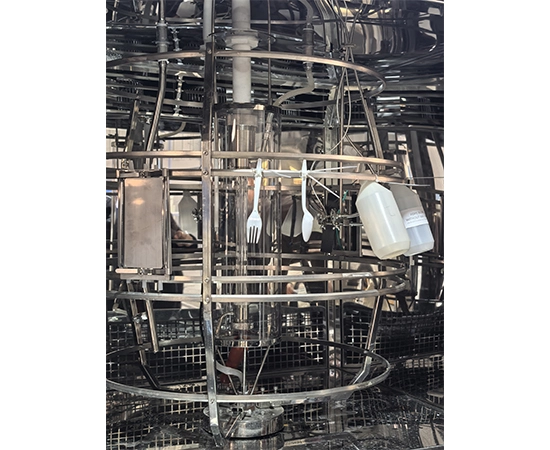
Hanging specimen |
Impact Resistance Degradation Assessment
Outdoor plastics must withstand mechanical shocks throughout their service life, making impact testing essential. Notched Izod or Charpy impact tests measure energy absorption before fracture, revealing embrittlement from UV and thermal exposure. Polymers like polycarbonate and ABS show significant impact strength reductions after extended weathering. Low-temperature impact testing (-40°C capability) simulates winter conditions in harsh climates. Maintaining adequate impact resistance prevents catastrophic failures in safety-critical applications
 |
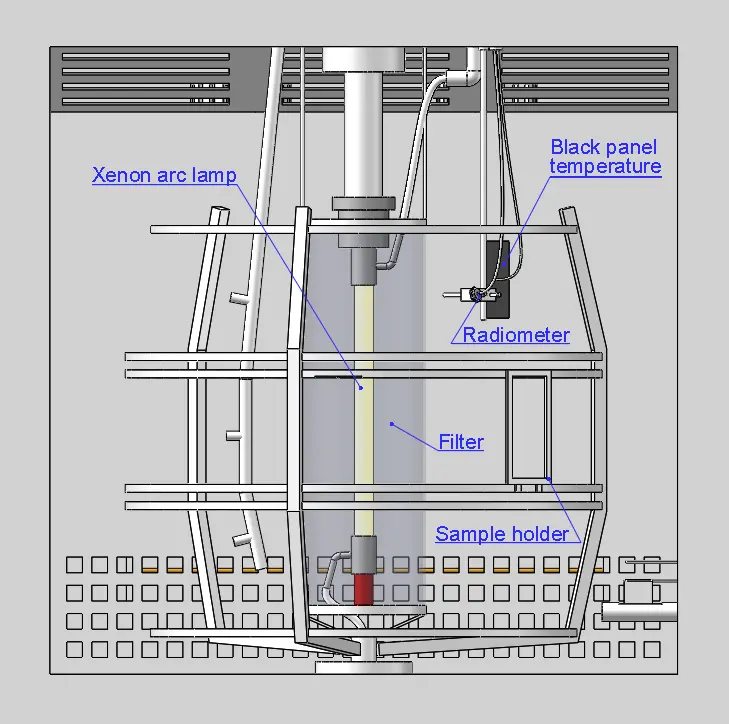 |
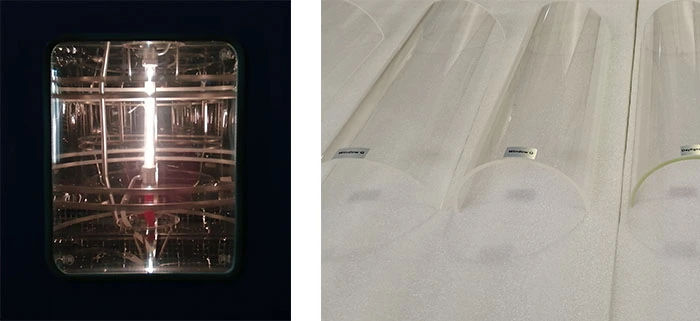
xenon lamp and filters
Flexural Properties and Stiffness Evaluation
Flexural testing determines modulus and strength under bending loads, parameters crucial for structural applications. Weathering may increase brittleness while reducing flexural strength, particularly in semi-crystalline polymers. Three-point or four-point bending configurations generate stress-strain curves that characterize material response. Modulus increases sometimes accompany degradation as chain mobility decreases and crosslinking occurs. These mechanical assessments complement appearance evaluations, providing comprehensive material characterization.
 |
 |
| Control system | |
Material Screening and Formulation Optimization Through Weathering TestsComparative Stabilizer Package Evaluation
UV absorbers, hindered amine light stabilizers (HALS), and antioxidants protect polymers through different mechanisms. Weatherometer testing compares stabilizer packages at various concentration levels, identifying optimal additive combinations. Cost-performance tradeoffs guide formulation decisions, balancing material expense against durability requirements. Accelerated exposure reveals synergistic or antagonistic interactions between stabilizers that field testing would take years to uncover. This rapid screening accelerates product development cycles significantly.
Pigment and Colorant Selection Studies
Organic and inorganic pigments exhibit vastly different weathering resistance profiles. Xenon arc weatherometer exposure distinguishes between high-performance pigments suitable for decade-long exterior use and economy colorants appropriate for shorter-term applications. Pigment loading percentages influence both color stability and polymer matrix protection. Transparent and translucent formulations present unique challenges, requiring specialized UV packages. Systematic pigment evaluation ensures color consistency across product lifecycles.
Filler and Reinforcement Impact Analysis
Minerals, glass fibers, and carbon fillers modify polymer weathering behavior through physical and chemical mechanisms. These additives may shield base resins from UV radiation or introduce catalytic degradation sites. Dispersion quality affects weathering uniformity, with agglomerates creating localized weak points. Testing filled versus unfilled formulations quantifies reinforcement benefits and identifies potential vulnerabilities. Surface treatments on fillers can dramatically alter weathering outcomes, warranting careful evaluation.
|
Formulation Variable |
Testing Parameters |
Evaluation Criteria |
Decision Impact |
|
Stabilizer Concentration |
0.5%, 1.0%, 2.0% loadings |
Color retention, strength |
Optimize cost/performance |
|
Pigment Type |
Organic vs. inorganic |
Fade resistance rating |
Select colorant system |
|
Filler Content |
10%, 20%, 30% loading |
Surface integrity |
Determine reinforcement level |
Supporting Quality Control and Product Qualification ProgramsBatch-to-Batch Consistency Verification
Manufacturing variations in raw materials, processing conditions, and additive dispersion affect weathering performance. Quality control protocols subject production samples to standardized xenon arc exposure, ensuring batch consistency. Acceptance criteria based on color change, gloss retention, and mechanical properties prevent substandard material from reaching customers. Statistical process control charts track weathering performance trends, enabling proactive adjustments. This verification reduces warranty claims and maintains brand reputation.
Supplier Raw Material Qualification
Resin suppliers provide technical data sheets with limited weathering information, necessitating independent verification. Qualification testing exposes candidate materials to accelerated aging, validating supplier claims under relevant conditions. Comparative evaluation of multiple suppliers supports sourcing decisions based on actual performance data. Long-term supplier agreements often include weathering performance specifications. This rigorous qualification protects against formulation changes that could compromise product durability.
Compliance with Industry Standards and Specifications
Automotive, construction, and consumer goods industries mandate specific weathering test protocols. Standards like SAE J2527, ASTM G155, and ISO 4892-2 define exposure conditions, test durations, and acceptance criteria. The xenon arc weatherometer configured with appropriate filters and conditions ensures regulatory compliance. Third-party testing laboratories often require equipment calibration certificates and standardized operating procedures. Meeting these standards opens market access and demonstrates technical competence.
Correlation of Xenon Arc Test Data with End-Use Performance RequirementsEstablishing Acceleration Factors for Service Life Prediction
Controlled laboratory exposure typically accelerates degradation by factors of 5 to 50 compared to outdoor weathering, depending on climate and material. Correlation studies compare xenon arc results with outdoor exposure racks in Florida, Arizona, and other reference locations. Statistical models relate laboratory exposure hours to equivalent outdoor years, enabling warranty period determination. Material-specific acceleration factors account for activation energies and temperature dependencies. These correlations transform laboratory data into actionable product development insights.
Geographic and Climate-Specific Testing Protocols
Materials destined for tropical, desert, or temperate climates experience different weathering stresses. Testing protocols adjust irradiance levels (typically 150W/m² in the 300-400nm range), temperature cycles, and moisture exposure to match target environments. Black panel temperatures reaching 85°C simulate extreme surface heating in desert applications. Humidity cycling between 30% and 98% RH replicates coastal and rainforest conditions. Geographic customization improves prediction accuracy for region-specific deployments.
Integration with Real-Time Outdoor Exposure Programs
Xenon arc testing provides rapid preliminary data, while outdoor exposure racks validate long-term predictions. Parallel testing programs combine accelerated laboratory exposure with natural weathering at multiple geographic sites. Correlation coefficients quantify agreement between laboratory and field results, refining prediction models. Discrepancies highlight degradation mechanisms inadequately captured by accelerated testing. This integrated approach balances speed with real-world validation, supporting confident product launches.
|
Climate Zone |
Irradiance Setting |
BPT Range |
Humidity Cycle |
Acceleration Factor |
|
Desert (Arizona) |
150 W/m² |
75-85°C |
30-50% RH |
20-30× |
|
Subtropical (Florida) |
150 W/m² |
60-75°C |
70-98% RH |
10-15× |
|
Temperate (Europe) |
120 W/m² |
50-65°C |
50-80% RH |
8-12× |
Ensure Material Durability with LIB Industry's Precision Xenon Arc WeatherometerAdvanced Testing Capabilities for Research and Development
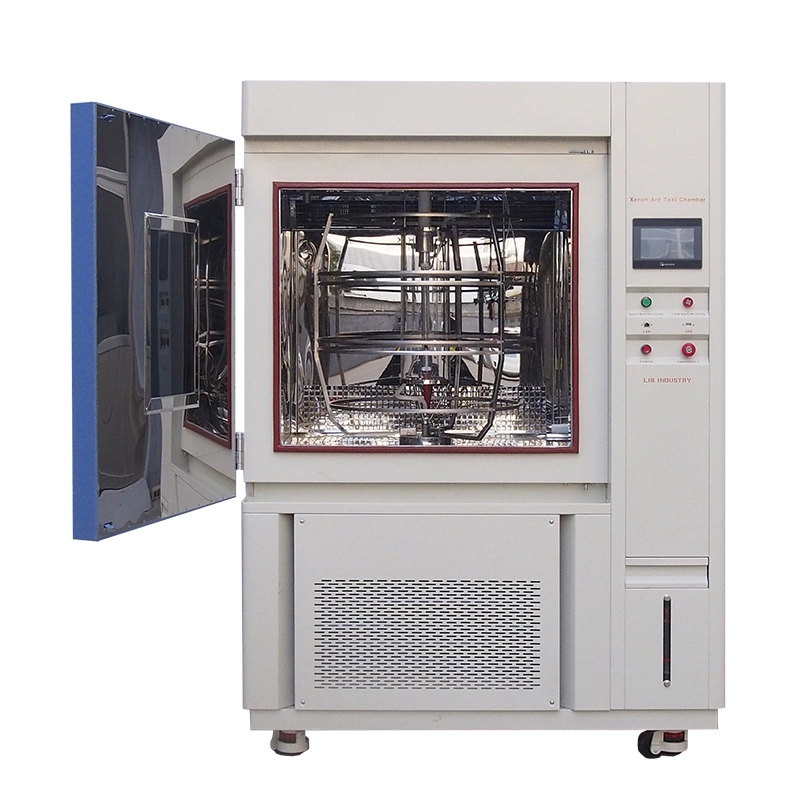
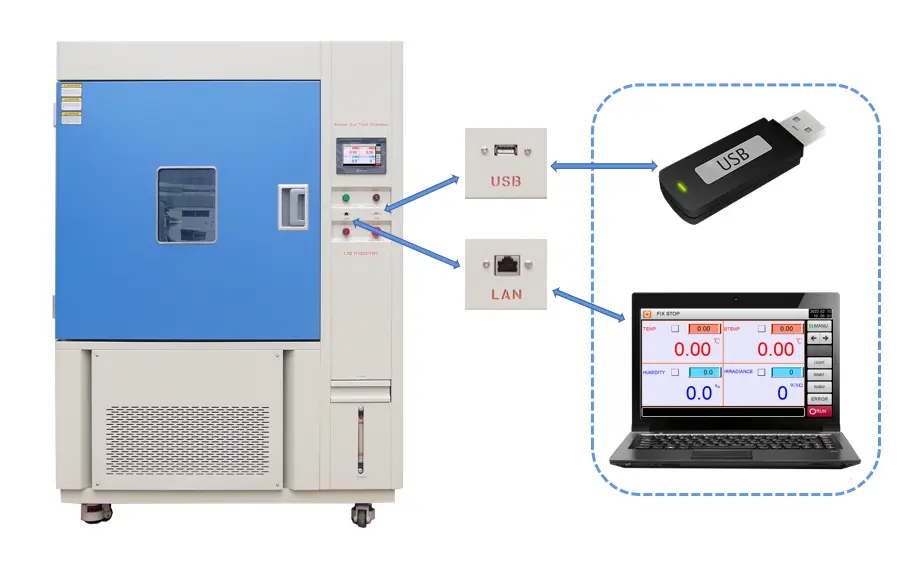
The XL-S-750C xenon arc weatherometer delivers precise environmental control within a 950×950×850mm test chamber. A 4500W water-cooled xenon lamp with specialized filters replicates the solar spectrum's damaging wavelengths. Programmable color LCD touchscreen controllers enable complex exposure sequences combining light, dark, humidity, and temperature cycles. Temperature control from -40°C to 100°C accommodates extreme condition simulation. This versatility supports fundamental polymer research and applied product development across industries.
Reproducible Results Through Calibrated Instrumentation
Integrated UV radiometers with ±5% tolerance maintain consistent irradiance throughout extended test campaigns. Automated radiometer positioning eliminates operator variability in exposure measurement. Black panel temperature sensors with ±2°C accuracy ensure thermal condition repeatability. The rotating sample holder at 1 revolution per minute provides uniform exposure across all test specimens. Double-layer thermostable silicone rubber sealing maintains chamber integrity during cycling operations. These features deliver the reproducibility essential for comparative testing and regulatory compliance.
Comprehensive Technical Support and Application Expertise
LIB Environmental Simulation Industry provides turn-key solutions including equipment commissioning, operator training, and ongoing technical support. Application specialists assist in test protocol development, ensuring alignment with industry standards and customer requirements. Calibration services maintain equipment accuracy throughout its operational lifetime. Global service networks minimize downtime through rapid parts availability and remote diagnostics. This comprehensive support infrastructure maximizes testing efficiency and data quality.
Conclusion
Xenon arc weatherometers provide essential insights into polymer behavior under accelerated aging conditions, enabling informed material selection and formulation optimization. The controlled replication of UV radiation, thermal cycling, and moisture exposure reveals degradation mechanisms that determine product lifespan. From color stability assessment to mechanical property monitoring, this testing methodology supports quality control, regulatory compliance, and performance prediction. Correlation with outdoor exposure data transforms laboratory results into actionable service life estimates across diverse climate zones.
FAQs1. What exposure duration is typically required to simulate 5 years of outdoor weathering for automotive plastics?
Depending on the polymer formulation and geographic location, 1000-2000 hours of xenon arc exposure generally correlates with 5 years of outdoor service. Acceleration factors vary with material chemistry, stabilizer packages, and climate conditions. Correlation studies with outdoor exposure racks in target markets provide precise conversion factors for specific applications.
2. Can xenon arc weatherometers evaluate both transparent and opaque polymer materials effectively?
Xenon arc testing accommodates transparent, translucent, and opaque materials by adjusting sample positioning and measurement techniques. Transparent materials require transmission spectroscopy and haze measurements, while opaque samples focus on surface appearance and color stability. The rotating sample holder ensures consistent exposure regardless of material opacity or surface characteristics.
3. How do xenon arc test results compare with natural outdoor weathering in predicting real-world performance?
Xenon arc weatherometers equipped with appropriate filters replicate the solar spectrum's damaging wavelengths with high fidelity. Correlation coefficients between laboratory and outdoor exposure typically exceed 0.85 for well-designed test protocols. Material-specific validation through parallel outdoor exposure confirms acceleration factors, enabling confident service life predictions based on laboratory data.
Contact LIB Industry today to discuss your weathering test requirements. As a leading manufacturer and supplier of xenon arc weatherometers, we deliver precision testing solutions backed by comprehensive technical support. Reach our applications team at ellen@lib-industry.com to explore how our XL-S-750C weatherometer can accelerate your polymer development programs.