Advantages of Portable Thermal Chambers in R&D Laboratories
Research and development laboratories demand precision, adaptability, and efficiency in their testing environments. Portable thermal chambers have emerged as indispensable tools that address these critical needs while offering substantial operational benefits. These compact, versatile units deliver controlled temperature and humidity conditions ranging from -70℃ to +150℃, enabling comprehensive environmental testing without the spatial and financial constraints of traditional walk-in chambers. Their ability to accelerate product validation cycles, enhance cross-functional collaboration, and provide flexible testing configurations makes them essential assets for modern R&D facilities pursuing innovation across electronics, materials science, pharmaceuticals, and aerospace sectors.
Why Do R&D Teams Require Flexible Thermal Testing Solutions?
Evolving Product Complexity Demands Adaptive Testing
Contemporary product development involves increasingly sophisticated components that operate across diverse environmental conditions. Semiconductor devices, battery systems, and composite materials must demonstrate reliability under thermal stress scenarios that traditional testing infrastructure cannot efficiently replicate. Portable thermal chambers provide the adaptability to quickly adjust testing protocols as product specifications evolve during development cycles.
Budget Constraints and Resource Optimization
Research facilities face ongoing pressure to maximize output while controlling capital expenditures. Large-scale environmental chambers represent significant investments in both acquisition costs and operational expenses. Compact thermal testing units offer cost-effective alternatives that deliver comparable performance within constrained budgets, allowing organizations to allocate resources toward multiple testing stations rather than singular, expensive installations.
Accelerated Time-to-Market Pressures
Competitive markets demand shorter development timelines without compromising quality validation. The ability to conduct parallel testing across multiple portable units significantly reduces bottlenecks that occur when teams must schedule access to shared, centralized testing facilities. This distributed testing capability directly translates to faster iteration cycles and reduced time-to-market intervals.
Rapid Prototyping and Iterative Testing Capabilities
Immediate Accessibility for Design Verification
Portable thermal chambers positioned directly within development workspaces eliminate the logistical delays associated with transporting prototypes to dedicated testing facilities. Engineers can conduct preliminary thermal assessments within minutes of completing design modifications, receiving immediate feedback that informs subsequent iterations. This proximity between design and testing activities fundamentally accelerates the refinement process.
|
|
|
||
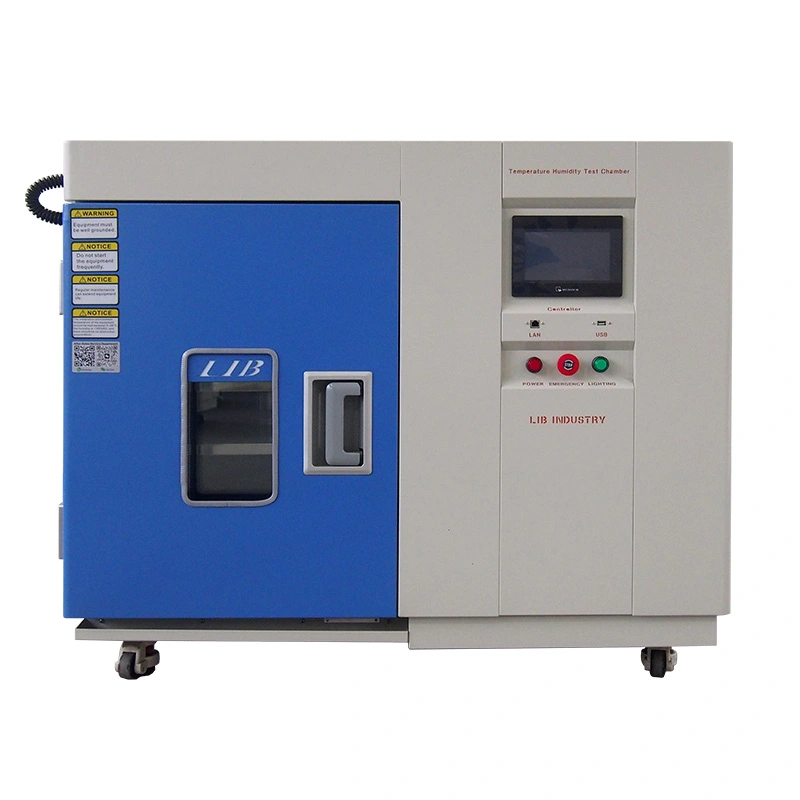
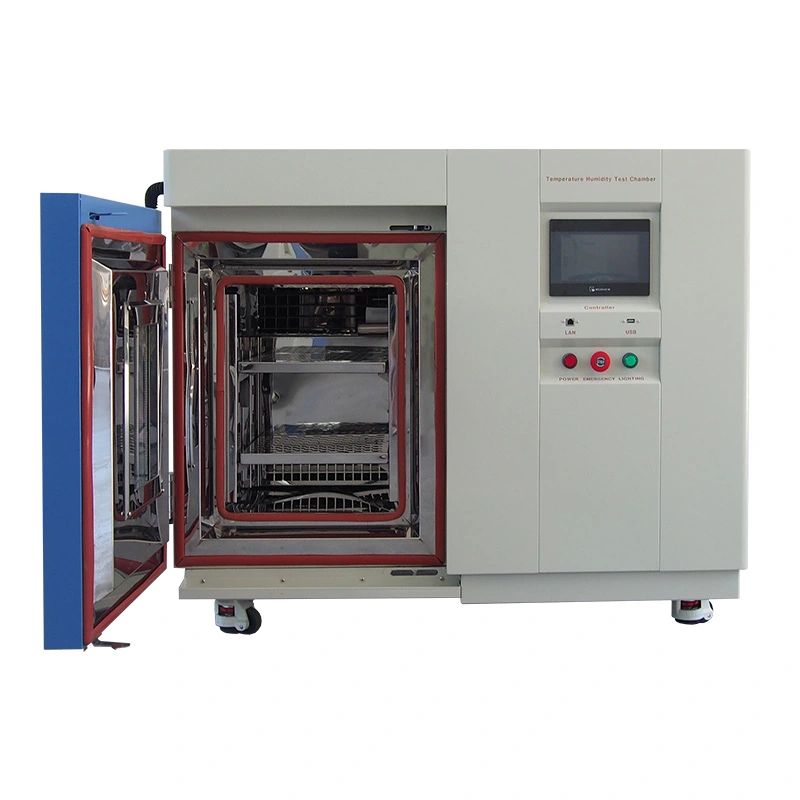
| Model | TH-50 | ||
| Internal dimension (mm) |
320x350x450 |
||
| Overall dimension (mm) | 800x1050x950 | ||
| Temperature range | -86 ℃ ~+150 ℃ | ||
| Temperature fluctuations | ± 0.5 ℃ | ||
| Humidity Range | 10%/20%~95 % | ||
| Temperature deviation | ± 2.0 ℃ | ||
| Temperature Sensor | PTR Platinum Resistance PT100Ω/MV A-class | ||
| Temperature Resolution | ± 0.001 ℃ | ||
| Exterior Material | Steel Plate with A protective coating | ||
| Interior Material | SUS 304 stainless steel | ||
Quick Temperature Transition Performance
Advanced refrigeration systems in modern portable units achieve cooling rates of 1℃/min and heating rates of 3℃/min, enabling rapid thermal cycling protocols. This performance characteristic supports accelerated life testing methodologies where components undergo hundreds of thermal cycles within compressed timeframes, revealing potential failure modes that might otherwise remain undetected until field deployment.
Programmable Testing Sequences
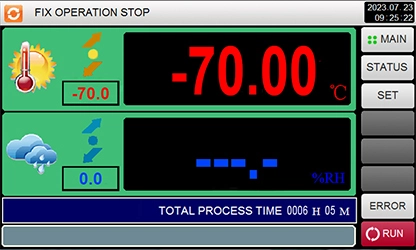
Contemporary controllers featuring color LCD touch screens allow researchers to program complex temperature and humidity profiles that automatically execute multi-stage testing protocols. This automation capability means prototype evaluation can continue unattended during off-hours, effectively extending productive testing time beyond standard work schedules and further compressing development timelines.
Space Efficiency and Modular Test Configurations
Compact Footprint Optimization
|
Model |
Internal Volume |
Overall Dimensions |
Floor Space Required |
|
TH-50 |
50L |
820×1160×950mm |
0.95 m² |
|
TH-80 |
80L |
900×1210×1000mm |
1.09 m² |
The table above demonstrates how portable thermal chambers deliver substantial testing capacity within minimal floor space, a critical consideration for laboratories operating in urban environments or multi-disciplinary facilities where every square meter carries premium value.
Workbench Integration Advantages
Unlike walk-in chambers that require dedicated floor space and often specialized installation, portable thermal chambers integrate seamlessly into existing laboratory layouts. Researchers can position them adjacent to measurement equipment, assembly stations, or computer workstations, creating cohesive testing ecosystems that enhance workflow efficiency and reduce movement between disparate work zones.
Scalable Testing Infrastructure
Organizations can incrementally expand their testing capabilities by adding portable units as project demands increase, rather than committing to oversized infrastructure based on projected future needs. This modular approach aligns capital investment with actual utilization patterns and provides flexibility to reallocate equipment between departments or projects as priorities shift.
How Portable Thermal Chambers Enable Parallel Testing Workflows?
Multi-Unit Simultaneous Operations
Research teams developing product families or conducting comparative studies across material variants benefit enormously from operating multiple thermal chambers concurrently. Where a single large chamber might accommodate only one comprehensive test protocol at a time, three or four portable units can simultaneously evaluate different configurations, multiplying the effective testing throughput.
Dedicated Test Station Assignments
Specialized research groups focusing on specific failure modes or environmental conditions can maintain permanently configured testing stations tailored to their recurring requirements. Electronics reliability teams might dedicate one unit to thermal shock protocols while materials scientists configure another for extended humidity exposure studies, eliminating the setup time and cross-contamination risks associated with shared equipment.
 |
|
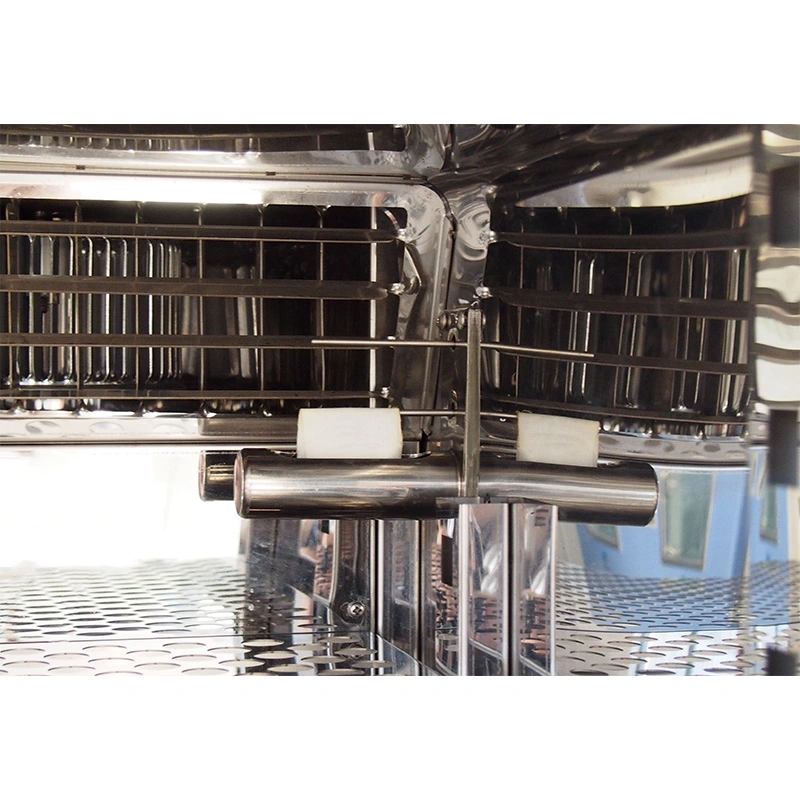 |
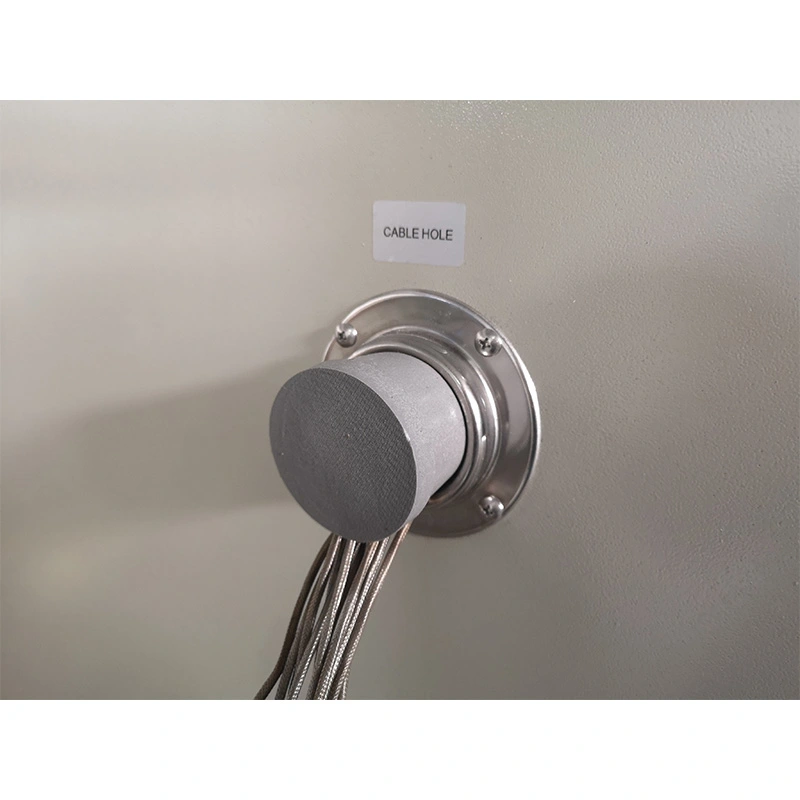
| Cable Hole | Controller | Temperature and HUmidity Sensor |
Reduced Scheduling Conflicts
Centralized testing facilities often become organizational bottlenecks where multiple teams compete for limited chamber availability. Distributed portable units assigned to individual departments or project teams eliminate these scheduling conflicts, ensuring that critical testing phases proceed according to project timelines rather than equipment availability calendars.
|
Testing Approach |
Weekly Test Cycles |
Setup Time per Test |
Utilization Efficiency |
|
Single Large Chamber |
3-4 cycles |
2-3 hours |
45-60% |
|
Three Portable Units |
15-18 cycles |
20-30 minutes |
75-85% |
Improved Collaboration Between Design and Test TeamsPhysical Proximity Enhances Communication
When portable thermal chamber resides within design laboratories rather than isolated testing departments, spontaneous collaboration becomes the norm. Engineers observing unexpected test results can immediately consult with designers, examining the physical prototype while reviewing thermal performance data, leading to more accurate root cause identification and solution development.
Real-Time Problem-Solving Opportunities
The ability to quickly retest after implementing design modifications creates tight feedback loops that accelerate problem resolution. Rather than waiting days for retesting appointments in shared facilities, teams can validate corrective actions within hours, maintaining project momentum and preventing the frustration that accompanies prolonged uncertainty about solution effectiveness.
Cross-Functional Knowledge Transfer
Design engineers gain deeper understanding of how their decisions impact thermal performance when they directly operate testing equipment and witness results firsthand. This experiential learning creates more thermally-aware designers who anticipate potential issues during initial concept development, reducing the number of design iterations required to achieve acceptable performance.
Enhancing Data Collection During Early-Stage DevelopmentEthernet Connectivity and Data Integration
Modern portable thermal chambers equipped with network connections integrate seamlessly into laboratory information management systems. Temperature, humidity, and test duration data automatically transfer to centralized databases where researchers can correlate thermal exposure with material property changes, component degradation rates, or performance metric variations, building comprehensive knowledge repositories.
Observation Window Documentation
Double-layer thermally-stable observation windows combined with interior lighting enable visual monitoring and photographic documentation of specimen behavior during testing. Researchers can capture high-resolution images of condensation patterns, material deformation, or component failure sequences without interrupting controlled environmental conditions, preserving the integrity of experimental data.
Cable Port Integration for In-Situ Monitoring
Standard cable holes (Φ50mm/100mm/200mm) with specialized plugs allow researchers to route measurement leads into the chamber while maintaining environmental integrity. This capability supports real-time electrical characterization, thermal imaging, or sensor data acquisition during exposure cycles, dramatically enriching the dataset beyond simple pass-fail determinations.
High-Precision Environmental Control
|
Parameter |
Specification |
Research Benefit |
|
Temperature Fluctuation |
±0.5℃ |
Ensures consistent exposure conditions across repeated tests |
|
Temperature Deviation |
±2.0℃ |
Maintains spatial uniformity throughout the test volume |
|
Humidity Deviation |
±2.5% RH |
Supports reliable moisture-related testing protocols |
Maximize R&D Agility with LIB Industry's Compact and Reliable Portable Thermal ChamberEnvironmental Refrigerant Compliance
Sustainability considerations increasingly influence laboratory equipment selection decisions. LIB Industry portable thermal chambers utilize environmentally responsible refrigerants that comply with international regulations while delivering the performance characteristics researchers require. This forward-looking design approach protects organizations from premature equipment obsolescence as environmental standards continue evolving.
Comprehensive Safety Architecture
Multiple protection systems including humidifier dry-combustion protection, over-temperature protection, over-current protection, refrigerant high-pressure protection, water shortage protection, and earth leakage protection ensure safe unattended operation. These redundant safety features provide peace of mind when running extended duration tests overnight or during weekends, maximizing equipment utilization without requiring continuous supervision.
Durable Construction Standards
Interior chambers fabricated from SUS304 stainless steel with mirror-surface finishing resist corrosion from moisture exposure and temperature extremes, ensuring long-term dimensional stability and cleanliness. Exterior steel plates with protective coating combined with polyurethane foam and insulation cotton thermal barriers deliver energy-efficient operation that minimizes operational costs while maintaining precise environmental control.
Turnkey Solution Provider Advantages
LIB Industry's comprehensive approach encompasses research, design, production, commissioning, delivery, installation, and training, ensuring that portable thermal chambers integrate seamlessly into existing laboratory operations. This end-to-end support model reduces implementation risks and accelerates the transition from equipment acquisition to productive testing operations.
Conclusion
Portable thermal chambers represent transformative investments for R&D laboratories seeking to enhance testing agility, reduce development timelines, and optimize resource utilization. Their compact configurations, rapid thermal cycling capabilities, and flexible deployment options address the evolving demands of contemporary product development across diverse industries. Organizations that strategically integrate these versatile testing platforms position themselves to respond more effectively to market opportunities while maintaining the rigorous validation standards that ensure product reliability and customer satisfaction.
FAQs
1. What temperature range capabilities should R&D labs prioritize when selecting portable thermal chambers?
Selection depends on application requirements. Electronics testing typically needs -40℃ to +150℃ ranges, while specialized materials research may require -70℃ capabilities. Consider both current testing protocols and potential future applications when specifying temperature ranges to ensure long-term equipment utility.
2. How do portable thermal chambers compare to walk-in chambers regarding testing capacity and flexibility?
While walk-in chambers offer larger test volumes, portable units provide superior flexibility through parallel testing capabilities, proximity to design workspaces, and modular scalability. Multiple portable chambers often deliver higher aggregate throughput than single large installations while requiring significantly lower capital investment.
3. Can portable thermal chambers integrate with existing laboratory data management systems?
Contemporary units feature Ethernet connectivity and programmable controllers that support network integration. This capability enables automatic data logging, remote monitoring, and seamless incorporation into laboratory information management systems, enhancing documentation compliance and facilitating comprehensive data analysis across multiple testing programs.
Ready to enhance your R&D testing capabilities? LIB Industry, a leading portable thermal chamber manufacturer and supplier, delivers customized environmental testing solutions tailored to your specific requirements. Contact us at ellen@lib-industry.com to discuss how our compact, reliable thermal chambers can accelerate your development workflows.