Applications of Constant Temperature Chambers in Calibration Labs
Calibration laboratories demand uncompromising environmental stability to maintain measurement traceability and achieve repeatable results. Constant temperature chambers serve as fundamental infrastructure in metrology facilities, providing controlled thermal environments where precision instruments undergo calibration against reference standards. These specialized enclosures eliminate temperature-induced measurement drift, enabling calibration technicians to achieve uncertainty budgets that comply with ISO/IEC 17025 requirements. By maintaining thermal stability within ±0.5°C across the working volume, these chambers create conditions where thermometers, sensors, material specimens, and analytical equipment demonstrate their true performance characteristics without environmental interference.
How Constant Temperature Affects Calibration Accuracy?
 Temperature represents one of the most significant influence quantities in dimensional, electrical, and chemical measurements. Understanding this relationship proves essential for laboratories pursuing accreditation.
Thermal Expansion Impact on Dimensional Metrology
Materials undergo predictable dimensional changes as temperature varies, following coefficients of thermal expansion specific to each substance. Steel components expand approximately 11.7 μm per meter per degree Celsius, while aluminum exhibits nearly twice this sensitivity. Calibration of micrometers, calipers, and gauge blocks requires thermal equilibrium at 20°C - the international reference temperature for length measurements - to achieve stated accuracy levels.
Electronic Component Temperature Coefficients
Resistance, capacitance, and voltage references embedded in measurement instruments exhibit temperature-dependent behavior. Precision resistors may drift 2-5 ppm/°C, accumulating significant errors across even modest temperature swings. Maintaining calibration environments within narrow thermal bands prevents these systematic errors from corrupting traceability chains.
Chemical Reaction Rate Dependencies
Analytical chemistry laboratories calibrating pH meters, spectrophotometers, and chromatography systems must account for temperature's exponential influence on chemical equilibria and reaction kinetics. Buffer solution pH values shift predictably with temperature according to well-characterized equations, making thermal control mandatory for achieving calibration uncertainties below 0.01 pH units.
Standard Equipment Calibrated Using Temperature Chambers
Modern metrology facilities rely on constant temperature chambers to calibrate diverse instrument categories across multiple measurement disciplines.
Temperature and Humidity Sensors
Thermocouples, RTDs, thermistors, and humidity probes undergo comparison calibration against reference-grade instruments inside chambers programmed to execute multi-point verification protocols. The chambers cycle through specified setpoints while data acquisition systems record deviations between test units and standards, establishing correction factors across the operational range.
Pressure and Flow Measurement Devices
Pressure transducers and flow meters exhibit temperature-sensitive zero drift and span changes that require characterization. Constant climate chambers housing these instruments during calibration isolate thermal effects from other error sources, allowing technicians to develop temperature compensation algorithms or document performance specifications across anticipated service conditions.
Material Testing Specimens
Tensile strength, hardness, and elasticity measurements on materials require thermal conditioning before testing. Chambers bring specimens to standardized temperatures, ensuring mechanical property evaluations reflect material behavior rather than thermal transients. Polymers particularly demand this treatment, as glass transition temperatures dramatically affect measured properties.
Chamber Design Considerations for Metrology Applications
Selecting appropriate constant temperature chambers for calibration work requires matching technical specifications to measurement uncertainty requirements.
Working Volume and Uniformity Specifications
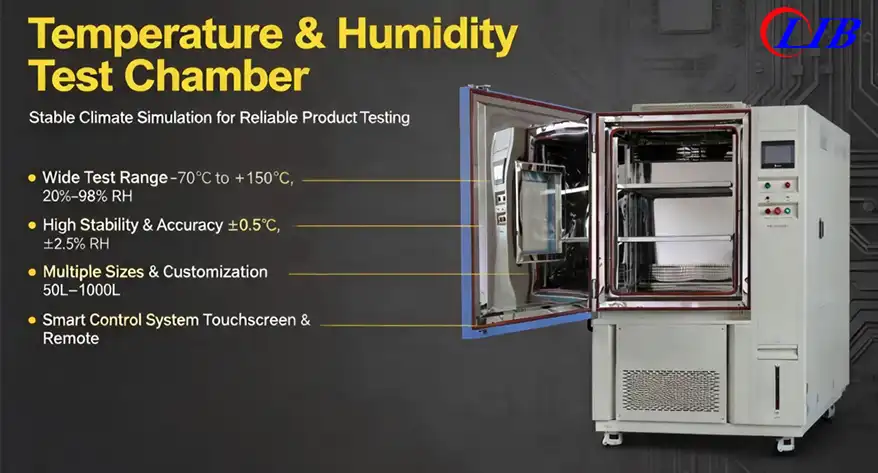
Chambers must accommodate calibration artifacts while maintaining spatial temperature uniformity sufficient for the intended measurements. Metrology-grade units achieve ±0.5°C uniformity through optimized airflow patterns and strategically positioned heating/cooling elements. Larger working volumes - ranging from 100L to 1000L - suit calibration of multiple instruments simultaneously, improving laboratory throughput.
Temperature Stability and Recovery Performance
PID control algorithms maintain setpoint stability by continuously adjusting heating and refrigeration outputs. Advanced controllers achieve stability better than ±0.1°C over extended periods, critical for long-duration calibration protocols. Recovery performance after door openings determines how quickly chambers return to stable conditions, directly impacting laboratory productivity.
Access Ports and Cable Penetrations
Calibration setups frequently require external connections to power supplies, data acquisition systems, and reference standards. Chambers equipped with insulated cable ports (typically 50mm to 200mm diameter) featuring silicone seals permit these connections while minimizing thermal leakage. Strategically positioned ports reduce air circulation disruption and maintain chamber uniformity.
|
Chamber Model |
Internal Volume |
Temperature Range |
Uniformity |
Typical Applications |
|
T-100 |
100L |
-70°C to +150°C |
±0.5°C |
Sensor calibration, small components |
|
T-500 |
500L |
-70°C to +150°C |
±0.5°C |
Multi-instrument calibration, material specimens |
|
T-1000 |
1000L |
-70°C to +150°C |
±0.5°C |
Large equipment, batch calibration operations |
Controlling Environmental Variables for Reliable Results
Achieving repeatable calibration results demands management of multiple environmental parameters beyond temperature alone.
Humidity Control Integration
Constant temperature and humidity chambers address hygroscopic materials and sensors requiring specific moisture conditions during calibration. Relative humidity control from 20% to 98% RH enables calibration of hygrometers, moisture analyzers, and humidity-sensitive electronic components. Precision humidity control prevents condensation at low temperatures while maintaining saturated conditions for specialized applications.
Vibration Isolation Requirements
Sensitive dimensional measurements and force calibrations detect vibration transmitted through chamber structures from refrigeration compressors and circulation fans. Mounting chambers on isolation platforms or selecting models with optimized compressor placement minimizes vibration coupling into calibration setups, particularly important for mass comparators and laser interferometry applications.
Atmospheric Pressure Considerations
Barometric pressure variations affect air-based pressure calibrations and influence temperature sensor readings through gas density effects. While constant temperature chambers do not typically control atmospheric pressure, locating them in environmentally stable laboratory areas minimizes pressure fluctuations that could corrupt calibration data.
Data Logging and Analysis in Calibration Processes
Documentation requirements under ISO/IEC 17025 demand comprehensive records of environmental conditions during calibration activities.
Continuous Monitoring Systems
Modern constant temperature chambers incorporate programmable touchscreen controllers with Ethernet connectivity, enabling real-time data transmission to laboratory information management systems (LIMS). Continuous logging of chamber temperature, humidity (when applicable), and setpoint deviations creates audit trails demonstrating environmental compliance throughout calibration procedures.
Statistical Process Control Applications
Long-term monitoring of chamber performance through control charts identifies drift, instability, or systematic trends requiring corrective action. Tracking parameters like temperature uniformity surveys, recovery times after door openings, and refrigeration system performance enables predictive maintenance scheduling that prevents calibration disruptions.
Uncertainty Budget Contributions
Environmental chamber specifications directly contribute to measurement uncertainty budgets. Type B uncertainty components derived from chamber uniformity specifications, stability performance, and calibration certificate data combine with other uncertainty sources to establish overall calibration capability. Chambers with superior performance specifications enable laboratories to claim lower uncertainties, expanding their accreditation scopes.
|
Uncertainty Source |
Typical Contribution |
Reduction Strategy |
|
Chamber uniformity |
±0.5°C (k=1) |
Verify with multi-point surveys, optimize loading |
|
Stability fluctuation |
±0.1°C (k=1) |
Extended thermal soak, advanced PID tuning |
|
Sensor placement |
±0.2°C (k=1) |
Position sensors in validated uniform zones |
Enhancing Instrument Precision Through Temperature-Stable Environments
Beyond calibration activities, constant temperature chambers support research and quality control functions demanding environmental control.
Thermal Cycling Testing Protocols
Accelerated life testing subjects instruments to programmed temperature profiles cycling between extreme conditions. Chambers with heating rates of 1°C/min and cooling rates of 3°C/min execute standardized stress tests revealing failure modes, validating design margins, and establishing MTBF (Mean Time Between Failures) predictions for field deployment planning.
Long-Term Drift Characterization
Documenting instrument stability over weeks or months requires uninterrupted environmental control. Constant temperature chambers housing instruments under continuous monitoring reveal aging characteristics, seasonal variations in zero drift, and long-term span changes that inform recalibration interval decisions and uncertainty budget revisions.
Reference Standard Storage
Primary and secondary measurement standards maintained as laboratory references require stable storage conditions between calibrations. Dedicated constant temperature chambers serving as reference storage vaults prevent thermal stress on precision resistors, voltage references, and dimensional artifacts, extending their stability periods and reducing recalibration frequency.
Ensure Calibration Precision with LIB Industry Constant Temperature Chambers
|
|
Name | Constant Temperature Chambers | ||||
|
Model |
TH-100 |
|||||
|
Temperature range |
-20℃ ~+150 ℃ |
|||||
|
Low type |
A: -40℃ B:-70℃ C -86℃ |
|||||
|
Humidity Range |
20%-98%RH |
|||||
|
Temperature deviation |
± 2.0 ℃ |
|||||
|
Heating rate |
3 ℃ / min |
|||||
|
Cooling rate |
1 ℃ / min |
|||||
|
Controller |
Programmable color LCD touch screen controller, Multi-language interface, Ethernet , USB |
|||||
|
Exterior material |
Steel Plate with protective coating |
|||||
|
Interior material |
SUS304 stainless steel |
|||||
|
Standard configuration |
1 Cable hole (Φ 50) with plug; 2 shelves |
|||||
|
Timing Function |
0.1~999.9 (S,M,H) settable |
|||||
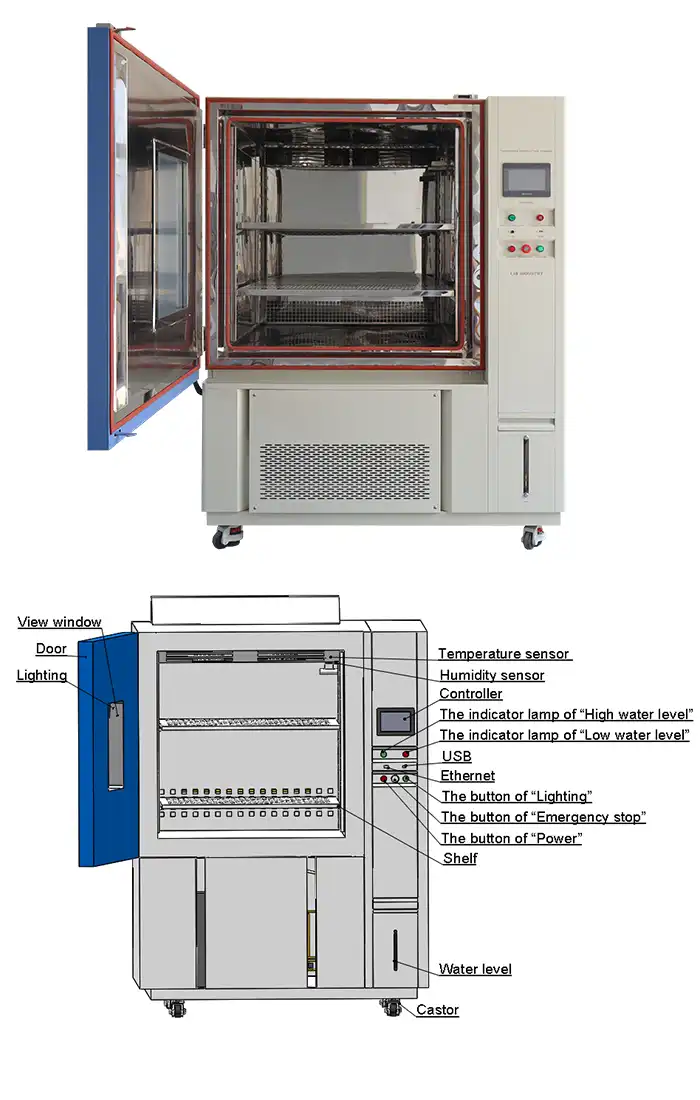
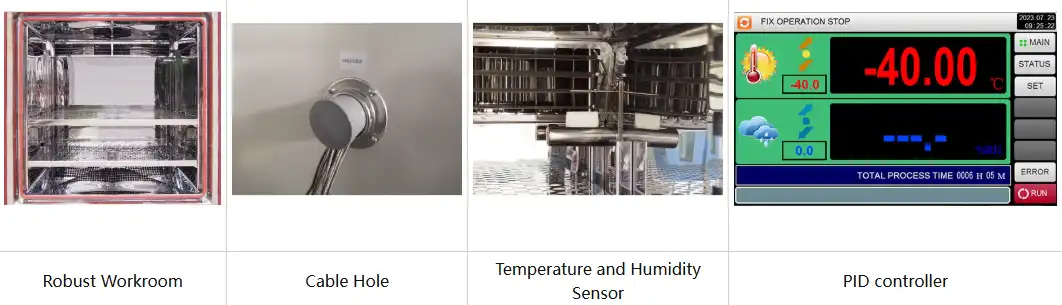
Selecting constant temperature chambers optimized for metrology applications requires evaluating features specifically addressing calibration laboratory needs.
Compliance with International Standards
Chambers designed for calibration work meet requirements outlined in standards including ISO 17025 for testing and calibration laboratories, ASTM E2554 for thermal performance validation, and IEC 60068 for environmental testing procedures. Manufacturers providing ISO 17025 calibration certificates with chambers streamline laboratory accreditation processes by establishing traceability to national measurement institutes.
Service and Support Infrastructure
Calibration laboratories cannot tolerate extended chamber downtime disrupting measurement schedules. Manufacturers offering preventive maintenance programs, rapid-response technical support, and local spare parts availability minimize operational interruptions. Training programs educating laboratory personnel on optimal chamber operation and basic troubleshooting enhance reliability and measurement quality.
Total Cost of Ownership Analysis
Initial purchase price represents only one component of chamber ownership costs. Energy consumption from continuous refrigeration operation, calibration service frequencies, consumable replacements (refrigerants, filters), and projected service life must factor into procurement decisions. Chambers featuring environmentally friendly refrigerants, efficient insulation systems, and proven longevity deliver superior value despite potentially higher acquisition costs.
|
Performance Specification |
Impact on Calibration Work |
LIB Industry Capability |
|
Temperature range |
Determines calibration scope |
-70°C to +180°C standard |
|
Uniformity |
Directly affects measurement uncertainty |
±0.5°C throughout working volume |
|
Stability |
Enables long-duration protocols |
±0.5°C temperature fluctuation |
|
Data interfaces |
Supports automated documentation |
Ethernet, USB, PC connectivity |
Conclusion
Constant temperature chambers constitute essential infrastructure in calibration laboratories pursuing measurement excellence and regulatory compliance. By eliminating thermal variables that degrade measurement quality, these chambers enable traceable calibrations meeting international standards while supporting expanded testing capabilities. Investment in appropriately specified chambers with proven performance, comprehensive support, and documented traceability establishes foundations for laboratory accreditation and sustained technical competence.
FAQ
What temperature stability is required for ISO 17025 accredited calibration laboratories?
ISO 17025 does not specify absolute stability requirements, but laboratories must demonstrate environmental control adequate for achieving claimed measurement uncertainties. Most metrology applications require chamber stability within ±0.5°C, though precision dimensional measurements may demand ±0.1°C or better depending on material coefficients and tolerance requirements.
Can constant temperature chambers calibrate instruments requiring humidity control?
Combined temperature-humidity chambers provide simultaneous control of both parameters across ranges from -20°C to +150°C and 20% to 98% RH. These chambers enable calibration of hygrometers, environmental monitors, and moisture-sensitive electronic components while maintaining traceability through reference sensors calibrated against national standards.
How often should calibration laboratories verify chamber temperature uniformity?
Initial uniformity surveys establish baseline performance, with annual reverification recommended for accredited laboratories. Additional surveys become necessary after chamber relocation, refrigeration system service, or when calibration results suggest environmental issues. Documenting uniformity through multi-point temperature mapping validates chamber suitability for specific calibration protocols.
Contact LIB Industry for Advanced Calibration Solutions
LIB Industry manufactures precision constant temperature chambers designed specifically for calibration laboratory applications worldwide. Our environmental testing solutions support metrology facilities achieving ISO/IEC 17025 accreditation and maintaining measurement traceability. Contact our technical specialists at ellen@lib-industry.com to discuss your calibration chamber requirements.