ASTM G155 Compliance: A Guide to Xenon Arc Testing
ASTM G155 compliance ensures standardized xenon arc weathering tests that accurately predict material degradation under outdoor exposure conditions. This American Society for Testing and Materials standard defines precise protocols for operating xenon test chambers, including spectral power distribution, irradiance levels, temperature control, and moisture cycling. The standard establishes multiple practice cycles addressing different exposure environments - from automotive exterior components to architectural coatings and polymeric materials. A xenon test chamber meeting ASTM G155 requirements features calibrated irradiance monitoring at 340nm or 420nm wavelengths, controlled black panel temperature (35-85°C), programmable humidity (30-98% RH), and water spray systems simulating rain. Compliance verification involves periodic radiometer calibration, filter transmittance checks, and temperature sensor validation. Manufacturers adhering to ASTM G155 protocols generate internationally recognized test data supporting product warranties, regulatory approvals, and customer specifications across automotive, construction, plastics, and coatings industries.
What ASTM G155 Means for Weathering Test Accuracy?
Standardization Eliminates Inter-Laboratory Variability
Material weathering assessment historically suffered from inconsistent methodologies producing incomparable results across testing facilities. ASTM G155 addresses this challenge by prescribing explicit equipment specifications, calibration procedures, and operating parameters. When laboratories worldwide execute identical ASTM G155 Practice cycles, they generate comparable data regardless of geographic location or equipment manufacturer. This standardization enables suppliers in Asia to qualify materials against North American specifications using locally-conducted testing, accelerating global supply chains and reducing qualification costs.
Spectral Distribution Matching Natural Sunlight
Xenon arc lamps produce continuous spectra from ultraviolet through visible to infrared wavelengths closely approximating natural sunlight. ASTM G155 mandates specific optical filter systems - daylight filters for outdoor exposure simulation or window glass filters for interior applications. These filters modify xenon output to match terrestrial solar radiation reaching earth's surface after atmospheric attenuation. The standard specifies allowable spectral power distribution tolerances ensuring photochemical degradation mechanisms in test chambers mirror outdoor weathering processes rather than introducing artifacts from non-representative wavelengths.
Reproducibility Through Controlled Variables
Natural outdoor exposure involves uncontrolled variables - seasonal irradiance fluctuations, unpredictable precipitation, temperature variations, and pollution levels. ASTM G155 eliminates these variables through precise parameter control. Closed-loop irradiance monitoring maintains constant UV exposure intensity compensating for lamp aging. Programmable temperature and humidity cycling replicate specific climate conditions repeatably. This controlled reproducibility enables comparative material testing, accelerated aging factor determination, and statistically valid performance prediction impossible with outdoor weathering alone.
|
Testing Approach |
Variable Control |
Timeline |
Data Comparability |
|
Natural Outdoor Exposure |
Uncontrolled environmental fluctuation |
1-5 years |
Geographic location dependent |
|
ASTM G155 Xenon Testing |
Precise programmed parameters |
Weeks to months |
High inter-laboratory agreement |
|
Non-Standard Xenon Testing |
Variable protocols |
Weeks to months |
Poor cross-facility comparison |
Key Components of an ASTM G155 Xenon Test Chamber

Water-Cooled Xenon Arc Lamp System
ASTM G155 performance relies on stable, high-intensity xenon arc lamps. The 4500W water-cooled xenon lamp employed in LIB Industry chambers delivers consistent spectral output throughout 1,600-2,000 hour service life. Water cooling prevents thermal degradation of optical components and maintains stable arc positioning. The standard requires specific lamp operating parameters - current, voltage, and cooling water temperature - documented in test reports. Lamp replacement timing follows manufacturer specifications or when irradiance calibration reveals output degradation exceeding compensation range.
Optical Filter Configuration
Filter selection fundamentally determines test relevance. ASTM G155 defines multiple filter types addressing different exposure scenarios. Type 1 daylight filters (borosilicate inner and outer filters) simulate outdoor exposure including UV wavelengths down to 295nm. Type 2 window glass filters attenuate UV below 310nm representing interior exposure through automotive or architectural glass. The xenon test chamber must accommodate interchangeable filter systems enabling laboratories to conduct multiple standard practices using single equipment. Filter transmittance verification through spectrophotometry ensures compliance throughout filter service life.
Irradiance Monitoring and Control Technology
Solar Eye radiometer technology continuously measures irradiance at critical wavelengths - 340nm or 420nm per ASTM G155 specifications. The closed-loop control system automatically adjusts lamp power compensating for output degradation, maintaining set irradiance levels (typically 0.35-1.50 W/m²/nm at 340nm) within ±5% tolerance. This precision eliminates irradiance variability as an uncontrolled test variable. The standard mandates radiometer calibration against NIST-traceable reference standards annually, with calibration certificates documenting measurement accuracy and traceability chain.
Selecting Exposure Cycles for Different Materials
Practice A: General Outdoor Weathering
ASTM G155 Practice A (Cycle 1) represents the most commonly specified protocol for general outdoor material exposure. The cycle alternates 102-minute light exposure at 0.35 W/m²/nm (340nm) with 18-minute light plus water spray, operating continuously. Black panel temperature maintains 63°C during dry periods and 47°C during spray. This cycle simulates moderate outdoor weathering suitable for coatings, plastics, and textiles. Many industries reference "ASTM G155 Cycle 1" as baseline qualification requirement establishing minimum weathering resistance expectations.
Practice B: Enhanced UV Exposure
Practice B employs elevated irradiance (0.55 W/m²/nm at 340nm) and higher black panel temperature (70°C) accelerating degradation compared to Practice A. The enhanced UV intensity targets materials serving high-solar-exposure applications - automotive exteriors in desert climates, architectural facades in tropical regions, or outdoor recreational equipment. The increased acceleration factor reduces test duration but requires validation that degradation mechanisms remain representative of natural weathering rather than introducing thermal-only artifacts absent from actual service conditions.
Custom Cycles for Specific Applications
Beyond prescribed practices, ASTM G155 permits custom cycles addressing unique application requirements. Automotive OEMs develop proprietary cycles incorporating industry-specific knowledge - extended dry periods representing garage storage, intense spray simulating car washing, or temperature cycling matching engine heat exposure. These custom protocols leverage ASTM G155 equipment specifications and calibration requirements while tailoring exposure sequences to application-specific weathering scenarios. A xenon test chamber with programmable controllers enables flexible cycle development supporting both standard and customized testing needs.
|
ASTM G155 Practice |
Irradiance (340nm) |
Black Panel Temp |
Spray Cycle |
Typical Applications |
|
Practice A, Cycle 1 |
0.35 W/m²/nm |
63°C dry / 47°C wet |
102 min dry / 18 min spray |
General outdoor coatings, plastics |
|
Practice B |
0.55 W/m²/nm |
70°C |
Programmable cycles |
Automotive exteriors, accelerated testing |
|
Custom Protocols |
Variable per specification |
Application-specific |
User-defined sequences |
Industry-specific qualification |
Controlling Irradiance, Temperature, and Humidity Parameters
Black Panel Temperature Precision
Black panel temperature (BPT) represents actual surface temperature of dark-colored materials under solar loading - often 20-30°C above ambient air temperature. ASTM G155 mandates BPT control rather than chamber air temperature because BPT directly correlates with material degradation rates. LIB Industry xenon test chambers achieve ±2°C BPT accuracy across the 35-85°C range through calibrated black panel thermometers and responsive control systems. The rotating sample rack ensures uniform air circulation preventing temperature stratification. BPT sensor calibration verification occurs semi-annually using certified reference thermometers.
Humidity Control and Measurement
Relative humidity significantly influences weathering mechanisms - hydrolysis reactions, dimensional changes, and coating permeability. ASTM G155 specifies humidity ranges (typically 50-98% RH) during defined cycle phases. The external stainless steel surface evaporation humidifier employed in LIB xenon test chambers generates consistent moisture independent of chamber temperature fluctuations. Humidity sensors positioned in representative chamber locations monitor RH with ±5% deviation tolerance. Achieving stable humidity during simultaneous heating and water spray challenges environmental chamber design - requiring coordinated heating, spray timing, and ventilation management maintaining specified conditions.
Irradiance Uniformity Across Sample Plane
Spatial irradiance variation within the exposure area affects sample comparability. ASTM G155 acknowledges inherent gradients in xenon chambers radiating from central lamp sources. The standard addresses uniformity through rotating sample racks - specimens continuously rotate around the xenon lamp ensuring time-averaged equal exposure. The 42-specimen capacity rotating rack in LIB Industry chambers completes rotations at optimized speeds distributing irradiance uniformly. Irradiance mapping studies verify acceptable variation (typically <10% across the specimen plane) documenting compliance with uniformity requirements.
Common Compliance Challenges in Xenon Arc Testing
Radiometer Calibration Maintenance
Irradiance measurement accuracy directly impacts test validity and inter-laboratory comparability. ASTM G155 requires annual radiometer calibration against NIST-traceable standards. Calibration drift between verification intervals introduces measurement uncertainty affecting irradiance control accuracy. Organizations conducting high-volume testing benefit from maintaining multiple calibrated radiometers enabling cross-verification detecting unexpected drift. Some laboratories implement quarterly calibration schedules for critical applications exceeding minimum annual requirements. Calibration certificates documenting traceability chain and measurement uncertainty must accompany test reports for regulatory submissions.
Filter Degradation and Replacement Timing
Optical filters gradually degrade through UV exposure, thermal cycling, and water spray impact. Transmittance changes alter spectral power distribution potentially invalidating test conditions. ASTM G155 doesn't mandate specific filter replacement intervals - manufacturers provide guidance based on cumulative exposure hours (typically 1,500-2,500 hours). Prudent practice involves periodic spectrophotometric verification comparing current filter transmittance against new filter specifications. Significant deviation (>5% transmittance change at critical wavelengths) necessitates replacement even if manufacturer intervals haven't elapsed. Filter replacement costs represent substantial operating expenses requiring budgetary planning.
Documentation and Traceability Requirements
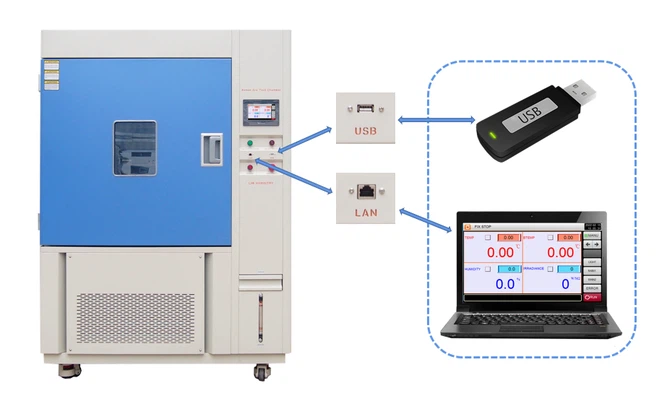
ASTM G155 compliance demands comprehensive documentation beyond simply operating equipment per specified parameters. Required records include lamp operating hours, filter service life, radiometer calibration certificates, black panel thermometer verification, humidity sensor calibration, water spray flow rate verification, and complete test cycle programming. Many regulatory authorities and customer specifications require test reports documenting equipment calibration status, environmental parameter logs, and sample identification traceability. A xenon test chamber with automated data logging via Ethernet connectivity streamlines documentation compliance, capturing continuous parameter histories eliminating manual record-keeping gaps.
|
Compliance Element |
Verification Frequency |
Documentation Required |
|
Radiometer Calibration |
Annual (minimum) |
NIST-traceable calibration certificate |
|
Black Panel Thermometer |
Semi-annual |
Calibration verification record |
|
Humidity Sensor |
Annual |
Calibration certificate or verification |
|
Filter Transmittance |
Per manufacturer or when suspect |
Spectrophotometric measurement data |
|
Water Spray Flow Rate |
Monthly |
Flow measurement log |
How ASTM G155 Supports Global Product Qualification?
Automotive Industry Acceptance
Global automotive manufacturers reference ASTM G155 protocols extensively for exterior materials qualification - paints, plastics, elastomers, and textiles. OEM specifications commonly mandate "96 hours ASTM G155 Cycle 1 with <ΔE 2.0 color change" or similar performance criteria. Tier suppliers worldwide conducting ASTM G155 testing generate data directly comparable to OEM internal testing, streamlining qualification processes. Some manufacturers supplement ASTM G155 with SAE J2527 automotive-specific weathering standards, but G155 remains foundational protocol. A xenon test chamber capable of executing multiple ASTM and SAE protocols provides flexibility addressing diverse customer requirements.
Building Materials and Architectural Applications
Construction materials endure decades of outdoor exposure requiring validated durability. Architectural coatings, vinyl siding, roofing membranes, and window frames undergo ASTM G155 testing demonstrating weathering resistance. Building codes and green building certifications increasingly reference accelerated weathering performance. ASTM G155 test data supports warranty claims - manufacturers offering 20-year fade warranties validate performance through extended xenon chamber exposure. The ability to accelerate years of weathering into months enables product development cycles matching construction industry timelines while providing empirical durability evidence.
Regulatory Compliance and International Harmonization
While ASTM standards originate from American organizations, ASTM G155 enjoys global recognition. European manufacturers cite G155 alongside ISO 4892-2 (xenon arc weathering) given substantial protocol harmonization. Japanese JIS standards reference similar xenon testing methodologies. This international acceptance enables manufacturers to conduct single test programs satisfying multiple geographic markets rather than duplicating testing per regional standards. Regulatory agencies evaluating product safety and performance recognize ASTM G155 data, particularly when accompanied by third-party laboratory certification from accredited facilities (ISO 17025).
LIB Industry Supports Full ASTM G155 Compliant Testing Solutions
|
|
 |
 |
|
|
|
|


xenon lamp and filters
 |
 |
Precision Engineered Xenon Test Chambers
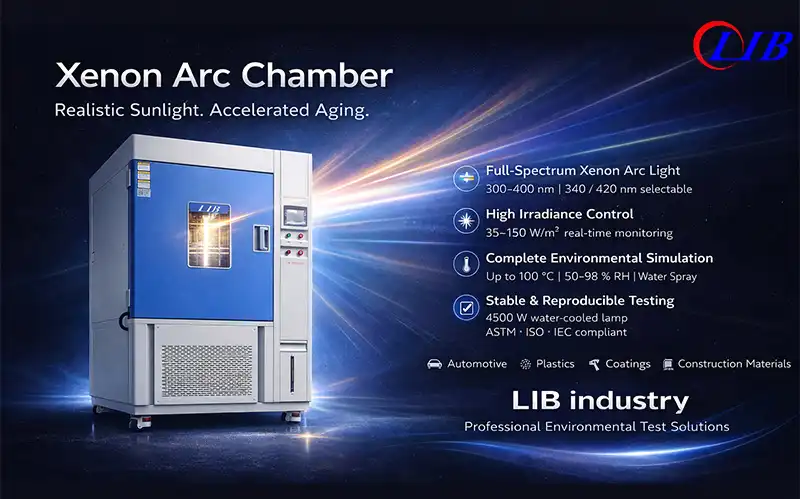
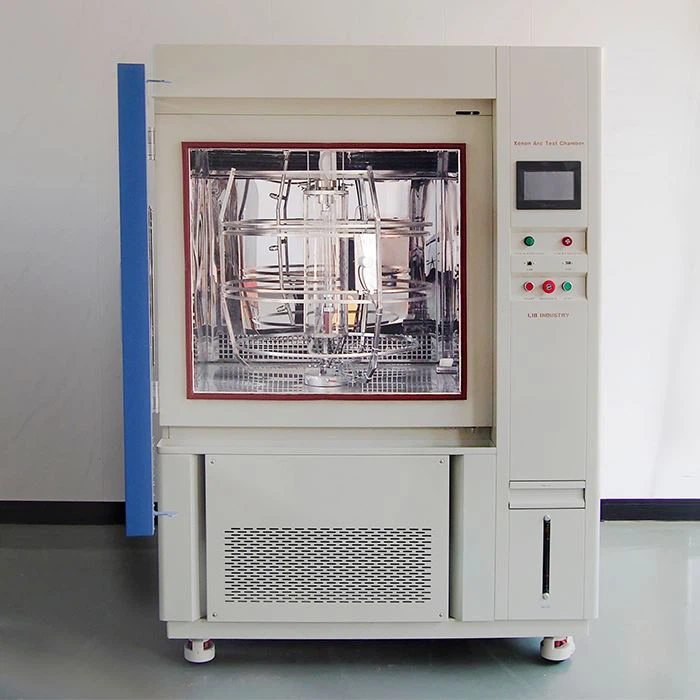
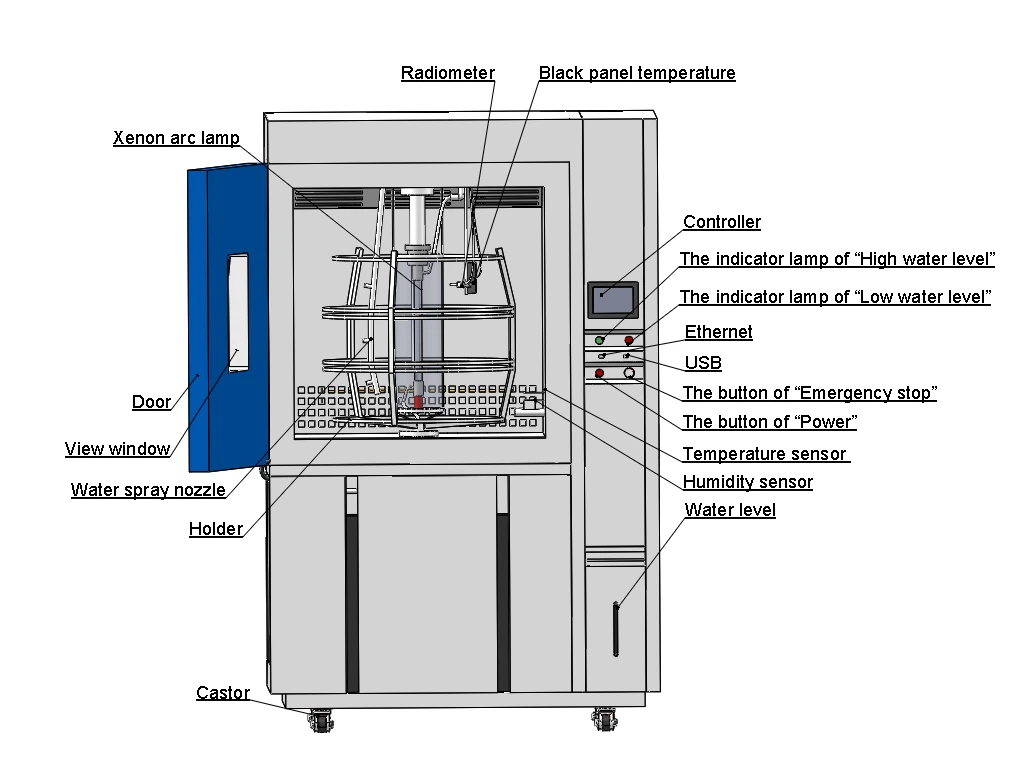
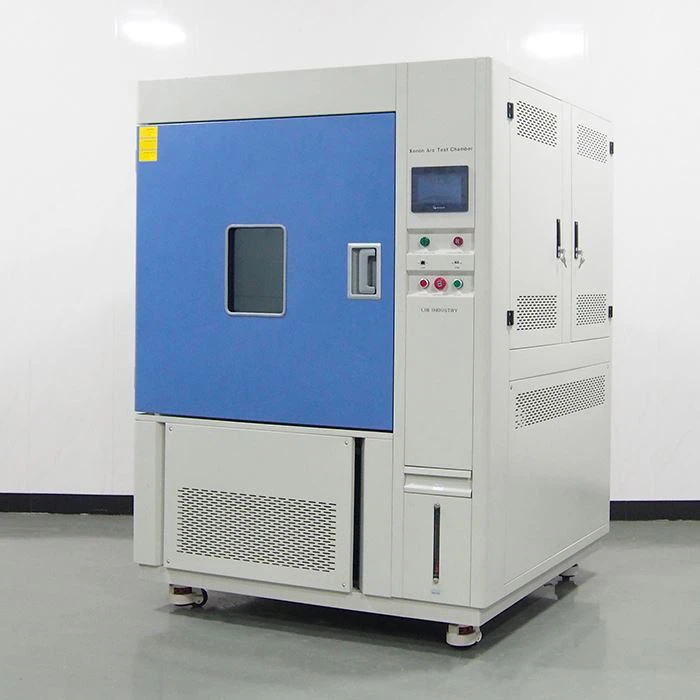
LIB Industry's XL-S-750 model embodies comprehensive ASTM G155 compliance through purpose-built design. The 4500W water-cooled xenon arc lamp with interchangeable filter systems supports all standard practices and custom cycles. The 950×950×850mm internal chamber accommodates 42 specimens (95×200mm) on the continuously rotating rack ensuring uniform exposure. Irradiance control maintains 35-150 W/m² (measured 300-400nm bandwidth) at specified wavelengths (340nm or 420nm) through Solar Eye radiometer feedback. This flexibility enables laboratories to conduct diverse testing protocols using single equipment investment.
Advanced Environmental Control Systems
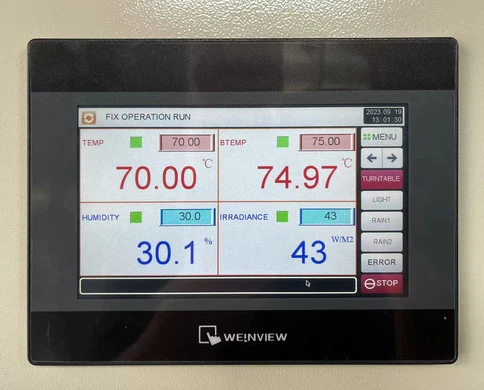
Achieving ASTM G155's stringent parameter tolerances requires sophisticated control engineering. The mechanical compression refrigeration system enables chamber temperature range from ambient to 100°C with ±2°C stability. Black panel temperature control spans 35-85°C with identical ±2°C accuracy. The external isolation stainless steel surface evaporation humidifier delivers 50-98% RH with ±5% deviation. Programmable water spray cycles (adjustable 1-9999 hours, 59 minutes) replicate precipitation patterns. The programmable color LCD touchscreen controller stores complex multi-segment test programs executing ASTM practices automatically, reducing operator programming errors and ensuring protocol consistency.
Quality Assurance and Global Support
Every LIB Industry xenon test chamber undergoes factory acceptance testing verifying ASTM G155 parameter compliance before shipment. CE certification demonstrates conformity with European safety and electromagnetic compatibility directives. Third-party validation by SGS and TUV provides independent performance verification. The comprehensive 3-year warranty backed by lifetime service commitment protects testing program continuity. LIB's global service network spanning 29 locations across North America, Europe, and Asia provides local-language technical support, calibration services, and spare parts availability. This infrastructure ensures laboratories maintain ASTM G155 compliance throughout equipment operational life.
|
LIB XL-S-750 Feature |
Specification |
ASTM G155 Compliance Benefit |
|
Xenon Lamp Power |
4500W water-cooled |
Stable spectral output, long service life |
|
Irradiance Range |
35-150 W/m² (300-400nm) |
Supports all standard practice intensities |
|
Wavelength Monitoring |
340nm or 420nm selectable |
Meets irradiance measurement requirements |
|
BPT Control |
35-85°C, ±2°C accuracy |
Precise temperature parameter compliance |
|
Humidity Range |
50-98% RH, ±5% deviation |
Full moisture cycling capability |
|
Sample Capacity |
42 specimens with rotation |
High throughput with exposure uniformity |
|
Filter Options |
Daylight, window glass, custom |
Accommodates all ASTM G155 practices |
Conclusion
ASTM G155 compliance transforms xenon arc weathering testing from equipment operation into standardized scientific methodology generating internationally recognized performance data. By prescribing explicit equipment specifications, calibration requirements, and operating protocols, the standard enables reproducible material evaluation supporting product development, supplier qualification, and regulatory compliance. LIB Industry's xenon test chambers combine precise environmental control, comprehensive compliance features, and global support infrastructure delivering reliable ASTM G155 testing solutions. Organizations implementing standardized weathering protocols gain competitive advantages through accelerated development cycles, reduced field failures, and enhanced product quality validated through recognized testing methodologies.
FAQ
Can a single xenon test chamber support both ASTM G155 and ISO 4892 testing protocols?
Modern xenon chambers with flexible programming capabilities support both standards given substantial harmonization between ASTM G155 and ISO 4892-2 xenon procedures. Key differences involve minor parameter variations and terminology - both specify similar irradiance levels, temperature control, and moisture cycling. Chambers with programmable controllers, interchangeable filters, and multi-language interfaces enable laboratories to execute American, European, and Asian standards using identical equipment, maximizing capital investment utilization.
How do I establish correlation between ASTM G155 exposure hours and outdoor weathering duration?
Correlation studies require parallel exposure - identical samples undergoing simultaneously outdoor weathering at representative sites and ASTM G155 chamber testing. Comparing degradation metrics (color change, gloss loss, mechanical properties) establishes site-specific correlation factors. Florida and Arizona outdoor exposure sites provide reference data. Correlation varies by material chemistry, making universal hour-to-month conversions unreliable. Conservative approaches use 1:3-8 acceleration factors depending on material class and exposure intensity.
What maintenance schedule ensures continued ASTM G155 compliance throughout chamber operational life?
Annual radiometer calibration represents the critical compliance requirement. Additional maintenance includes semi-annual black panel thermometer verification, annual humidity sensor calibration, monthly water spray flow rate checks, and periodic filter transmittance verification. Xenon lamp replacement occurs every 1,600-2,000 operating hours based on irradiance control range. Water purification system filter replacement follows manufacturer schedules. LIB Industry provides comprehensive maintenance protocols and offers service contracts ensuring uninterrupted compliance and minimizing unplanned downtime.
Partner with a Leading Xenon Test Chamber Manufacturer
LIB Industry specializes in delivering comprehensive environmental testing solutions as a trusted xenon test chamber manufacturer and supplier. Our turn-key services encompass design consultation, production, installation, calibration, and technical training customized to your ASTM G155 compliance requirements. Contact our engineering team at ellen@lib-industry.com to discuss xenon chamber configurations optimized for your specific testing applications and international standard adherence needs.


