Accelerated Weathering Testing for Outdoor LED Products
Accelerated weathering testing for outdoor LED products evaluates how prolonged UV radiation, temperature fluctuations, and moisture exposure affect critical components like polycarbonate lenses, housing materials, and protective coatings. An accelerated weathering tester simulates years of outdoor exposure within weeks using xenon arc lamps that replicate the complete solar spectrum. Testing protocols assess lens yellowing, impact resistance degradation, seal integrity loss, and coating adhesion failures that compromise LED performance. By exposing samples to controlled cycles of irradiance (35-150 W/㎡), temperature variations (35-100°C), and humidity (50-98% RH), manufacturers identify design weaknesses before market deployment. This methodology ensures outdoor LED luminaires maintain optical efficiency, weather protection, and aesthetic appearance throughout their projected 50,000+ hour operational lifespan.
Environmental Challenges Facing Outdoor LED Systems
Solar Radiation Photodegradation
Outdoor LED fixtures endure relentless ultraviolet bombardment that breaks molecular bonds in polymeric materials. The 280-400nm UV spectrum drives photochemical reactions causing lens discoloration, diffuser brittleness, and housing embrittlement. High-power streetlights positioned without canopy protection receive annual UV doses equivalent to 150 kWh/m², accelerating material breakdown that reduces light transmission and structural integrity.
Thermal Cycling Stress
LED luminaires experience dramatic temperature swings between daytime solar heating and nighttime cooling. Metal housings in desert climates reach 85°C surface temperatures while internal electronics generate additional heat. These thermal cycles induce differential expansion between dissimilar materials - aluminum heat sinks, polycarbonate optics, and silicone seals - creating mechanical stress that propagates cracks and compromises ingress protection ratings.
Moisture Infiltration Mechanisms
Rain, fog, and condensation challenge LED enclosure designs. Water intrusion corrodes electrical connections, fogs optical cavities, and accelerates photodegradation through combined UV-moisture attack. Coastal installations face additional salt spray corrosion affecting aluminum die-cast housings and stainless steel fasteners. IP65/IP66 ingress protection requires validated seal performance across temperature and humidity extremes.
|
Environmental Factor |
Impact on LED Components |
Failure Mechanism |
|
UV Radiation (280-400nm) |
Polycarbonate lens yellowing |
Photooxidation, chromophore formation |
|
Thermal Cycling (-40°C to +85°C) |
Seal degradation, housing cracks |
Differential thermal expansion |
|
Humidity & Condensation |
Electrical corrosion, optics fogging |
Moisture infiltration, galvanic corrosion |
UV Exposure Effects on LED Housing Materials
Polycarbonate Lens Degradation
Polycarbonate dominates outdoor LED optics due to impact resistance and optical clarity. Unprotected polycarbonate yellows dramatically under UV exposure as photooxidation creates aromatic ketone chromophores. Transmission losses exceeding 20% within two years reduce luminaire efficacy below specification. UV-stabilized grades incorporating benzotriazole absorbers and hindered amine light stabilizers extend service life, requiring validation through accelerated weathering tester protocols.
Acrylic Diffuser Embrittlement
Polymethyl methacrylate (PMMA) diffusers offer superior light transmission but inferior weathering resistance compared to polycarbonate. Extended UV exposure causes surface crazing - microscopic cracks that scatter light and harbor contaminants. Impact resistance declines sharply as crosslink density increases through photooxidative chain scission. Accelerated testing quantifies embrittlement through standardized impact testing post-UV exposure.
Powder Coating Chalking and Erosion
Die-cast aluminum housings receive polyester or polyurethane powder coatings providing corrosion protection and aesthetic finish. UV-induced binder degradation manifests as surface chalking - loose pigment particles indicating resin breakdown. Coating erosion exposes substrate to corrosion initiation. High-durability polyester-TGIC and acrylic-polyurethane systems demonstrate superior gloss retention and chalking resistance validated through xenon arc weathering chamber testing.
Temperature and Humidity Cycling in LED Reliability Testing
Black Panel Temperature Simulation
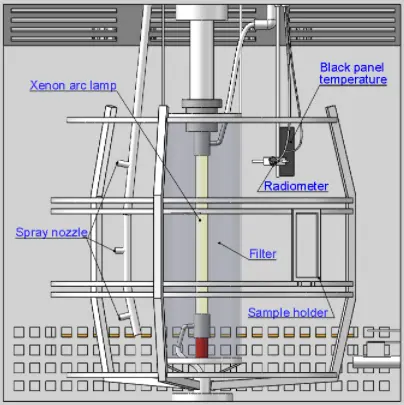
The black panel thermometer within accelerated weathering testers measures actual surface temperatures under solar loading - the realistic condition LED housings experience. Dark-colored aluminum luminaires reach BPT values 20-30°C above ambient, driving accelerated thermal aging. LIB Industry accelerated weathering testers maintain BPT precision of ±2°C across the 35-85°C range, enabling accurate thermal stress simulation.
Condensation and Spray Cycles
Programmable water spray systems replicate rain events and dew formation. Alternating dry irradiation with spray intervals (adjustable 1-9999 hours) creates wet/dry cycling that stresses gasket seals and tests drain path effectiveness. Water purification systems ensure spray water lacks minerals that could create misleading deposit artifacts. This cycling reveals seal compression set and adhesive bond degradation invisible during dry-only testing.
Combined Environmental Stress Testing
Realistic weathering combines simultaneous UV, temperature, and moisture exposure. Synergistic effects exceed individual stressor impacts - elevated temperature accelerates UV-driven polymer degradation while moisture hydrolyzes stabilizer additives. Test protocols incorporating 8-hour UV exposure at 70°C BPT followed by 4-hour spray at reduced irradiance compress years of actual exposure into weeks while maintaining degradation mechanism fidelity.
|
Test Parameter |
LIB Accelerated Weathering Tester |
Outdoor LED Application |
|
Irradiance Control |
35-150 W/㎡ at 340nm or 420nm |
Simulates global solar conditions |
|
Black Panel Temperature |
35-85°C (±2°C accuracy) |
Matches dark housing surface temps |
|
Humidity Range |
50-98% RH (±5% deviation) |
Covers humid tropical to arid climates |
|
Water Spray Cycling |
Programmable intervals |
Replicates rain and condensation |
 |
 |
Evaluating Lens Clarity and Coating Durability
Spectrophotometric Transmission Measurement
LED optical performance depends on maintaining lens transmission across visible wavelengths. Spectrophotometric analysis at 400-700nm quantifies yellowing through yellowness index (YI) calculations per ASTM E313. Premium UV-stabilized polycarbonate maintains YI below 3.0 after weathering equivalent to five-year outdoor exposure, while unstabilized materials exceed YI 10.0, indicating severe discoloration affecting color rendering.
Haze and Clarity Assessment
Surface degradation creates light scattering measured as haze percentage per ASTM D1003. Clean polycarbonate exhibits haze below 2%, while weathered samples developing surface microcracks show haze exceeding 15%. This scattering reduces contrast and visual comfort in architectural lighting applications. Accelerated weathering tester protocols identify haze development rates guiding material selection and stabilizer optimization.
Anti-Reflective and Hydrophobic Coating Adhesion
Advanced LED optics incorporate multi-layer coatings enhancing transmission and preventing dirt accumulation. UV exposure and moisture cycling stress coating-substrate interfaces. Tape adhesion testing post-weathering per ASTM D3359 quantifies coating retention - critical as delaminated coatings reduce performance below uncoated optics. Silane coupling agents and plasma surface treatments improve durability validated through xenon arc exposure.
Standards for Outdoor LED Weather Resistance Testing
ASTM G155 Xenon Arc Exposure
ASTM G155 provides standardized xenon arc weathering procedures applicable to outdoor LED components. Practice A specifies daylight filters with controlled irradiance and spray cycles. LED manufacturers adapt these protocols to emphasize critical wavelengths - 340nm for polymer degradation assessment. Minimum 1,000-hour exposures provide preliminary screening while 2,000+ hour tests enable long-term performance prediction.
IEC 60598 and IP Rating Verification
IEC 60598-1 establishes safety requirements for luminaires including housing durability. While the standard doesn't mandate specific weathering tests, IP ingress protection ratings (IP65/IP66/IP67) require seal integrity verification. Accelerated weathering followed by IP testing validates that UV-aged gaskets maintain compression and that housing materials resist cracking that compromises protection ratings.
LM-80 and TM-21 Lumen Maintenance Extrapolation
LED lumen depreciation testing per LM-80 occurs at elevated temperatures but excludes UV and moisture. Comprehensive outdoor LED qualification combines thermal LM-80 data with optical component weathering results from accelerated weathering testers. TM-21 lifetime projections incorporate both LED chip degradation and optical system transmission losses, providing realistic performance predictions.
|
Testing Standard |
Scope |
Relevance to Outdoor LEDs |
|
ASTM G155 |
Xenon arc weathering procedures |
Validates housing, lens, coating durability |
|
IEC 60598-1 |
Luminaire safety and construction |
Establishes ingress protection requirements |
|
LM-80/TM-21 |
LED lumen maintenance |
Quantifies light source degradation (excludes optics) |
Extending LED Product Lifespan with Accelerated Weathering Tests
Material Selection Optimization
Comparative weathering testing guides informed material decisions. Testing multiple polycarbonate grades with varying UV stabilizer packages reveals cost-performance relationships. A 15% material cost increase for premium UV-stabilized resin may deliver 200% longer optical clarity retention - economically justified for high-value architectural installations. Accelerated weathering tester data transforms material selection from supplier claims to validated performance metrics.
Coating System Development
LED housing finishes require balancing aesthetics, corrosion protection, and UV durability. Accelerated weathering enables rapid coating formulation iteration - testing alternative resin chemistries, pigment selections, and topcoat systems. Quantitative gloss retention and color stability data after 1,500-hour xenon exposure identifies optimal systems before expensive field trials. This methodology compressed development cycles from years to months.
Quality Control and Supplier Validation
Manufacturing consistency directly impacts field performance. Periodic accelerated weathering testing of production components verifies supplier adherence to specifications. Detecting formulation drift - reduced UV stabilizer levels cutting costs - before product shipment prevents warranty claims and brand damage. Establishing weathering acceptance criteria creates objective quality gates protecting long-term reliability.
LIB Industry Ensures UV and Climate Resistance Validation for LEDs
|
|
|


xenon lamp and filters
 |
 |
Full Spectrum Xenon Arc Technology
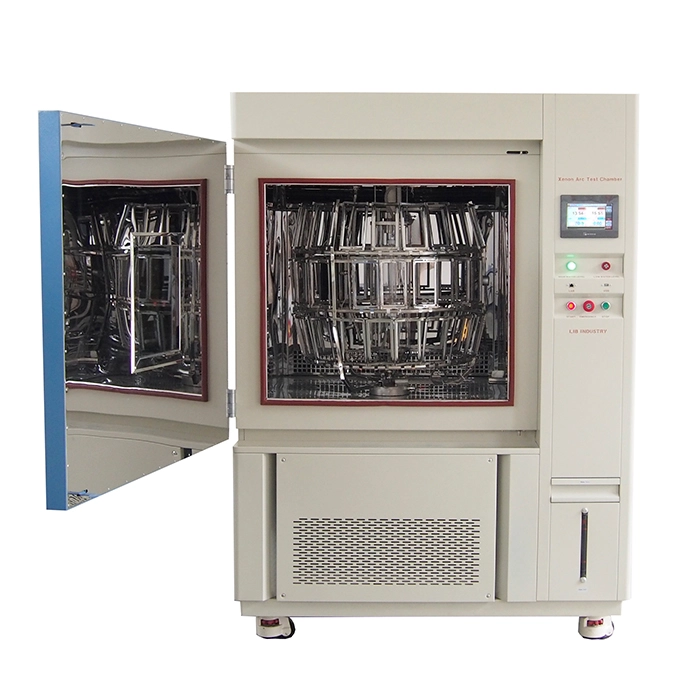
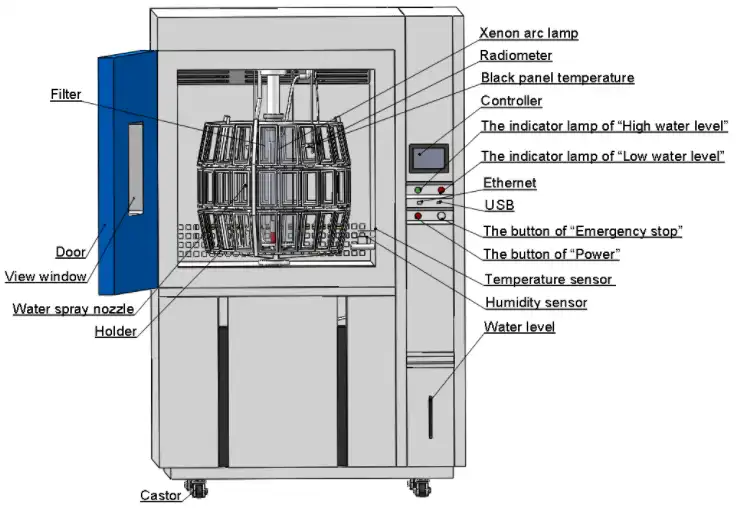
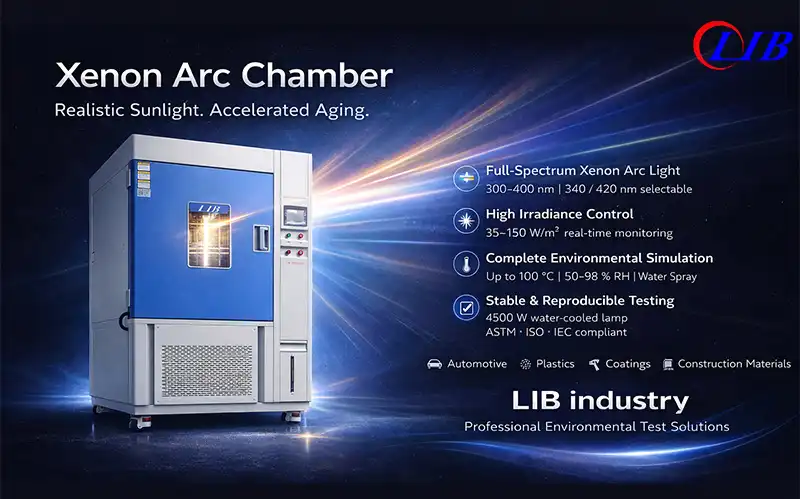
LIB Industry's accelerated weathering tester features a 4500W water-cooled xenon arc lamp delivering stable spectral output across 280-800nm wavelength range. Multiple interchangeable filter systems - daylight, window glass, and UV-extended configurations - enable testing under various exposure conditions. The 1,600-hour lamp lifespan with consistent output ensures repeatable long-duration testing essential for LED qualification programs.
Precision Environmental Control Systems
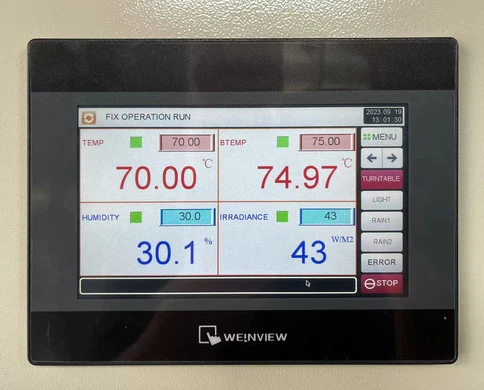
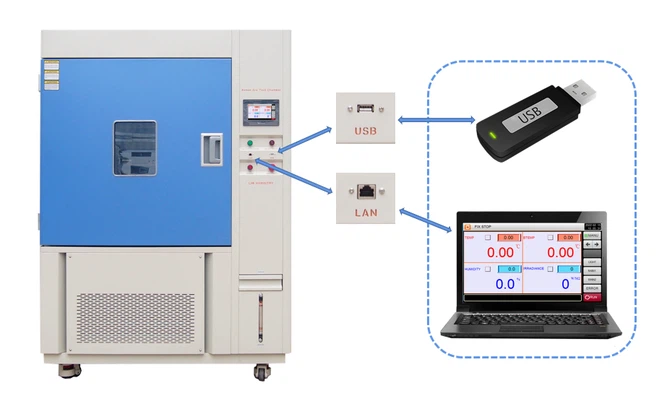
The intelligent PID control system maintains black panel temperature stability (±2°C) and humidity precision (±2.5% RH) throughout extended test cycles. This accuracy ensures consistent dose delivery critical for comparative testing. The rotating specimen holder accommodates 42 LED components simultaneously, with continuous rotation guaranteeing uniform exposure eliminating positional bias. Real-time monitoring through Ethernet/Wi-Fi connectivity enables remote supervision.
Comprehensive Testing Capabilities
LIB weathering chambers integrate multiple environmental stressors in programmable sequences. Alternate 8-hour UV exposure at 0.55 W/㎡@340nm and 70°C BPT with 4-hour spray cycles and condensation periods. This flexibility enables customized protocols matching specific geographic deployment conditions - tropical high-humidity, desert high-UV, or temperate moderate exposure. The closed-loop water circulation system with multi-stage filtration supports economical operation.
|
LIB Weathering Tester Feature |
Specification |
LED Testing Advantage |
|
Xenon Lamp System |
4500W water-cooled, 1600hr lifespan |
Stable full-spectrum simulation |
|
Sample Capacity |
42 specimens with rotation |
High-throughput component testing |
|
Irradiance Range |
35-150 W/㎡, 340nm/420nm |
Adjustable intensity for various climates |
|
Temperature Control |
Ambient-100°C chamber, BPT 35-85°C |
Replicates global deployment conditions |
|
Humidity Capability |
50-98% RH with ±5% control |
Comprehensive moisture exposure |
Conclusion
Accelerated weathering testing represents an essential validation step for outdoor LED products facing harsh environmental exposure throughout multi-decade service lives. By subjecting critical optical and protective components to controlled UV radiation, temperature cycling, and moisture stress, manufacturers identify design vulnerabilities before market release. LIB Industry's advanced weathering testing systems deliver the spectral accuracy, environmental control precision, and testing flexibility required for comprehensive LED reliability validation. Implementing rigorous weathering protocols ensures outdoor LED luminaires maintain optical performance, structural integrity, and aesthetic appearance across diverse global climates.
FAQ
How does accelerated weathering testing correlate with actual outdoor LED performance?
Correlation studies comparing accelerated weathering tester results with outdoor exposure sites establish equivalency factors. Typical xenon arc testing at elevated irradiance delivers 4:1 to 8:1 acceleration, meaning 1,000 chamber hours approximates 1-2 years outdoors. Geographic-specific correlation accounts for latitude, altitude, and climate affecting actual UV dose and temperature exposure.
What LED components require accelerated weathering evaluation?
All optically-critical and environmentally-exposed components need testing: polycarbonate lenses, acrylic diffusers, silicone gaskets, powder-coated housings, printed graphics, and UV-cured adhesives. Even internal components near optical cavities warrant evaluation as secondary light paths can transmit UV into enclosed spaces. Comprehensive testing prevents unexpected field failures.
Can accelerated weathering testing predict exact LED product lifespan?
Weathering testing provides comparative degradation rates rather than absolute lifespan predictions. Combined with thermal testing (LM-80) and electrical stress data, manufacturers develop probabilistic lifetime models. Testing identifies which component fails first - chip degradation versus optical transmission loss - enabling targeted improvements. Regular testing revision incorporating field return analysis refines predictive accuracy.
Partner with a Leading Accelerated Weathering Tester Manufacturer
LIB Industry delivers comprehensive environmental testing solutions as a trusted accelerated weathering tester manufacturer and supplier. Our turn-key services encompass design, production, installation, commissioning, and technical training customized to your LED product testing requirements. Contact our engineering team at ellen@lib-industry.com to discuss weathering test chamber configurations optimized for outdoor LED component validation.