Constant Temperature Chambers for Precision Material Testing
Constant temperature chambers provide controlled environments essential for accurate material characterization and quality assurance. These precision instruments maintain stable thermal conditions ranging from -70°C to +180°C, enabling researchers and engineers to evaluate how materials respond to specific temperature exposures. By eliminating thermal variability, these chambers ensure reproducible test results across diverse applications - from polymer degradation studies to semiconductor reliability assessments. Advanced PID control systems maintain temperature uniformity within ±0.5°C throughout the testing volume, while programmable profiles simulate real-world thermal cycles. Whether validating material specifications or investigating failure mechanisms, constant temperature chambers deliver the environmental stability required for defensible data and informed material selection decisions.
Why Precise Temperature Control Is Critical for Material Testing?
Temperature Sensitivity of Material Properties
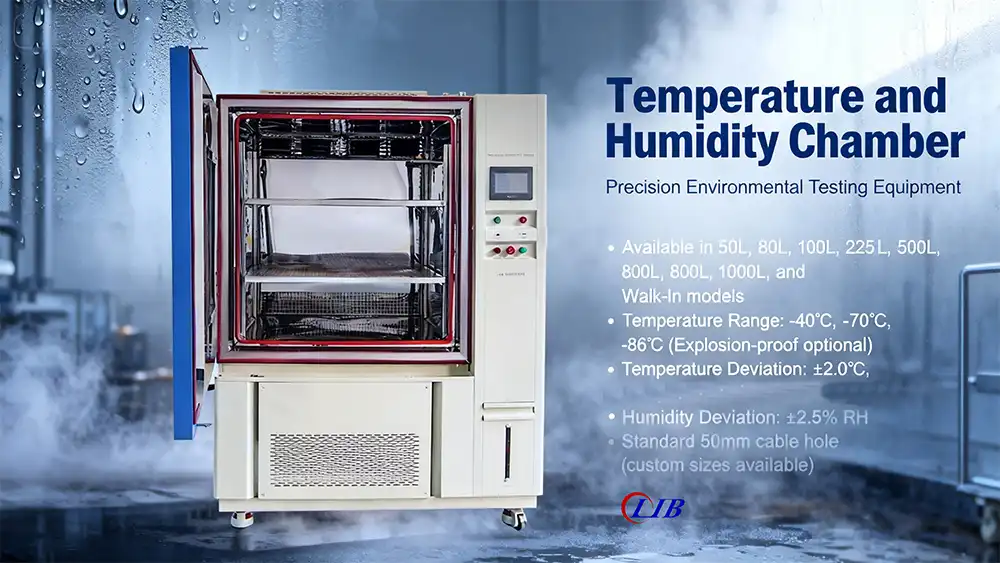
Material characteristics exhibit profound temperature dependence that directly impacts performance and longevity. Mechanical strength, electrical conductivity, and dimensional stability all vary as thermal energy alters molecular arrangements and bonding interactions. A polymer's glass transition temperature marks the boundary between brittle and flexible behavior, while metal alloys demonstrate creep resistance only within specific thermal windows. Testing without precise temperature control introduces unquantified variability that masks true material responses.
Reproducibility Requirements in Standards Compliance
International testing standards mandate strict environmental controls to ensure inter-laboratory comparability. ASTM, ISO, and industry-specific protocols specify temperature tolerances often within ±2°C to validate material certifications. Automotive components, medical devices, and aerospace materials undergo qualification testing where temperature deviations invalidate results and delay product launches. Constant temperature chambers eliminate this uncertainty by maintaining setpoints with documented traceability.
Accelerated Aging and Reliability Predictions
Elevated temperature exposure accelerates degradation mechanisms, enabling lifetime predictions through the Arrhenius relationship. Constant thermal conditions separate temperature-dependent failure modes from other environmental stressors like humidity or mechanical stress. Researchers establish activation energies and predict field performance by conducting isothermal aging studies at multiple temperatures, requiring chambers that hold setpoints for weeks or months without drift.
Common Material Properties Evaluated Under Constant Temperature
Mechanical Characterization Under Thermal Stress
Tensile strength, elongation at break, and modulus measurements reveal how materials bear loads across their operating temperature range when specimens are conditioned in a constant climate chamber. Plastics soften and become ductile above their glass transition, while metals may exhibit increased brittleness at cryogenic temperatures. Engineers evaluate these transitions by conditioning specimens at target temperatures before mechanical testing, ensuring property data reflects actual service conditions.
Thermal Expansion and Dimensional Stability
Materials expand and contract with temperature changes according to their coefficient of thermal expansion. Precision components in optical systems, electronic assemblies, and measurement instruments require materials with matched expansion rates to prevent stress accumulation or misalignment. Constant temperature chambers enable dilatometry studies that quantify dimensional changes with 0.1% accuracy, guiding material selection for thermally stable designs.
Electrical Properties and Semiconductor Performance
Electrical resistivity, dielectric constant, and capacitance all vary with temperature through changes in carrier mobility and polarization mechanisms. Semiconductor devices undergo extensive characterization across their rated temperature range to verify switching speeds, leakage currents, and breakdown voltages. Constant temperature conditioning ensures that electrical measurements reflect material properties rather than thermal transients during testing.
Test Parameters and Chamber Configuration for Accuracy
Temperature Range Selection and Uniformity
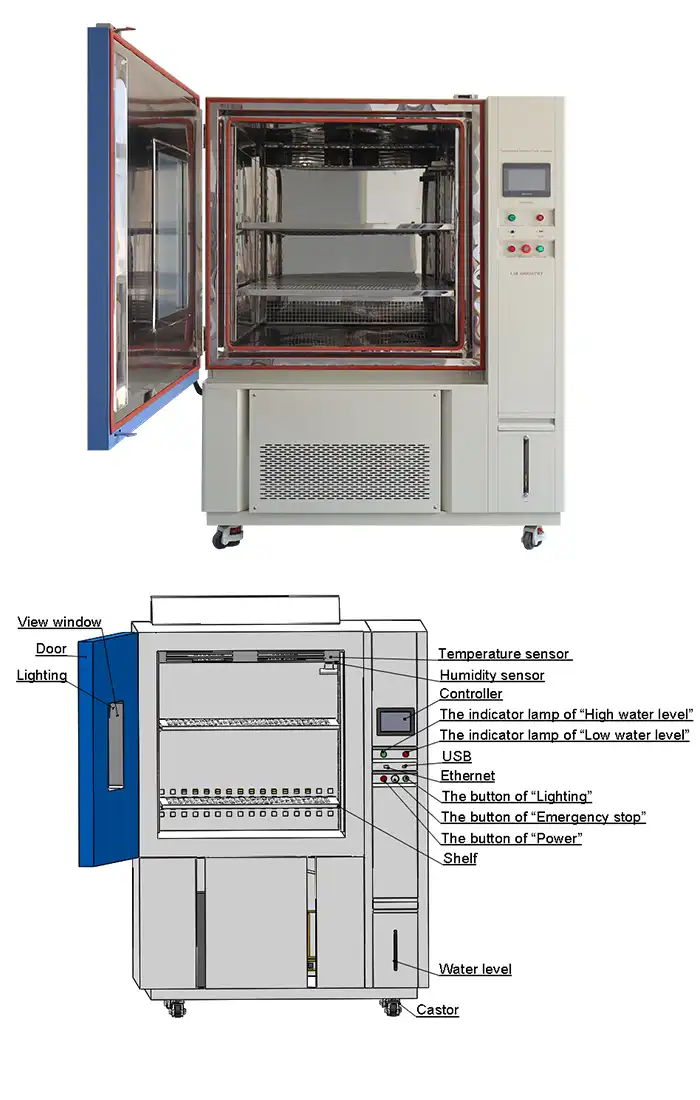
Selecting appropriate temperature capabilities depends on material service conditions and safety margins. Industrial applications typically require -40°C to +150°C, while research applications extend to -70°C or +180°C for extreme condition simulation. Uniformity specifications of ±0.5°C ensure consistent material exposure throughout the chamber volume, eliminating position-dependent results that complicate data interpretation.
|
Chamber Model |
Temperature Range |
Volume |
Uniformity |
|
T-100 |
-70°C to +150°C |
100L |
±0.5°C |
|
T-500 |
-70°C to +150°C |
500L |
±0.5°C |
|
T-1000 |
-70°C to +150°C |
1000L |
±0.5°C |
Ramp Rate Control and Thermal Cycling
Programmable temperature profiles replicate thermal cycling that materials experience during manufacture, transport, or operation. Controlled ramp rates prevent thermal shock that could introduce artifacts like microcracks or residual stresses. Heating rates of 1°C/min and cooling rates of 3°C/min allow gradual thermal equilibration while maintaining reasonable test durations for cyclical testing protocols.
Sample Loading and Airflow Optimization
Forced air circulation by centrifugal fans maintains temperature uniformity despite thermal mass introduced by test specimens. Strategic sample placement on perforated shelving allows airflow around all surfaces, preventing cold spots or hot zones. Maximum heat loads of 1000W accommodate multiple specimens or materials with high thermal conductivity without overwhelming the refrigeration system's capacity.
Monitoring and Recording Temperature Stability
Real-Time Data Acquisition Systems
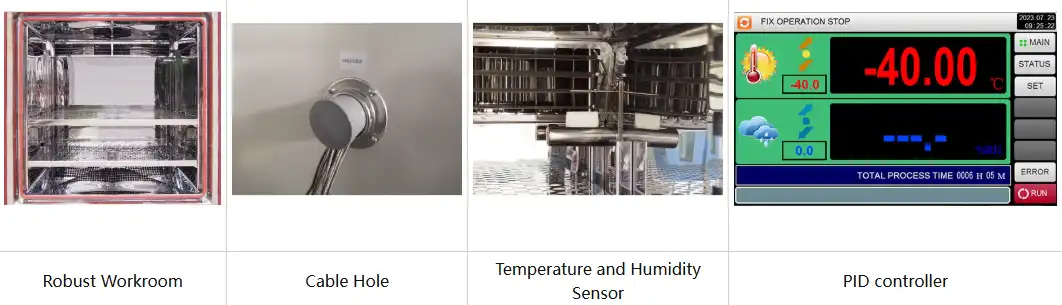
Modern constant temperature chambers incorporate programmable touchscreen controllers with Ethernet connectivity for continuous data logging. PT100 platinum resistance thermometers provide calibrated temperature readings with 0.1°C resolution, generating time-stamped records that document actual chamber conditions throughout testing. USB ports and PC interfaces enable export to analysis software for statistical validation of temperature stability.
Alarm Functions and Safety Interlocks
Overtemperature protection systems prevent runaway heating through independent thermostats that interrupt power when limits are exceeded. High-pressure refrigerant cutoffs protect compressor integrity, while earth leakage protection ensures operator safety. These redundant safeguards maintain specimen integrity during unattended operation and prevent costly material losses from equipment malfunctions.
Calibration Verification and Uncertainty Analysis
ISO/IEC 17025 accredited calibration establishes traceable temperature accuracy referenced to national standards. Calibration certificates document systematic errors across the chamber's temperature range, enabling uncertainty budgets that quantify measurement confidence. Annual recalibration maintains compliance with quality management systems and regulatory requirements for validated testing environments.
|
Performance Parameter |
Specification |
Measurement Method |
|
Temperature Fluctuation |
±0.5°C |
Continuous recording |
|
Temperature Deviation |
±2.0°C |
9-point mapping |
|
Cooling Rate |
3°C/min |
Time-temperature profile |
|
Heating Rate |
1°C/min |
Time-temperature profile |
Analyzing Material Behavior During Long-Term Exposure
Isothermal Aging and Property Degradation
Extended exposure at constant temperature reveals degradation mechanisms including oxidation, crystallization, and phase separation. Polymers undergo chain scission or crosslinking that alters molecular weight distribution, while metals experience grain growth or precipitation reactions. Periodic property measurements during aging establish degradation kinetics that inform shelf-life predictions and storage requirements.
Time-Temperature Superposition Principles
Viscoelastic materials exhibit time-dependent mechanical responses that shift predictably with temperature. By conducting creep or stress relaxation tests at multiple temperatures, researchers construct master curves spanning timescales impossible to measure directly. Constant temperature chambers enable the isothermal conditions required for valid time-temperature superposition analysis.
Comparative Studies Across Temperature Conditions
Parallel testing at multiple temperatures isolates thermal effects from batch variability or procedural differences. Identical specimens conditioned at different temperatures reveal activation energies for degradation processes and identify critical temperature thresholds. Statistical comparison of temperature-dependent trends guides formulation optimization and establishes safe operating envelopes.
Improving Material Selection and Design Through Controlled Testing
Material Qualification and Specification Development
Performance requirements translate into temperature exposure criteria that candidate materials must satisfy. Constant temperature testing validates whether proposed materials maintain required properties across service temperatures, preventing premature failures in fielded products. Qualification data becomes part of material specifications that guide procurement and quality acceptance.
Failure Mode Analysis and Root Cause Investigation
When materials fail unexpectedly, constant temperature and humidity chambers reproduce service conditions to investigate failure mechanisms. Controlled thermal exposure distinguishes temperature-dependent failures from mechanical overload or environmental contamination. Understanding root causes enables corrective actions in material selection, processing parameters, or design modifications.
Optimization of Manufacturing Processes
Processing temperatures profoundly influence final material properties through effects on crystallinity, residual stress, and microstructure. Systematic studies at different processing temperatures identify optimal conditions that maximize desired properties while maintaining manufacturability. Constant temperature chambers provide the controlled environments needed to establish robust process windows.
|
Testing Application |
Temperature Range |
Typical Duration |
Key Outputs |
|
Polymer aging |
+80°C to +150°C |
500-2000 hours |
Tensile retention, color change |
|
Metal stress relief |
+150°C to +180°C |
2-8 hours |
Residual stress, hardness |
|
Electronic burn-in |
+85°C to +125°C |
168-1000 hours |
Failure rate, parameter drift |
Maximize Testing Accuracy with LIB Industry Constant Temperature Chambers
Advanced Control Systems for Stability
LIB Industry constant temperature chambers employ microprocessor-based PID control algorithms that continuously adjust heating and refrigeration to maintain setpoints. French TECUMSEH compressors with environmentally friendly refrigerants deliver reliable cooling capacity, while nichrome heating elements provide rapid temperature recovery after door openings. This combination achieves ±0.5°C temperature fluctuation even during frequent access.
Flexible Chamber Configurations
Available volumes from 100L to 1000L accommodate testing needs from small component validation to large assemblies. Interior dimensions ranging from 400×500×500mm to 1000×1000×1000mm with adjustable shelving allow efficient space utilization. Standard 50mm cable ports with silicone plugs enable instrumentation connections without compromising thermal insulation or introducing air leaks.
Comprehensive Support and Customization
LIB Industry provides turnkey solutions including installation, calibration verification, and operator training. Custom temperature ranges, integrated humidity control, and specialized data acquisition interfaces adapt chambers to specific testing protocols. ISO 9001 certified manufacturing and CE marked construction ensure quality and safety compliance for global installations.
Conclusion
Constant temperature chambers represent indispensable tools for material characterization, quality assurance, and product development across industries. Their ability to maintain precise thermal environments enables reproducible testing that validates material specifications and predicts long-term performance. From fundamental research investigating temperature-dependent phenomena to production quality control verifying batch consistency, these chambers provide the environmental control necessary for defensible data. Investing in reliable constant temperature testing infrastructure accelerates development timelines while reducing field failures through comprehensive material understanding.
FAQ
What temperature uniformity can I expect throughout the chamber volume?
LIB Industry constant temperature chambers maintain ±0.5°C temperature uniformity through forced air circulation and optimized duct design. This specification ensures consistent material exposure regardless of sample position, eliminating location-dependent variability in test results across the entire working volume.
How do programmable temperature profiles support accelerated aging studies?
Programmable controllers enable automated thermal cycling with defined ramp rates, soak temperatures, and dwell times. These capabilities replicate real-world thermal histories including diurnal temperature swings or process-induced thermal exposures, accelerating lifetime predictions through controlled stress application without constant operator intervention.
What calibration documentation supports regulatory compliance requirements?
ISO/IEC 17025 accredited calibration certificates provide traceable temperature accuracy verification against national standards. Documentation includes measurement uncertainty budgets, calibration point locations, and as-found/as-left data that satisfy quality management system audits and regulatory submissions for medical devices, aerospace components, and other controlled industries.
Partner with LIB Industry, your trusted constant temperature chamber manufacturer and supplier, for precision environmental testing solutions. Our expert team delivers customized chambers backed by comprehensive installation and training services. Contact ellen@lib-industry.com to discuss your material testing requirements today.