Water Immersion Tanks for IPX7 and IPX8 Testing Applications
Water immersion tanks serve as critical instruments for verifying the waterproof integrity of electronic devices and components against IPX7 and IPX8 standards. These specialized testing chambers simulate real-world submersion conditions, enabling manufacturers to validate product durability before market release. Modern immersion testers combine automated pressure control systems with programmable interfaces, delivering consistent test results while accommodating various sample sizes and testing protocols. Whether evaluating smartphones, wearable devices, or industrial equipment, proper immersion testing protects brand reputation and ensures customer satisfaction through reliable waterproof performance verification.
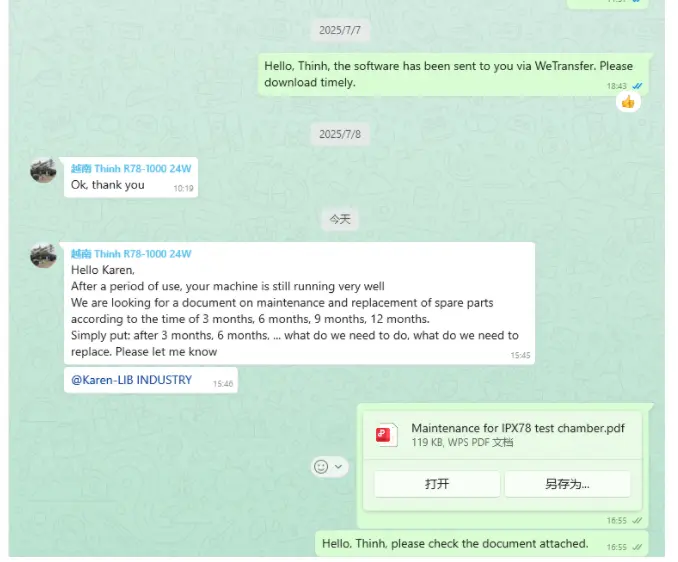
A customer from Vietnam shared positive feedback after several months of operation, confirming that the water immersion tank continues to run smoothly and reliably in daily use. The customer also praised the responsiveness of the support team, noting that detailed maintenance and spare-parts replacement guidance (covering 3-, 6-, 9-, and 12-month intervals) was promptly provided. This real-world feedback highlights not only the long-term stability of the IPX7/IPX8 immersion testing system, but also the value of professional after-sales support in ensuring consistent testing performance over time.
What Are IPX7 and IPX8 Standards and Their Testing Requirements?
 Understanding the IP Rating System
The Ingress Protection (IP) rating system provides a standardized classification method for evaluating the sealing effectiveness of electrical enclosures against solid particles and liquids. The two-digit numerical code following "IP" indicates specific protection levels, with the second digit addressing liquid ingress. This international standard, defined by IEC 60529, enables manufacturers and consumers to understand precisely what environmental conditions a device can withstand.
IPX7 Temporary Immersion Specifications
IPX7 certification requires devices to withstand immersion in water up to 1 meter depth without harmful ingress. Testing involves submerging the sample for 30 minutes under controlled conditions, with water temperature maintained between 15°C and 35°C. The device must continue functioning normally after removal and drying, demonstrating that no water penetrated critical internal components during the exposure period.
IPX8 Continuous Immersion Requirements
IPX8 represents enhanced protection beyond IPX7, with testing depths and durations specified by manufacturers based on intended use cases. Typical testing involves submersion at depths ranging from 1.5 meters to 50 meters, with exposure periods extending from one hour to continuous operation. Devices meeting IPX8 standards demonstrate superior sealing capabilities suitable for professional diving equipment, underwater cameras, and marine instrumentation.
Differences Between IPX7 and IPX8 Water Immersion Tests
Depth and Pressure Variations
The fundamental distinction between IPX7 and IPX8 testing lies in the pressure differential experienced by test samples. IPX7 testing maintains relatively shallow depths of 1 meter, creating approximately 0.1 bar of additional pressure on device seals. IPX8 testing escalates this challenge significantly, with depths up to 50 meters generating pressures approaching 5 bars, placing substantially greater stress on gaskets, seals, and enclosure joints.
|
Testing Parameter |
IPX7 Standard |
IPX8 Standard |
|
Minimum Depth |
1 meter |
Manufacturer specified (typically >1 meter) |
|
Maximum Depth |
1 meter |
Up to 50 meters or more |
|
Duration |
30 minutes |
Manufacturer specified (typically ≥1 hour) |
|
Pressure Range |
~0.1 bar |
Up to 5 bars or higher |
Duration and Exposure Time Considerations
While IPX7 specifies a fixed 30-minute immersion period, IPX8 testing allows manufacturers to define exposure durations matching real-world usage scenarios using a water immersion tank. Consumer electronics might undergo one-hour tests, whereas professional marine equipment faces extended immersion periods spanning days or weeks. This flexibility acknowledges that different applications demand varying degrees of waterproof assurance.
Pass/Fail Criteria Distinctions
Both standards prohibit water ingress in quantities sufficient to interfere with device operation, yet IPX8 applies stricter evaluation criteria. IPX7 testing permits minimal moisture entry provided it doesn't accumulate in harmful locations. IPX8 certification demands absolute exclusion of water from internal cavities, reflecting the severe consequences of seal failure at greater depths where pressure forces water through even microscopic breaches.
Test Parameters: Depth, Duration, and Water Temperature
Establishing Proper Immersion Depth
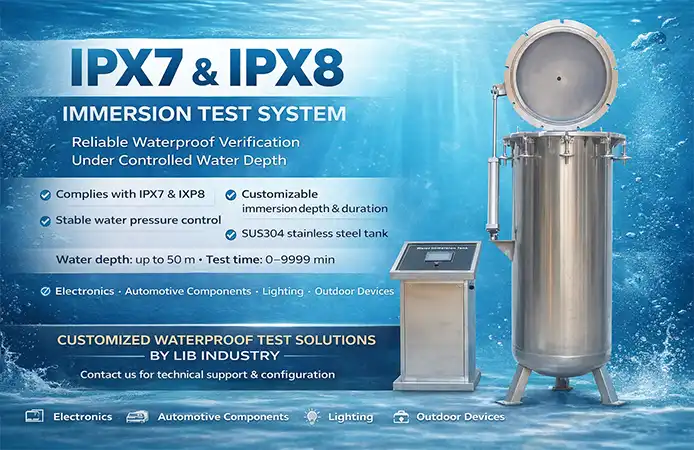
Accurate depth control represents a critical testing parameter that directly influences pressure application on test samples. Water immersion tanks like the R78-600 model accommodate samples at depths up to 50 meters, utilizing pressure simulation systems that replicate deep-water conditions without requiring physically tall chambers. Operators must verify depth settings before each test cycle, ensuring consistency across multiple evaluation runs.
Timing Protocols and Monitoring Systems
Programmable touch screen controllers enable precise timing management throughout immersion cycles. Modern systems automatically track elapsed time, provide visual progress indicators, and trigger alarms upon test completion. Automated timing eliminates human error while generating documentation proving compliance with standard requirements. Storage of historical timing data supports quality audits and facilitates process improvement initiatives.
Temperature Control and Stabilization
Water temperature significantly affects sealing material properties and device performance during immersion testing. Standards specify temperature ranges between 15°C and 35°C to reflect typical environmental conditions. Testing outside these parameters may produce misleading results, as extreme temperatures alter rubber gasket flexibility and plastic housing dimensions. Automated water supply systems in advanced water immersion tanks maintain stable temperatures throughout extended test cycles.
|
Temperature Range |
Material Impact |
Testing Implications |
|
Below 15°C |
Gasket hardening, reduced flexibility |
Potential false failures |
|
15°C - 35°C |
Normal material behavior |
Standard testing zone |
|
Above 35°C |
Material expansion, altered sealing pressure |
Non-standard conditions |
Preparing Samples and Fixtures for Immersion Testing
Sample Conditioning and Pre-Test Inspection
Proper sample preparation begins with thorough visual inspection identifying existing damage or manufacturing defects that might compromise test validity. Devices should reach ambient temperature matching the test environment, preventing thermal shock that could affect sealing performance. Battery compartments require sealing or battery installation according to manufacturer specifications, as empty battery bays represent non-standard configurations that invalidate test results.
Fixture Design and Sample Mounting
Secure fixture design prevents sample movement during immersion while avoiding interference with device seals or pressure-sensitive areas. The R78-600's internal dimensions (600mm diameter × 1500mm height) accommodate diverse sample sizes from compact wearables to large industrial enclosures. Fixtures must position samples at specified depths, typically using calibrated suspension systems or weighted platforms that maintain stability throughout testing.
Documentation and Traceability Requirements
Comprehensive documentation captures sample identification, test parameters, environmental conditions, and operator information. Photographic evidence showing sample condition before and after testing provides objective records supporting certification claims. USB data download capabilities in modern immersion tanks enable automatic logging of test parameters, eliminating manual transcription errors and creating audit trails demonstrating compliance verification.
Evaluating Device Performance After Water Exposure
Visual Inspection Procedures
Post-immersion evaluation commences with careful external examination detecting water droplets, condensation, or visible ingress at seams and interfaces. Internal inspection requires controlled disassembly following manufacturer protocols, with particular attention to critical areas surrounding electronic components, battery contacts, and circuit boards. Water-reactive indicator strips placed inside devices during testing provide immediate visual confirmation of moisture intrusion.
Functional Testing Protocols
Comprehensive functional testing verifies all device features operate correctly following water exposure. Testing sequences should exercise buttons, switches, displays, sensors, and communication interfaces, comparing performance against pre-immersion baseline measurements. Devices demonstrating degraded functionality, intermittent operation, or complete failure indicate inadequate waterproofing requiring design modifications before certification approval.
Documentation of Test Results
Detailed reporting captures quantitative and qualitative assessment data supporting pass/fail determinations. Reports should include photographic evidence, functional test results, environmental condition logs, and operator observations. Modern water immersion tanks with Ethernet connectivity enable remote monitoring and automatic report generation, streamlining documentation workflows while ensuring consistency across testing facilities.
|
Evaluation Category |
Assessment Method |
Pass Criteria |
|
Visual Inspection |
External/internal examination |
No visible water ingress |
|
Functional Testing |
Complete feature verification |
All functions operational |
|
Indicator Verification |
Chemical strip analysis |
No moisture detection |
Ensuring Compliance and Reliability Through IPX Testing
Certification Process and Third-Party Validation
Achieving IPX certification requires independent testing by accredited laboratories following standardized protocols. Manufacturers submit representative samples reflecting production quality, avoiding specially prepared units that might not represent actual product performance. Third-party validation provides market credibility and regulatory compliance, particularly for products sold in regions requiring certified ingress protection ratings.
Quality Assurance Integration
IPX testing should integrate into broader quality management systems rather than functioning as isolated certification exercises. Regular production sampling verifies manufacturing consistency, while accelerated life testing combining immersion cycles with thermal stress reveals potential long-term sealing degradation. Statistical process control methods identify trends suggesting seal design improvements or manufacturing process adjustments.
Continuous Improvement Through Testing Data Analysis
Systematic analysis of testing data reveals patterns guiding product development initiatives. Failure mode analysis identifies weak points in seal designs, material selections, or assembly processes requiring engineering attention. Modern immersion tanks with data logging capabilities generate comprehensive datasets supporting statistical analysis, trend identification, and predictive modeling of seal performance under various conditions.
Secure IPX7 & IPX8 Compliance with LIB Industry Water Immersion Tanks
Advanced Features Supporting Accurate Testing
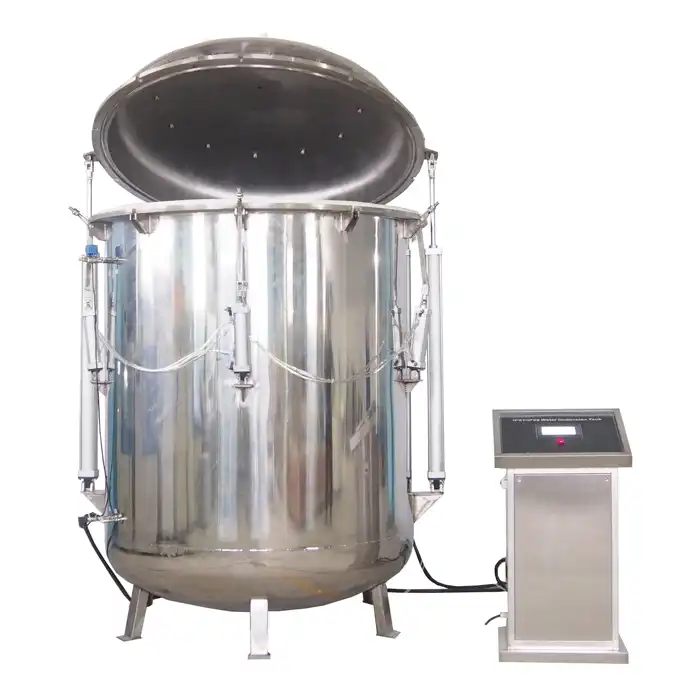
LIB Industry's R78-600 water immersion tank incorporates sophisticated features ensuring precise, repeatable testing results. The programmable color LCD touch screen controller simplifies operation while enabling complex testing protocols matching specific standard requirements. Pneumatic lid operation provides safe, convenient access to the testing chamber, while the automatic water supply system maintains consistent fill levels throughout extended testing campaigns.
Robust Construction for Long-Term Reliability
Built from 15mm thick A3 steel plate with galvanized coating and electrostatic treatment, the immersion tank delivers exceptional durability in demanding industrial environments. The cylindrical design with tripod support ensures structural stability under full water load, while 304 stainless steel hydraulic components resist corrosion from continuous moisture exposure. This robust construction guarantees decades of reliable service, protecting testing equipment investments.
Customization Capabilities Meeting Diverse Requirements
Beyond standard IPX7 and IPX8 testing protocols, LIB Industry's immersion tanks accommodate customized testing solutions addressing unique industry requirements. Adjustable pressure settings simulate various depth conditions, while programmable controllers enable modified timing sequences matching specialized testing procedures. This flexibility serves diverse markets including consumer electronics, automotive components, medical devices, and aerospace applications requiring tailored waterproof verification.
 |
|
|
Model |
R78-600 |
|
Internal Dimension (mm) |
Diameter 600mm * Height 1500 mm |
|
Overall Dimension (mm) |
Diameter 800mm * Height 1800 mm |
|
Pressure |
50m water depth pressure |
|
Open mode |
Pneumatic lid |
|
Material |
A3 steel plate, wall thickness 15mm |
|
Controller |
Programmable color LCD touch screen controller, Ethernet connection |
|
Water Supply System |
Storage water tank, Automatic water supply |
 |
 |
| Test Area | Footstand |
 |
 |
| Control Panel | Safety Lock |
Conclusion
Water immersion tanks represent essential testing instruments enabling manufacturers to validate waterproof claims and secure IPX7 and IPX8 certification. Understanding testing requirements, proper sample preparation, and accurate performance evaluation ensures reliable results supporting product quality and regulatory compliance. LIB Industry's advanced immersion testing solutions combine precision control systems with durable construction, delivering the accuracy and repeatability necessary for confident certification.
FAQ
What is the main difference between IPX7 and IPX8 water resistance ratings?
IPX7 certifies devices for temporary immersion up to 1 meter depth for 30 minutes, while IPX8 indicates protection during continuous immersion at greater depths specified by manufacturers. IPX8 represents superior waterproofing suitable for professional underwater applications, whereas IPX7 addresses splash protection and brief submersion scenarios.
How often should manufacturers conduct IPX immersion testing during production?
Production sampling frequency depends on product complexity, manufacturing consistency, and regulatory requirements. Typical quality protocols involve testing representative samples from each production batch, with increased frequency following design changes or process modifications. Statistical process control methods help establish optimal sampling rates balancing cost efficiency with quality assurance.
Can the same water immersion tank test both IPX7 and IPX8 standards?
Advanced immersion tanks like the R78-600 accommodate both IPX7 and IPX8 testing through programmable depth and duration settings. The adjustable pressure simulation system replicates various immersion conditions, while automated controls ensure precise parameter management for different testing protocols, eliminating the need for multiple specialized testing chambers.
Partner with LIB Industry for Superior Water Immersion Testing Solutions
As a leading water immersion tank manufacturer and supplier, LIB Industry provides comprehensive environmental testing solutions tailored to your specific requirements. Contact our technical team at ellen@lib-industry.com to discuss your IPX testing needs and discover how our expertise supports your product development success.