Polymer durability studies require precise methods to evaluate how materials withstand environmental stressors over extended periods. ASTM G154 UV testing provides accelerated weathering conditions that replicate years of outdoor exposure in controlled laboratory settings. By subjecting polymer specimens to concentrated ultraviolet radiation, controlled temperature cycling, and moisture exposure, the ASTM G154 UV test machine delivers quantifiable data on material degradation rates, helping researchers predict real-world performance. This standardized approach enables manufacturers to optimize formulations, validate material selections, and ensure products meet longevity requirements across diverse applications - from automotive components to construction materials.
What Are the Primary Degradation Mechanisms in Polymers?
 Understanding how polymers deteriorate under environmental stress forms the foundation for effective durability testing. Multiple degradation pathways operate simultaneously, creating complex failure patterns that require systematic evaluation.
Photodegradation Through UV Absorption
Ultraviolet radiation initiates chain scission reactions when polymer molecules absorb photons with sufficient energy. This process breaks covalent bonds along the polymer backbone, reducing molecular weight and compromising mechanical properties. Different polymer structures exhibit varying susceptibility based on their chemical composition and chromophoric groups present within the molecular architecture.
Oxidative Chain Reactions
Oxygen molecules interact with free radicals generated during UV exposure, creating peroxide intermediates that propagate degradation throughout the material matrix. These autocatalytic reactions accelerate deterioration exponentially, particularly at elevated temperatures where molecular mobility increases. The synergistic effect between photooxidation and thermal aging significantly reduces polymer service life.
Hydrolytic Degradation Pathways
Moisture penetration causes hydrolysis in polymers containing ester, amide, or carbonate linkages. Water molecules attack susceptible bonds, cleaving polymer chains and creating oligomeric fragments. This mechanism becomes particularly relevant in condensation polymers like polyesters and polyamides, where environmental humidity directly influences degradation kinetics.
Role of UV Radiation in Polymer Aging Processes
Ultraviolet exposure represents the most aggressive environmental factor accelerating polymer deterioration in outdoor applications. The specific wavelength ranges and intensity levels determine degradation severity and mechanisms.
Wavelength-Specific Damage Mechanisms
UVB radiation (280-315 nm) delivers higher energy photons capable of directly breaking chemical bonds, causing rapid surface erosion and discoloration. UVA radiation (315-400 nm) penetrates deeper into polymer substrates, initiating slower but more extensive degradation throughout the material thickness. The ASTM G154 UV test machine accommodates both UVA-340 and UVB-313 lamp types to replicate different environmental conditions.
Surface versus Bulk Material Degradation
Initial UV damage concentrates at exposed surfaces where radiation intensity remains highest. Surface chalking, cracking, and gloss reduction manifest as early degradation indicators. Progressive exposure allows degradation to penetrate deeper, compromising bulk mechanical properties including tensile strength, impact resistance, and elongation at break.
Synergistic Environmental Interactions
Temperature fluctuations amplify UV-induced degradation by increasing polymer chain mobility and accelerating chemical reaction rates. Moisture exposure introduces additional stress through swelling-induced mechanical strain and hydrolytic chain scission. The combination of these factors in natural weathering creates complex degradation patterns that single-factor testing cannot adequately predict.
ASTM G154 Test Parameters for Polymer Durability Evaluation
Standardized testing protocols ensure reproducible results across different laboratories and enable meaningful comparison of polymer performance data. The UV test machine implements carefully controlled parameters that balance acceleration with realistic simulation.
UV Lamp Selection and Irradiance Control
|
Lamp Type |
Peak Wavelength |
Primary Application |
Acceleration Factor |
|
UVA-340 |
340 nm |
General outdoor weathering simulation |
Moderate (1.5-3×) |
|
UVB-313 |
313 nm |
Maximum acceleration for quality control |
High (3-8×) |
|
UVB-351 |
351 nm |
Window glass filtered sunlight |
Low (1-2×) |
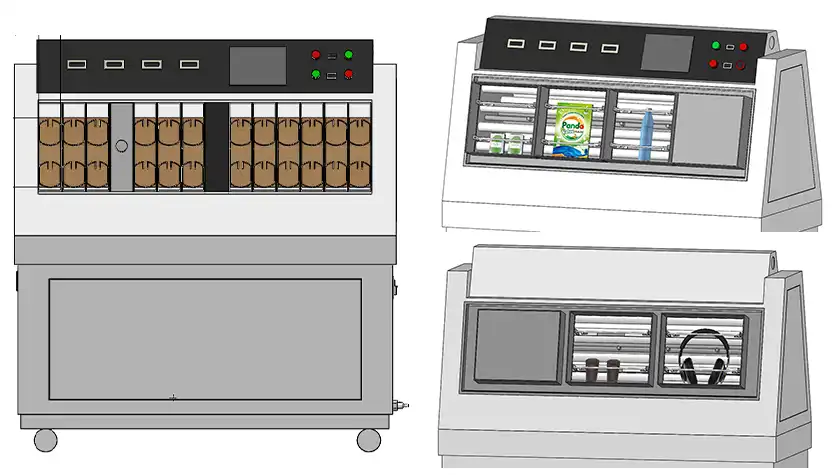
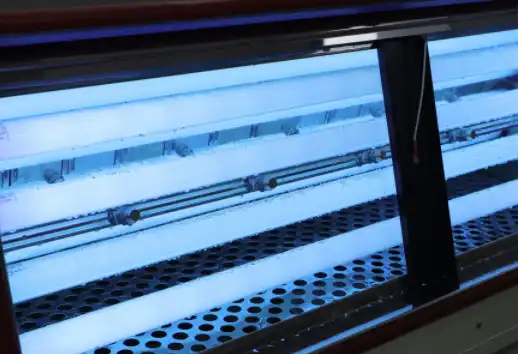
The chamber maintains irradiance levels between 0.3-20 W/m² with automatic monitoring and feedback control, ensuring consistent exposure throughout testing duration. Eight evenly distributed 40-watt fluorescent lamps provide uniform radiation across all specimen positions, eliminating position-dependent variability.
Temperature and Condensation Cycling
Test protocols alternate between UV exposure at elevated temperatures (typically 60°C black panel temperature) and condensation phases at lower temperatures (typically 50°C). This cycling replicates diurnal temperature variations and nighttime dew formation that occur in natural environments. The chamber achieves temperature control accuracy within ±0.5°C and maintains humidity levels exceeding 95% RH during condensation cycles.
Water Spray Implementation
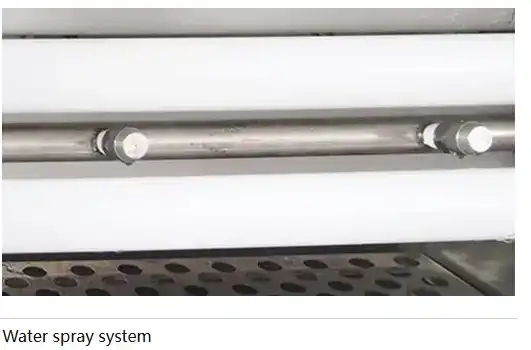
Ten programmable spray nozzles deliver controlled water spray cycles that simulate sudden rainfall events. The thermal shock created when cold water contacts hot, UV-exposed specimens accelerates surface cracking and delamination. Spray volume reaches 0.8-1.0 mm accumulation per 80 cm² per hour, providing consistent moisture exposure across the 56-piece specimen capacity.
Correlating Accelerated UV Tests with Long-Term Performance
Establishing reliable relationships between laboratory test results and actual outdoor performance remains critical for predictive polymer durability assessment. Multiple approaches enhance correlation accuracy.
Exposure Duration Calculation Methods
Researchers employ various mathematical models to translate accelerated test hours into equivalent outdoor exposure years. The reciprocity law, modified Arrhenius relationships, and empirical correlation factors all contribute to conversion accuracy. However, acceleration factors vary significantly depending on polymer type, geographic location, and specific degradation mechanism under evaluation.
Property Change Measurement Protocols
|
Property Category |
Measurement Technique |
Degradation Indicator |
Testing Frequency |
|
Mechanical |
Tensile testing |
Retained strength/elongation |
Every 168 hours |
|
Optical |
Colorimetry |
ΔE color change |
Every 72 hours |
|
Surface |
Gloss measurement |
Gloss retention percentage |
Every 72 hours |
|
Chemical |
FTIR spectroscopy |
Carbonyl index increase |
Every 336 hours |
Regular property monitoring throughout exposure duration using UV testing equipment enables construction of degradation curves showing property change rates. Comparing these curves with outdoor weathering data establishes material-specific correlation factors that improve lifespan predictions.
Geographic and Application Variables
Natural weathering intensity varies dramatically based on latitude, altitude, and local climate conditions. Arizona desert exposure delivers approximately 1,800 kWh/m² annual UV radiation, while European temperate climates receive only 600-800 kWh/m² annually. Application-specific factors including mounting angle, ventilation, and thermal mass further influence actual degradation rates experienced by polymer products.
Limitations of UV Accelerated Aging for Polymers
While ASTM G154 testing provides valuable durability insights, inherent limitations require careful interpretation of results and complementary testing approaches.
Spectrum Truncation Effects
Fluorescent UV lamps cannot replicate the full solar spectrum, particularly the visible and infrared wavelengths that contribute to thermal aging. The wavelength distribution differs from natural sunlight, potentially emphasizing certain degradation mechanisms while underrepresenting others. This spectrum mismatch may cause rank-order changes where materials perform differently in accelerated tests versus outdoor exposure.
Moisture Condition Simplifications
Natural weathering involves complex moisture dynamics including dew formation duration, rainfall frequency variations, and relative humidity fluctuations throughout daily cycles. The condensation phase in UV chambers maintains near-saturation humidity continuously, creating more severe hydrolytic stress than most outdoor environments experience. This can disproportionately affect moisture-sensitive polymers.
Missing Environmental Stressors
Accelerated UV testing excludes several degradation factors present in outdoor service including biological attack from microorganisms, chemical exposure from pollutants and acid rain, mechanical stress from wind loading, and thermal cycling beyond the chamber's programmed conditions. Comprehensive durability evaluation requires supplementary testing protocols addressing these additional stressors.
Improving Polymer Formulations Based on UV Test Results
UV testing data directly informs formulation optimization efforts, enabling targeted improvements that enhance polymer weatherability without compromising other essential properties.
UV Stabilizer Selection and Optimization
Hindered amine light stabilizers (HALS) scavenge free radicals generated during UV exposure, interrupting degradation propagation. UV absorbers convert harmful photon energy into harmless heat through molecular rearrangement. Testing different stabilizer types and concentration levels in the ASTM G154 UV test machine identifies optimal additive packages that maximize protection efficiency while maintaining cost-effectiveness.
Pigment and Filler Impact Assessment
|
Additive Type |
UV Protection Mechanism |
Optimal Loading Range |
Performance Trade-offs |
|
Carbon black |
UV screening/absorption |
2-3% by weight |
Color limitation (black only) |
|
Titanium dioxide |
UV scattering/reflection |
5-15% by weight |
Photocatalytic activity risk |
|
Iron oxide |
UV absorption |
3-8% by weight |
Limited color palette |
|
Silica |
Physical barrier |
10-20% by weight |
Processing difficulty increase |
Comparative testing of pigmented versus unpigmented formulations quantifies protective effects and identifies minimum loading thresholds necessary for adequate UV resistance. This data guides cost-performance balancing decisions during product development.
Polymer Backbone Modification Strategies
Chemical structure modifications including incorporation of UV-stable aromatic groups, crosslinking density adjustments, and copolymerization with stabilizing monomers fundamentally improve intrinsic UV resistance. Systematic testing of structural variants in accelerated weathering chambers identifies promising molecular architectures worthy of scale-up and commercialization investment.
Predict Polymer Lifespan Accurately with LIB Industry ASTM G154 UV Test Machines
Advanced testing equipment capabilities directly determine the accuracy and reliability of polymer durability predictions. LIB Industry's UV-SI-260 model delivers comprehensive testing solutions backed by proven performance.
Precision Control Systems for Reproducible Results
The programmable color LCD touchscreen controller provides intuitive parameter setting with Ethernet connectivity enabling remote monitoring and data logging. Irradiance control maintains set points within 2% variation through continuous feedback from calibrated sensors, eliminating drift-related uncertainty. Temperature regulation accuracy of ±0.5°C ensures consistent test conditions throughout exposure durations extending thousands of hours.
Comprehensive Safety and Quality Assurance
Built-in protection systems including over-temperature shutdown, over-current protection, water shortage detection, earth leakage protection, and phase sequence monitoring prevent equipment damage and ensure operator safety. CE certification and third-party validation from SGS and TUV confirm compliance with international standards. ISO 9001 quality management system certification guarantees consistent manufacturing quality across all equipment units.
Long-Term Support Infrastructure
LIB Industry provides three-year warranty coverage with lifetime technical support available 24/7 globally. Lamp management systems track operating hours and provide replacement reminders, maintaining testing consistency throughout equipment service life. If repair proves impossible during the warranty period, brand-new replacement equipment ensures minimal disruption to testing schedules and research timelines.
Conclusion
ASTM G154 UV testing delivers essential insights into polymer degradation mechanisms, acceleration factors, and formulation optimization strategies that directly impact product longevity and performance reliability. The controlled simulation of UV radiation, temperature cycling, and moisture exposure enables researchers to predict real-world durability within compressed timeframes. While limitations exist regarding spectrum completeness and environmental factor simplification, the standardized methodology provides reproducible results that guide material selection and development decisions across industries.
FAQ
How long should polymers be tested in an ASTM G154 UV chamber to simulate 5 years of outdoor exposure?
Exposure duration depends on polymer type, geographic location, and lamp selection. UVA-340 lamps typically require 2,000-4,000 hours to simulate five years in temperate climates, while UVB-313 lamps accelerate testing to 800-1,500 hours through higher intensity radiation.
Can ASTM G154 testing replace outdoor weathering validation entirely?
Accelerated UV testing serves as an excellent screening tool and formulation development guide, but cannot completely replace outdoor validation. Natural weathering confirmation remains essential for critical applications where long-term performance claims require verification under actual service conditions.
What specimen preparation considerations affect ASTM G154 test accuracy?
Surface contamination, residual molding stresses, and specimen thickness variations significantly impact results. Specimens should be cleaned, conditioned at standard laboratory atmosphere, and sourced from consistent production batches. Maintaining uniform thickness ensures comparable UV penetration depth across test samples.
Ready to enhance your polymer durability research capabilities? LIB Industry, a leading environmental test chamber manufacturer, offers comprehensive UV testing solutions tailored to your specific requirements. Contact our technical team at ellen@lib-industry.com to discuss how our ASTM G154 UV test machines can support your material development objectives.