Electric vehicle battery packs face relentless mechanical stress throughout their operational lifespan - from road-induced vibrations during daily commutes to extreme shocks encountered on rough terrain. Without rigorous vibration validation, these lithium-ion assemblies risk catastrophic failures including internal short circuits, thermal runaway, and structural disintegration. Vibration testing serves as the definitive method to evaluate battery pack resilience under simulated real-world conditions, identifying weak points in cell mounting, busbar connections, and housing integrity before vehicles reach consumers. Manufacturers who prioritize comprehensive vibration validation using advanced vibration test chambers significantly reduce warranty claims, enhance customer safety, and meet increasingly stringent regulatory requirements across global automotive markets.
How Does Vibration Affect EV Battery Cells and Pack Structures?
 Mechanical Stress on Individual Lithium-Ion Cells
Continuous vibration exposure induces microscopic movements within battery cells that compromise their structural integrity. The electrode assemblies - comprising layered cathode, anode, and separator materials - experience relative motion that can cause internal delamination. This mechanical fatigue accelerates capacity degradation and increases internal resistance, directly impacting vehicle range and charging efficiency. High-frequency vibrations particularly affect the delicate separator membranes that prevent electrode contact.
Degradation of Electrical Connections and Busbars
Battery pack architecture relies on precision-welded connections between cells, module busbars, and high-voltage terminals. Vibrational forces create cyclic loading on these joints, leading to micro-cracks in welds and solder points. Resistance increases at degraded connections generate localized heating, creating thermal hotspots that propagate throughout the assembly. Loose connections may also produce intermittent electrical contact, causing voltage fluctuations that confuse battery management systems and trigger false fault codes.
Structural Weakening of Housing and Support Systems
The battery enclosure must maintain dimensional stability while absorbing vibration energy to protect internal components. Repeated stress cycles can fatigue mounting brackets, crack sealing materials, and loosen fasteners. Aluminum and composite housings are particularly vulnerable to resonance frequencies that amplify vibration amplitude. Structural failures compromise the pack's ability to withstand subsequent impacts, while seal degradation allows moisture ingress that accelerates corrosion.
Typical Vibration Failure Modes in Electric Vehicle Battery Systems
Internal Short Circuits from Electrode Displacement
Vibration-induced particle migration within cells represents one of the most dangerous failure mechanisms. Conductive debris from electrode degradation can breach separator barriers, creating direct electrical pathways between positive and negative terminals. These internal shorts bypass normal current regulation, generating intense localized heating. The resulting thermal runaway can propagate to adjacent cells within milliseconds, triggering cascading failures across entire modules.
Electrolyte Leakage Due to Seal Compromise
Battery cells contain volatile organic electrolytes sealed within precision-manufactured casings. Vibration stress concentrates at seal interfaces, particularly where dissimilar materials join. Cyclic loading fatigues gasket materials, creating microscopic leak paths that allow electrolyte escape. Leaked electrolyte reacts with ambient moisture to form corrosive compounds that attack electrical connections and structural components, accelerating pack degradation beyond initial seal failure.
Thermal Management System Disruption
Modern battery packs integrate sophisticated cooling systems with channels, pumps, and thermal interface materials. Vibration can dislodge coolant lines, crack rigid cooling plates, and degrade thermal paste connections between cells and cold plates. Disrupted thermal management creates temperature gradients across the pack, forcing some cells to operate outside optimal ranges. This imbalance reduces overall capacity and creates conditions for accelerated aging in thermally stressed regions.
Vibration Test Requirements for EV Battery Safety Standards
International Electrotechnical Commission (IEC) Guidelines
IEC 62660 establishes comprehensive vibration protocols for rechargeable lithium-ion cells used in electric vehicles. The standard mandates sine wave testing across frequency ranges from 7 Hz to 200 Hz with specified acceleration amplitudes. Test durations extend up to 12 hours per axis, simulating years of accumulated road stress. Compliance requires cells to maintain electrical performance, show no physical damage, and exhibit zero leakage throughout testing cycles.
United Nations Regulation No. 100 (UN R100) Compliance
UN R100 governs safety requirements for rechargeable energy storage systems in vehicles worldwide. Section 5.3.4 specifies vibration testing procedures including logarithmic sweep tests and frequency-specific endurance evaluations. Battery assemblies must withstand vibrations up to 8.4G acceleration while maintaining voltage stability within 2% tolerance. The regulation also mandates post-test electrical insulation verification and structural integrity inspections.
Society of Automotive Engineers (SAE) Testing Protocols
SAE J2380 defines recommended practices for vibration testing of electric vehicle batteries, incorporating both swept sine and random vibration profiles. The standard recognizes that real-world driving generates complex multi-frequency vibrations unlike simple sine waves. Testing specifications account for vehicle platform variations, recommending customized profiles based on mounting location, suspension characteristics, and anticipated duty cycles. SAE protocols emphasize statistical validation across multiple sample units.
|
Standard |
Frequency Range |
Duration |
Key Focus |
|
IEC 62660 |
7-200 Hz |
12 hours/axis |
Cell-level integrity |
|
UN R100 |
10-190 Hz |
Variable |
System safety compliance |
|
SAE J2380 |
5-200 Hz |
Mission-specific |
Application-based validation |
The Role of Vibration Test Chambers in Battery Pack Validation
Controlled Environment Simulation Capabilities
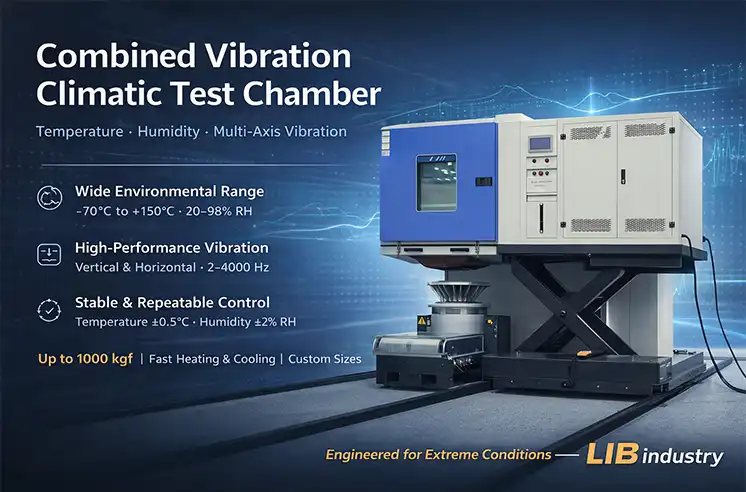
Advanced vibration test chambers provide precise control over mechanical stimulation parameters while simultaneously regulating temperature and humidity. This integrated approach replicates authentic service conditions where batteries encounter vibration during extreme weather events. Temperature ranges from -70℃ to +150℃ combined with humidity control between 20% to 98% RH enable validation across diverse climate zones from arctic conditions to tropical environments.
Multi-Axis Testing for Comprehensive Stress Analysis
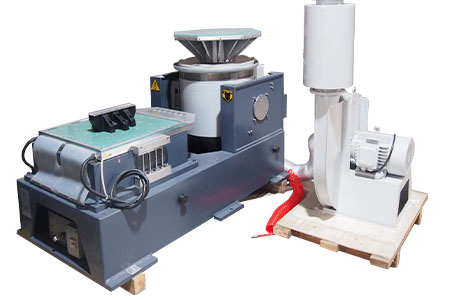
Battery packs experience vibration forces in three orthogonal directions during vehicle operation. Modern chambers feature both vertical and horizontal axis testing capabilities with synchronized control systems. The equipment generates controlled vibrations from 2 Hz to 4000 Hz with rated forces reaching 1000 kgf, accommodating battery assemblies up to 500 kg. Head expanders measuring 600×600 mm provide stable mounting platforms for various pack configurations.
Data Acquisition and Failure Mode Analysis
Contemporary vibration chambers integrate sophisticated monitoring systems that track acceleration, displacement, temperature, voltage, and current parameters throughout testing. Digital power amplifiers with sine pulse width modulation deliver precise waveform control while minimizing harmonic distortion. Continuous data logging enables engineers to correlate specific vibration frequencies with observable degradation patterns, identifying resonance points that require design modifications.
Combined Vibration and Thermal Stress in EV Battery Testing
Synergistic Effects of Mechanical and Temperature Cycling
Simultaneous exposure to vibration and temperature extremes accelerates degradation mechanisms beyond what either stressor produces independently. Thermal expansion and contraction cycling weakens material interfaces while vibration exploits these compromised zones. Cold temperatures increase electrolyte viscosity and reduce lithium-ion mobility, making cells more susceptible to mechanical damage. Conversely, elevated temperatures soften polymer components and adhesives, amplifying vibration-induced displacement.
Real-World Condition Replication Through Combined Testing
Vehicles traversing mountain roads experience continuous vibration while batteries heat from regenerative braking and cool during extended descents. Environmental test chambers equipped with mechanical compression refrigeration systems achieve cooling rates of 5℃/min and heating rates of 5℃/min, enabling rapid temperature transitions that mirror actual driving scenarios. This combined testing reveals failure modes invisible to single-variable validation.
Identifying Temperature-Dependent Resonance Phenomena
Material properties shift with temperature, altering structural resonance frequencies. A battery pack that demonstrates acceptable vibration resistance at room temperature may develop destructive resonance at -40℃ when materials become brittle. Combined testing across the full operational temperature envelope identifies these temperature-dependent vulnerabilities, guiding material selection for components like mounting brackets and vibration isolators.
|
Test Condition |
Temperature Range |
Vibration Profile |
Objective |
|
Hot vibration |
+60℃ to +85℃ |
Random broadband |
Thermal softening effects |
|
Cold vibration |
-40℃ to -20℃ |
Swept sine |
Material brittleness assessment |
|
Thermal shock + vibration |
-70℃ to +150℃ cycling |
Continuous multi-axis |
Extreme environment validation |
Improving EV Battery Reliability Through Early-Stage Vibration Testing
Design Validation Before Production Tooling Investment
Implementing vibration testing during prototype development in a vibration chamber prevents costly design flaws from reaching production. Early detection of resonance frequencies, inadequate mounting configurations, or insufficient damping allows engineering teams to iterate designs using cost-effective modifications. Testing reveals whether cell spacing provides adequate vibration isolation or if additional damping materials are necessary, informing decisions before committing to expensive tooling and manufacturing processes.
Accelerated Life Testing for Warranty Prediction
Controlled vibration exposure at elevated stress levels compresses years of operational wear into weeks of laboratory testing. Engineers apply accumulated damage models to extrapolate field reliability from accelerated test results. This predictive capability enables manufacturers to establish appropriate warranty periods with confidence, balancing customer expectations against anticipated failure rates. Data-driven warranty terms reduce reserve requirements while maintaining competitive market positioning.
Supplier Component Qualification and Continuous Improvement
Battery packs incorporate components from numerous suppliers including cells, busbars, thermal management hardware, and structural elements. Establishing vibration qualification requirements ensures incoming materials meet performance standards before assembly integration. Continuous testing of components from ongoing production lots detects manufacturing drift that could compromise pack reliability. This proactive quality assurance prevents field failures traceable to substandard supplier deliverables.
Ensure Absolute EV Safety with LIB Industry's Vibration Test Chambers

Comprehensive Testing Solutions for Every Development Phase
LIB Industry manufactures specialized environmental chambers that combine temperature, climate, vibration, corrosion, altitude, and pressure testing capabilities within single systems. Our equipment serves manufacturers throughout the entire product lifecycle - from initial concept validation through production quality assurance. Temperature control spans -70℃ to +150℃ with ±0.5℃ fluctuation precision, while humidity regulation maintains 30% to 98% RH with ±2.5% deviation tolerance.
Customized Configurations for Specific Application Requirements
Recognizing that battery testing demands vary across vehicle platforms and operational environments, LIB provides tailored chamber configurations. Available formats include benchtop units for cell-level validation, floor-standing chambers for module testing, and walk-in systems accommodating complete vehicle battery packs. Our engineers collaborate with clients to specify vibration parameters, environmental ranges, and monitoring capabilities aligned with their unique validation requirements and regulatory obligations.
Turn-Key Implementation with Comprehensive Support Services
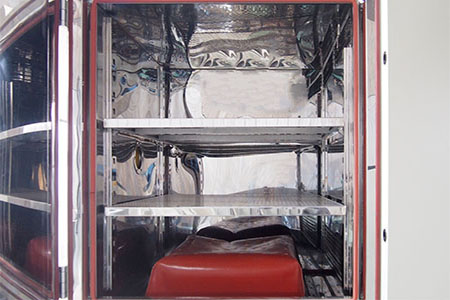
LIB Industry delivers complete solutions encompassing research, design, production, commissioning, installation, and operator training. Our technical support extends beyond equipment delivery, assisting customers with test protocol development, data interpretation, and continuous process optimization. Protective coating exterior construction with SUS304 stainless steel interiors ensures long-term durability, while comprehensive safety systems including over-temperature protection, refrigerant high-pressure monitoring, and earth leakage protection guarantee operator safety.
|
Chamber Specification |
Performance |
Application |
|
Temperature fluctuation |
±0.5℃ |
Precision testing |
|
Vibration frequency range |
2-4000 Hz |
Full spectrum simulation |
|
Maximum load capacity |
500 kg |
Pack-level validation |
|
Cooling/Heating rate |
5℃/min |
Rapid thermal cycling |
|
|
|
 |
|
SUS 304 Climatic Workroom |
Versatile Vibration Testing |
Smart Control & Monitoring System |
Conclusion
Vibration testing represents an indispensable pillar of electric vehicle battery safety validation, protecting consumers from potentially catastrophic failures while enabling manufacturers to deliver reliable, durable products. The complex interplay between mechanical stress, thermal conditions, and electrochemical processes demands sophisticated testing infrastructure capable of replicating authentic operational environments, which is facilitated by a vibration test chamber. As electric vehicle adoption accelerates globally, rigorous vibration validation using advanced environmental chambers becomes not merely a competitive advantage but an essential requirement for market access and brand reputation protection.
FAQ
What vibration frequencies are most critical for EV battery testing?
The frequency range between 10-200 Hz proves most critical as it corresponds to typical road-induced vibrations that battery packs encounter during vehicle operation. Resonance frequencies specific to individual pack designs typically fall within this range, making comprehensive sweep testing essential for identifying potential failure modes.
How long should vibration testing cycles run to adequately simulate real-world conditions?
Standard protocols specify 12-24 hours of continuous vibration per axis to simulate years of accumulated road stress. Accelerated testing at elevated vibration amplitudes can compress equivalent lifetime exposure into shorter durations, though correlation studies must validate the acceleration factors for specific battery chemistries and pack configurations.
Can vibration testing predict battery warranty claim rates?
Properly designed vibration test programs combined with accumulated damage models provide reliable warranty predictions when validated against field data. Manufacturers establish correlation between laboratory test results and actual failure rates, enabling data-driven warranty period determination and reserve allocation based on anticipated claim frequencies.
Ready to Elevate Your EV Battery Testing Standards?
LIB Industry stands ready as your trusted vibration test chamber manufacturer and supplier, delivering precision-engineered solutions that meet the most demanding validation requirements. Our factory produces customized chambers backed by comprehensive technical support and installation services. Contact our team at ellen@lib-industry.com to discuss your specific testing needs and discover how our turn-key environmental testing solutions can accelerate your product development while ensuring uncompromising safety standards.