How Water Immersion Tanks Are Used in Electronics Validation?
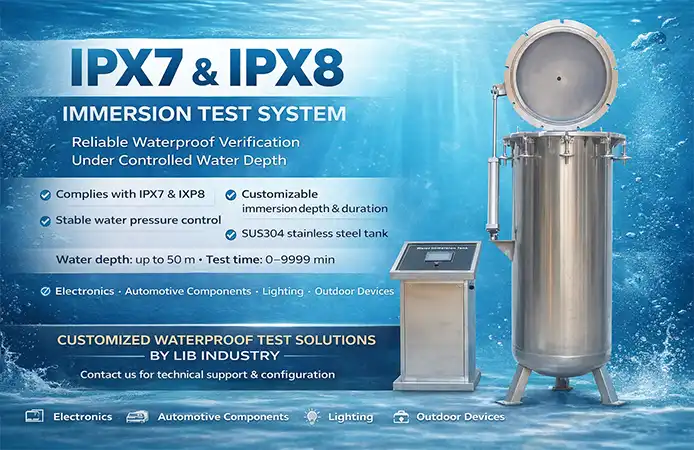
Water immersion tanks serve as essential validation tools for electronics manufacturers, enabling systematic evaluation of waterproof integrity before products reach consumers. These specialized testing chambers simulate real-world submersion scenarios, exposing devices to controlled water pressure at specified depths and durations. By subjecting smartphones, wearables, medical devices, and industrial electronics to rigorous IPX7 and IPX8 testing protocols, engineers identify seal weaknesses, material vulnerabilities, and design flaws that could compromise device functionality. The validation process combines precise pressure control, automated monitoring systems, and standardized test procedures to verify that electronic products meet their advertised water resistance ratings and regulatory requirements.
Why Water Resistance Is Critical for Electronic Devices?
Consumer Expectations Drive Waterproofing Standards
Modern consumers expect their electronic devices to withstand daily water exposure without failure. Smartphones accompany users to beaches, pools, and rainy environments, while fitness trackers endure sweat and shower conditions. This shift in usage patterns has transformed water resistance from a premium feature into a baseline requirement. Manufacturers who fail to deliver adequate waterproofing face product returns, warranty claims, and brand reputation damage that extends far beyond individual device failures.
Regulatory Compliance Across Global Markets
International standards organizations mandate specific water resistance testing for electronics sold in various markets. The IEC 60529 standard defines IP ratings that manufacturers must verify through documented testing procedures. Products marketed with IPX7 or IPX8 ratings require certification evidence demonstrating compliance with submersion depth and duration requirements. Without proper validation using calibrated water immersion tanks, companies risk regulatory penalties, product recalls, and market access restrictions.
Financial Impact of Water Damage
Electronic device water damage generates billions in annual losses across manufacturing, warranty servicing, and consumer replacement costs. A single batch of insufficiently waterproofed devices can trigger mass returns that devastate quarterly earnings. Insurance claims, litigation expenses, and emergency redesign initiatives multiply the financial burden. Investing in comprehensive immersion testing during development phases costs substantially less than addressing water ingress failures after market launch.
Common Failure Modes Due to Water Ingress
Seal and Gasket Degradation
Rubber gaskets and silicone seals represent primary water barrier components in electronic enclosures. These materials deteriorate through temperature cycling, UV exposure, and mechanical stress, creating microscopic gaps that allow water penetration. During immersion testing, pressure differentials expose compromised seals by forcing water through degraded barrier zones. Engineers observe leak patterns around connector ports, battery compartments, and display assemblies where gasket compression proves inadequate.
Adhesive Bond Weaknesses
Modern electronics rely extensively on structural adhesives to bond glass, metal, and plastic components into waterproof assemblies. Adhesive failures manifest when bonding agents lose adhesion strength due to improper curing, surface contamination, or incompatible material combinations. Water immersion tanks reveal these vulnerabilities by maintaining sustained pressure that exploits adhesive weaknesses, allowing moisture to infiltrate device interiors through seemingly solid bond lines.
Component-Level Vulnerabilities
Microphones, speakers, and pressure sensors require designed openings that balance functionality with water resistance. These acoustic components employ hydrophobic membranes and tortuous path designs to block liquid while transmitting sound or air pressure. Immersion testing identifies membrane defects, inadequate membrane adhesion, and pathway design flaws that permit water entry. Corrosion damage to circuit boards, connector contacts, and battery terminals follows when these protective barriers fail under test conditions.
Designing Immersion Test Profiles for Electronics
Matching Test Parameters to Product Specifications
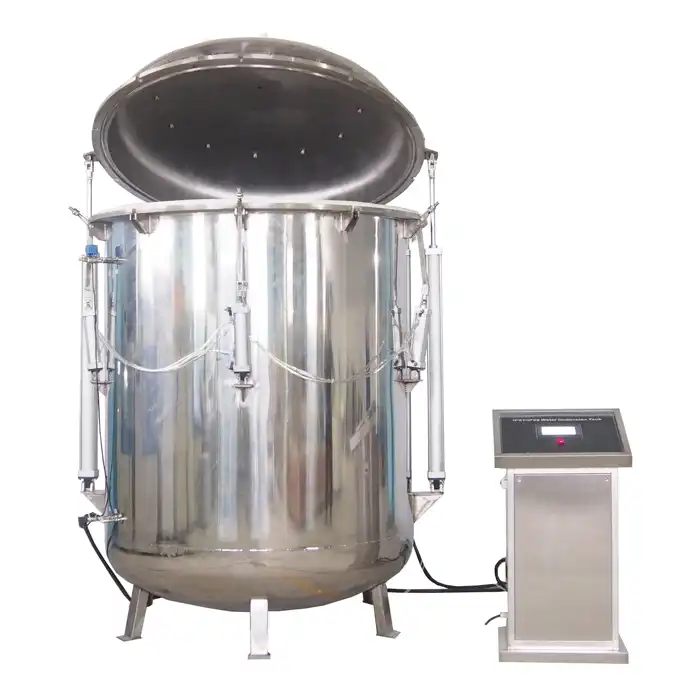
Effective test profile development begins with analyzing intended product usage environments. A smartwatch designed for swimming requires different validation parameters than a smartphone rated for accidental submersion. Engineers establish immersion depth, duration, and temperature conditions that simulate worst-case scenarios while maintaining correlation to standard test requirements. The R78-600 immersion tester accommodates these varied profiles through its 50-meter pressure capability and programmable touch screen controller.
Conditioning and Pre-Test Procedures
Sample preparation significantly influences test validity and result interpretation. Devices undergo conditioning cycles that stabilize internal components and activate adhesive bonds to full strength. Temperature equilibration prevents thermal expansion effects that could mask design weaknesses. Test specimens receive physical inspection documenting seal integrity, connector alignment, and assembly quality before immersion. This baseline assessment enables post-test comparison that isolates water ingress effects from pre-existing defects.
Progressive Testing Strategies
Validation programs typically employ progressive immersion sequences that incrementally increase test severity. Initial shallow-depth tests verify basic seal integrity before subjecting samples to rated depth pressures. This approach conserves expensive prototypes while generating comprehensive failure mode data. Engineers document performance at each test level, identifying the specific conditions where water intrusion initiates and quantifying safety margins above minimum specification requirements.
|
Test Level |
Depth (meters) |
Duration (minutes) |
Purpose |
|
Preliminary Screening |
0.5 |
10 |
Verify basic assembly quality |
|
IPX7 Validation |
1.0 |
30 |
Standard submersion rating |
|
Extended Endurance |
Rated depth |
120 |
Safety margin verification |
|
Extreme Stress |
1.5x rated depth |
60 |
Identify failure thresholds |
Monitoring Electronic Performance During Water Exposure
Real-Time Functionality Assessment
Advanced validation procedures maintain device operation throughout immersion testing to detect performance degradation before catastrophic failure. Engineers establish electrical connections through sealed cable glands that preserve tank pressure integrity while enabling continuous monitoring. Test protocols activate device functions at intervals during submersion, recording touchscreen response, wireless connectivity, camera operation, and sensor accuracy. Performance anomalies indicate partial water intrusion affecting specific components before visible moisture accumulation occurs.
Pressure and Leak Detection Systems
Integrated sensors within modern water immersion tanks track internal device pressure changes that signal seal breaches. Micro-pressure transducers detect air displacement as water enters device cavities through compromised barriers. The R78-600 storage water tank system maintains stable test conditions while pneumatic lid mechanisms ensure uniform pressure distribution around test specimens. Automated data logging captures pressure-time profiles that correlate specific seal failures with test timeline events.
Environmental Parameter Recording
Comprehensive test documentation requires simultaneous tracking of water temperature, ambient conditions, and device operational status. Temperature variations affect both water viscosity and seal material properties, influencing test severity and result interpretation. The programmable color LCD touch screen controller manages data acquisition from multiple sensor inputs, organizing information for post-test analysis. USB download capability enables test data export for statistical analysis and long-term trend evaluation across product development cycles.
Interpreting Test Results for Product Qualification
Pass/Fail Criteria Establishment
Product qualification requires clearly defined acceptance criteria that align with intended water resistance ratings and regulatory requirements. Engineers establish maximum allowable water ingress thresholds based on component sensitivity and functional criticality. Visible moisture on circuit boards typically constitutes failure, while condensation in sealed air spaces may prove acceptable depending on component placement. Post-test inspection procedures include electrical functionality verification, internal moisture detection, and seal integrity assessment.
Statistical Analysis of Sample Sets
Reliable qualification decisions demand adequate sample sizes that capture manufacturing variation and random defects. Statistical methods determine confidence levels for lot acceptance based on observed failure rates across test populations. Three-sample minimum testing rarely provides sufficient data for high-reliability applications, while automotive and medical device industries may require 30-sample validation runs. Data analysis identifies systematic failure patterns distinguishing design flaws from assembly process variations.
Failure Mode Investigation
Every test failure triggers detailed investigation to determine root cause and corrective action requirements. Destructive analysis exposes water ingress pathways through cross-sectioning, dye penetrant testing, and microscopic examination of seal interfaces. Engineers trace moisture patterns backward from internal damage sites to entry points, correlating physical evidence with pressure-time data recorded during testing. This forensic approach distinguishes design inadequacies from manufacturing defects and material quality issues.
|
Failure Type |
Investigation Method |
Typical Root Cause |
Corrective Action |
|
Seal compression |
Cross-section analysis |
Inadequate gasket design |
Geometry optimization |
|
Adhesive delamination |
Peel strength testing |
Surface preparation defect |
Process improvement |
|
Component breach |
Dye penetrant inspection |
Membrane damage |
Supplier quality audit |
Improving Device Reliability Through Early Immersion Testing
Design Validation During Development
Incorporating immersion testing during early prototype phases accelerates design maturity by identifying waterproofing challenges before tooling commitments. Engineers evaluate alternative sealing concepts, material selections, and assembly methods through rapid iteration testing. Early failure discovery costs substantially less than redesigning production tooling after mass manufacturing begins. The cylindrical design and tripod support of water immersion tanks accommodate diverse prototype geometries without requiring custom fixtures for each design iteration.
Manufacturing Process Qualification
Production readiness verification extends beyond design validation to encompass manufacturing process capability assessment. Immersion testing of pilot production samples confirms that assembly procedures consistently achieve specified seal integrity. Process variables including adhesive cure time, gasket compression force, and ultrasonic welding parameters receive optimization through correlation with test results. Statistical process control limits emerge from baseline testing that characterizes normal process variation versus out-of-specification performance.
Supplier Quality Assurance
Component suppliers providing seals, gaskets, membranes, and adhesives require qualification through representative immersion testing. Incoming material inspection programs verify that purchased components meet waterproofing performance specifications under actual use conditions. Alternative suppliers undergo comparative evaluation using standardized test protocols that quantify relative performance. Long-term supplier relationships benefit from periodic requalification testing that detects material formulation changes or manufacturing process drift affecting water resistance properties.
Ensure Electronics Waterproofing with LIB Industry Water Immersion Tanks
 |
|
|
Model |
R78-600 |
|
Internal Dimension (mm) |
Diameter 600mm * Height 1500 mm |
|
Overall Dimension (mm) |
Diameter 800mm * Height 1800 mm |
|
Pressure |
50m water depth pressure |
|
Open mode |
Pneumatic lid |
|
Material |
A3 steel plate, wall thickness 15mm |
|
Controller |
Programmable color LCD touch screen controller, Ethernet connection |
|
Water Supply System |
Storage water tank, Automatic water supply |
 |
 |
| Test Area | Footstand |
 |
 |
| Control Panel | Safety Lock |
Advanced Testing Capabilities
LIB Industry's R78-600 water immersion tank delivers professional-grade validation capabilities through its robust construction and sophisticated control systems. The 600mm diameter by 1500mm height internal dimension accommodates diverse electronic products from compact wearables to larger industrial equipment. Pneumatic lid operation ensures consistent seal pressure during extended test cycles, while the A3 steel plate construction with 15mm wall thickness provides long-term durability under continuous operational demands.
Precision and Automation Features
Programmable touch screen controllers eliminate manual test parameter adjustment, reducing operator errors and improving result repeatability. Ethernet connectivity enables remote monitoring and data access, supporting distributed engineering teams and quality management systems. The automatic water supply system maintains stable test conditions without requiring constant operator attention during multi-hour immersion cycles. These automation features enhance testing throughput while ensuring consistent adherence to validation protocols.
Comprehensive Support and Customization
LIB Industry provides turn-key environmental testing solutions encompassing equipment design, production, commissioning, installation, and operator training. Customized testing protocols accommodate specific industry requirements and unique product configurations that standard test procedures may not address adequately. Technical support teams assist with test method development, result interpretation, and troubleshooting throughout product development lifecycles. This comprehensive service approach transforms equipment purchases into long-term partnerships supporting ongoing quality improvement initiatives.
|
Specification |
R78-600 |
Benefit |
|
Internal Dimensions |
Ø600mm × 1500mm |
Accommodates various device sizes |
|
Pressure Capability |
50m water depth |
Exceeds standard IPX8 requirements |
|
Wall Thickness |
15mm A3 steel |
Ensures structural integrity |
|
Control Interface |
Programmable touch screen |
Simplifies operation and data management |
|
Water Management |
Automatic supply system |
Maintains stable test conditions |
Conclusion
Water immersion tanks represent indispensable validation tools for electronics manufacturers committed to delivering waterproof products that meet consumer expectations and regulatory standards. Through systematic testing that exposes design weaknesses, manufacturing defects, and material inadequacies, these specialized chambers prevent costly market failures while accelerating product development cycles. The integration of precise pressure control, automated monitoring, and comprehensive data logging transforms waterproofing validation from subjective assessment into quantifiable engineering discipline. Organizations investing in professional immersion testing infrastructure establish competitive advantages through enhanced product reliability and reduced warranty costs.
FAQ
How long should electronics remain submerged during IPX7 testing?
IPX7 certification requires continuous submersion for 30 minutes at 1-meter depth minimum. Extended duration testing beyond standard requirements helps verify safety margins and identifies time-dependent failure modes that shorter tests might miss.
Can immersion tanks test products with active electrical connections?
Specialized cable glands enable sealed electrical feedthroughs that maintain tank pressure integrity while powering devices during testing. This capability allows real-time functionality monitoring to detect early performance degradation before complete water ingress failure.
What maintenance do water immersion tanks require?
Regular maintenance includes seal inspection, pressure calibration verification, water quality monitoring, and controller function testing. Stainless steel construction minimizes corrosion concerns, while automated systems reduce manual intervention requirements during routine operation.
How do you determine appropriate immersion depth for custom applications?
Depth selection considers intended product usage scenarios, competitive benchmarks, and regulatory requirements. Engineers typically test at rated depth plus 50% safety margin to ensure performance reliability under worst-case field conditions exceeding normal consumer exposure.
Partner with LIB Industry for Your Testing Needs
LIB Industry stands ready as your trusted water immersion tank manufacturer and supplier, delivering comprehensive environmental testing solutions tailored to your specific validation requirements. Contact our technical team at ellen@lib-industry.com to discuss how our advanced immersion testing systems can strengthen your product development processes and ensure market-ready waterproofing performance.