Blowing Rain Test Chambers for Automotive Exterior Testing
Automotive manufacturers face mounting pressure to deliver vehicles that withstand extreme weather conditions without compromising passenger comfort or component integrity. A blowing rain test chamber replicates wind-driven precipitation scenarios that vehicles encounter during their operational lifespan, enabling engineers to identify vulnerabilities in sealing systems, electronic modules, and structural assemblies before mass production. These specialized environmental chambers combine adjustable water flow rates, variable wind velocities, and temperature-controlled conditions to simulate everything from moderate showers to violent tropical storms, providing quantifiable data on water penetration resistance and material degradation patterns that inform design improvements across automotive platforms.
Why Automotive Exteriors Require Wind-Driven Rain Validation?
Regulatory Compliance and Consumer Safety Standards
Automotive regulations across major markets mandate water ingress protection for critical vehicle systems. European ECE standards and North American FMVSS requirements specify minimum performance thresholds for electrical components exposed to moisture. Manufacturers must demonstrate compliance through systematic testing protocols that replicate real-world exposure conditions.
Real-World Driving Conditions Exceed Laboratory Assumptions
Highway speeds generate aerodynamic forces that propel rainwater into areas conventional static testing cannot reveal. Wind speeds exceeding 100 km/h create horizontal water trajectories that challenge door seals, hood gaps, and underbody protection systems. Laboratory validation must account for these dynamic pressure differentials to accurately predict field performance.
Economic Impact of Water-Related Warranty Claims
Industry data reveals water intrusion consistently ranks among the top five warranty expense categories for vehicle manufacturers. Failed seals, corroded connectors, and water-damaged interior components generate substantial repair costs and diminish brand reputation. Proactive testing reduces these financial burdens by catching design flaws during development phases.
Common Components Tested: Body Panels, Seals, and Sensors
Door and Window Sealing Assemblies
Automotive door systems incorporate multiple sealing layers that must maintain integrity across temperature extremes and mechanical cycling. Testing protocols evaluate primary weather strips, secondary seals, and drainage channel effectiveness under varying wind angles and precipitation rates. Engineers measure water accumulation in door cavities and verify drain hole positioning prevents liquid pooling.
|
Component Type |
Critical Test Parameters |
Acceptance Criteria |
|
Primary Door Seals |
Wind speed 25 m/s, rainfall 1.7 mm/min |
Zero water entry to cabin |
|
Window Channel Seals |
Droplet size 0.5-4.5 mm, test duration 120 min |
No visible moisture penetration |
|
Drainage Systems |
Nozzle pressure 276 kPa, surface area coverage |
Complete water evacuation within 5 min |
Advanced Driver Assistance System Sensors
Modern vehicles integrate radar modules, camera arrays, and ultrasonic sensors throughout exterior surfaces. These electronic systems require IP67 or higher protection ratings to function reliably in wet conditions. Rain test chambers validate enclosure designs by subjecting sensors to sustained water exposure while monitoring electrical continuity and signal quality.
Underbody and Wheel Arch Components
Suspension components, brake assemblies, and underbody shields face constant water bombardment from road spray and direct precipitation. Testing evaluates protective coatings, drainage pathways, and component mounting strategies. Engineers assess corrosion resistance of fasteners, effectiveness of splash guards, and integrity of electrical harness routing in vulnerable areas.
Designing Test Cycles for Vehicle Qualification
Accelerated Lifecycle Simulation Protocols
Standard automotive qualification requires test chambers to compress years of environmental exposure into weeks of laboratory evaluation. A typical protocol might specify 500 hours of cycling between rain simulation phases, drying intervals, and thermal transitions. Engineers calculate equivalency factors based on regional climate data and expected vehicle usage patterns.
Multi-Phase Testing Sequences for Comprehensive Assessment
Effective test cycles incorporate graduated severity levels that mirror vehicle operational reality. Initial phases apply moderate conditions to establish baseline performance, followed by intensified exposure to identify failure thresholds. The final validation stage combines maximum wind velocity with elevated water temperature to stress test all protective systems simultaneously.
Regional Climate Adaptation Requirements
Vehicles destined for tropical markets require different test parameters than those engineered for temperate zones. Chamber programming must accommodate these variations through adjustable rainfall rates, temperature ranges, and test durations. Manufacturers maintain region-specific test profiles that reflect local weather extremes documented in meteorological databases.
Simulating Road and Weather Conditions in Chambers
Wind Generation and Directional Control Systems
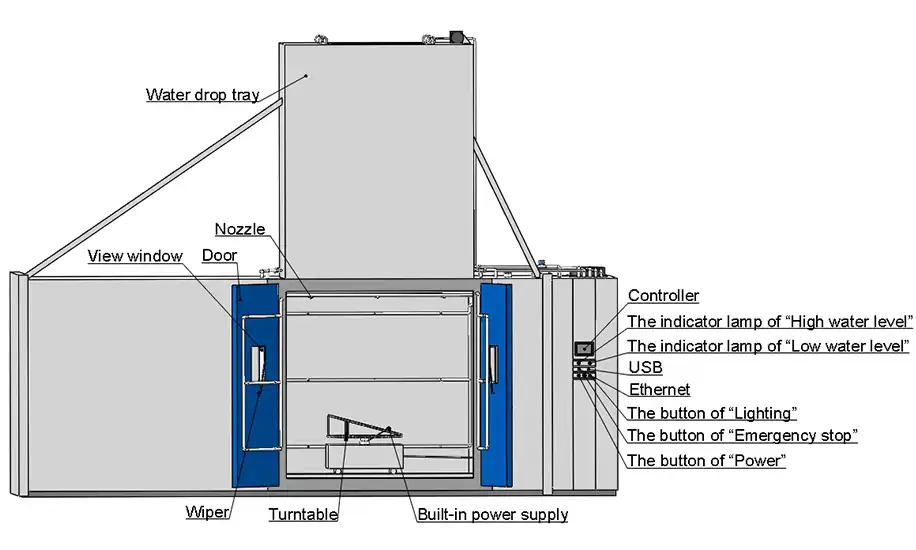
High-performance axial fans generate sustained wind speeds up to 25 m/s within test chambers, replicating highway driving conditions during heavy precipitation. Variable frequency drives enable precise velocity control, allowing engineers to match specific test scenarios. The 360-degree ring nozzle array ensures uniform water distribution regardless of wind direction, while the rotating turntable exposes all vehicle surfaces to consistent environmental stress.
Water Delivery and Droplet Characterization
Achieving realistic rain simulation demands precise control over multiple parameters. Nozzle arrays generate droplets ranging from 0.5 mm to 4.5 mm diameter, matching natural precipitation distributions. System pressure regulation maintains consistent rainfall rates of 1.7 mm/min for standard testing or increases to 20.8 L/min for exaggerated exposure scenarios.
|
Test Condition |
Wind Speed |
Rainfall Rate |
Water Temperature |
Duration |
|
Moderate Rain |
15 m/s |
1.7 mm/min |
Ambient +10°C |
180 min |
|
Heavy Storm |
22 m/s |
20.8 L/min |
Ambient +10°C |
240 min |
|
Tropical Downpour |
25 m/s |
20.8 L/min |
Max +55°C |
300 min |
Temperature and Humidity Integration
Water temperature control systems in a rain test machine enable testing across seasonal variations by heating spray water up to 55°C above ambient conditions. This capability proves essential for validating seal performance across the full operational temperature range vehicles encounter. Thermal differentials between water and test specimens reveal expansion-contraction vulnerabilities in polymer sealing materials.
Analyzing Water Ingress and Surface Degradation
Detection Methods for Water Penetration
Engineers employ multiple techniques to identify water intrusion during and after test cycles. Visual inspection using UV-reactive tracer dyes reveals penetration pathways through complex geometries. Electronic moisture sensors placed at critical locations provide real-time alerts when water breaches protective barriers. Post-test disassembly enables comprehensive assessment of internal water accumulation in door panels, trunk areas, and electrical enclosures.
Material Performance Degradation Metrics
Extended exposure to wind-driven rain affects exterior materials beyond simple water penetration. Paint systems experience surface erosion quantified through gloss measurements taken before and after testing. Polymer components undergo mechanical property testing to detect strength loss from moisture absorption. Adhesive bonds in trim assemblies face pull-strength validation to ensure water exposure hasn't compromised structural integrity.
Data Logging and Failure Analysis Reporting
Advanced control systems continuously record wind speed, water flow rate, chamber pressure, and temperature throughout test duration. This comprehensive data collection enables engineers to correlate environmental conditions with specific failure modes. Automated reporting generates detailed test summaries documenting compliance with MIL-STD-810H methodology and customer-specific validation requirements.
Enhancing Automotive Durability Through Controlled Rain Testing
Design Iteration and Continuous Improvement Cycles
Early-stage prototype testing identifies design weaknesses before tooling investments occur. Engineers modify seal geometries, adjust drainage pathways, and refine component positioning based on test results. Subsequent validation cycles confirm improvements meet performance targets, establishing a closed-loop development process that systematically eliminates water intrusion vulnerabilities.
Cross-Functional Collaboration Benefits
Blowing rain test chambers facilitate communication between design engineers, manufacturing specialists, and quality teams. Shared observation of test cycles builds common understanding of failure mechanisms and design constraints. This collaborative approach accelerates problem resolution and reduces development timelines by aligning stakeholders around objective performance data.
Long-Term Reliability Prediction Models
Accumulated test data feeds statistical models that predict field performance across vehicle production volumes. Engineers establish correlation between laboratory test results and warranty claim rates, refining acceptance criteria to optimize quality outcomes. These predictive capabilities enable manufacturers to balance design robustness with cost efficiency throughout product development.
Validate Automotive Watertightness with LIB Industry Blowing Rain Test Chambers
Technical Capabilities for Automotive Applications
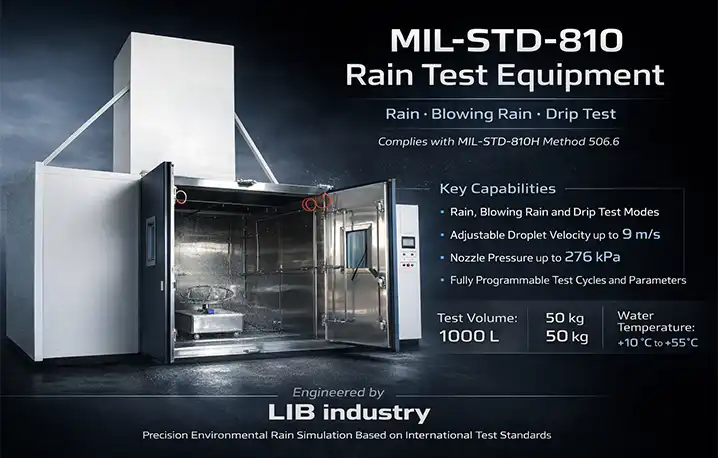
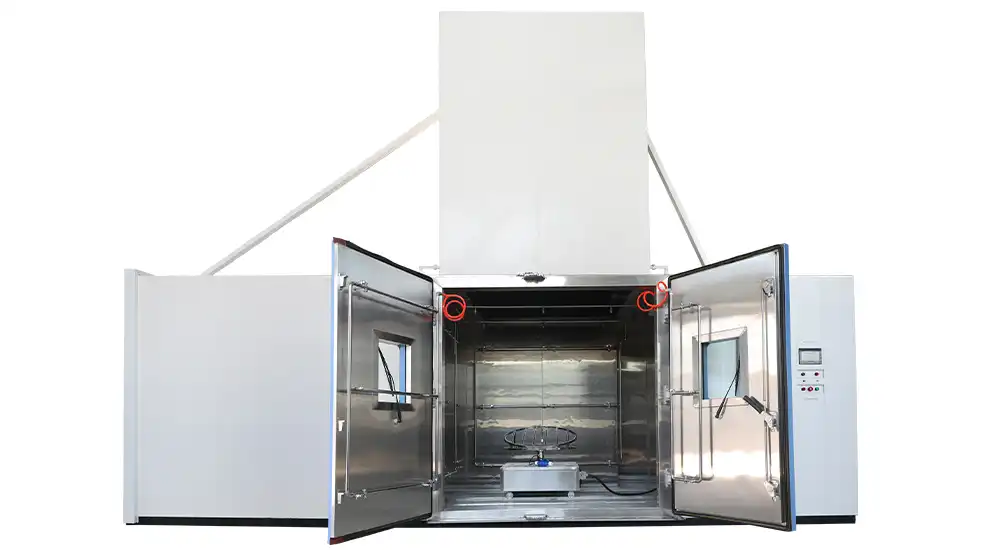
The LIB RIM-1000 blowing rain test chamber delivers 1000-liter internal volume capable of accommodating complete door assemblies, large exterior panels, or full vehicle front-end modules. The 800mm diameter turntable supports loads up to 50kg while rotating at precisely controlled speeds for uniform exposure. Military-grade compliance ensures testing meets MIL-STD-810H standards that many automotive OEMs reference in their validation protocols.
Customization Options for Manufacturer Requirements
LIB's engineering team specializes in adapting standard chamber configurations to unique testing needs. Custom fixture designs secure irregular automotive components during test cycles. Modified spray arrays target specific vehicle areas requiring focused evaluation. Integration with manufacturer data systems enables automated test sequence execution and results reporting aligned with existing quality management workflows.
|
Chamber Specification |
Standard Configuration |
Custom Options Available |
|
Internal Dimensions |
1000×1000×1000 mm |
Up to 2500×2000×2000 mm |
|
Wind Speed Range |
0-25 m/s |
Extended range to 35 m/s |
|
Water Temperature |
Ambient +10°C to +55°C |
Chilled water option available |
|
Control System |
HMI touchscreen |
Remote monitoring integration |
Comprehensive Support Infrastructure
Every LIB blowing rain test chamber includes a three-year comprehensive warranty covering all mechanical, electrical, and control system components. Global service networks provide 24/7 technical support with rapid response times for operational questions or maintenance requirements. Customers receive detailed operational training, calibration procedures, and preventive maintenance schedules ensuring optimal chamber performance throughout its operational lifespan.
|
|
|
|
Model: RIM-1000 Interior Volume: 1000 L Turntable Load: 50 kg Turntable Diameter: 800 mm Door Lock: Electromagnetic lock Interior Material: SUS304 stainless steel Test Standard: MIL-STD-810H Test Time: 0 – 999 min, adjustable |
|
|
Rain & Blowing Rain Final Rain Droplet Velocity: 9 m/s on test item Rainfall Rate≥ 1.7 mm/min Droplet Size: 0.5 – 4.5 mm Water Temperature: +10°C to max. +55°C |
|
|
Drip Drip Area Dimensions: 1600 × 1000 mm, height adjustable Drip Hole Diameter: 20 – 25.4 mm Distance Between Holes: 25 mm Water Volume: ≥ 280 L/m²/h Water Temperature: +10°C to max. +55°C |
|
|
Exaggerated Rain Nozzle Pressure: 276 kPa Rainfall Rate: 20.8 L/min Nozzle Arrangement: One nozzle per 0.56 m² of surface area, approx. 48 cm from test surface Droplet Size:0.5 – 4.5 mm |
|
Conclusion
Wind-driven rain testing represents a critical validation step in automotive development that directly impacts vehicle quality, customer satisfaction, and warranty cost management. Modern blowing rain test chambers provide controlled environments where engineers systematically evaluate component performance against quantifiable standards. Manufacturers who integrate comprehensive rain testing into development workflows gain competitive advantages through improved seal designs, enhanced material selections, and validated drainage strategies that deliver long-term reliability across diverse operating conditions.
FAQ
What automotive components benefit most from blowing rain testing?
Door seals, window assemblies, exterior lighting fixtures, sensor housings, and underbody shields gain significant validation benefits. Testing reveals design vulnerabilities in sealing systems and drainage pathways before production tooling investments occur, reducing warranty exposure.
How does blowing rain testing differ from standard water ingress testing?
Conventional IP testing applies static water spray without wind simulation, failing to replicate aerodynamic forces vehicles experience during highway driving. Blowing rain chambers combine variable wind speeds with controlled precipitation to reproduce realistic operational conditions.
What test duration ensures adequate automotive component validation?
Standard qualification protocols typically specify 200-500 hours of cyclic exposure depending on component criticality and target market conditions. Engineers establish test durations through accelerated lifecycle calculations correlating laboratory exposure with years of field operation.
Contact LIB Industry Today
As a leading blowing rain test chamber manufacturer and supplier, LIB Industry delivers turn-key environmental testing solutions tailored to automotive validation requirements. Our factory produces chambers meeting international standards with customization capabilities addressing unique testing protocols. Contact our technical team at ellen@lib-industry.com to discuss your automotive testing needs.