IPX9K Testing for Food Processing Machinery
IPX9K testing for food processing machinery validates equipment protection against high-pressure, high-temperature water jets encountered during sanitation procedures. Food production facilities employ aggressive washdown protocols using heated water at 80-88°C and pressures reaching 8,000-10,000 kPa to eliminate bacterial contamination and maintain HACCP compliance. IEC 60529 IPX9K equipment replicates these harsh cleaning conditions by exposing machinery components - motors, control panels, sensors, and electrical enclosures - to spray from four angles (0°, 30°, 60°, 90°) at close range (100-150mm) while rotating samples at 5 rpm. This rigorous testing identifies seal failures, gasket inadequacies, and ingress protection weaknesses before equipment deployment. Manufacturers achieving IPX9K certification demonstrate their machinery withstands industrial cleaning regimens without compromising food safety, operational reliability, or regulatory compliance throughout multi-shift production environments.
Hygiene and Washdown Requirements in Food Industry Equipment
Stringent Sanitation Protocols
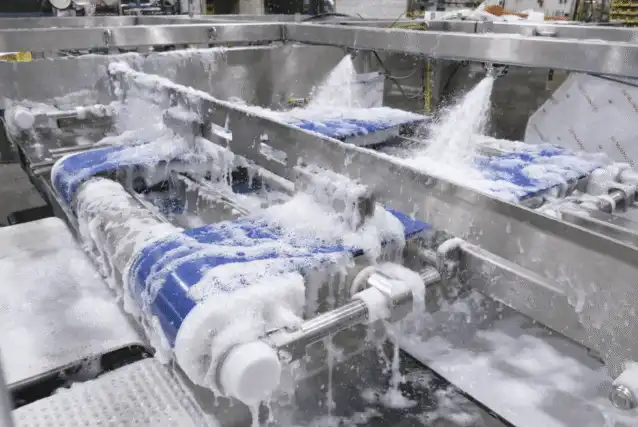
Food processing facilities operate under strict hygiene regulations mandating daily or even shift-by-shift equipment cleaning. The FDA Food Safety Modernization Act (FSMA) and European Regulation (EC) No 852/2004 require manufacturers to prevent cross-contamination and pathogen proliferation. High-pressure washdown systems delivering 6,000-10,000 kPa at elevated temperatures (65-88°C) effectively remove organic residues, biofilms, and microbial colonies. Equipment unable to withstand these aggressive cleaning cycles creates food safety vulnerabilities and operational downtime.
Water Ingress and Contamination Risks
Moisture penetration into electrical components, motors, or sensor housings compromises both equipment functionality and food safety. Water intrusion carrying cleaning chemicals or organic debris can harbor bacterial growth within enclosures. Listeria monocytogenes, Salmonella, and E. coli thrive in moisture-rich environments, potentially contaminating subsequent production batches. Robust ingress protection verified through IPX9K testing ensures machinery maintains hermetic integrity preventing these cross-contamination pathways.
Material Compatibility with Cleaning Agents
Beyond mechanical water resistance, food processing equipment faces chemical exposure from alkaline detergents, acid sanitizers, and chlorine-based disinfectants. Stainless steel grades 304 and 316L provide corrosion resistance, while polymeric seals and gaskets must resist swelling, hardening, or degradation. IEC 60529 IPX9K equipment testing combined with chemical compatibility assessment validates comprehensive washdown survival, ensuring equipment maintains protection ratings throughout years of sanitation cycles.
|
Food Industry Sector |
Typical Cleaning Frequency |
Washdown Conditions |
|
Meat & Poultry Processing |
Multiple times per shift |
80-88°C, 8,000+ kPa, alkaline/acid cycles |
|
Dairy Production |
After each product changeover |
75-85°C, 6,000-8,000 kPa, CIP systems |
|
Beverage Filling Lines |
Daily sanitation |
70-80°C, 6,000-9,000 kPa, sanitizer exposure |
|
Bakery Equipment |
End-of-shift cleaning |
60-75°C, 5,000-7,000 kPa, steam cleaning |
How IPX9K Simulates High-Pressure Cleaning Environments?
Multi-Angle High-Pressure Spray Configuration
Real-world washdown operations involve technicians directing spray nozzles from various angles to reach all equipment surfaces. IEC 60529 IPX9K equipment replicates this through four fixed spray positions at 0°, 30°, 60°, and 90° angles. Each position subjects the test sample to 30 seconds of high-pressure exposure, totaling 120 seconds of comprehensive coverage. The rotating turntable at 5±1 rpm ensures every surface receives equivalent spray impact, eliminating blind spots where inadequate sealing might otherwise escape detection.
Controlled Temperature and Pressure Parameters
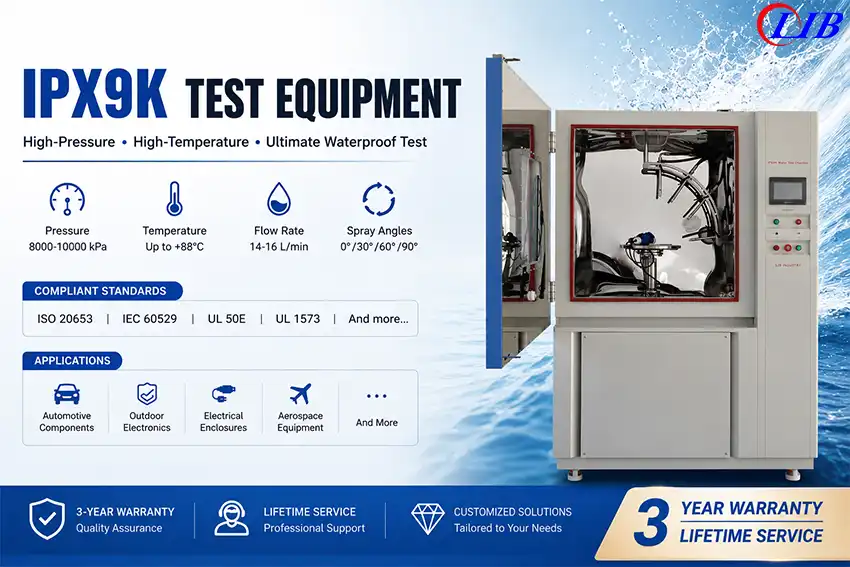
The IPX9K standard specifically mandates water temperature at 80°C minimum, recognizing that thermal expansion exacerbates seal vulnerabilities. LIB Industry's R9K-1200 model delivers adjustable temperatures from ambient to 88°C through dedicated nichrome heating elements and insulated water tanks. Pressure regulation between 8,000-10,000 kPa with real-time monitoring ensures consistent test conditions. This precision distinguishes professional IEC 60529 IPX9K equipment from improvised testing approaches that fail to replicate actual cleaning severity.
Close-Proximity Spray Simulation
Unlike lower IPX ratings testing spray from meters away, IPX9K positions nozzles just 100-150mm from test samples. This close proximity concentrates hydraulic forces on seals, gaskets, and panel joints - precisely where food processing equipment experiences maximum stress during handheld pressure washing. The 14-16 L/min flow rate delivers substantial water volume magnifying detection of even minor seal imperfections that could propagate into failures during production operations.
Evaluating Corrosion Resistance in Stainless Steel Machinery
Stainless Steel Grade Performance Differentiation
Food processing machinery predominantly employs austenitic stainless steels, with 304 grade providing adequate corrosion resistance for most applications. Environments involving salt exposure, acidic products, or chloride-rich sanitizers demand 316L with enhanced molybdenum content. IPX9K testing accelerates corrosion initiation by combining high-temperature water exposure with mechanical spray impact. Post-test inspection reveals pitting, crevice corrosion, or passivation layer degradation invisible during visual examination, guiding appropriate material selection.
Weld Zone and Heat-Affected Area Vulnerability
Welded assemblies create metallurgical variations affecting corrosion resistance. Heat-affected zones adjacent to welds experience grain boundary sensitization - chromium carbide precipitation depleting corrosion protection. Food machinery manufacturers employ low-carbon 304L/316L grades and controlled welding parameters minimizing sensitization. IEC 60529 IPX9K equipment testing specifically stresses welded joints and seams, identifying heat treatment deficiencies or improper filler metal selection before equipment enters sanitary production environments.
Surface Finish Impact on Bacterial Adhesion
Beyond corrosion resistance, surface roughness influences bacterial colonization. Ra values below 0.8 μm (32 micro-inches) minimize surface irregularities harboring microorganisms. Electropolishing achieves superior finishes compared to mechanical polishing, creating passive chromium oxide layers resisting biofilm formation. High-pressure IPX9K testing evaluates whether surface treatments withstand mechanical erosion from repeated washdown, ensuring equipment maintains hygienic surface characteristics throughout operational lifetimes.
|
Stainless Steel Grade |
Corrosion Resistance |
Typical Food Applications |
IPX9K Testing Focus |
|
304 (18-8) |
Good general resistance |
Dry processing, ambient conditions |
Weld integrity, surface erosion |
|
304L Low-carbon |
Improved weld corrosion resistance |
Welded assemblies, moderate chemicals |
Heat-affected zone testing |
|
316L Molybdenum-enhanced |
Superior chloride/acid resistance |
Acidic products, coastal facilities |
Pitting resistance, crevice corrosion |
IPX9K Standards for Food Safety and Equipment Compliance
IEC 60529 Ingress Protection Classification
The International Electrotechnical Commission's IEC 60529 standard defines ingress protection (IP) ratings through systematic testing protocols. The "9K" designation represents the highest liquid ingress protection level - protection against high-pressure, high-temperature water jets from close range. This rating exceeds requirements for typical industrial environments, specifically addressing food processing, vehicle washing, and similar applications where equipment endures aggressive cleaning. Achieving IPX9K certification requires validated testing using calibrated IEC 60529 IPX9K equipment under witnessed conditions.
Regulatory Compliance Requirements
Food safety regulations increasingly reference IP ratings in equipment specifications. The European Hygienic Engineering and Design Group (EHEDG) recommends IPX9K protection for electrical components in wet-cleaning zones. USDA and FDA guidance for meat, poultry, and dairy facilities emphasizes preventing water intrusion into electrical enclosures. Equipment manufacturers targeting global markets require IPX9K certification demonstrating compliance across jurisdictional requirements, avoiding costly redesigns for regional market access.
Third-Party Testing and Certification Bodies
While manufacturers conduct internal IPX9K validation during development, regulatory authorities and purchasers demand independent verification. Accredited testing laboratories including TUV, SGS, and UL maintain calibrated IEC 60529 IPX9K equipment and certified test procedures. These organizations issue formal test reports and certificates that equipment manufacturers incorporate into technical documentation. The credibility of third-party validation significantly influences purchasing decisions in risk-averse food industry procurement processes.
Testing Control Panels and Electrical Enclosures for Water Ingress
Electrical Component Vulnerability Assessment
Modern food processing equipment integrates sophisticated programmable logic controllers (PLCs), variable frequency drives (VFDs), and human-machine interfaces (HMIs). These electronic components tolerate zero moisture intrusion without malfunction or safety hazards. IPX9K testing validates that NEMA 4X or IP69K-rated enclosures maintain protection during high-pressure washdown. Testing protocols examine enclosure seams, cable glands, display windows, and cooling vents - common ingress pathways that compromise electrical safety.
Seal and Gasket Material Performance
Enclosure sealing relies on elastomeric gaskets compressed between mating surfaces. Food-grade silicone, EPDM, and fluorocarbon materials provide chemical resistance and temperature stability. Compression set - permanent gasket deformation reducing sealing force - develops through thermal cycling and chemical exposure. IEC 60529 IPX9K equipment testing at 88°C water temperature accelerates compression set effects, identifying gasket formulations inadequate for long-term food processing environments where replacement intervals must extend to annual maintenance windows.
Cable Entry and Connector Protection
Electrical connections penetrating enclosures create potential ingress points. IP-rated cable glands with multiple compression seals prevent water migration along conductors. Circular connectors with O-ring seals and threaded couplings provide robust protection for sensor and power connections. IPX9K testing specifically targets these interface points with direct spray exposure, validating installation procedures and component specifications. Post-test electrical insulation resistance measurements quantify whether any moisture penetrated into conductor pathways.
|
Enclosure Feature |
Protection Mechanism |
IPX9K Test Validation |
|
Door Gaskets |
Continuous compression seal |
Spray resistance at panel joints |
|
Cable Glands |
Multi-stage compression sealing |
Water migration along conductors |
|
Display Windows |
Sealed transparent panels |
High-pressure impact resistance |
|
Vent Systems |
Hydrophobic membrane filters |
Moisture barrier under pressure differential |
Enhancing Equipment Longevity in Harsh Cleaning Conditions
Predictive Maintenance Through Testing Data
IPX9K testing during product development generates valuable reliability data. Accelerated testing protocols involving extended duration or elevated pressure exposures reveal degradation patterns predicting field maintenance requirements. Manufacturers analyze post-test seal condition, corrosion initiation, and material degradation establishing preventive maintenance schedules. Gasket replacement intervals, protective coating renewal, and component inspection frequencies derive from quantitative IEC 60529 IPX9K equipment testing rather than arbitrary time-based schedules.
Design Optimization for Washdown Resilience
Testing feedback drives iterative design improvements enhancing washdown durability. Engineers modify seal groove geometries increasing compression, specify higher-grade gasket materials, or redesign drainage paths preventing water accumulation. The rapid testing cycles possible with IEC 60529 IPX9K equipment - hours rather than months of field exposure - accelerate product development. Multiple design variants undergo parallel testing, enabling data-driven decisions optimizing protection levels against manufacturing costs.
Total Cost of Ownership Reduction
Equipment achieving robust IPX9K performance delivers compelling economic advantages. Reduced unplanned downtime from water-damaged components minimizes production losses averaging thousands of dollars per hour in high-volume facilities. Extended maintenance intervals decrease labor costs and spare parts inventory. Perhaps most significantly, preventing food safety incidents through reliable equipment protection avoids recall costs, brand damage, and regulatory sanctions that dwarf initial equipment investment. Rigorous IPX9K validation transforms from testing cost to strategic investment.
LIB Industry Hygienic IPX9K Testing for Food Equipment Safety
-


SUS304 Workroom 
2. Stable High Temperature & PressurePurpose-Built Food Industry Testing Solutions
LIB Industry's R9K-1200 model incorporates design features specifically addressing food processing equipment validation. The 1000-liter internal volume (1000×1000×1000mm) accommodates substantial machinery components - motor housings, control enclosures, and sensor assemblies - without dimensional constraints limiting test realism. The robust turntable supports standard loads to 50kg with upgrades to 200kg for heavy industrial components. This capacity enables testing complete assemblies rather than isolated subcomponents, revealing system-level vulnerabilities missed during piecemeal evaluation.
Precision Control and Documentation Capabilities
Food industry quality systems demand comprehensive test documentation supporting regulatory submissions and customer qualifications. The programmable color LCD touchscreen controller with Ethernet connectivity enables automated test sequence execution and data logging. Real-time pressure curve display verifies compliance with 8,000-10,000 kPa specifications throughout test duration. Temperature monitoring confirms 88°C maintenance eliminating thermal expansion effects. USB data download provides complete test records supporting ISO 9001, FSMA, and customer-specific quality requirements.
Safety and Operational Reliability
High-pressure water testing presents operational hazards requiring robust safety engineering. Multi-layer reinforced observation windows withstand 10,000 kPa impact forces while enabling test monitoring. Electromagnetic door locks prevent opening under pressure, protecting operators from hazardous spray release. The closed-loop water circulation system with filtration maintains spray quality while reducing water consumption - critical in facilities managing environmental sustainability. Built-in safety monitoring tracks system status continuously with over-temperature, over-current, and water shortage protection preventing equipment damage.
|
LIB R9K-1200 Feature |
Specification |
Food Equipment Testing Advantage |
|
Internal Chamber Volume |
1000 liters (1000×1000×1000mm) |
Accommodates large machinery components |
|
Turntable Load Capacity |
50kg standard, 200kg optional |
Tests complete assemblies, not just samples |
|
Water Temperature Control |
Ambient to 88°C adjustable |
Replicates actual sanitization conditions |
|
Pressure Range |
8,000-10,000 kPa adjustable |
Matches industrial washdown systems |
|
Spray Configuration |
Four angles, 30s each position |
Comprehensive coverage simulation |
|
Construction Materials |
SUS304 stainless steel interior |
Hygienic, corrosion-resistant design |
Conclusion
IPX9K testing represents an essential validation step for food processing machinery facing daily high-pressure sanitation protocols. By subjecting equipment to controlled high-temperature, high-pressure water jets, manufacturers identify ingress protection weaknesses before deployment. LIB Industry's IEC 60529 IPX9K equipment delivers the precision, capacity, and documentation capabilities required for rigorous food industry validation. Implementing comprehensive IPX9K testing ensures machinery maintains food safety integrity, operational reliability, and regulatory compliance throughout demanding production environments. This investment protects brand reputation while preventing costly recalls and production disruptions.
FAQ
How does IPX9K testing differ from standard IPX7 or IPX8 water immersion testing?
IPX9K specifically addresses high-pressure, high-temperature spray conditions rather than static immersion. While IPX7 tests submersion to 1 meter and IPX8 continuous submersion, IPX9K replicates aggressive washdown with 8,000-10,000 kPa jets at 88°C from close range. Food processing equipment rarely experiences submersion but endures daily high-pressure cleaning making IPX9K the relevant validation standard.
Can equipment passing IPX9K testing still fail in food production environments?
IPX9K validates water ingress protection but doesn't address chemical compatibility, mechanical wear, or thermal cycling beyond test parameters. Comprehensive food equipment qualification combines IPX9K testing with chemical resistance evaluation, thermal shock testing, and mechanical fatigue assessment. This multi-faceted validation ensures equipment survives combined stresses encountered during production and sanitation cycles over multi-year service lives.
What maintenance does IEC 60529 IPX9K equipment require for ongoing accuracy?
Annual calibration of pressure sensors, temperature controllers, and flow meters maintains test precision. Spray nozzle inspection prevents orifice erosion affecting spray patterns. Water system descaling removes mineral deposits in heating elements and piping. LIB Industry provides comprehensive calibration services and replacement component availability ensuring test equipment delivers consistent results supporting regulatory compliance and customer qualification requirements throughout operational lifetime.
Partner with a Trusted IEC 60529 IPX9K Equipment Manufacturer
LIB Industry specializes in delivering customized environmental testing solutions as a leading IEC 60529 IPX9K equipment manufacturer and supplier. Our turn-key services encompass design consultation, production, installation, commissioning, and technical training tailored to your food processing equipment validation requirements. Contact our engineering specialists at ellen@lib-industry.com to discuss IPX9K testing configurations optimized for your specific applications.