How Paint Manufacturers Simulate Sunlight with Xenon Chambers?
Paint manufacturers simulate sunlight with xenon chambers by utilizing xenon arc lamps that replicate the complete solar spectrum, including critical UV wavelengths. These specialized testing systems expose coating samples to controlled irradiance levels, temperature fluctuations, and humidity cycles that mirror real-world weathering. By programming accelerated aging protocols according to ISO 4892 and ASTM G155 standards, manufacturers can predict years of outdoor exposure in weeks or months. Advanced xenon test chambers feature rotating sample racks ensuring uniform light distribution, precise black panel temperature control, and programmable spray cycles that simulate rain and dew. This methodology enables coating developers to validate color stability, gloss retention, and protective performance before market release.
Why Sunlight Simulation Matters in Coating Development?

Predicting Long-Term Outdoor Performance
Paint formulations must withstand decades of environmental assault. Natural weathering trials require years to yield actionable data, delaying product launches and innovation cycles. Accelerated testing using xenon chambers compresses timelines dramatically while maintaining correlation with actual outdoor exposure, enabling rapid formulation optimization.
Economic Impact of Coating Failure
Premature coating degradation costs industries billions annually through warranty claims, repainting expenses, and brand reputation damage. Automotive manufacturers face particular scrutiny as consumers expect pristine finishes lasting ten years or more. Architectural coatings protecting infrastructure must resist chalking, cracking, and color shift across diverse climates.
Regulatory Compliance Requirements
Government agencies and industry consortiums mandate weathering resistance verification. The automotive sector follows SAE J2527 protocols, while architectural coatings adhere to ASTM D7897 specifications. Xenon testing provides the documented evidence necessary for certifications, insurance approvals, and contract fulfillment across global markets.
|
Testing Approach |
Timeline |
Environmental Control |
Data Reliability |
|
Natural Outdoor Exposure |
1-5 years |
Uncontrolled variables |
High real-world correlation |
|
Xenon Test Chamber |
Weeks to months |
Precise programmable conditions |
Reproducible accelerated results |
|
QUV Fluorescent Testing |
Weeks to months |
Limited spectrum simulation |
UV-specific degradation |
Xenon Arc Technology for Realistic Weathering Conditions
Spectral Match to Natural Sunlight
The 4500W water-cooled xenon arc lamp produces a continuous spectrum from 290nm ultraviolet through visible light to infrared radiation. Optical filter systems - including borosilicate inner and outer filters - tailor output to match specific environmental conditions like window glass filtration or direct sunlight exposure. This spectral accuracy ensures photochemical reactions in coatings mirror outdoor degradation mechanisms.
Closed-Loop Irradiance Monitoring
Solar Eye radiometer technology measures light intensity at critical wavelengths (340nm or 420nm) within the 300-400nm bandwidth. The control system automatically compensates for lamp aging by adjusting power input, maintaining consistent irradiance between 35-150 W/㎡ throughout multi-thousand-hour test cycles. This precision eliminates variability that compromises comparative testing.
Water-Cooled Lamp Stability
Unlike air-cooled systems prone to thermal fluctuations, water-cooled xenon lamps used in a xenon test chamber maintain stable spectral output. The recirculating coolant prevents localized hotspots that alter emission characteristics. This thermal management extends lamp service life beyond 2,000 hours while ensuring reproducible test conditions across multiple campaigns.
Measuring Gloss Retention and Color Fading Performance
Quantifying Surface Degradation
Paint gloss reduction signals resin breakdown and surface erosion. Manufacturers measure 60-degree specular gloss at defined intervals - typically every 250 irradiation hours. High-quality automotive clearcoats retain 80% initial gloss after 2,000 hours at 0.55 W/㎡@340nm, while inferior formulations drop below 50%, indicating inadequate UV stabilizer packages.
Colorimetric Analysis Protocols
Delta E (ΔE) calculations using CIELAB color space quantify perceptible color change. Values below 1.0 represent imperceptible shifts, while ΔE exceeding 3.0 indicates obvious fading. Xenon chambers enable systematic pigment stability assessment - critical for automotive OEM color matching warranties and architectural coating fade resistance claims.
Chalking and Erosion Assessment
Beyond aesthetics, surface chalking reduces protective barrier properties. Testing protocols incorporate tape adhesion tests post-exposure, measuring resin degradation through powder residue quantification. Premium exterior coatings show minimal chalking (ASTM rating 8-10) after accelerated weathering equivalent to five years Florida exposure.
|
Performance Metric |
Measurement Method |
Acceptance Criteria (Premium Coatings) |
|
Gloss Retention |
60° specular gloss |
>80% after 2,000 hours |
|
Color Stability |
ΔE CIELAB |
<2.0 after equivalent 5-year exposure |
|
Surface Chalking |
ASTM D4214 tape test |
Rating 8-10 (minimal residue) |
Testing Paint Resistance to Heat and Humidity Cycles
Black Panel Temperature Control
The black panel thermometer mimics actual substrate surface temperatures under solar loading - often 20-30°C above ambient. LIB Industry xenon test chambers maintain BPT precision of ±2°C across the 35-85°C range, replicating conditions from mild temperate climates to extreme desert environments where metal substrates exceed 80°C.
Programmable Moisture Simulation
Realistic weathering includes wet/dry cycling. Spray nozzles deliver purified water mist simulating rain or dew condensation. Programmable cycles alternate dry irradiation periods with spray intervals and dark humidity soaks (50-98% RH). This moisture variation drives hydrolysis reactions, osmotic blistering, and adhesion loss mechanisms impossible to replicate through dry irradiation alone.
Thermal Shock Stress Testing
Rapid temperature transitions stress coating flexibility and substrate adhesion. Advanced test protocols incorporate abrupt shifts from 85°C irradiation to 15°C spray cycles, exposing brittleness or thermal expansion mismatches. Flexible coatings for plastics and elastomers require particular scrutiny under these conditions.
International Standards for Automotive and Industrial Coatings
ASTM G155 Xenon Exposure Protocols
ASTM G155 defines multiple exposure cycles addressing different application needs. Practice A (Cycle 1) simulates general outdoor exposure with alternating light/dark and spray cycles. Automotive clearcoat testing often follows modified protocols with extended dry periods reflecting service conditions. Adherence ensures inter-laboratory reproducibility and supplier qualification consistency.
ISO 4892 Harmonized Testing Methods
ISO 4892-2 specifies xenon arc exposure conditions aligned with European automotive and industrial coating requirements. Method A employs daylight filters with controlled irradiance at 300-400nm or 420nm, while Method B uses window glass filters for interior material testing. Global manufacturers reference both ASTM and ISO standards for comprehensive validation.
SAE Automotive Specifications
SAE J2527 establishes accelerated weathering procedures specifically for automotive exterior materials. The standard prescribes irradiance levels, BPT settings, and minimum exposure durations correlating with warranty requirements. Paint suppliers must demonstrate compliance through certified xenon test chamber results before achieving OEM approval status.
|
Standard |
Geographic Focus |
Key Parameters |
Common Applications |
|
ASTM G155 |
North America |
340nm @ 0.55 W/㎡, BPT 70°C |
General weathering validation |
|
ISO 4892-2 |
Europe/Global |
300-400nm, daylight/window filters |
Industrial and architectural coatings |
|
SAE J2527 |
Automotive Industry |
Controlled irradiance, spray cycles |
OEM qualification testing |
Optimizing Paint Formulations with Accelerated Weathering Data
UV Stabilizer Selection and Dosage
Xenon testing reveals optimal hindered amine light stabilizer (HALS) and UV absorber concentrations. Incremental formulation adjustments undergo comparative exposure, identifying cost-effective protection levels. Data shows that doubling HALS from 1% to 2% may extend service life by 40%, while further increases yield diminishing returns - critical intelligence for cost-competitive markets.
Resin System Performance Comparison
Acrylic, polyurethane, and polysiloxane binders exhibit distinct weathering profiles. Controlled xenon chamber testing isolates resin contributions from pigment and additive effects. Polysiloxane systems demonstrate superior gloss retention but higher material costs, while advanced acrylic-urethane hybrids offer balanced performance - decisions informed by quantitative accelerated aging data.
Pigment Lightfastness Verification
Organic pigments vary dramatically in photostability. Xenon exposure identifies fugitive colorants requiring reformulation or application restrictions. Inorganic iron oxides show excellent retention, while certain organic yellows and reds fade rapidly. Early identification prevents costly field failures and enables informed pigment supplier negotiations.
Recommended Accelerated Weathering Test Solutions for Paint Manufacturers
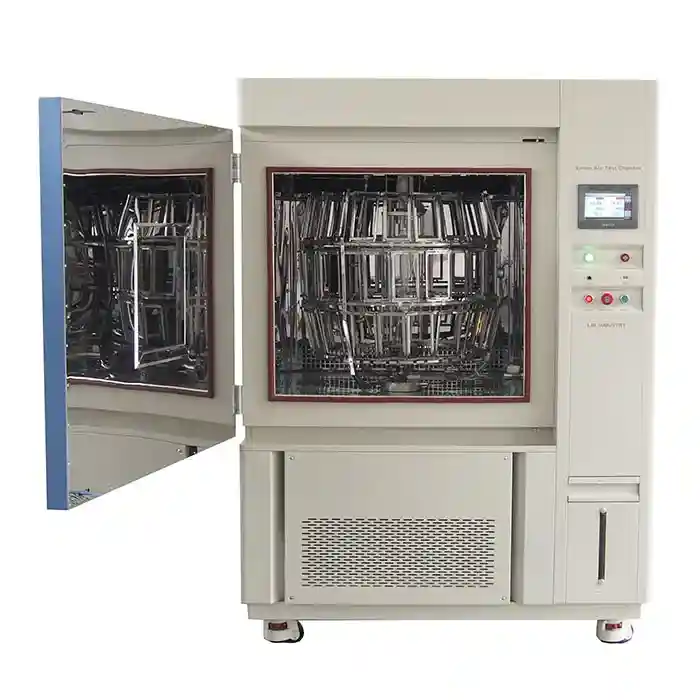
Xenon Test Chamber
|
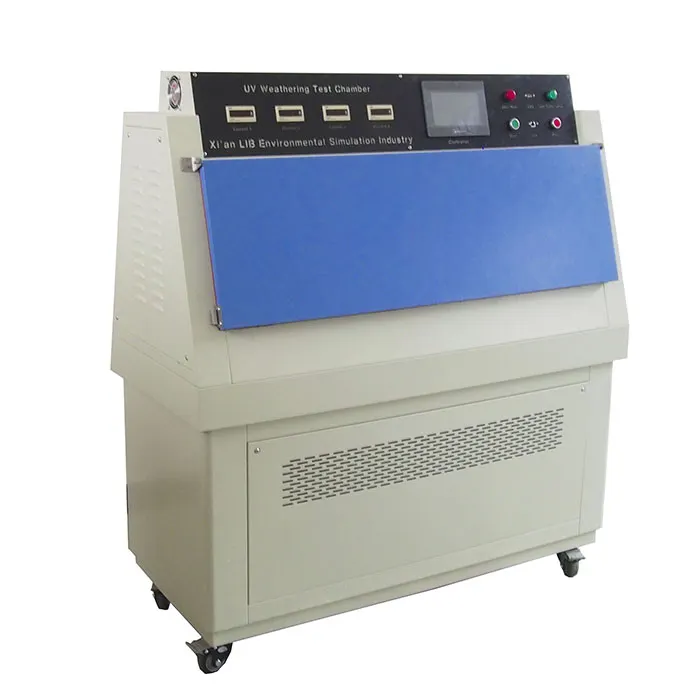
UV Accelerated Weathering Test Chamber
|
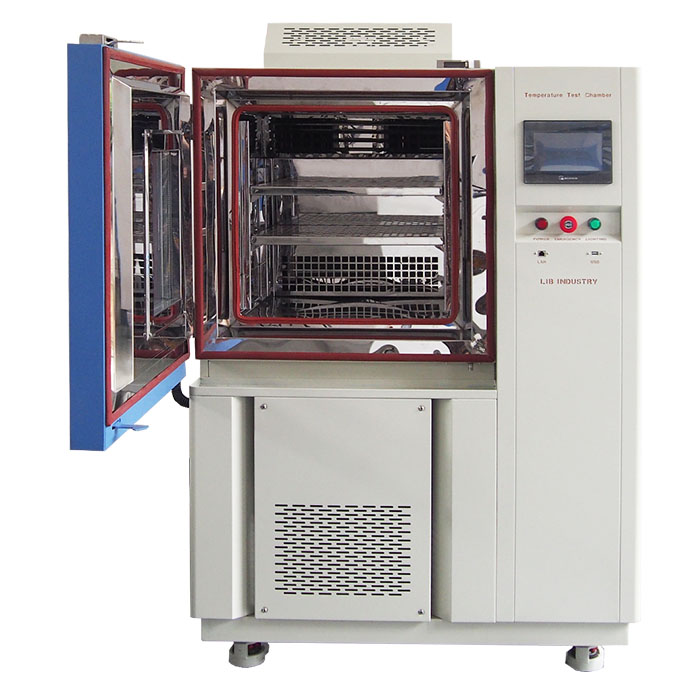
Thermal Cycling Chamber
|
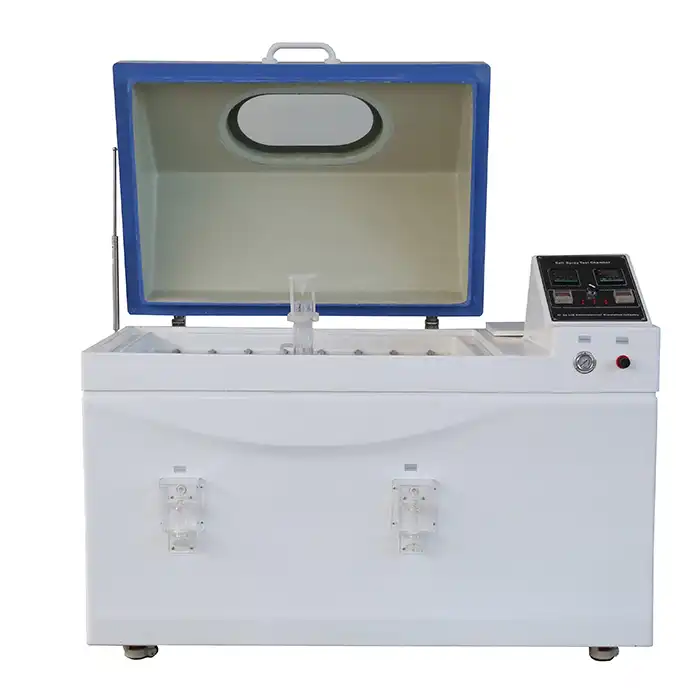
Salt Spray Corrosion Chamber
|
LIB Industry Xenon Systems Ensure Accurate Coating Weather Simulation
|
|
|


xenon lamp and filters
Superior Spectral Accuracy and Control
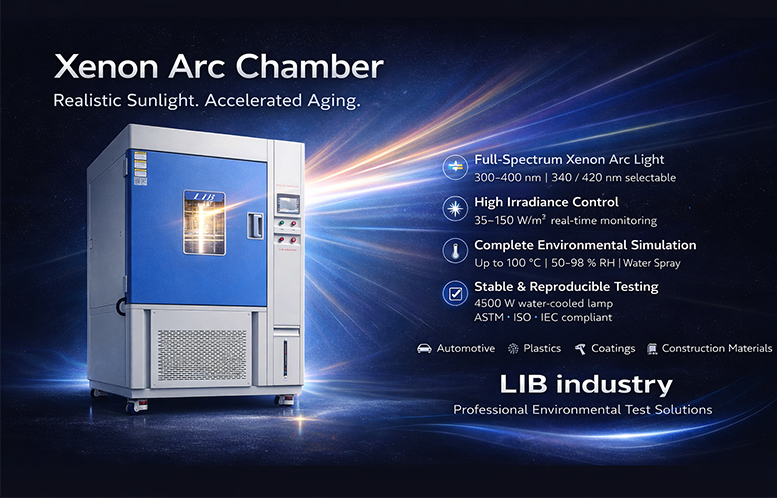
LIB Industry's xenon test chambers features advanced optical filtration maintaining consistent spectral distribution throughout lamp life. The 4500W water-cooled xenon system delivers uniform irradiance across the 950×950×850mm chamber, accommodating 42 specimens (95×200mm) on a continuously rotating rack. This ensures every sample receives identical exposure, eliminating positional bias.
Comprehensive Environmental Simulation
The mechanical compression refrigeration system enables ambient to 100°C chamber temperatures with ±2°C stability. Combined with the external stainless steel surface evaporation humidifier delivering 50-98% RH, the system replicates conditions from arid deserts to tropical rainforests. Programmable water spray cycles (1-9999 hours, 59 minutes) simulate rainfall patterns with precision.
Quality Assurance and Support
All LIB Industry units carry CE certification and undergo third-party validation by SGS and TUV. ISO 9001 manufacturing processes ensure consistent quality, while the 3-year warranty and lifetime service commitment provide operational security. The programmable color LCD touchscreen controller simplifies complex protocol development, supported by 24/7 global technical assistance.
|
LIB XL-S-750 Feature |
Specification |
Testing Advantage |
|
Xenon Lamp Power |
4500W water-cooled |
Stable, full-spectrum simulation |
|
Sample Capacity |
42 specimens (95×200mm) |
High-throughput testing |
|
Irradiance Control |
35-150 W/㎡, ±5% tolerance |
Precise dose delivery |
|
Temperature Range |
Ambient to 100°C, ±2°C |
Broad climate simulation |
|
Humidity Control |
50-98% RH, ±5% deviation |
Realistic moisture exposure |
Conclusion
Xenon test chambers have become indispensable tools for paint manufacturers seeking competitive advantage through superior weathering resistance. By accurately replicating solar radiation, temperature extremes, and moisture cycles, these systems enable data-driven formulation decisions that reduce development time and prevent costly field failures. LIB Industry's advanced xenon testing solutions combine spectral precision, environmental control, and robust construction to deliver reliable accelerated weathering data. Whether developing automotive clearcoats or architectural protective coatings, xenon chamber testing provides the scientific foundation for durable, long-lasting paint systems.
FAQ
How long does xenon chamber testing take compared to outdoor exposure?
Xenon test chamber acceleration factors typically range from 3:1 to 8:1 depending on geographic location and specific coating chemistry. A 1,000-hour chamber exposure at elevated irradiance often correlates with 1-3 years Florida outdoor exposure, though correlation studies are essential for accurate service life prediction.
Can xenon testing replace all outdoor weathering trials?
While xenon chambers provide excellent correlation for photodegradation and moisture effects, some mechanisms like biological growth or industrial pollutant interactions require supplementary outdoor exposure. Leading manufacturers use xenon testing for rapid screening and formulation optimization, then validate final products through limited outdoor trials.
What maintenance does a xenon test chamber require?
Regular maintenance includes xenon lamp replacement every 2,000-3,000 hours, optical filter inspection for degradation, water purification system filter changes, and radiometer calibration annually. LIB Industry systems feature accessible components and comprehensive maintenance protocols ensuring consistent long-term performance and minimal downtime.
Partner with a Trusted Xenon Test Chamber Manufacturer
LIB Industry specializes in delivering turn-key environmental testing solutions as a leading xenon test chamber manufacturer and supplier. Our comprehensive services span research, design, production, installation, and training tailored to your coating development requirements. Contact our technical team at ellen@lib-industry.com to discuss custom xenon weathering systems for your laboratory.