Benchtop Environmental Chambers for Electronics R&D Labs
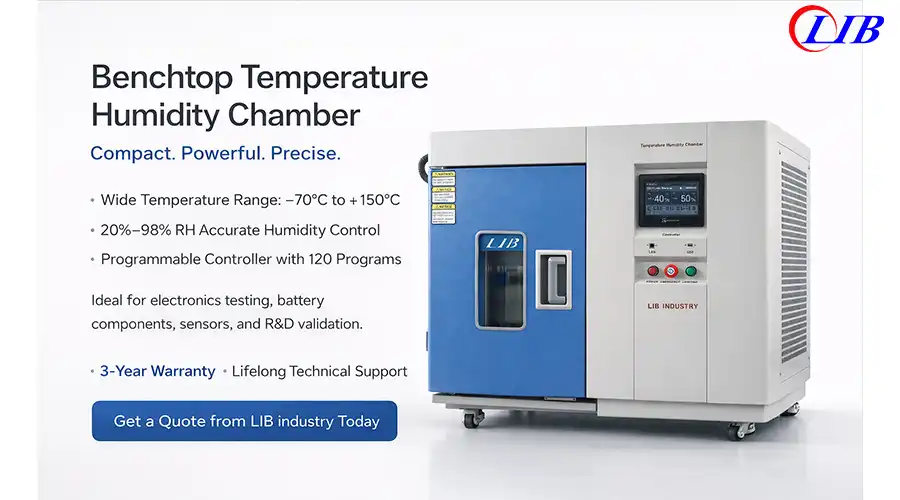
Benchtop environmental chambers for electronics R&D labs provide compact, space-efficient solutions for evaluating component reliability under controlled temperature and humidity conditions. These desktop-sized testing systems enable engineers to conduct thermal cycling, humidity stress testing, and accelerated aging protocols without requiring dedicated environmental rooms. Modern benchtop environmental chambers deliver temperature ranges from -40°C to +150°C and humidity control between 20-98% RH within 50-80 liter internal volumes that fit standard laboratory workbenches. Advanced programmable controllers support complex test profiles while monitoring capabilities via Ethernet connectivity enable remote supervision. This combination of precise environmental simulation, minimal footprint, and plug-and-play installation makes benchtop chambers indispensable tools for printed circuit board validation, semiconductor characterization, and electronic assembly reliability assessment.
Environmental Stress Testing for Electronic Components
Temperature-Induced Failure Mechanisms
Electronic components experience thermal stress throughout their operational lifecycle. Semiconductor junction temperatures fluctuate with power dissipation while ambient conditions vary seasonally. Thermal expansion coefficient mismatches between silicon dies, copper interconnects, and organic substrates generate mechanical strain. A benchtop environmental chamber exposes prototypes to temperature extremes ranging from -40°C Arctic conditions to +150°C automotive underhood environments, revealing solder joint fatigue, wire bond lift-off, and package delamination before field deployment.
Humidity Penetration and Corrosion
Moisture ingress remains a primary failure mode in electronics. Water vapor permeates through polymeric encapsulants reaching sensitive metallization layers. Relative humidity above 60% combined with ionic contamination initiates electrochemical migration - conductive dendrite growth shorting adjacent traces. Benchtop chambers maintaining 98% RH at elevated temperatures accelerate corrosion mechanisms, enabling rapid assessment of conformal coating effectiveness and hermetic seal integrity within condensed test schedules.
Combined Environmental Stress Screening
Real-world electronics endure simultaneous temperature and humidity variations. A smartphone transitions from air-conditioned offices to humid outdoor environments within minutes. Automotive modules cycle between engine heat and cold-weather starts. Programmable benchtop environmental chambers replicate these combined stresses through customized profiles - 8-hour thermal soaks at 85°C/85% RH followed by rapid cooling to -20°C. This holistic approach identifies synergistic failure modes invisible during single-parameter testing.
|
Stress Factor |
Typical Test Condition |
Electronics Failure Mode |
|
High Temperature |
+125°C to +150°C |
Interconnect diffusion, polymer degradation |
|
Low Temperature |
-40°C to -55°C |
Solder embrittlement, LCD freezing |
|
High Humidity |
85% RH to 98% RH |
Corrosion, electrochemical migration |
|
Thermal Cycling |
-40°C ↔ +125°C |
Solder fatigue, die cracking |
Simulating Extreme Temperature and Humidity Conditions
Precise Temperature Uniformity Control
Spatial temperature variation within test chambers compromises data validity. A 3°C gradient across the workspace yields different aging rates for simultaneously tested samples. LIB Industry benchtop environmental chambers achieve ±2.0°C temperature deviation through optimized airflow design and strategic heating element placement. The SUS304 stainless steel interior provides uniform thermal mass distribution while forced air circulation eliminates stratification. This precision ensures every PCB position experiences identical thermal history.
Rapid Thermal Transition Capabilities
Accelerated testing demands quick temperature changes simulating rapid environmental transitions. The mechanical compression refrigeration system delivers 1°C/min cooling rates from ambient to -40°C while the heating system achieves 3°C/min ramp rates. These controlled transition speeds stress components through thermal shock without introducing chamber overshoot instabilities. Engineers program multi-step profiles transitioning between temperature extremes with defined dwell periods, replicating mission profiles from consumer electronics to aerospace applications.
Humidity Generation and Control Accuracy
Maintaining stable relative humidity across wide temperature ranges challenges environmental chamber design. The external stainless steel surface evaporation humidifier generates consistent moisture independent of chamber temperature fluctuations. Built-in humidifier dry-combustion protection prevents element damage during extended operation. Achieving ±2.5% RH deviation throughout the 20-98% RH range enables reliable humidity-sensitive device testing - critical for evaluating moisture sensitivity levels (MSL) in surface-mount components per JEDEC J-STD-020.
Reliability Validation for PCB and Semiconductor Development
Solder Joint Fatigue Assessment
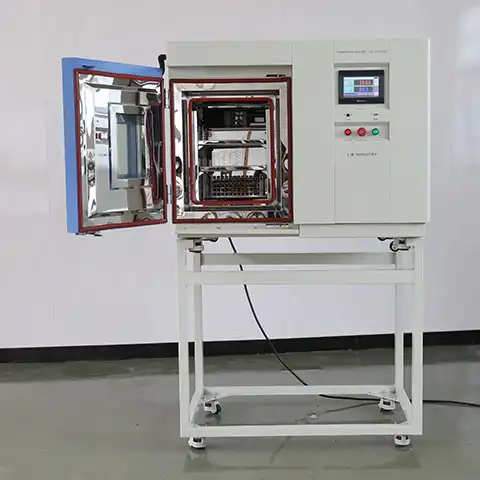
Thermal cycling between temperature extremes induces coefficient of thermal expansion (CTE) mismatch stress at solder interconnections. Ball grid array (BGA) packages attached to FR-4 substrates experience differential expansion generating low-cycle fatigue. A benchtop environmental chamber executing 500-1000 cycles between -40°C and +125°C with 15-minute dwell periods accelerates years of power cycling within weeks. Daisy-chain resistance monitoring detects incipient solder cracks enabling statistical lifetime prediction through Weibull analysis.
Package Moisture Sensitivity Characterization
Plastic encapsulated microcircuits absorb moisture during storage and handling. Subsequent reflow soldering vaporizes trapped water causing package cracking - "popcorning." JEDEC J-STD-020 defines preconditioning protocols involving controlled humidity exposure at 30°C/60% RH or 85°C/85% RH depending on MSL classification. Benchtop chambers provide the precise environmental control necessary for baking components at specified conditions before simulated reflow, validating moisture barrier effectiveness and establishing proper handling floor life.
Die Attach and Wire Bond Integrity
Semiconductor packaging reliability depends on robust die attachment and wire bonding. Temperature cycling stresses these interfaces through CTE mismatches between silicon dies, silver-filled epoxies, and copper leadframes. High-temperature storage at +150°C accelerates intermetallic formation at gold wire-aluminum pad interfaces potentially causing bond weakening. Benchtop environmental chambers enable systematic evaluation of alternative die attach materials, wire bonding parameters, and molding compound formulations through parallel testing of multiple variants under controlled stress conditions.
|
Electronics Component |
Critical Reliability Test |
Benchtop Chamber Conditions |
|
BGA/QFN Packages |
Thermal cycling fatigue |
-40°C ↔ +125°C, 500-1000 cycles |
|
Surface Mount Devices |
Moisture sensitivity (MSL) |
85°C/85% RH, 168-336 hours |
|
Power Semiconductors |
High-temp storage stability |
+150°C, 1000 hours |
|
Flexible PCBs |
Humidity resistance |
85°C/85% RH, 1000 hours |
Accelerated Life Testing in Compact Laboratory Spaces
Space Optimization Without Performance Compromise
Electronics R&D labs face perpetual space constraints as equipment proliferates. Traditional walk-in environmental rooms consume valuable floor area while requiring dedicated facilities infrastructure. The TH-50 and TH-80 benchtop environmental chamber occupy just 0.9-1.0 square meters of bench space while providing 50-80 liter test volumes - sufficient for multiple PCB assemblies, semiconductor packages, or small electronic modules. The compact footprint enables positioning testing equipment adjacent to characterization instruments, streamlining workflows.
Plug-and-Play Installation Advantage
Large environmental chambers demand three-phase electrical connections, dedicated water supplies, and external exhaust ventilation. These infrastructure requirements delay testing programs and increase facility costs. LIB Industry benchtop environmental chambers operate from standard single-phase 110V/220V outlets drawing moderate power loads. No plumbing connections or special ventilation beyond normal laboratory HVAC proves necessary. Engineers unpack, position, and begin testing within hours rather than weeks required for walk-in chamber installations.
Multi-Chamber Testing Strategies
Budget and space constraints often limit labs to single large chambers creating bottlenecks when multiple projects require environmental testing. The compact benchtop environmental chamber footprint and moderate cost enable procurement of multiple units. Parallel testing of different product variants under identical conditions accelerates development cycles. Dedicating chambers to specific test protocols - one for thermal cycling, another for high-humidity soak - eliminates reprogramming delays and cross-contamination risks between incompatible test sequences.
Improving Product Design Through Environmental Simulation
Iterative Design Validation
Modern electronics development follows rapid iteration cycles. Engineers prototype multiple design variants evaluating tradeoffs between performance, cost, and reliability. Traditional environmental testing timelines spanning weeks per iteration throttle innovation. Benchtop chambers positioned within engineering workspaces enable overnight testing cycles. Engineers initialize thermal stress tests before leaving evening, review results next morning, and implement design modifications same day. This compressed feedback loop transforms reliability engineering from downstream validation to integrated design activity.
Comparative Material Evaluation
Component selection decisions benefit from empirical environmental performance data. Choosing between conventional FR-4 and polyimide PCB substrates, or evaluating alternative conformal coating chemistries, requires side-by-side comparison under identical stress conditions. The 50-80 liter chamber capacity accommodates multiple test coupons simultaneously. Adjustable SUS304 stainless steel shelving enables spatial separation while maintaining uniform exposure. Statistical comparison of degradation rates guides material selection balancing performance requirements against cost considerations.
Failure Mode Discovery and Mitigation
Environmental testing uncovers latent design weaknesses before production commitment. A prototype smartphone discovered through 85°C/85% RH testing that moisture condensation formed inside the camera module fogging lenses. This finding prompted redesign incorporating desiccant packets and improved sealing. Early identification through benchtop environmental chamber testing prevented costly field returns and warranty claims. The ROI from preventing single product recall vastly exceeds chamber investment costs.
|
Design Decision |
Environmental Validation |
Outcome |
|
PCB Material Selection |
Thermal cycling -40°C ↔ +125°C |
Quantify CTE mismatch effects |
|
Conformal Coating Type |
Humidity resistance 85°C/85% RH |
Compare moisture barrier performance |
|
Thermal Interface Material |
High-temp stability +150°C |
Evaluate thermal conductivity retention |
|
Connector Sealing Design |
Water condensation cycling |
Verify ingress protection rating |
Selecting the Right Benchtop Chamber for Electronics Research
Temperature Range Requirements
Electronics applications span diverse thermal environments. Consumer devices typically require -20°C to +70°C validation while automotive electronics demand -40°C to +125°C capability. Military and aerospace specifications extend to -55°C and +150°C extremes. LIB Industry offers benchtop environmental chambers with multiple temperature range options: Option A (-20°C to +150°C), Option B (-40°C to +150°C), and Option C (-70°C to +150°C). Matching chamber specifications to actual product requirements optimizes capital investment while ensuring adequate test capability.
Internal Volume and Sample Capacity
Chamber sizing balances test capacity against bench space consumption. The TH-50 model provides 50 liters (320×350×450mm) suitable for smartphone-sized assemblies, sensor modules, and small circuit boards. The TH-80 expands to 80 liters (400×400×500mm) accommodating larger automotive controllers, networking equipment, or multiple simultaneous samples. Two adjustable stainless steel shelves enable vertical stacking optimizing space utilization. The 50mm cable port with plug facilitates testing under power without compromising chamber sealing.
Advanced Control and Connectivity Features
Modern R&D workflows demand sophisticated programming capabilities and remote monitoring. The programmable color LCD touchscreen controller stores 120 programs with 100 segments each - sufficient for complex mission profile simulations. Ethernet connectivity enables integration with laboratory information management systems (LIMS). Engineers monitor test progress via web browsers or smartphones, receiving alerts upon completion or alarm conditions. USB data download captures complete temperature-humidity-time profiles supporting regulatory documentation and design review traceability requirements.
LIB Industry Supports Reliable Electronics R&D Environmental Simulation
|
|
|
|||


Proven Quality and Compliance Standards
Every LIB Industry benchtop environmental chamber undergoes rigorous quality verification following ISO 9001 Quality Management System protocols. CE certification demonstrates compliance with European safety and electromagnetic compatibility directives. Third-party validation by SGS and TUV laboratories provides independent performance verification. This comprehensive quality assurance framework ensures chambers deliver specified performance throughout their service lives - critical when test data influences million-dollar product development decisions.
Comprehensive Safety Protection Systems
Electronics testing occasionally involves prototype failures - short circuits, battery thermal runaway, or component smoke generation. LIB Industry chambers incorporate multiple protection layers: earth leakage protection prevents electrical hazards, over-temperature shutdown safeguards against runaway heating, and the observation window's double-layer tempered glass enables safe monitoring. The internal LED lighting illuminates samples without introducing heat sources affecting temperature uniformity. These safety features protect personnel, equipment, and test samples during extended unattended operation.
Global Support Infrastructure
Electronics R&D operates globally with design centers spanning continents. LIB Industry maintains 24/7 technical support through 29 worldwide service centers including locations in Malaysia, Canada, United Kingdom, and United States. This distributed support network provides local-language assistance, rapid spare parts availability, and on-site service when required. The comprehensive 3-year warranty backed by lifetime service commitment eliminates operational risk. If repair proves impossible during warranty coverage, LIB provides complete chamber replacement - uncommon commitment demonstrating confidence in product durability.
|
LIB Benchtop Chamber Feature |
Specification |
R&D Lab Benefit |
|
Footprint Efficiency |
0.9-1.0 m² bench space |
Maximizes valuable lab real estate |
|
Operating Noise |
<65 dB |
Enables placement in active work areas |
|
Temperature Stability |
±0.5°C fluctuation |
Ensures repeatable test conditions |
|
Humidity Accuracy |
±2.5% RH deviation |
Reliable moisture sensitivity testing |
|
Programming Capacity |
120 programs × 100 segments |
Complex mission profile simulation |
|
Remote Monitoring |
Ethernet/Wi-Fi connectivity |
Supports modern connected workflows |
Conclusion
Benchtop environmental chambers deliver essential environmental simulation capabilities within space-constrained electronics R&D laboratories. These compact testing systems enable engineers to validate component reliability, optimize design choices, and accelerate development cycles without investing in costly walk-in chambers or dedicated environmental rooms. LIB Industry's benchtop solutions combine precise temperature-humidity control, sophisticated programming capabilities, and robust safety features supporting demanding electronics testing requirements. By integrating environmental stress screening directly into engineering workflows, organizations improve product quality while compressing time-to-market - competitive advantages essential in today's rapidly evolving electronics landscape.
FAQ
How do benchtop environmental chambers compare to walk-in chambers for electronics testing?
Benchtop chambers offer comparable temperature and humidity control within compact footprints suitable for component-level and small assembly testing. Walk-in chambers accommodate full systems and large equipment but require dedicated facilities infrastructure. Electronics R&D labs benefit from benchtop units' faster deployment, lower costs, and workspace integration while walk-in chambers serve final product validation needs.
Can benchtop chambers support battery-powered electronics testing safely?
Modern benchtop environmental chambers incorporate safety features suitable for battery testing including over-temperature protection, ventilation considerations, and observation windows. LIB Industry offers optional safety configurations specifically for lithium-ion battery testing. Establishing protocols limiting total energy content and incorporating smoke detection provides additional risk mitigation for prototype battery assemblies during environmental stress screening.
What maintenance requirements do benchtop environmental chambers have?
Routine maintenance includes periodic inspection of door seals for proper compression, verification of temperature-humidity sensor calibration annually, and cleaning of interior surfaces preventing contamination buildup. The refrigeration system requires refrigerant charge verification every 2-3 years. The water purification system needs filter replacement based on usage volume. LIB Industry provides comprehensive maintenance schedules and offers service contracts ensuring optimal long-term performance.
Connect with a Trusted Benchtop Environmental Chamber Manufacturer
LIB Industry specializes in delivering customized environmental testing solutions as a leading benchtop environmental chamber manufacturer and supplier. Our comprehensive turn-key services encompass design consultation, production, installation, commissioning, and technical training tailored to your electronics R&D laboratory requirements. Contact our engineering specialists at ellen@lib-industry.com to discuss benchtop chamber configurations optimized for your specific testing applications.