Medical Packaging Stability Testing with Xenon Test Chambers
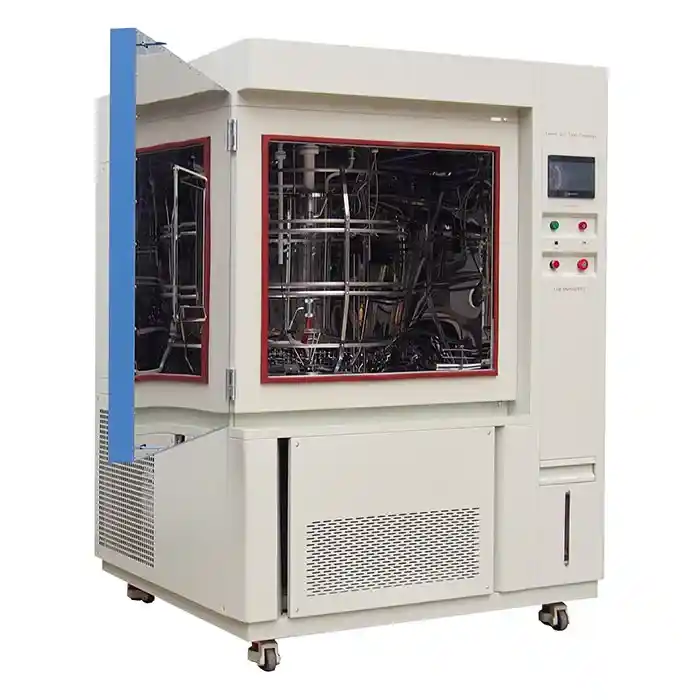
Medical packaging serves as the critical barrier protecting pharmaceutical products, surgical instruments, and medical devices from environmental degradation throughout their shelf life. The xenon test chamber provides an essential validation tool that simulates years of light exposure in compressed timeframes, enabling manufacturers to verify packaging integrity before market release. This accelerated aging technology replicates the full solar spectrum - including ultraviolet, visible, and infrared wavelengths - allowing comprehensive assessment of how packaging materials respond to photodegradation, temperature fluctuations, and humidity variations that occur during storage, distribution, and display in clinical settings.
Why UV Stability Matters for Medical Packaging Materials?
The Science Behind Photodegradation in Medical Polymers
Polymeric materials commonly used in medical packaging - such as polyethylene, polypropylene, and polyvinyl chloride - contain chemical bonds vulnerable to photolytic breakdown when exposed to ultraviolet radiation. The energy from UV wavelengths, particularly in the 300-400nm range, initiates chain scission reactions that compromise molecular structure. This degradation process weakens mechanical properties, reduces barrier effectiveness, and potentially releases degradation byproducts that could contaminate sterile contents.
Impact on Sterility Maintenance and Product Safety
Photodegradation directly threatens the primary function of medical packaging: maintaining sterility throughout the product lifecycle. As UV exposure weakens polymer chains, microcracks develop in packaging films and containers, creating potential pathways for bacterial penetration. A xenon test chamber accelerates this degradation process, allowing quality assurance teams to identify vulnerabilities before products reach healthcare facilities where compromised sterility could endanger patient safety.
Economic Consequences of Packaging Failure
Product recalls due to packaging degradation generate substantial financial losses, regulatory scrutiny, and reputational damage. Testing materials in a xenon test chamber during development phases costs significantly less than post-market failures. Pharmaceutical companies investing in comprehensive stability validation reduce warranty claims, minimize product waste, and strengthen brand reliability in competitive medical device markets.
Simulating Storage and Transportation Light Exposure
Warehouse Lighting Conditions and Duration Effects
Medical products frequently undergo extended storage periods in distribution centers where fluorescent lighting, skylights, and periodic sunlight exposure accumulate photodegradation effects. The xenon test chamber replicates these conditions using programmable irradiance levels between 35-150 W/m², matching the spectral distribution of natural daylight filtered through glass. This capability allows precise simulation of warehouse environments where packages may remain for months before reaching end users.
Retail Display and Clinical Environment Exposure
Products displayed in pharmacy windows or medical supply rooms encounter variable lighting conditions that traditional testing methods fail to replicate adequately. The rotating sample rack in advanced xenon test chambers accommodates 42 specimens simultaneously, ensuring uniform exposure across all test samples. This rotation mechanism prevents edge effects and delivers statistically reliable data about how packaging performs under realistic display conditions.
Geographic Variations in Solar Intensity
Medical products distributed globally experience dramatically different UV exposure levels depending on latitude, altitude, and climate zones. Testing protocols using a xenon test chamber incorporate filters matching specific geographic conditions - from tropical high-UV environments to temperate regions with lower solar intensity. This geographic customization ensures packaging maintains integrity whether products ship to hospitals in Singapore or clinics in Scandinavia.
Table 1: Comparison of Light Exposure Conditions in Medical Product Lifecycle
|
Environment |
UV Intensity (W/m²) |
Daily Exposure (hours) |
Annual Cumulative Effect |
Xenon Chamber Simulation Time |
|
Indoor Warehouse |
5-15 |
8-12 |
Low-Moderate |
300-500 hours |
|
Retail Window Display |
25-45 |
6-10 |
Moderate-High |
500-800 hours |
|
Tropical Climate Storage |
60-120 |
10-14 |
Very High |
800-1200 hours |
|
Hospital Supply Room |
3-8 |
24 |
Low |
200-400 hours |
Evaluating Barrier Performance After Accelerated Aging
Oxygen Transmission Rate Changes Under UV Stress
Oxygen permeation through packaging materials accelerates medication oxidation, reducing pharmaceutical efficacy and shelf life. UV exposure degrades polymer crystallinity, increasing free volume within the material matrix and elevating oxygen transmission rates. The xenon test chamber enables measurement of these barrier property changes by subjecting materials to controlled UV doses, then quantifying permeability shifts using standardized transmission testing methods.
Moisture Vapor Transmission Testing Post-Exposure
Hygroscopic pharmaceutical formulations require packaging that maintains low moisture vapor transmission rates throughout shelf life. Photodegradation creates structural defects that compromise this moisture barrier function. Testing protocols combine xenon chamber exposure with subsequent moisture vapor transmission rate analysis, revealing how UV aging affects humidity protection - a critical parameter for moisture-sensitive products like lyophilized medications and diagnostic test strips.
Seal Strength Integrity After Environmental Cycling
Heat-sealed closures in medical pouches and blister packs must maintain integrity despite UV-induced polymer embrittlement. The xenon test chamber's programmable temperature control (35-85°C black panel temperature) combined with humidity variation (50-98% RH) simulates the thermal cycling that exacerbates UV damage. Post-exposure seal strength testing identifies threshold conditions where packaging integrity becomes compromised, informing shelf life determinations and storage requirement specifications.
Table 2: Barrier Property Degradation Thresholds in Common Medical Packaging Materials
|
Material Type |
Initial OTR (cc/m²/day) |
OTR After 500h Xenon Exposure |
Initial MVTR (g/m²/day) |
MVTR After 500h Exposure |
Critical Degradation Point |
|
LDPE Film |
8,000 |
12,500 |
15 |
23 |
600 hours |
|
PET/PE Laminate |
50 |
85 |
5 |
8 |
800 hours |
|
PP Container |
2,500 |
3,800 |
8 |
12 |
700 hours |
|
PVC Blister |
150 |
280 |
12 |
19 |
550 hours |
Regulatory Standards for Medical Packaging Weathering Tests
ISO 4892 Requirements for Plastics Exposure Methods
The International Organization for Standardization establishes protocols for xenon arc lamp exposure of plastics through ISO 4892 standards. These specifications mandate precise spectral power distribution, temperature control accuracy, and relative humidity parameters. A xenon test chamber meeting these requirements employs optical filter systems that match specific exposure conditions - from direct daylight simulation to window-glass-filtered radiation - ensuring test relevance to actual storage environments medical packages encounter.
ASTM G155 Testing Protocols for Medical Applications
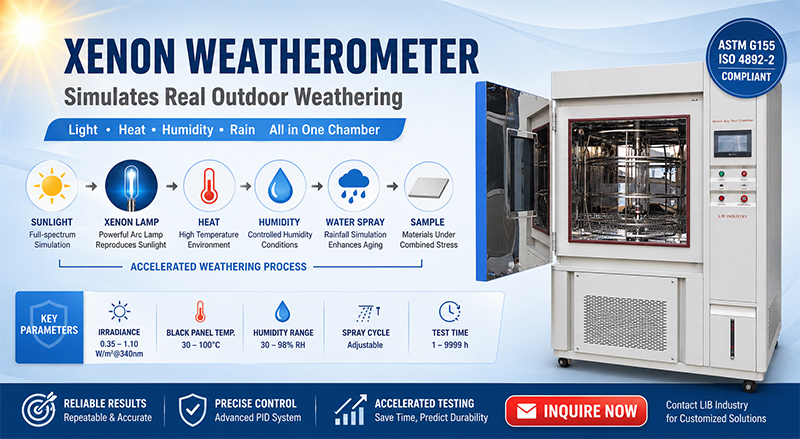
American Society for Testing and Materials standard G155 provides detailed operating procedures specifically addressing non-metallic materials used in healthcare products. This standard specifies irradiance measurement methodology at 340nm or 420nm wavelengths, establishing closed-loop control systems that compensate for lamp aging. LIB Industry's xenon test chamber incorporates Solar Eye technology that continuously monitors and automatically adjusts irradiance levels, maintaining consistent exposure conditions throughout extended test cycles.
FDA Guidance on Packaging System Performance Qualification
The Food and Drug Administration requires comprehensive packaging validation demonstrating maintenance of sterility, barrier properties, and structural integrity throughout labeled shelf life. Photostability testing using a xenon test chamber provides critical supporting data for regulatory submissions, particularly for products with transparent or translucent packaging components. Documentation of accelerated aging protocols, correlation studies, and stability indicating parameters strengthens regulatory compliance and expedites approval processes.
European Medical Device Regulation Compliance
The European Union's Medical Device Regulation (EU MDR 2017/745) mandates rigorous technical documentation proving packaging suitability throughout product lifecycle. Xenon chamber testing generates objective evidence of photostability, supporting conformity assessment procedures. Manufacturers serving European markets benefit from testing protocols aligned with harmonized standards, facilitating CE marking processes and market access across member states.
Detecting Discoloration and Material Degradation Risks
Visual Appearance Changes and Consumer Perception
Color shifts in medical packaging materials signal underlying photochemical degradation that may compromise functional performance. Yellowing of clear plastics, fading of printed information, or pigment degradation affects both aesthetic appeal and information legibility - critical factors when healthcare professionals rely on package labeling for proper product identification. The xenon test chamber's observation window with interior lighting enables real-time monitoring of discoloration progression during accelerated aging cycles.
Chemical Migration from Degraded Polymers
Photodegradation products including aldehydes, ketones, and low-molecular-weight oligomers may migrate from packaging into sterile contents, potentially causing adverse reactions or compromising pharmaceutical stability. Advanced testing protocols subject materials to xenon chamber exposure, then analyze migrated compounds using chromatographic techniques. This integrated approach identifies formulation-packaging incompatibilities before clinical distribution, protecting patient safety and regulatory compliance.
Mechanical Property Deterioration Indicators
Brittleness, reduced tensile strength, and diminished elongation at break serve as quantifiable indicators of UV-induced polymer degradation. Testing sequences expose materials in a xenon test chamber, followed by standardized mechanical testing revealing property changes. Correlation between exposure duration and mechanical degradation establishes safe use limits, informing shelf life specifications and storage condition recommendations that preserve packaging functionality.
Table 3: Degradation Detection Methods and Acceptance Criteria
|
Degradation Parameter |
Testing Method |
Measurement Frequency |
Acceptance Threshold |
Xenon Exposure Correlation |
|
Color Change |
Spectrophotometry (ΔE) |
Every 100 hours |
ΔE < 3.0 |
Linear up to 500h |
|
Tensile Strength |
ASTM D882 |
Every 200 hours |
>80% retention |
Exponential decay |
|
Extractables |
GC-MS Analysis |
0, 500, 1000 hours |
<10 ppm increase |
Threshold at 600h |
|
Haze Development |
ASTM D1003 |
Every 100 hours |
<15% increase |
Linear progression |
Improving Packaging Reliability with Xenon Stability Testing
Material Selection Optimization Through Comparative Testing
Developing new medical packaging requires evaluating multiple material candidates under identical exposure conditions. The 42-specimen capacity of advanced xenon chambers enables simultaneous testing of different polymer formulations, additive packages, and barrier layer configurations. This parallel testing approach accelerates development timelines by quickly identifying superior material systems that maintain properties under photostress, reducing time-to-market for innovative medical products.
Shelf Life Extension Validation Studies
Manufacturers seeking extended shelf life claims must demonstrate packaging integrity maintenance beyond standard durations. Accelerated aging in a xenon test chamber compresses years of real-time exposure into weeks or months of controlled testing. Correlation studies comparing chamber results with real-time stability data establish acceleration factors, enabling scientifically defensible shelf life projections that balance product availability with safety assurance.
Quality Control Batch Release Testing
Routine quality verification of incoming packaging materials benefits from abbreviated xenon exposure protocols that screen for manufacturing variability. Short-duration tests identify substandard material batches before they enter production lines, preventing costly recalls and maintaining consistent product quality. The programmable controller in modern xenon test chambers stores validated test methods, ensuring reproducible screening procedures across multiple testing cycles.
LIB Industry Ensures Reliable Medical Packaging Light Stability Validation
|
|
|


Advanced Spectral Matching Technology
LIB Industry's 4500W water-cooled xenon arc lamp system delivers spectral power distribution closely matching natural daylight across UV, visible, and infrared ranges. The sophisticated optical filter system supports various international standards including ISO 4892 and ASTM G155, providing the spectral accuracy required for meaningful correlation with real-world exposure. This precision ensures test results reliably predict actual performance in diverse storage and transportation environments.
Closed-Loop Environmental Control Systems
Maintaining consistent test conditions throughout extended aging studies requires sophisticated control technology. The integrated Solar Eye irradiance monitoring system continuously measures UV intensity and automatically compensates for lamp aging, eliminating variations that compromise result validity. Combined with precise black panel temperature control (±2°C accuracy) and humidity regulation (±5% RH), this closed-loop system delivers the reproducibility essential for regulatory submissions and quality system compliance.
Comprehensive Technical Support and Custom Solutions
LIB Industry's expertise extends beyond equipment supply to include application-specific protocol development, correlation study design, and validation support. The engineering team collaborates with medical packaging specialists to create tailored testing solutions addressing unique stability challenges. This consultative approach, backed by ISO 9001 quality management certification and CE compliance, ensures customers receive turnkey testing systems optimized for their specific validation requirements.
Global Service Network and Quality Assurance
A worldwide support infrastructure provides 24/7 technical assistance, ensuring minimal downtime and maximum productivity. Every xenon test chamber undergoes rigorous factory acceptance testing verified by third-party specialists including SGS and TUV. The comprehensive 3-year warranty and lifetime service commitment demonstrate confidence in product reliability while protecting customer investments in critical validation infrastructure.
Conclusion
Medical packaging stability validation demands rigorous testing methodologies that accurately predict real-world performance under diverse environmental conditions. The xenon test chamber provides the spectral accuracy, environmental control, and regulatory compliance necessary for defensible shelf life claims and patient safety assurance. By compressing years of photodegradation into accelerated timeframes, this technology enables manufacturers to optimize material selection, validate barrier performance, and satisfy regulatory requirements efficiently. Investing in comprehensive photostability testing protects brand reputation, reduces recall risks, and ensures medical products reach patients with packaging integrity fully maintained.
FAQ
How long does xenon chamber testing take to simulate one year of shelf life exposure?
Acceleration factors typically range from 5:1 to 10:1 depending on material sensitivity and exposure conditions. A properly designed protocol using controlled irradiance levels and temperature cycling can simulate 12-24 months of warehouse storage in 500-1000 hours of chamber exposure, though correlation studies specific to each material system provide the most accurate predictions.
Can xenon test chambers evaluate multiple packaging components simultaneously?
The rotating sample rack accommodates 42 specimens, allowing simultaneous testing of different materials, printed films, adhesive systems, and complete package assemblies. This parallel testing capability accelerates development timelines and enables direct performance comparisons under identical exposure conditions, improving material selection decisions and validation efficiency.
What differentiates xenon arc testing from UV fluorescent lamp chambers?
Xenon arc lamps replicate the full solar spectrum including visible and infrared wavelengths, whereas fluorescent UV lamps emit primarily in ultraviolet ranges. Medical packaging often contains additives and pigments responsive to visible light degradation, making the broader spectral coverage of xenon chambers more representative of actual storage conditions and providing superior correlation with real-time stability data.
Partner with LIB Industry for Your Medical Packaging Validation Needs
As a leading xenon test chamber manufacturer and supplier, LIB Industry delivers turnkey environmental testing solutions backed by global technical support. Contact our specialists at ellen@lib-industry.com to discuss custom protocols, equipment specifications, and validation strategies tailored to your medical packaging stability requirements.