Small Climatic Chambers in Medical Device Validation
 Medical device validation demands precise environmental control to ensure products meet stringent safety and performance standards before reaching healthcare facilities. Small climatic chambers provide manufacturers with compact, reliable solutions for conducting temperature and humidity testing across development, qualification, and shelf-life studies. These specialized units replicate challenging environmental conditions - from arctic transport scenarios to tropical storage facilities - allowing teams to verify device integrity, packaging effectiveness, and functional stability under controlled laboratory settings. By integrating small climatic chambers into validation protocols, medical device manufacturers demonstrate regulatory compliance while protecting patient safety through thorough pre-market evaluation.
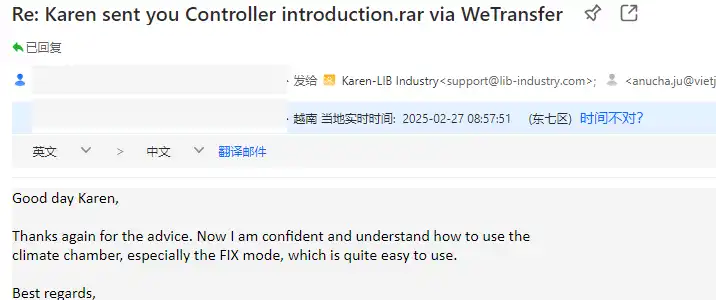
Beyond medical applications, small climatic chambers from LIB industry are also trusted in advanced research sectors where environmental precision is mission-critical. A research team from Vietnam specializing in aerospace flight systems selected the TH-50 model to support environmental simulation studies for flight-related components. During commissioning, the team highlighted the intuitive controller interface—particularly the FIX mode—which simplified constant-condition testing and improved operational confidence. With technical guidance from LIB industry, the customer quickly mastered system operation and successfully integrated the unit into their laboratory workflow. This feedback reflects not only the performance stability of the TH-50, but also LIB industry’s commitment to responsive technical support and long-term customer partnership across global high-tech industries.
Why Temperature and Humidity Testing Matters for Medical Devices?
|
|
|
||


Protecting Patient Safety Through Environmental Validation
Medical devices face diverse environmental stresses throughout their lifecycle - from manufacturing floors to distribution channels to clinical settings. Temperature excursions can degrade adhesives in wound dressings, compromise sterile barriers in surgical instruments, or alter medication delivery rates in infusion pumps. Humidity variations affect electronic components in diagnostic equipment, cause corrosion in metallic implants, or promote microbial growth in moisture-sensitive products. Environmental testing identifies these vulnerabilities before devices reach patients.
Ensuring Functional Performance Across Storage Conditions
Devices must maintain specified performance characteristics whether stored in air-conditioned pharmacies or warehouse facilities without climate control. A glucose monitor stored at 40°C may display inaccurate readings. Respiratory masks exposed to 90% relative humidity might lose elasticity. Small climatic chambers simulate these storage extremes, revealing potential failures in materials, electronics, or mechanical assemblies that could compromise device function when healthcare providers need them most.
Validating Packaging Integrity and Shelf Life
Sterile barrier systems protecting implantable devices must withstand years of storage without compromise. Temperature cycling accelerates aging processes, while humidity challenges seal integrity and material properties. Testing programs using climatic chambers establish validated shelf lives by demonstrating that packaging maintains sterility, devices retain functionality, and labeling remains legible throughout the claimed product lifetime under specified storage conditions.
Regulatory Standards for Environmental Testing in Healthcare
ISO 11607 Requirements for Packaging Validation
ISO 11607 establishes comprehensive requirements for terminally sterilized medical device packaging. The standard mandates accelerated aging studies conducted at elevated temperatures to compress real-time aging into manageable timeframes. Small climatic chambers provide the controlled 50°C to 60°C environments required for these studies, maintaining stability within ±2°C throughout multi-week protocols. The standard also requires conditioning samples at 23°C and 50% RH before mechanical testing, ensuring consistent baseline conditions.
ASTM Standards for Environmental Conditioning
ASTM F1980 guides accelerated aging protocols using modified Arrhenius equations to establish time-temperature relationships. The methodology requires precise temperature control during conditioning phases - capabilities inherent in quality small climatic chambers. ASTM D4332 addresses conditioning procedures for conditioning plastics, specifying 23°C ±2°C and 50% ±5% RH as standard laboratory atmospheres. Medical device manufacturers reference these standards when developing validation protocols for polymer-based components.
FDA Guidance on Stability Testing Programs
The FDA expects medical device manufacturers to establish stability programs demonstrating product safety and effectiveness throughout labeled shelf life. Guidance documents reference ICH Q1A principles adapted from pharmaceuticals, recommending storage at 25°C/60% RH for long-term studies and 40°C/75% RH for accelerated testing. Small environmental test chambers meeting these specifications enable manufacturers to generate the stability data FDA reviewers expect in premarket submissions.
|
Standard |
Temperature Requirement |
Humidity Requirement |
Application |
|
ISO 11607 |
50-60°C (accelerated aging) |
Ambient to 50% RH |
Packaging validation |
|
ASTM F1980 |
Variable (Arrhenius-based) |
As specified |
Accelerated aging studies |
|
ICH Q1A (adapted) |
25°C / 40°C |
60% RH / 75% RH |
Long-term and accelerated stability |
Test Cycles for Simulating Real-World Medical Device Conditions
Accelerated Aging for Shelf-Life Determination
Accelerated aging compresses years of real-time storage into weeks or months by elevating temperature according to validated relationships. The Arrhenius equation, with a Q10 factor of 2.0, suggests that storage at 55°C for two weeks approximates one year at ambient conditions. Small climatic chambers maintain these elevated temperatures with ±0.5°C stability, ensuring consistent aging rates across samples. Manufacturers periodically remove samples for functional testing, package integrity assessment, and sterility verification.
Thermal Cycling for Material Compatibility Assessment
Repeated temperature transitions stress material interfaces, revealing delamination in multi-layer packaging, cracking in polymer housings, or solder joint failures in electronic assemblies. Typical thermal cycling protocols range from -20°C to +60°C with controlled ramp rates. The TH-50 and TH-80 models achieve 1°C/min cooling and 3°C/min heating rates, allowing precise control over thermal stress magnitude. Cycling hundreds of times reveals failure modes that single-point exposure testing might miss.
Humidity Resistance for Moisture-Sensitive Devices
Devices containing hygroscopic materials, pressure-sensitive adhesives, or moisture-barrier coatings require humidity resistance validation. Testing at 85% RH and 40°C represents aggressive tropical storage conditions. Small climatic chambers with 20% to 98% RH range cover both dry storage scenarios and high-humidity challenges. Manufacturers monitor weight gain in desiccant packaging, electrical resistance in circuit boards, and adhesive tack retention in wound care products.
Evaluating Material and Functional Stability in Devices
Polymer Degradation and Dimensional Changes
Medical-grade polymers - from polycarbonate housings to silicone elastomers - exhibit temperature-dependent degradation pathways. Elevated temperatures accelerate oxidation, chain scission, and plasticizer migration. Environmental chambers expose polymer samples to aging conditions while maintaining uniform temperature distribution across the test volume. Post-exposure analysis includes tensile testing, impact resistance, dimensional verification, and visual inspection for discoloration or embrittlement.
Electronic Component Performance Under Stress
Diagnostic devices, monitoring equipment, and powered surgical instruments contain electronic assemblies sensitive to environmental extremes. High temperatures degrade capacitors and accelerate semiconductor junction degradation. Humidity promotes corrosion on circuit boards and dendrite growth across conductor spacing. Testing in a small humidity chamber subjects electronics to operational stress at temperature and humidity extremes, revealing design weaknesses before market release. Functional verification during and after exposure confirms performance margins.
Adhesive Bond Strength After Environmental Exposure
Medical devices rely on adhesive bonds for assembly, labeling, and sterile barrier seals. Environmental stress affects bond strength through multiple mechanisms: thermal expansion mismatches create interfacial stress, humidity plasticizes adhesive matrices, and temperature cycles fatigue bond lines. Testing programs expose bonded assemblies to relevant environmental conditions, then measure peel strength, shear resistance, and package seal integrity using standardized mechanical tests.
|
Material Category |
Critical Parameters |
Typical Test Conditions |
Evaluation Methods |
|
Polymers |
Tensile strength, flexibility, appearance |
50-70°C, ambient humidity |
Mechanical testing, visual inspection |
|
Electronics |
Functionality, resistance values |
-20°C to +60°C, 20-85% RH |
Electrical testing during exposure |
|
Adhesives |
Bond strength, seal integrity |
Thermal cycling, high humidity |
Peel/shear testing, leak detection |
Risk Mitigation Through Controlled Environmental Testing
Identifying Design Vulnerabilities Early in Development
Prototype testing in small climatic chambers reveals design weaknesses when modifications remain cost-effective. A blood glucose meter might fail when moisture condenses on optical sensors. An inhaler valve may stick after cold storage. Discovering these issues during design verification - rather than during field failures - prevents costly recalls and protects brand reputation. Compact chamber size allows positioning near engineering workstations for rapid iteration.
Establishing Robust Shipping and Storage Specifications
Distribution involves exposure to cargo holds, delivery vehicles, and warehouse facilities with varying climate control. Temperature excursions during international shipping can reach -30°C in aircraft holds or +50°C in ground transport containers. Small climatic chambers validate device survival under worst-case distribution scenarios, establishing the storage range printed on device labeling. Conservative specifications protect devices throughout the supply chain.
Supporting Complaint Investigation and Root Cause Analysis
When field failures occur, environmental testing helps determine whether storage or use conditions contributed to the issue. Returned devices undergo functional assessment, then exposure to suspected stress conditions in climatic chambers. Reproducing failures under controlled conditions confirms root cause and guides corrective actions. Compact chambers enable quality teams to conduct focused investigations without monopolizing large environmental rooms.
Supporting Compliance and Certification with Small Climatic Chambers
Generating Documentation for Regulatory Submissions
Premarket approval applications and 510(k) submissions require comprehensive environmental testing documentation. Chamber qualification protocols establish temperature and humidity accuracy, uniformity, and stability. Calibration certificates trace sensors to national standards. Test protocols specify conditioning durations, acceptance criteria, and sample quantities. Data logs demonstrate that chambers maintained specified conditions throughout testing. This documentation package demonstrates to regulators that validation studies occurred under controlled, reproducible conditions.
Meeting Quality Management System Requirements
ISO 13485 quality management systems require controlled conditions for product testing and evaluation. Small climatic chambers with programmable controllers, automated data logging, and alarm systems provide the process control expected under quality system audits. Equipment qualification files - including installation qualification, operational qualification, and performance qualification protocols - demonstrate that chambers operate within validated parameters. Regular calibration and preventive maintenance sustain compliance.
Facilitating Third-Party Laboratory Testing
Notified bodies and testing laboratories conduct independent verification of manufacturer claims. Compact climatic chambers allow these facilities to offer environmental testing services without dedicating extensive floor space. The TH-50's 50-liter capacity accommodates multiple samples across repeated test cycles. Programmable controllers enable standardized test protocols, ensuring consistent methodology across different testing dates or client requests.
Reliable Medical Compliance with LIB Industry Small Climatic Chambers
Precision Control for Reproducible Testing Outcomes
LIB Industry small climatic chambers deliver ±0.5°C temperature stability and ±2.5% RH humidity control through advanced PID algorithms and PT100 Class A sensors. This precision ensures reproducible test conditions across validation studies conducted months or years apart. Centrifugal fans maintain uniform air circulation, preventing thermal stratification that could invalidate test results. Even when chambers hold multiple device samples, temperature deviation remains within ±2.0°C across all shelf positions.
Space-Efficient Solutions for Laboratory Environments
Medical device manufacturers often conduct validation in facilities where floor space carries premium value. The TH-50 model occupies just 0.92 square meters of floor area while providing 50 liters of usable test volume. This compact footprint allows placement in quality labs, R&D areas, or regulatory affairs offices without monopolizing valuable workspace. Single-phase 220V/110V power requirements eliminate the need for specialized electrical infrastructure.
Comprehensive Safety and Durability Features
SUS304 stainless steel interiors resist corrosion during extended high-humidity testing protocols. Multiple protection systems - including over-temperature shutdown, refrigerant high-pressure protection, and earth leakage protection - safeguard both operators and test samples. The robust construction withstands years of continuous operation in demanding laboratory environments. LIB Industry's 3-year warranty and global service network provide long-term support, while ISO 9001 certification and CE marking demonstrate manufacturing quality.
|
Feature |
TH-50 Specification |
TH-80 Specification |
Validation Benefit |
|
Temperature Range |
-20°C to +150°C (expandable to -70°C) |
-20°C to +150°C (expandable to -70°C) |
Covers storage, distribution, and accelerated aging |
|
Humidity Range |
20% to 98% RH |
20% to 98% RH |
Simulates dry and tropical conditions |
|
Temperature Uniformity |
±2.0°C |
±2.0°C |
Ensures consistent sample exposure |
|
Controller |
Programmable LCD touchscreen, Ethernet |
Programmable LCD touchscreen, Ethernet |
Automated protocols, data logging |
|
Interior Volume |
50L |
80L |
Accommodates multiple samples |
|
|
|
|
|
Controller |
Link and USB | Cable Hole (Customizable) |


Conclusion
Small climatic chambers represent essential validation tools for medical device manufacturers navigating complex regulatory landscapes while ensuring patient safety. These precision instruments enable thorough environmental testing - from accelerated aging studies establishing shelf life to thermal cycling revealing design vulnerabilities - within space-constrained laboratory environments. By providing accurate, reproducible temperature and humidity control, compact chambers generate the validation data regulators expect while supporting efficient product development workflows. Investing in quality environmental testing equipment protects both patients and brand reputation through comprehensive pre-market evaluation.
FAQ
What temperature range do small climatic chambers provide for medical device testing?
Quality small climatic chambers typically offer -20°C to +150°C temperature ranges, with optional configurations extending to -70°C for specialized applications. This range covers standard stability testing, accelerated aging protocols, and extreme distribution scenarios required for comprehensive medical device validation.
How long does accelerated aging testing take in a climatic chamber?
Accelerated aging duration depends on the Arrhenius relationship between elevated test temperature and claimed shelf life. Testing at 55°C typically compresses one year of real-time aging into two weeks. Complete validation studies often require several time points across multiple weeks to establish product stability trends.
Can small climatic chambers accommodate sterile packaging validation requirements?
Modern small climatic chambers meet ISO 11607 requirements for packaging validation studies. Units provide the temperature stability, uniformity, and programmability needed for accelerated aging studies while accommodating multiple sterile barrier samples. Data logging capabilities generate documentation supporting regulatory submissions and quality system audits.
Partner with LIB Industry for Your Validation Needs
LIB Industry delivers turn-key environmental testing solutions as a trusted small climatic chamber manufacturer and supplier. Our engineering team provides customization, installation, training, and ongoing support to ensure your validation programs succeed. Contact us at ellen@lib-industry.com to discuss how our compact chambers can strengthen your medical device compliance strategy.