Water Immersion Testing for Sealed Enclosures Explained
Water immersion testing for sealed enclosures evaluates how effectively protective housings prevent liquid penetration under submerged conditions. This standardized methodology validates whether electronic devices, industrial equipment, and consumer products meet IPX7 and IPX8 waterproof ratings by subjecting them to controlled depth and duration parameters. Using specialized water immersion tanks, manufacturers assess seal integrity, identify potential failure points, and verify that enclosures maintain operational reliability when exposed to aquatic environments ranging from temporary submersion to continuous underwater operation.
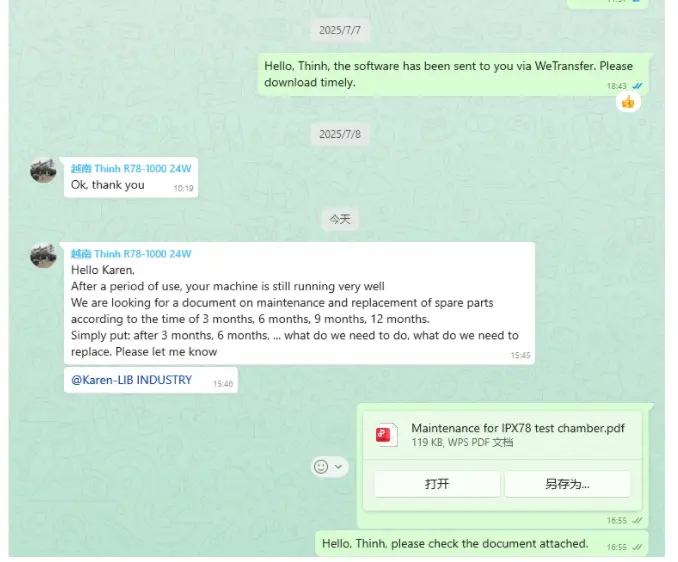
Further demonstrating real-world reliability, a customer from Vietnam operating the LIB industry R78-1000 water immersion test system recently reported consistent and stable performance after extended operational use. The client confirmed that the equipment maintained accurate immersion testing conditions and dependable sealing evaluation capability throughout their production validation process. Following several months of operation, the customer also requested preventive maintenance guidance and spare-parts replacement planning, highlighting both their continued reliance on the system and confidence in its long-term durability. This feedback reflects LIB industry’s commitment to delivering robust IPX7 and IPX8 immersion testing solutions that support sustained performance, simplified maintenance planning, and dependable waterproof validation for global manufacturers.
What Defines a Sealed Enclosure for IPX Testing?

Understanding Ingress Protection Classifications
Ingress Protection (IP) ratings provide a standardized framework for categorizing how effectively enclosures resist solid particles and liquids. The two-digit code following "IP" denotes specific protection levels, where the second digit addresses liquid ingress resistance. IPX7 certification requires enclosures to withstand temporary immersion up to 1 meter for 30 minutes, while IPX8 demands protection during continuous submersion beyond 1 meter, with depth and duration specified by manufacturers.
Critical Design Elements of Watertight Housings
Sealed enclosures incorporate multiple protective barriers including gaskets, O-rings, compression seals, and welded joints. Material selection plays a vital role - silicone, EPDM rubber, and polyurethane gaskets each offer distinct compression characteristics and chemical resistance profiles. Housing geometry must eliminate sharp corners where stress concentrations could compromise seal contact, while fastener placement ensures uniform compression across sealing surfaces.
Enclosure Materials and Their Water Resistance Properties
Polycarbonate, ABS plastics, aluminum alloys, and stainless steel each present unique advantages for waterproof applications. Thermoplastics allow intricate molding for integrated sealing surfaces but may degrade under prolonged UV exposure. Metal housings provide superior structural rigidity yet require careful surface treatment to prevent galvanic corrosion at seal interfaces. Material thermal expansion coefficients must align with gasket materials to maintain seal compression across operating temperature ranges.
Mechanisms of Water Ingress and Seal Failure
Common Pathways for Liquid Penetration
Water infiltration typically occurs through compromised gasket compression, capillary action along threaded fasteners, and micro-porosity in housing materials. Cable entry points represent particularly vulnerable zones where dynamic sealing must accommodate conductor movement while maintaining environmental protection. Vent assemblies that equalize internal pressure can inadvertently create ingress pathways if membrane materials degrade or installation procedures introduce gaps.
Environmental Factors Affecting Seal Performance
Temperature cycling induces differential expansion between housing components and sealing elements, potentially creating transient gaps during thermal transitions. Hydrostatic pressure forces water molecules into microscopic surface irregularities that appear insignificant under atmospheric conditions. Chemical exposure from saltwater, industrial solvents, or cleaning agents accelerates elastomer degradation, reducing sealing force and material resilience.
Degradation Patterns in Sealing Components
Compression set - the permanent deformation of elastomeric seals under sustained loading - gradually reduces contact pressure between mating surfaces. UV radiation breaks down polymer chains in exposed gasket materials, causing surface cracking and hardening. Testing in a water immersion tank reveals how sustained fluid exposure exacerbates compression set. Repeated assembly and disassembly cycles abrade sealing surfaces, while improper torque application creates uneven compression that leaves vulnerable sections along the seal perimeter.
Test Setup for Immersion of Sealed Housings
Equipment Configuration and Chamber Requirements
|
Component |
Specification |
Purpose |
|
Tank Dimensions |
Ø600mm × 1500mm (internal) |
Accommodates specimens with 1m+ water depth |
|
Pressure Capability |
50m equivalent depth |
Validates IPX8 performance under extreme conditions |
|
Wall Construction |
A3 steel, 15mm thickness |
Ensures structural integrity during pressurized testing |
|
Control System |
Programmable touchscreen |
Manages test parameters and data logging |
Water immersion tank configuration begins with specimen positioning at predetermined depths using adjustable fixtures. The pneumatic lid system creates a sealed testing environment, while automated water supply maintains consistent levels throughout extended test durations. Temperature monitoring ensures testing occurs within specified ambient conditions, as thermal variations affect both water density and specimen material properties.
Sample Preparation and Fixture Installation
Test specimens require careful inspection before immersion - external surfaces must be clean and free from contaminants that could interfere with leak detection. Electrical connections for powered devices demand waterproof feed-throughs that don't compromise the enclosure being tested. Mounting fixtures must secure specimens without inducing mechanical stress that could artificially affect seal performance, while allowing complete water contact with all external surfaces.
Calibration and Pre-Test Verification Procedures
Pressure sensors undergo verification against calibrated reference standards to ensure accurate depth simulation. Water quality parameters including temperature, pH, and dissolved solids are documented, as these factors influence corrosion rates and material interactions. Leak detection systems - whether using tracer dyes, pressure decay monitoring, or electrical continuity tests - receive functional checks to confirm sensitivity levels meet detection requirements.
Evaluating Seal Integrity and Enclosure Performance
Visual Inspection Techniques During Testing
Transparent tank construction allows real-time observation of air bubble formation, which signals active leak pathways. High-intensity lighting from multiple angles reveals subtle bubble streams that might escape notice under ambient conditions. Video documentation captures the temporal progression of water ingress, providing insights into whether failures occur immediately upon immersion or develop gradually as hydrostatic pressure acts on seal imperfections.
Quantitative Assessment Methods
|
Test Method |
Detection Capability |
Application |
|
Pressure Decay |
0.01 bar/minute sensitivity |
Identifies gross leaks in sealed volumes |
|
Helium Mass Spectrometry |
10⁻⁹ mbar·L/s resolution |
Detects micro-leaks in critical applications |
|
Electrical Continuity |
Real-time moisture detection |
Monitors electronic enclosure protection |
Internal pressure monitoring tracks whether enclosures maintain vacuum or positive pressure during immersion, indicating seal effectiveness. Weight measurement before and after testing quantifies water absorption through permeable materials or infiltration past seals. Desiccant indicators placed inside enclosures provide binary pass/fail results for applications where any moisture presence constitutes failure.
Post-Immersion Analysis Protocols
Following test completion, external water removal precedes careful enclosure opening to prevent contamination of internal spaces during inspection. Moisture-sensitive paper placed at strategic internal locations reveals ingress patterns and severity. Disassembly allows detailed gasket examination for compression marks, damage, or displacement that might explain test results. Metallurgical analysis of seal surfaces can identify corrosion initiation or material incompatibilities.
Data Analysis and Reporting for Water Immersion Tests
Recording Critical Test Parameters
Comprehensive documentation captures immersion depth, test duration, water temperature, and pressure profiles throughout the evaluation period in a water immersion tank. Automated data logging eliminates transcription errors while providing timestamped records that correlate environmental conditions with observed performance. USB data export and LAN connectivity enable integration with quality management systems, creating traceable records that support regulatory compliance and design validation efforts.
Statistical Interpretation of Results
Sample populations undergo analysis to determine whether observed failures represent systematic design issues or manufacturing outliers. Weibull distribution modeling predicts long-term reliability from accelerated test data, while confidence intervals quantify the certainty of pass/fail determinations. Correlation analysis identifies which design variables most significantly influence waterproof performance, guiding optimization priorities.
Compliance Documentation Requirements
|
Standard |
Test Specification |
Documentation Elements |
|
IEC 60529 |
IPX7: 1m depth, 30 minutes |
Depth measurement, duration log, pass/fail criteria |
|
IEC 60529 |
IPX8: Manufacturer specified |
Agreed conditions, pressure profiles, test rationale |
|
MIL-STD-810 |
Method 512.6 |
Immersion depth, duration, temperature, acceptance limits |
Test reports include specimen identification, pre-test condition assessment, detailed test setup description, environmental parameters, observed results, and conformance determination. Photographic evidence substantiates visual observations, while pressure and temperature graphs demonstrate test condition stability. Deviation documentation explains any departures from standard procedures and their potential impact on result validity.
 |
 |
  |
 |
 |
Optimizing Enclosure Design Based on Test Results
Failure Mode Analysis and Design Iteration
Root cause investigation examines whether leaks stem from inadequate gasket compression, improper material selection, or geometric features that compromise seal effectiveness. Finite element analysis models stress distribution across sealing interfaces, revealing whether housing deflection under hydrostatic load reduces contact pressure. Iterative prototyping addresses identified weaknesses, with each design revision undergoing validation testing to confirm improvement.
Material and Geometry Modifications
Gasket groove depth and width adjustments optimize seal compression ratios for specific elastomer hardness values. Transition from compression seals to face seals may eliminate leakage along threaded fastener paths. Surface finish improvements on sealing planes reduce micro-gap formation, while additional fasteners redistribute clamping forces more uniformly around perimeters.
Cost-Performance Trade-Off Considerations
Premium sealing materials and precision machining increase waterproofing reliability but impact manufacturing costs. Design modifications that improve seal performance might complicate assembly processes or require specialized tooling. Value engineering balances enhanced ingress protection against market positioning, warranty exposure, and competitive pricing constraints, ensuring optimized designs meet both performance targets and commercial viability.
Accurate Leak Detection for Seals with LIB Industry Water Immersion Tanks
 |
|
|
Model |
R78-600 |
|
Internal Dimension (mm) |
Diameter 600mm * Height 1500 mm |
|
Overall Dimension (mm) |
Diameter 800mm * Height 1800 mm |
|
Pressure |
50m water depth pressure |
|
Open mode |
Pneumatic lid |
|
Material |
A3 steel plate, wall thickness 15mm |
|
Controller |
Programmable color LCD touch screen controller, Ethernet connection |
|
Water Supply System |
Storage water tank, Automatic water supply |
 |
 |
| Test Area | Footstand |
 |
 |
| Control Panel | Safety Lock |
Advanced Testing Capabilities
The R78-600 water immersion tank delivers precise IPX7 and IPX8 compliance verification through programmable color LCD touchscreen control that manages complex test sequences. Its 50-meter depth pressure capability exceeds typical IPX8 requirements, enabling validation of specialized applications including underwater instrumentation and marine equipment. Pneumatic lid operation ensures consistent seal engagement, while the robust A3 steel construction with 15mm wall thickness provides long-term dimensional stability.
Automation Features Enhancing Test Reliability
Automated water supply systems maintain consistent immersion depths throughout extended test periods, eliminating manual intervention that could introduce variability. Ethernet connectivity facilitates remote monitoring and control, allowing multiple test stations to operate under centralized supervision. USB data export provides seamless integration with laboratory information management systems, streamlining documentation workflows and ensuring complete traceability.
Customized Testing Solutions
LIB Industry accommodates specialized testing protocols through configurable pressure profiles, variable immersion durations, and custom fixture designs. The cylindrical tank configuration with tripod support optimizes floor space utilization while providing stable positioning for irregularly shaped test specimens. Storage water tanks with automatic replenishment enable continuous operation during high-volume validation campaigns, supporting both development testing and production quality verification.
Conclusion
Water immersion testing provides essential validation that sealed enclosures deliver promised ingress protection across diverse operating environments. Through systematic evaluation of design elements, seal performance, and failure mechanisms, manufacturers develop products that withstand aquatic exposure while maintaining operational integrity. Advanced testing equipment, rigorous analytical methods, and iterative design optimization converge to produce waterproof housings that protect sensitive components and ensure long-term reliability under challenging conditions.
FAQ
What distinguishes IPX7 from IPX8 water immersion testing?
IPX7 testing verifies enclosure protection during temporary submersion at 1-meter depth for 30 minutes under standardized conditions. IPX8 certification requires continuous immersion beyond 1 meter, with specific depth and duration determined through manufacturer-customer agreement based on intended application requirements and operational environments.
How often should sealed enclosures undergo re-testing during production?
Testing frequency depends on manufacturing process stability, component supplier consistency, and risk tolerance. Critical applications typically require 100% production testing, while stable processes may employ statistical sampling plans. Design changes, supplier modifications, or field failure reports necessitate immediate re-validation regardless of established schedules.
Can water immersion testing damage electronic components inside enclosures?
Properly designed enclosures protect internal electronics during immersion testing when seals perform as intended. Test failures that allow water ingress may damage components, highlighting design inadequacies before market release. Non-powered testing or protective measures for energized circuits prevent electrical damage while validating mechanical seal integrity and housing construction quality.
Partner with LIB Industry for Comprehensive Water Immersion Testing Solutions
LIB Industry manufactures precision-engineered water immersion tanks that deliver accurate IPX testing for sealed enclosure validation. As a leading environmental testing equipment supplier, we provide turn-key solutions including installation, training, and technical support. Contact our team at ellen@lib-industry.com to discuss your waterproofing evaluation requirements.