Temperature Humidity Chamber Standards and Compliance Guide
Navigating the landscape of environmental testing standards requires comprehensive understanding of regulatory frameworks governing temperature humidity chambers. Compliance isn't merely about meeting baseline requirements - it encompasses calibration protocols, documentation practices, and ongoing validation procedures that ensure test integrity. Modern laboratories face increasing scrutiny from regulatory bodies, making adherence to international standards like IEC, ISO, and ASTM essential for operational legitimacy. This guide explores the critical compliance pathways, certification requirements, and best practices that transform your testing facility into a trusted, audit-ready operation capable of delivering defensible results across global markets.
What Standards Govern Temperature Humidity Chamber Testing?
International Regulatory Framework
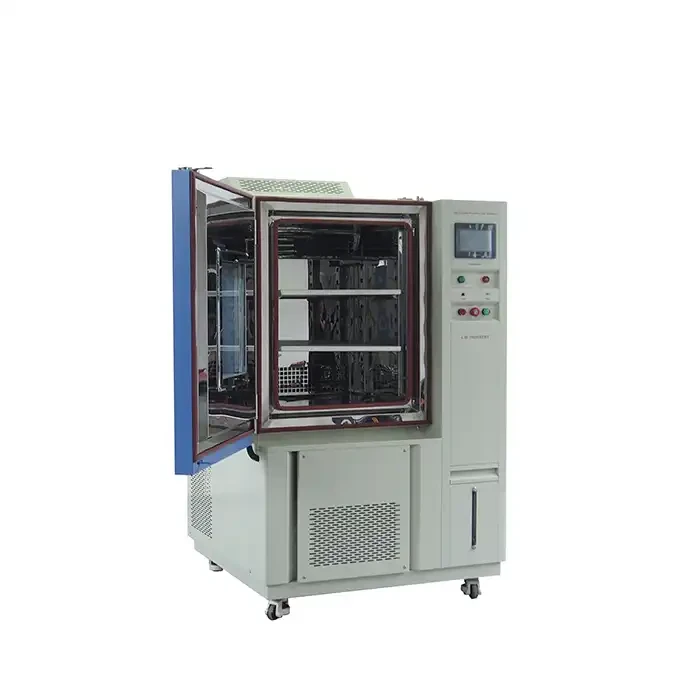
The global environmental testing landscape operates under multiple jurisdiction-specific standards that ensure measurement consistency and result reproducibility. Temperature humidity chambers must comply with various regional regulations depending on their application sector - automotive components follow different protocols than pharmaceutical products, while electronics testing adheres to semiconductor-specific requirements. Understanding which standards apply to your testing scope represents the foundational step toward achieving compliance.
Sector-Specific Requirements
Different industries impose unique environmental simulation demands. Military specifications (MIL-STD) require extreme temperature cycling capabilities, often demanding chambers that reach -70°C and maintain precise control during rapid transitions. Pharmaceutical testing follows FDA guidance documents that emphasize stability chamber validation, requiring detailed qualification protocols. Electronics manufacturers reference JEDEC standards for moisture sensitivity levels, while automotive suppliers adhere to AEC-Q100 specifications for component reliability assessment.
Accreditation Body Expectations
Third-party accreditation organizations like A2LA, UKAS, and CNAS maintain specific criteria for laboratory competence. These bodies evaluate not just equipment specifications but operational procedures, personnel qualifications, and measurement uncertainty calculations. Your temperature humidity chamber must demonstrate metrological traceability through calibration certificates traceable to national standards institutes. Accreditation auditors examine historical performance data, maintenance records, and evidence of ongoing measurement system analysis.
Overview of IEC, ISO, and ASTM Environmental Testing Standards

IEC Standards for Environmental Simulation
The International Electrotechnical Commission publishes comprehensive testing protocols under IEC 60068 series. IEC 60068-2-78 addresses damp heat steady-state testing, specifying temperature humidity chamber performance criteria including temperature uniformity within ±2°C and humidity deviation below ±3% RH. IEC 60068-2-30 outlines cyclic temperature and humidity testing procedures, defining ramp rates and dwell times. These standards establish the technical foundation for electronics reliability assessment worldwide.
|
IEC Standard |
Test Type |
Key Parameters |
Application |
|
IEC 60068-2-78 |
Damp Heat Steady State |
93% RH at 40°C |
Component moisture resistance |
|
IEC 60068-2-30 |
Cyclic Temperature-Humidity |
Variable cycles |
Thermal shock with moisture |
|
IEC 60068-2-1 |
Cold Testing |
-65°C minimum |
Low temperature functionality |
|
IEC 60068-2-2 |
Dry Heat |
+150°C typical |
High temperature endurance |
ISO Environmental Testing Protocols
ISO 9001 quality management principles extend into environmental testing through ISO/IEC 17025, which governs laboratory competence. This standard mandates method validation, uncertainty estimation, and proficiency testing participation. ISO 4611 addresses plastic material weathering tests, while ISO 16750 covers automotive electrical components. The TH-500 model from LIB Industry's TH Series meets these stringent requirements through its SUS304 stainless steel construction and high-accuracy PT100 Class A sensors providing ±0.001°C resolution.
ASTM Testing Methodologies
The American Society for Testing and Materials provides detailed test procedures across material categories. ASTM D2126 describes coated fabric response to temperature cycling. ASTM D5010 evaluates assembly cure efficiency through controlled humidity exposure. ASTM E1559 establishes temperature uniformity survey protocols, requiring nine-point measurement arrays with wireless data acquisition. Chambers must demonstrate spatial uniformity within specification before receiving qualification approval.
Calibration and Validation Requirements for Compliance
Metrological Traceability Chain
Every measurement instrument requires documented calibration lineage connecting chamber sensors to primary standards maintained by national metrology institutes. The temperature and humidity sensors in your testing equipment receive calibration from secondary laboratories holding ISO/IEC 17025 accreditation, which themselves trace to national references. Calibration certificates must display uncertainty budgets calculated per GUM (Guide to the Expression of Uncertainty in Measurement) methodology, showing confidence intervals at coverage factor k=2.
Installation Qualification Protocols
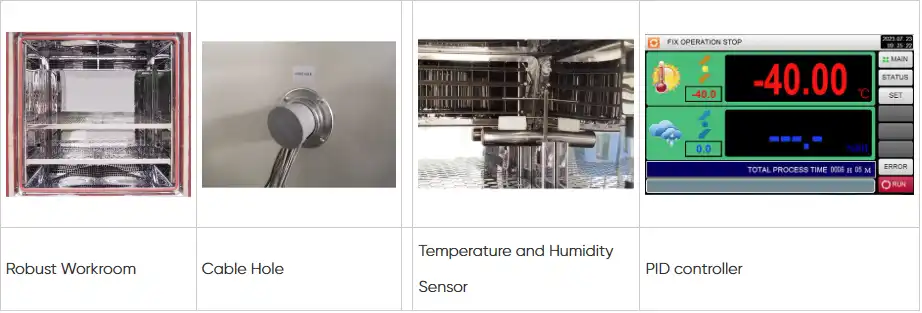
IQ procedures verify that equipment arrives per specifications and operates safely within the designated environment. Documentation confirms electrical supply compatibility, adequate ventilation for heat rejection, and proper drainage for the water purification system. The programmable color LCD touch screen controller undergoes functional testing across all menu options. Physical inspection confirms the double-layer thermo stability silicone rubber sealing maintains integrity and the observation window provides clear visibility without condensation.
Operational Qualification Procedures
OQ testing demonstrates chamber performance across the specified operating envelope. Empty chamber mapping surveys temperature distribution using calibrated reference sensors at 27 locations minimum. The French TECUMSEH compressor cooling system proves capability to achieve and maintain -70°C when equipped with the cascade refrigeration framework. Humidity uniformity testing validates that the external isolation stainless steel surface evaporation humidifier delivers consistent RH distribution from 20% to 98% throughout the 500L interior volume.
|
Qualification Stage |
Activities Performed |
Acceptance Criteria |
Documentation |
|
Installation Qualification |
Physical inspection, utility verification |
Per manufacturer specifications |
IQ protocol with photos |
|
Operational Qualification |
Empty chamber mapping, control verification |
±2.0°C deviation, ±2.5% RH |
OQ report with sensor locations |
|
Performance Qualification |
Loaded chamber testing, worst-case scenarios |
Product-specific requirements |
PQ protocol with load configurations |
Performance Qualification Validation
PQ studies evaluate chamber behavior under actual use conditions with representative product loads. Heat load testing confirms that the 1000W capacity accommodates your typical specimen thermal mass. Worst-case positioning validates that items placed near chamber extremities experience equivalent environmental exposure. Recovery time measurement ensures the Nichrome heater and mechanical compression refrigeration system restore setpoint conditions within acceptable timeframes after door openings.
How to Ensure Regulatory Compliance in Testing Processes?
Standard Operating Procedure Development
Comprehensive SOPs translate regulatory requirements into actionable laboratory instructions. Procedures must address temperature humidity chamber startup verification, setpoint programming validation, and emergency shutdown protocols. The Ethernet connection capability allows remote monitoring integration into laboratory information management systems. SOPs define data review responsibilities, specifying how technicians verify that programmed profiles execute correctly across the 120 programs with 100 steps each available in the touchscreen controller.
Personnel Training and Competency Assessment
Operator proficiency directly impacts result validity. Training programs cover fundamental psychrometric principles, understanding how temperature and humidity interact within the sealed chamber environment. Technicians learn to recognize abnormal conditions - unusual compressor cycling patterns, unexpected humidity deviations, or alarm conditions triggering the safety device array including humidifier dry-combustion protection and refrigerant high-pressure protection. Competency evaluations through written examinations and practical demonstrations ensure consistent operation.
Measurement Uncertainty Analysis
Regulatory compliance demands quantified confidence in reported values. Uncertainty budgets aggregate error sources including sensor calibration uncertainty, spatial uniformity variations, and digital resolution limits. The ±0.5°C temperature fluctuation specification combines with ±2.0°C deviation to establish the measurement uncertainty envelope. Statistical analysis of historical data reveals long-term drift patterns, informing calibration interval optimization and contributing to more accurate uncertainty statements.
Documentation and Audit Readiness for Test Laboratories
Essential Record Categories
Comprehensive documentation systems maintain equipment histories, calibration records, maintenance logs, and test reports. Each chamber receives a unique identification number cross-referenced across all documentation. The automatic water supply system and water purification system require routine maintenance documentation. The polyurethane foam and insulation cotton thermal barriers undergo periodic inspection with findings recorded. CSV or Excel format data export functionality enables efficient record archiving and retrieval.
Calibration Certificate Requirements
Certificates must display specific information elements satisfying auditor scrutiny. Instrument identification, calibration date, environmental conditions during calibration, standards used with their traceability statements, and calibrated values with uncertainties form mandatory content. Certificates for the PT100 Class A sensors document resistance values at ice point and specific temperatures across the -70°C to +150°C operating range. Multi-point calibration at 10°C intervals provides interpolation data for intermediate temperatures.
Change Control Documentation
Modifications to chamber configuration, control software updates, or procedural changes require formalized change control. Documentation captures the change rationale, risk assessment results, validation activities performed, and approval signatures. Upgrading from WiFi monitoring to enhanced Ethernet access necessitates revalidation of data integrity and cybersecurity assessment. The protective coating on the exterior A3 steel frame may receive refinishing, triggering photographic documentation and structural integrity verification.
|
Document Type |
Retention Period |
Content Requirements |
Review Frequency |
|
Calibration Certificates |
Equipment lifetime + 5 years |
Traceability, uncertainty, conditions |
Annual verification |
|
Maintenance Logs |
10 years |
Date, technician, activities, parts |
Monthly review |
|
Test Reports |
Per regulatory requirement |
Method, conditions, results, uncertainty |
Each test completion |
|
Validation Protocols |
Re-validation cycle |
Rationale, procedure, acceptance, approval |
Every 2 years minimum |
Audit Trail Integrity
Electronic records require protection against unauthorized modification. The touchscreen controller logs all parameter changes with user identification and timestamps. Data integrity verification through cryptographic checksums ensures that stored test profiles remain unaltered. Audit trails demonstrate who accessed the chamber control system, what parameters were modified, when changes occurred, and why adjustments were necessary through linked change control records.
Best Practices for Maintaining Long-Term Compliance
Preventive Maintenance Scheduling
Proactive maintenance prevents unexpected failures and maintains performance specifications. Quarterly refrigeration system inspections check refrigerant charge levels and compressor oil condition. The cascade refrigeration framework enabling continuous operation at extreme low temperatures requires specialized attention to both primary and secondary loops. Annual replacement of the dual-layer silicone sealing prevents temperature leakage and condensation issues. The heated anti-fog glass windows receive periodic inspection for heating element continuity.
Ongoing Performance Monitoring
Continuous verification programs detect gradual performance degradation before reaching unacceptable levels. Monthly empty temperature humidity chamber uniformity checks using portable reference sensors trending over time reveal subtle changes. Control chart analysis of setpoint achievement data identifies systematic deviations requiring investigation. The 30% lower energy consumption achieved through the electronic expansion valve innovation provides a secondary performance indicator - unexpected power increases signal potential issues.
Calibration Interval Optimization
Generic annual calibration cycles may prove either excessive or insufficient based on actual equipment stability. Historical calibration data analysis using methods from NCSL International RP-1 guideline enables evidence-based interval adjustment. Sensors consistently returning within tolerance at annual checks might support interval extension to 18 months. Conversely, sensors approaching tolerance limits suggest interval reduction or sensor replacement before failure.
LIB Industry Certified Chambers Meeting Global Testing Standards
|
|
Name | Temperature Humidity Chamber | ||||
|
Temperature range |
-20℃ ~+150 ℃ |
|||||
|
Low type |
A: -40℃ B:-70℃ C -86℃ |
|||||
|
Humidity Range |
20%-98%RH |
|||||
|
Temperature deviation |
± 2.0 ℃ |
|||||
|
Heating rate |
3 ℃ / min |
|||||
|
Cooling rate |
1 ℃ / min |
|||||
|
Controller |
Programmable color LCD touch screen controller, Multi-language interface, Ethernet , USB |
|||||
|
Refrigerant |
R404A, R23 |
|||||
|
Exterior material |
Steel Plate with protective coating |
|||||
|
Interior material |
SUS304 stainless steel |
|||||
|
Standard configuration |
1 Cable hole (Φ 50) with plug; 2 shelves |
|||||
|
Timing Function |
0.1~999.9 (S,M,H) settable |
|||||

ISO 9001 Quality Management Integration
LIB Industry's certified manufacturing processes ensure consistent chamber quality across the TH Series product line. ISO 9001 principles embedded throughout design, production, and delivery phases guarantee that each unit - from the compact TH-100 (100L) to the spacious TH-1000 (1000L) - meets identical quality standards. CE compliance certification demonstrates European safety directive conformance, while third-party testing by SGS and TUV authorities provides independent verification of performance claims.
Comprehensive Warranty and Support
The 3-year warranty with lifetime service support reflects manufacturing confidence and customer commitment. Global 24/7 assistance ensures minimal downtime regardless of geographic location. Replacement guarantee during warranty periods eliminates repair delays when chambers require component replacement. Technical support teams understand regulatory compliance requirements, assisting with validation protocol development and troubleshooting during accreditation preparations.
Customization for Specific Standards
Non-standard design capabilities deliver chambers optimized for unique compliance scenarios. Automotive testing requiring AEC-Q100 conformance might specify enhanced thermal cycling rates beyond the standard 1°C/min cooling and 3°C/min heating rates. Pharmaceutical applications demanding 21 CFR Part 11 electronic record compliance receive customized data logging systems. Military specification testing chambers incorporate ruggedized construction and extended temperature ranges down to -86°C.
Conclusion
Achieving and maintaining compliance with temperature humidity chamber standards demands systematic attention to calibration, validation, documentation, and operational procedures. Understanding the regulatory landscape - from IEC electronic component protocols to ISO laboratory competence requirements and ASTM material testing methodologies - establishes the foundation for defensible test results. Investment in properly qualified equipment, comprehensive training programs, and robust quality systems transforms compliance from burden into competitive advantage, enabling laboratories to serve global markets with confidence.
FAQ
How often should temperature humidity chambers undergo calibration to maintain compliance?
Most regulatory frameworks recommend annual calibration intervals, though evidence-based programs using historical performance data may justify extended or reduced frequencies. Critical applications like pharmaceutical stability testing often mandate more frequent verification, while stable systems demonstrate consistent performance over longer periods.
What documentation do auditors typically request during laboratory compliance inspections?
Auditors examine calibration certificates with traceability statements, validation protocols including IQ/OQ/PQ studies, maintenance logs, operator training records, measurement uncertainty budgets, and representative test reports. Change control documentation and evidence of ongoing performance monitoring through control charts frequently receive scrutiny.
Can existing chambers be retrofitted to meet updated compliance standards?
Many chambers accommodate upgrades including enhanced sensor systems, improved data logging capabilities, and refined control algorithms. Retrofits require revalidation demonstrating continued performance within specifications. Structural limitations may prevent compliance with certain extreme requirements, necessitating equipment replacement rather than modification.
Ready to upgrade your environmental testing capabilities with fully compliant chambers? Contact LIB Industry, a trusted temperature humidity chamber manufacturer and supplier, at ellen@lib-industry.com to discuss customized solutions meeting your specific regulatory requirements and application needs.