Why Does Mining Equipment Need a Dust Test Chamber for IP6X and MIL-STD-810 Certification?
Mining operations expose equipment to some of the harshest dust conditions imaginable. From fine silica particles in underground tunnels to abrasive coal dust in open-pit mines, machinery faces relentless particulate bombardment that threatens operational integrity. Rigorous dust testing isn't merely a regulatory checkbox — it's a critical safeguard against catastrophic equipment failure, worker safety hazards, and astronomical maintenance costs. This article explains why a dust test chamber is essential for mining equipment validation, what IEC 60529, ISO 20653, and MIL-STD-810 actually require, how to size a chamber for your components, and how LIB Industry's DI-series chambers and after-sales support fit into that testing program. A dust test chamber replicates extreme particulate conditions in the lab, letting manufacturers validate sealing effectiveness, identify vulnerability points, and certify compliance with international ingress protection standards before equipment enters the field — because without that verification, mining operations risk downtime that can cost upwards of $50,000 per hour in lost productivity.
Dust Exposure Challenges in Mining Operational Environments
 Mining environments present uniquely aggressive particulate challenges that distinguish them from standard industrial settings.
Particle size distribution. Mining dust spans particle dimensions from respirable particles under 10 micrometers to coarse fragments exceeding 100 micrometers. Respirable crystalline silica particles (1–5 micrometers) penetrate microscopic seal gaps while creating health hazards for operators. The most insidious particles measure 10–75 micrometers — small enough to bypass inadequate seals yet large enough to cause mechanical interference in precision components. Testing protocols using 50–75 micrometer talcum powder in controlled chambers accurately replicate this critical size range.
Concentration variability. Dust concentrations fluctuate dramatically based on mining methods and ventilation effectiveness. Underground coal mines may experience concentrations exceeding 10 mg/m³ during active cutting, while surface extraction sites generate dust clouds varying from 2–50 mg/m³. Programmable dust chambers let manufacturers test components under both sustained low-concentration exposure and intense dust-storm scenarios.
Chemical composition and corrosivity. Mining dust isn't chemically inert — coal dust contains sulfur compounds that accelerate corrosion when combined with moisture, and metallic ore dusts may include reactive minerals that degrade elastomeric seals. Advanced testing programs use representative dust samples from target mining environments rather than generic test powders for mission-critical applications.
How Abrasive Particles Affect Mechanical Component Wear
The abrasive nature of mining dust transforms routine mechanical wear into an accelerated degradation process. Silica particles, ranking 7 on the Mohs hardness scale, act as microscopic cutting tools against softer materials like aluminum housings or rubber seals, while repeated particle impacts create fatigue cracks that eventually cause delamination.
Bearing and seal compromise is one of the most critical vulnerability points. Particles contaminating lubricants function as lapping compounds, grinding bearing surfaces and generating metallic debris that compounds the damage. IP6X testing, which chambers simulate by creating sustained negative pressure while circulating talcum powder at specified concentrations, validates seal integrity under realistic operational stress.
Electrical contact contamination is an increasingly important failure mode as mining equipment relies more on electronic control systems. Fine particles infiltrating electrical enclosures create current leakage paths, trigger false sensor readings, and cause short circuits — carbon-bearing coal dust presents particular hazards due to its electrical conductivity. Chambers equipped with specimen power outlets enable live electrical testing during dust exposure, revealing contamination vulnerabilities that static inspection cannot detect.
Reliability Standards for Mining Equipment Dust Protection
International standards provide the framework for dust resistance verification, though mining applications often demand performance exceeding baseline certification requirements.
| Standard | Dust Protection Level | Testing Requirements | Mining Application Relevance |
|---|---|---|---|
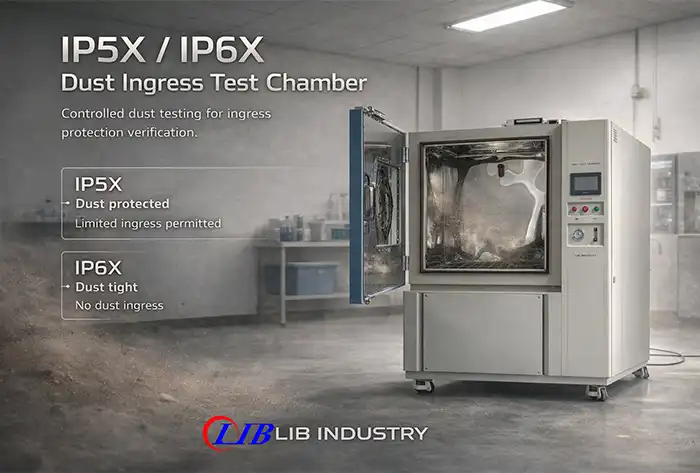
| IEC 60529 IP5X | Dust protected | Limited ingress permitted; doesn't interfere with operation | Suitable for enclosed control panels in ventilated areas |
| IEC 60529 IP6X | Dust tight | No ingress detected | Required for motors and drives in direct dust exposure |
| ISO 20653 IP6KX | Enhanced dust tight with pressure testing | No ingress under elevated pressure differential | Critical for sealed battery compartments and sensitive electronics |
| MIL-STD-810 Method 510.7 | Blowing dust and sand | Extended exposure with environmental stressors | Military-grade protection for autonomous mining vehicles |
IP5X vs. IP6X in practice: IP5X permits limited dust ingress provided it doesn't interfere with operation — acceptable for components with internal filtration or regular maintenance access. IP6X requires absolute prevention of dust ingress, essential for sealed components where any contamination causes failure. The testing differentiation lies in exposure duration and acceptance criteria: IP5X testing permits trace deposits, while IP6X demands zero detectable ingress, verified using a mesh sieve with 75-micron diameter openings to ensure correct test dust particle sizing.
Mining jurisdictions with explosive atmosphere regulations (ATEX, IECEx) also require dust ignition testing for coal-mine equipment, combining dust ingress testing with ignition source evaluation.
Testing Sealing Systems in Heavy-Duty Mining Machinery
Mining equipment typically employs multi-stage sealing strategies — primary dynamic seals maintaining lubrication boundaries, secondary static seals protecting enclosure interfaces, and tertiary labyrinth seals providing redundant protection. Comprehensive dust chamber testing evaluates the entire sealing architecture rather than isolated components, exposing system-level vulnerabilities where individual seal failures cascade into complete protection breakdown.
Seal material selection also depends heavily on chamber-based comparative testing, since cost and durability trade off differently across material families:
| Material Category | Dust Resistance Rating | Cost Factor | Optimal Mining Applications |
|---|---|---|---|
| Standard Nitrile Seals | Moderate (6–12 months) | 1.0x | Light-duty applications with regular maintenance |
| Polyurethane Seals | High (18–24 months) | 2.3x | Hydraulic cylinders and reciprocating shafts |
| Fluoroelastomer Seals | Very High (36+ months) | 4.5x | Critical components with difficult maintenance access |
| Stainless Steel 304 Housings | Excellent corrosion resistance | 3.2x | Electrical enclosures in high-moisture environments |
| Powder-Coated A3 Steel | Good with proper coating maintenance | 1.5x | Structural components with accessible surfaces |
While fluoroelastomer seals cost 4.5 times more than nitrile equivalents, tripling service intervals may justify the investment for components requiring expensive downtime for replacement — this is exactly the kind of performance-versus-cost tradeoff a dust test chamber quantifies with objective data instead of speculation.
Dust Chamber Simulation of Extreme Underground Conditions
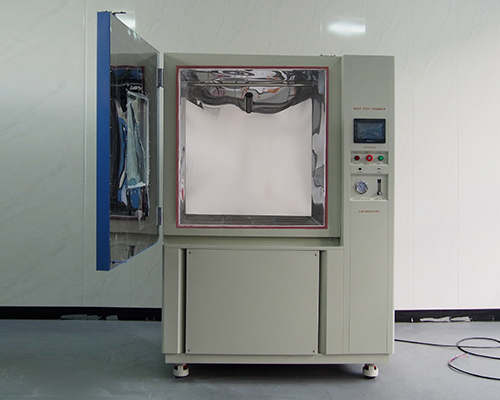
Underground environments exhibit stable temperatures typically ranging 15–30°C with elevated humidity from groundwater seepage and ventilation moisture, and these conditions alter both dust adhesion characteristics and seal material properties. High humidity causes talcum powder clumping in dust test chambers lacking proper environmental control, so heating technology that maintains conditions below 30% RH prevents this test-invalidating phenomenon. Chambers with vacuum systems and pressure regulators also replicate the negative-pressure conditions that ventilation systems create inside electrical cabinets, drawing particulate-laden air through any available pathway — the same mechanism responsible for real-world dust infiltration.
Because mining equipment operates continuously for weeks between scheduled maintenance intervals, controllers offering programmable blow cycles extending to 99 hours 59 minutes enable extended exposure protocols that condense months of field exposure into meaningful test data.
LIB Industry Dust & Sand Test Chambers: Sizing, Technology, and Support
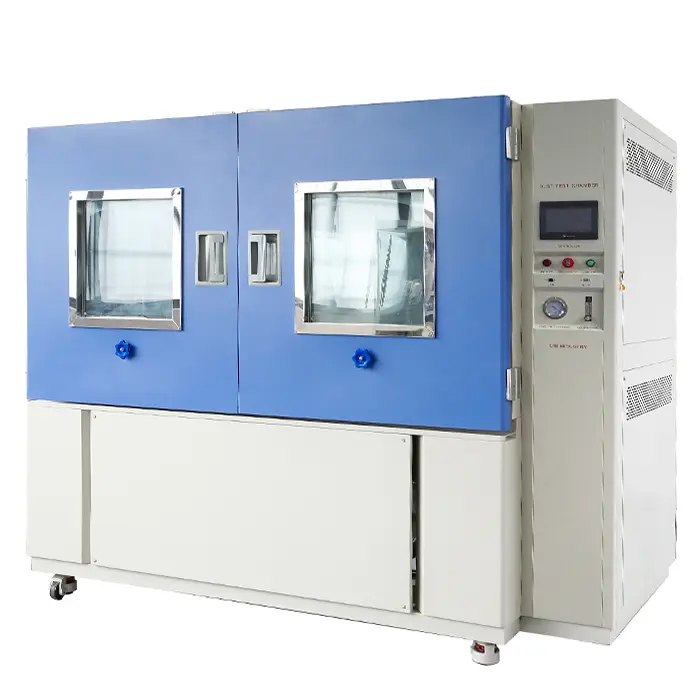
Mining equipment components span enormous size ranges, from compact sensors to multi-ton drive assemblies. LIB Industry's DI-series dust and sand test chambers are purpose-built to cover that full range with the precision, durability, and support infrastructure mining equipment certification demands.
Chamber Sizing for Every Mining Component
| Model | Internal Dimensions | Volume | Typical Test Article |
|---|---|---|---|
| DI-800 | 800×1000×1000mm | 800 L | Electrical components, control panels, sensor assemblies, sealed connectors |
| DI-1000 | 1000×1000×1000mm | 1,000 L | Motor assemblies, hydraulic valve banks, medium-sized electronic enclosures |
| DI-1500 | 1500mm depth | 1,500 L | Elongated components such as hydraulic cylinders |
| DI-2000 | 2000mm depth | 2,000 L | Complete subsystem assemblies, drive units with attached control systems |
The DI-800's smaller footprint reduces facility space requirements while still delivering full testing capability, including programmable temperature control and vacuum systems. The DI-1000 represents the optimal balance between capacity and operational economy for most motor and valve-bank testing. The DI-1500 and DI-2000 extend chamber depth specifically to accommodate elongated components like hydraulic cylinders and conveyor drive assemblies that shorter chambers can't fit.
| Diameter of Turntable (mm) |
600 |
IP6X Dust Test Chamber |
|
Turntable loads |
20kgs Max |
|
|
Turntable Rotation Speed |
0~7r/min (Adjustable) |
|
|
Internal Diameter of IPX5 Nozzle |
6.3 mm |
|
|
Internal Diameter of IPX6 Nozzle |
12.5 mm |
|
|
Water Flow Rate IPX5/ IPX6 |
12.5L/min ±5% / 100L/min ±5% |
|
|
Controller |
Programmable color LCD touch screen controller |
|
|
Ethernet connection, PC Link, USB |
||
|
Build-in Water Tank(mm) |
370*375*950 |
|
|
View Window Size(mm) |
475*475 |

 |
 |
|
| Test Area | LAN and USB | Controller |

Precision Control and Testing Technology
Every LIB dust chamber runs on the same core control platform, engineered around the specific demands of IP5X/IP6X and MIL-STD-810 test protocols:
Programmable color LCD touchscreen controller with PID algorithms holding temperature stability within ±0.5°C throughout extended exposure cycles.
Separate programmable timers for "fight time" (dust circulation active) and "blowing time" (settling periods), letting engineers replicate realistic operational duty cycles rather than continuous uniform exposure.
Extended blow-cycle programming up to 99 hours 59 minutes, enabling unattended multi-day test campaigns that compress weeks of field exposure into a single automated run.
Integrated vacuum systems and pressure regulators that apply controlled negative pressure to test specimens, replicating the pressure differentials created by mine ventilation systems that actually drive dust infiltration in the field — with pressure gauge monitoring for test condition accuracy.
Heating technology maintaining conditions below 30% RH, preventing the humidity-induced talcum powder clumping that would otherwise invalidate test results, while temperature control extending to 80°C simulates deep-mine geothermal heating.
Funnel-shaped chamber bottoms with sloped interiors that prevent powder accumulation, keeping airborne dust concentration consistent throughout extended tests instead of depleting over time.
Observation window with integrated wiper and LED lighting, allowing real-time monitoring of specimen behavior and failure progression without opening the chamber.
Specimen power outlets for live electrical testing during dust exposure, revealing contamination vulnerabilities — like current leakage or false sensor readings — that static post-test inspection cannot detect.
Ethernet connectivity and PC Link support for automated data logging, producing the defensible documentation mining equipment certification requires.
Construction and Safety
LIB dust chambers pair a 304 stainless steel interior with a mirror-surface rust-proof finish against a protective-coated A3 steel exterior, built to withstand demanding industrial environments over years of repeated testing. Electromagnetic door locks prevent inadvertent access mid-test, backed by safety interlocks covering over-temperature, over-current, earth leakage, and phase sequence protection. Every chamber ships ready to use, with sample racks, dust wipers, and an initial 5kg talcum powder supply included as standard.
Quality Assurance and Global Support Infrastructure
| Support Element | LIB Provision | Mining Industry Benefit |
|---|---|---|
| Warranty Coverage | 3-year comprehensive warranty with lifetime service support | Reduces total cost of ownership; ensures long-term testing capability |
| Quality Certification | ISO 9001, CE marking, SGS/TUV third-party validation | Meets international procurement requirements; supports export compliance |
| Technical Support | 24/7 global assistance with remote diagnostic capabilities | Minimizes testing program disruption; enables multi-site coordination |
| Custom Engineering | Non-standard chamber design for unique requirements | Accommodates oversized components or specialized environmental conditions |
| Replacement Commitment | Brand-new unit replacement if repair is impossible during warranty | Eliminates catastrophic program delays from equipment failure |
Related Products for a Complete Mining Equipment Testing Lab
Dust resistance is only one piece of mining equipment qualification. LIB Industry's related product lines let a single lab cover the full range of field stresses without outsourcing any stage of testing:
 Climatic Test Chambers — for temperature/humidity qualification of the same electrical enclosures and drive components tested for dust ingress, including underground-condition simulation from ambient to 80°C. Climatic Test Chambers — for temperature/humidity qualification of the same electrical enclosures and drive components tested for dust ingress, including underground-condition simulation from ambient to 80°C. |
Salt Spray / Corrosion Test Chambers — for evaluating corrosion resistance of housings and hardware exposed to sulfur-bearing coal dust combined with moisture. |
Vibration Test Systems — for validating structural durability of hydraulic cylinders, conveyor drive assemblies, and sensor mounts under transport and operational shock. |
 IP Waterproof Test Chambers (IPX rating) — for combined dust-and-water ingress testing (IP6K9K) required for sealed battery compartments and equipment used in wash-down or wet-mine conditions. IP Waterproof Test Chambers (IPX rating) — for combined dust-and-water ingress testing (IP6K9K) required for sealed battery compartments and equipment used in wash-down or wet-mine conditions. |


Frequently Asked Questions About Dust Test Chambers for Mining Equipment
1. What dust particle size should be used for testing mining equipment seals?
Testing protocols typically use talcum powder sized to a 50-micrometer nominal wire diameter and 75-micrometer gap spacing, replicating the critical 10–75μm particle range most problematic for mining equipment seals and electrical enclosures.
2. How long does typical IP6X dust chamber testing take for mining certification?
Standard IP6X protocols require 8 hours of continuous dust circulation under negative pressure. Mining-specific validation often extends this to 24–50 hours to replicate extended operational periods between maintenance intervals, managed automatically by programmable controllers.
3. Can dust test chambers replicate underground mining humidity and temperature conditions?
Yes. Chambers with temperature control from ambient to 80°C (±0.5°C accuracy) and humidity regulation below 30% RH can simulate typical underground conditions (15–30°C, moderate humidity) while avoiding the powder-clumping that invalidates results in uncontrolled chambers.
4. What warranty and after-sales support does LIB Industry provide with its dust test chambers?
LIB Industry backs every DI-series chamber with a 3-year comprehensive warranty and lifetime service support, plus a replacement commitment — a brand-new unit if repair proves impossible during the warranty period — so mining equipment testing programs are never left stalled by chamber downtime.
5. Does LIB Industry offer custom dust test chambers for oversized mining components?
Yes. Beyond the standard DI-800 to DI-2000 range, LIB's engineering team provides non-standard chamber design for oversized components or specialized environmental conditions, built on LIB's own full in-house production line, with one-stop service covering consultation, manufacturing, installation, and operator training.
6. Is third-party certification available for dust test results from LIB chambers?
LIB chambers are manufactured under ISO 9001 and CE-marked, and test data can be documented for SGS/TUV third-party witnessing, adding the credibility mining equipment manufacturers need for international market entry.
Partner with LIB Industry for Mining Equipment Dust Testing Solutions
Dust resistance is a validated engineering specification, not a design assumption — and a properly equipped dust test chamber is what makes that validation possible, from IP5X control panels to IP6X motors to MIL-STD-810 autonomous mining vehicles. Backed by a 3-year warranty, lifetime service, and full custom-build capability, LIB Industry's DI-series chambers support that testing from R&D through certification.
Contact LIB Industry's engineering team at ellen@lib-industry.com to discuss your mining equipment dust testing requirements, request a technical proposal, or get a quote on a standard or custom dust test chamber.