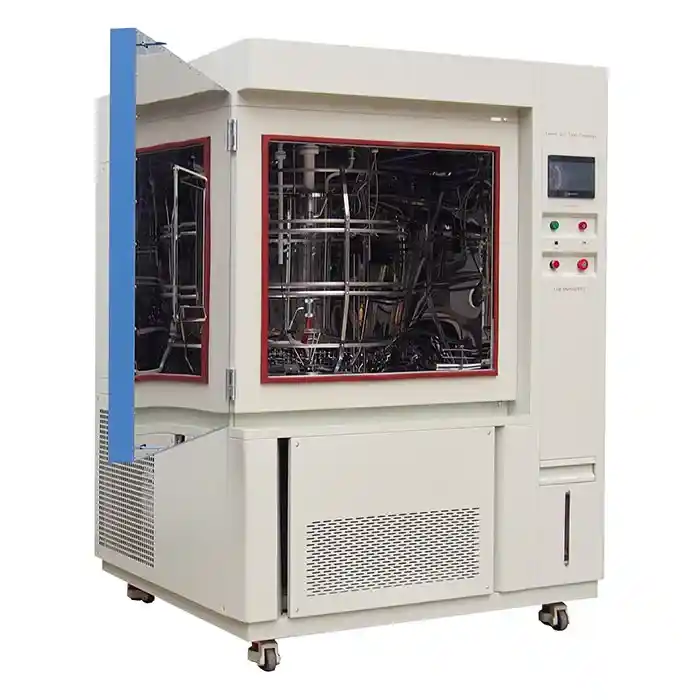
Polymer manufacturers face critical decisions when selecting accelerated weathering equipment for durability assessment. Xenon test chambers and UV fluorescent chambers represent the two dominant technologies for simulating environmental degradation, yet they operate through fundamentally different mechanisms. Xenon arc lamps produce broad-spectrum radiation closely matching natural daylight (300-800nm wavelengths), while UV fluorescent systems concentrate energy in narrow ultraviolet bands. A xenon test chamber employs a 4500W water-cooled xenon arc lamp maintaining irradiance levels of 35-150 W/㎡ with closed-loop spectral control, whereas UV systems deliver narrower wavelengths at higher intensities. Selecting between these technologies requires understanding material-specific degradation pathways, regulatory requirements, and real-world environmental exposure patterns. This comprehensive comparison explores technical distinctions, application suitability, and performance outcomes that differentiate these testing methodologies.
Differences Between Xenon Arc and UV Fluorescent Testing
Spectral Composition and Natural Sunlight Simulation
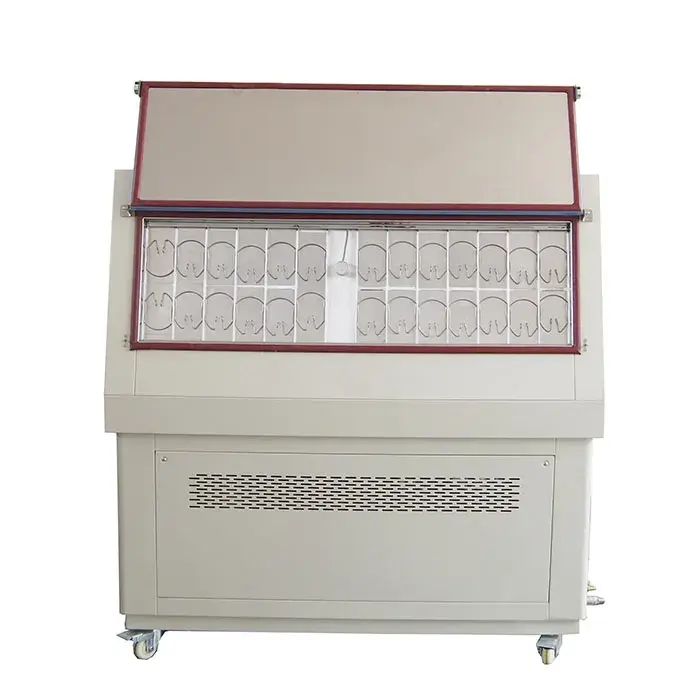
Xenon arc lamps generate continuous spectral output spanning 300-800nm wavelengths - encompassing ultraviolet, visible, and infrared radiation present in natural sunlight. This spectral distribution closely approximates outdoor daylight composition, making xenon chambers ideal for materials experiencing direct solar exposure. UV fluorescent systems concentrate energy at specific wavelengths (typically 313nm, 340nm, or 365nm), producing artificial conditions not found in nature. Materials degrading through visible-light photochemistry perform unpredictably under narrow-spectrum UV radiation.
Irradiance Intensity and Exposure Duration Implications
Xenon test chambers operate at relatively modest irradiance levels (35-150 W/㎡) approximating terrestrial solar intensities, with closed-loop Solar Eye technology compensating for lamp aging. UV fluorescent systems deliver much higher irradiance concentrations (150-350+ W/㎡), dramatically accelerating degradation mechanisms. This intensity reciprocity failure means UV results may not correlate reliably with field performance, particularly for polymers sensitive to both spectral composition and exposure intensity.
Temperature Management and Thermal Cycling Capability
Xenon chambers incorporate sophisticated cooling systems maintaining precise temperature control across chamber zones. Black panel temperatures (35-85°C) track thermal conditions experienced by outdoor polymers, while humidity ranges (50-98% RH) simulate moisture dynamics in real environments. This thermal precision enables simultaneous assessment of moisture absorption, thermal expansion, and photochemical degradation. UV fluorescent systems typically maintain less sophisticated temperature control, concentrating capabilities on wavelength management rather than thermal dynamics.
Which Materials Benefit Most from Xenon Weathering Tests?
Automotive Exterior Components and Coatings
Automotive polymers encounter demanding weathering environments - intense solar radiation, wide temperature swings (-40 to +80°C), humidity cycling, and salt spray contamination. Xenon test chambers replicate these conditions through simultaneous management of radiation spectrum, temperature gradients, and moisture cycling. Automotive OEMs increasingly mandate xenon testing per ASTM G155 and ISO 4892 standards. Bumper covers, exterior trim, and light diffusers benefit from xenon's comprehensive environmental simulation.
Building Materials and Long-Term Weathering Assessment
Roofing membranes, exterior sealants, and architectural composites experience decades of continuous sun exposure. These materials require testing methodologies capturing cumulative photodegradation across extended timescales. Xenon chambers enable equivalent aging simulation in weeks rather than years, with closed-loop spectral control ensuring consistent radiation throughout test cycles. Materials certified through xenon testing demonstrate superior field longevity compared to UV-only validation.
Textile, Dye, and Color Stability Applications
Fabrics and dyes depend critically on spectral composition for accurate color-fading prediction. Xenon arc lamps reveal actual color shifting patterns and dye stability limitations. Textile manufacturers and automotive interior suppliers rely on xenon data for color durability claims. This spectral accuracy proves impossible through UV-only testing, making xenon testing essential for materials where color stability represents critical performance criteria.
Comparing Light Spectrum and Environmental Simulation Accuracy
Photochemical Reaction Pathways Under Different Spectral Conditions
Polymer degradation initiates when photons exceed material-specific bandgap energies (typically 250-400 nm). UV fluorescent systems delivering intense narrow-band radiation may trigger photochemical pathways that never occur under natural sunlight. Xenon arc lamps simulate natural photon distribution, ensuring polymers degrade through authentic mechanisms. This spectral fidelity proves particularly important for polymers incorporating UV absorbers optimized for natural sunlight conditions.
Bandwidth Measurement Standardization and Irradiance Calibration
Xenon test chambers employ standardized bandwidth measurements (300-400nm at 340nm or 420nm per ISO 4892), enabling precise specification compliance. Irradiance ranges of 35-150 W/㎡ align with global solar intensities. UV fluorescent systems operate at irradiance levels far exceeding terrestrial conditions, creating unpredictable acceleration ratios. Xenon's standardized parameters enable more reliable extrapolation from accelerated testing to field service performance.
Moisture Integration and Spray Cycle Complexity
Xenon test chambers incorporate programmable spray cycles (1-9999 hours) enabling sophisticated moisture simulation. Materials simultaneously experience hydrolysis, plasticizer leaching, and photochemical degradation. This integrated environmental simulation proves impossible in UV-only chambers, where moisture integration typically involves simple spray cycles disconnected from spectral exposure.
|
Testing Parameter |
Xenon Arc Chamber |
UV Fluorescent Chamber |
|
Spectral Range |
300-800nm (full solar spectrum) |
313-420nm (narrow UV band) |
|
Irradiance Level |
35-150 W/㎡ (terrestrial matching) |
150-350+ W/㎡ (artificial acceleration) |
|
Temperature Range |
Ambient to 100°C ±2°C |
Typically 50-70°C operational range |
|
Humidity Control |
50-98% RH with ±5% deviation |
Limited humidity simulation |
|
Moisture Cycles |
Programmable 1-9999H duration |
Fixed spray patterns |
|
Correlation to Field |
High (natural spectral matching) |
Variable (intensity reciprocity issues) |
 |
 |
Evaluating Polymer Cracking, Fading, and Surface Degradation
Stress Cracking and Embrittlement Mechanisms
Xenon chambers capture polymer chain scission and modulus changes through combined photochemical exposure and thermal cycling. UV fluorescent systems create exaggerated cracking patterns that may not correlate to field behavior. Materials exhibiting pronounced stress cracking under UV testing sometimes show acceptable field durability, indicating UV-derived damage predictions exceed actual service conditions.
Color Fading and Cosmetic Degradation Patterns
Dye and pigment fading depends critically on photon wavelengths. Xenon arc lamps simulate natural fading because their spectral distribution matches sunlight composition. UV systems cannot reliably predict color shifts because dyes absorb differently across artificial narrow-band spectrum versus natural broadband radiation. This distinction becomes especially important for materials where color stability represents primary performance criteria.
Surface Roughening and Micro-Scale Texture Evolution
Xenon chambers, maintaining consistent radiation through closed-loop Solar Eye technology, reveal progressive surface texture evolution reflecting actual field degradation patterns. UV systems show variable surface degradation depending on lamp aging, compromising reliability. Xenon's sophisticated spectral control ensures consistent surface degradation throughout extended test cycles.
Cost, Testing Speed, and Application Considerations
Capital Investment and Operating Expense Implications
Xenon test chambers represent higher capital investments but lower operating expenses through water cooling efficiency and reduced lamp replacement frequency. Xenon lamps require replacement every 1000-1500 hours versus UV fluorescent bulbs requiring replacement every 500 hours. Over 5-10 year lifecycles, total cost-of-ownership often favors xenon systems despite higher initial acquisition costs.
Testing Duration and Acceleration Factor Variability
UV chambers achieve acceleration through elevated irradiance, typically completing 500-1000 hour cycles in 2-4 weeks. Xenon chambers require longer test durations (1000-2000 hours), extending timelines to 4-8 weeks. However, xenon results require no acceleration-factor correction, while UV results require material-specific reciprocity corrections introducing prediction uncertainty.
Regulatory and Certification Requirements by Industry Sector
Automotive OEMs mandate ASTM G155 and ISO 4892 xenon testing for exterior components. Aircraft and aerospace manufacturers similarly prescribe xenon testing per FAA standards. Building material suppliers increasingly recognize that xenon-certified products command market premium positioning. Understanding industry-specific certification mandates proves critical when determining equipment investment alignment with target markets.
|
Application Category |
Xenon Preference |
Key Consideration |
|
Automotive Exterior |
High |
ASTM G155, ISO 4892 mandate xenon testing |
|
Building Materials |
High |
Long-term durability claims support xenon correlation |
|
Textile and Dyes |
High |
Spectral accuracy essential for color industries |
|
Medical Devices |
Medium |
Regulatory standards determine xenon necessity |
|
Electronics/Appliances |
Medium |
Market positioning determines preference |
|
Plastic Films |
Low to Medium |
Indoor vs outdoor use determines necessity |
Choosing the Right Chamber for Industry-Specific Requirements
Market-Driven Selection Based on Competitive Positioning
Premium automotive applications, luxury consumer goods, and high-reliability aerospace systems benefit from xenon chamber certification - demonstrating commitment to rigorous durability validation. Budget-conscious manufacturers may select UV systems for rapid product validation and market-entry acceleration. Optimal chamber selection aligns with target market positioning, customer expectations, and competitive differentiation strategies.
Environmental Exposure Profile Matching and Performance Prediction
Materials destined for outdoor use in intense sunlight derive maximum value from xenon chamber testing. Indoor applications experiencing controlled lighting benefit less from xenon's comprehensive simulation. Coastal environments with salt spray exposure benefit from xenon systems incorporating moisture cycling capability. Geographic market expansion necessitates xenon testing for accurate durability assessment under different solar intensities and thermal extremes.
Testing Standard Compliance and Certification Pathway Requirements
Organizations pursuing ASTM G155 or ISO 4892 certification explicitly require xenon chambers. Automotive supply chains operating under OEM durability mandates require xenon capability. However, establishing xenon testing capability positions organizations for future market expansion and regulatory evolution - investing in xenon systems creates durable competitive advantage transcending immediate certification requirements.
LIB Industry Provides Advanced Xenon Testing for Polymer Comparison Accuracy
|
|
 |
 |
|
|
Model |
XL-S-750 Xenon Arc Weathering Test Chamber |
|
Internal Dimension (mm) |
950*950*850 mm |
|
Overall Dimension (mm) |
1300*1420*1800 mm |
|
Sample holder |
Adjustable speed, 1r /min |
|
Chamber Type |
Rotating Holder |
|
Irradiation Source |
1 piece of 4500w water-cooled xenon arc lamp with inner quartz and outer borosilicate filter |
|
Irradiance Range |
150 W/㎡ |
|
Bandwidth Measurement |
300~400 nm |
|
Chamber Temperature Range |
-40~ 100 ℃ ±2 ℃ |
|
Black Panel Temperature |
BPT 35 ~ 85 ℃ ±2 ℃ |
|
Humidity Range |
30 % ~ 98 % RH |
|
Water Spray Cycle |
1~9999 H 59 M (Adjustable) |
|
Controller |
Programmable color LCD touch screen controller |
|
Radiometer |
UV Radiometer, Tolerance: ±5 % |
Multi-standard compatibility including ASTM G155, ISO 4892-2, and SAE J2527
|
|
|


xenon lamp and filters
 |
 |
 |
|

Superior Equipment Specifications and Precision Environmental Control
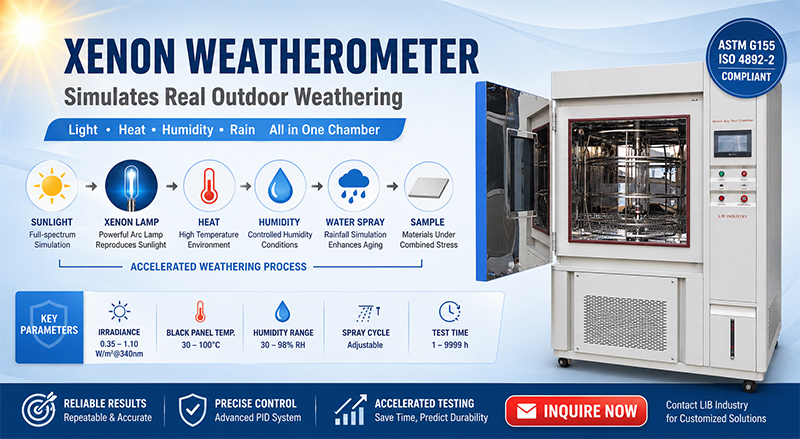
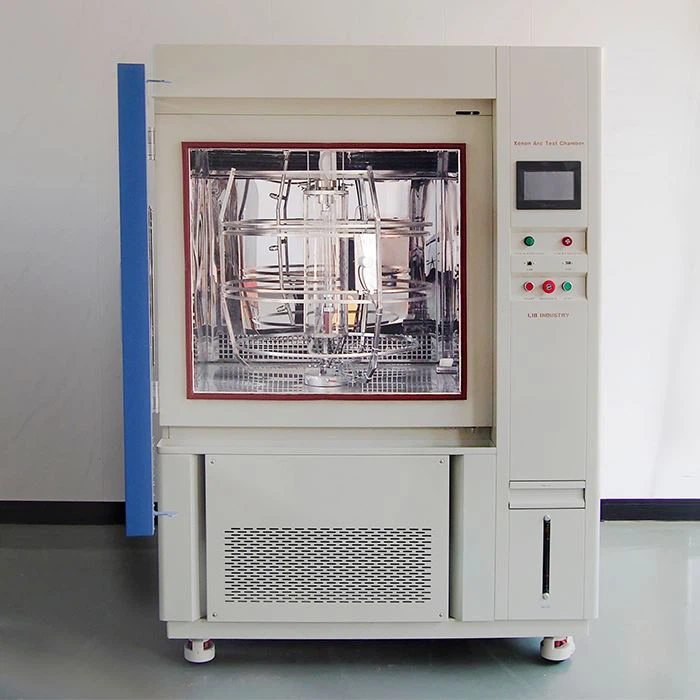
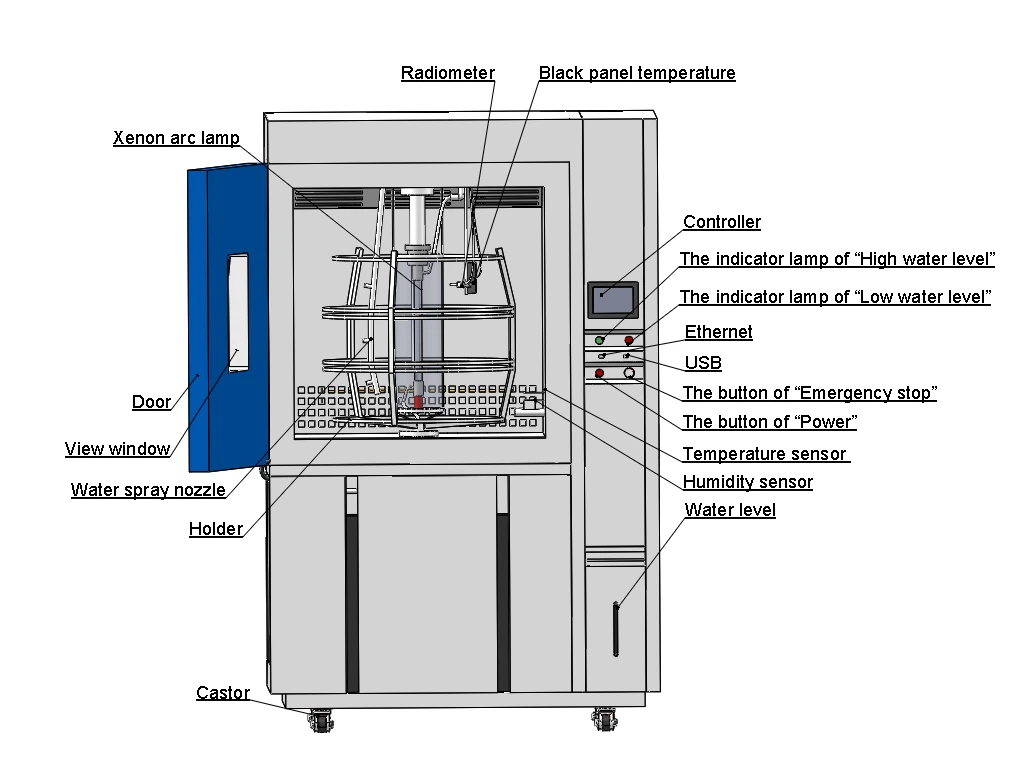
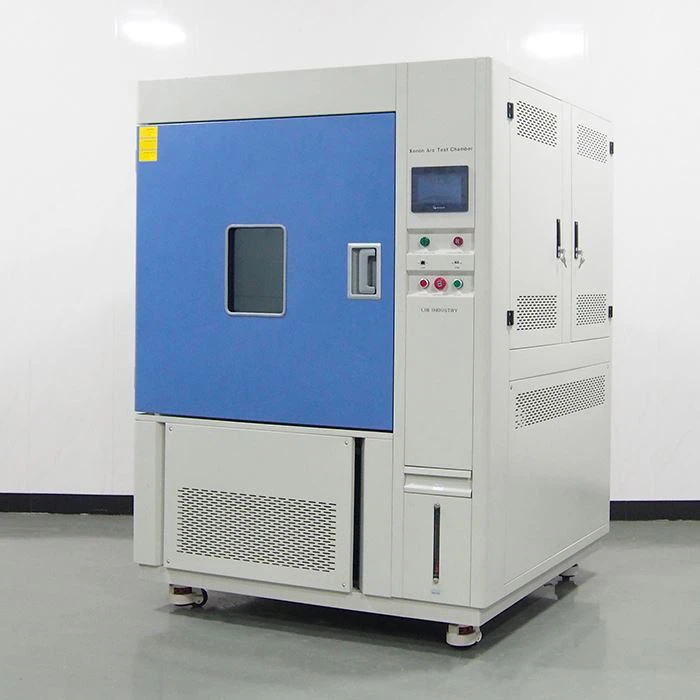
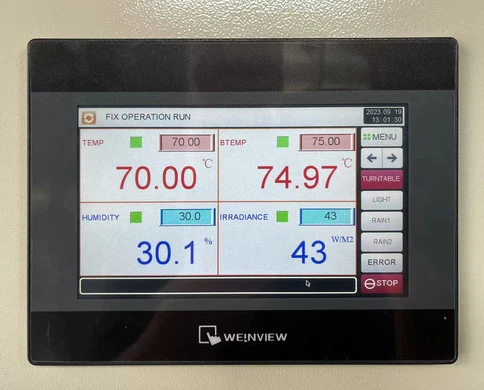
LIB Industry's xenon test chamber (Model XL-S-750) delivers 4500W water-cooled xenon arc lamp technology with closed-loop Solar Eye irradiance control maintaining consistent spectral output throughout extended test cycles. Bandwidth measurement capability supports both 340nm and 420nm reference wavelengths. Black panel temperature control (35-85°C ±2°C accuracy) combined with humidity range management (50-98% RH ±5% precision) enables sophisticated environmental simulation unavailable in competing platforms.
Advanced Specimen Management and Uniform Exposure Assurance
The rotating sample rack accommodates 42 specimens simultaneously, with continuous rotation ensuring identical light exposure and spray coverage. This uniform exposure proves critical for statistical reliability - large sample populations reduce testing variability. Specimen holder dimensions (95×200mm) accommodate diverse material formats, enabling comprehensive material portfolio assessment within single testing cycles.
Comprehensive Environmental Integration and Custom Solution Expertise
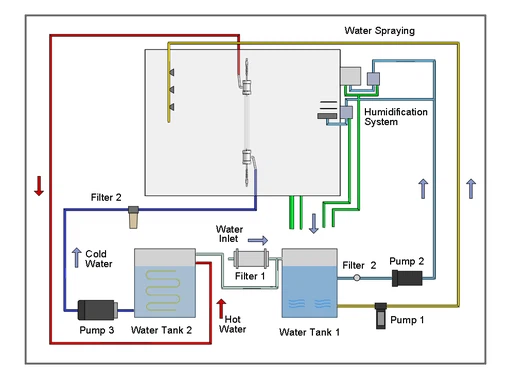
Programmable spray cycles (1-9999 hours) enable customized moisture simulation reflecting actual geographic conditions. Automatic water supply and purification systems maintain spray quality throughout extended testing. LIB Industry's engineering team specializes in custom modifications accommodating non-standard specimens, specialized fixtures, and application-specific environmental profiles, transforming xenon testing into strategic competitive advantage.
Conclusion
Selecting between xenon and UV fluorescent chambers requires understanding how spectral composition, environmental integration, and acceleration mechanisms influence testing outcomes. Xenon arc lamps deliver superior field-performance correlation through comprehensive spectral simulation matching natural sunlight conditions, precise environmental control, and closed-loop irradiance management. Materials destined for intense solar exposure derive maximum value from xenon chamber validation. LIB Industry's advanced xenon testing platform delivers the precision engineering, environmental sophistication, and customization expertise enabling organizations to validate polymer durability with scientific confidence. Investment in xenon testing capability establishes competitive differentiation through superior product reliability backed by rigorous scientific validation.
FAQ
Can xenon test chamber results reliably predict field durability for automotive polymers exposed to multiple environmental stressors simultaneously?
Xenon chambers excel at replicating simultaneous solar radiation, temperature cycling, and moisture exposure - primary stressors affecting automotive polymers. Closed-loop spectral control ensures consistent radiation throughout testing, providing reliable acceleration factors. Chemical exposures require supplementary testing; xenon chambers focus on photochemical and thermal degradation mechanisms. Comprehensive validation often combines xenon testing with salt-spray protocols.
How does the 4500W xenon arc lamp compare to UV fluorescent systems regarding long-term testing consistency and lamp replacement frequency?
The 4500W water-cooled xenon lamp maintains stable output throughout 1000-2000 hour test cycles, with closed-loop Solar Eye technology compensating for aging. Xenon lamps require replacement every 1000-1500 hours versus UV fluorescent bulbs requiring replacement every 500 hours. Combined with superior cooling efficiency, xenon systems demonstrate lower operating costs, making them economically advantageous for organizations requiring frequent polymer testing.
Which materials show greatest performance divergence between xenon and UV chamber testing results?
Materials incorporating stabilizer packages optimized for natural sunlight, colored polymers relying on specific dye chemistries, and composites with visible-light-absorbing fillers show pronounced divergence. UV chambers' narrow-band radiation triggers non-representative degradation mechanisms, creating accelerated failure timescales exceeding actual field rates. Chemically stabilized polymers show better performance predictions through xenon testing because spectral distribution matches manufacturer stabilizer optimization assumptions.
Partner with LIB Industry: Your Trusted Xenon Test Chamber Manufacturer and Supplier
Transform your polymer durability validation through LIB Industry's advanced xenon test chamber technology. As a leading global manufacturer and supplier of environmental testing chambers, we provide comprehensive turn-key solutions including equipment design, production, commissioning, installation, and technical training. Whether you require standardized ASTM G155 testing or custom environmental profiles matching your specific market conditions, our engineering team delivers tailored solutions maximizing your testing investment. With 3-year warranty coverage and lifetime service support through our 24/7 global network, your success represents our commitment. Contact our technical specialists at ellen@lib-industry.com to explore how xenon testing capability accelerates product development while establishing market-leading durability credentials.