Choosing between a waterproof test machine and water immersion testing depends on your product's real-world exposure scenarios and required IP rating. Spray-based systems simulate rain, splashes, and high-pressure jets, ideal for IPX1 through IPX6 evaluations where water contacts surfaces dynamically. Immersion testing submerges devices to assess seal integrity under static pressure, corresponding to IPX7 and IPX8 ratings. While immersion offers straightforward pass/fail results for submerged applications, spray testing reveals vulnerabilities in seams, joints, and connectors that intermittent water exposure creates. Understanding these fundamental differences ensures you select the method that truly validates your product's durability, avoids costly field failures, and meets international compliance standards efficiently.
Differences Between Spray Testing and Immersion Testing
Fundamental Mechanism Contrasts
A waterproof test machine atomizes water into controlled droplets or jets that strike the product's exterior, mimicking rainfall or hose spray. The water source remains external, testing enclosure barriers against penetration. Water immersion testing places the entire device underwater, subjecting it to hydrostatic pressure from all sides simultaneously. This internal pressure tests seal compression and housing welds differently than external spray impact.
Stress Simulation Variations
Spray testing introduces kinetic energy through moving water streams and oscillating patterns, creating shear forces at surface interfaces. It can incorporate temperature cycling and angled attacks to stress vulnerable points like button seals or cable glands. Immersion testing applies uniform static pressure that increases with depth, primarily challenging O-rings, gaskets, and housing joints for compression set and material permeability without dynamic impact.
Suitability for Product Categories
Consumer electronics like smartphones and outdoor lighting typically undergo spray testing for IPX4/IPX5 ratings, reflecting splash and jet exposure. Industrial sensors and marine electronics often require immersion testing for IPX7/IPX8, simulating accidental drops in water or permanent submersion. Automotive components may need both methods to cover road spray (IPX4) and engine bay washdown (IPX5) scenarios.
|
Aspect |
Spray Testing (Waterproof Test Machine) |
Immersion Testing |
|
Primary Stressor |
Kinetic impact, angular water flow |
Hydrostatic pressure |
|
Typical IP Coverage |
IPX1 – IPX6 |
IPX7 – IPX8 |
|
Test Duration |
Minutes to hours per cycle |
30 minutes to weeks continuous |
|
Water Temperature |
Often ambient to 90°C (heated spray) |
Typically ambient |
|
Real-World Simulation |
Rain, splashes, cleaning jets |
Submersion, accidental drops |
|
Equipment Footprint |
Moderate (chamber + tank) |
Simple tank or chamber |
 |
 |
IP Standards Related to Waterproof Evaluation Methods
Decoding the IP Code Structure
The International Protection (IP) rating system defined by IEC 60529 and ISO 20653 uses two digits. The first digit indicates solid particle ingress protection (0-6). The second digit specifies liquid protection (0-9K). Crucially, the liquid ingress digit dictates the test method: IPX0 means no special protection, IPX1-6 require spray testing, while IPX7 and IPX8 mandate immersion under defined conditions.
Test Method Mapping to IPX Ratings
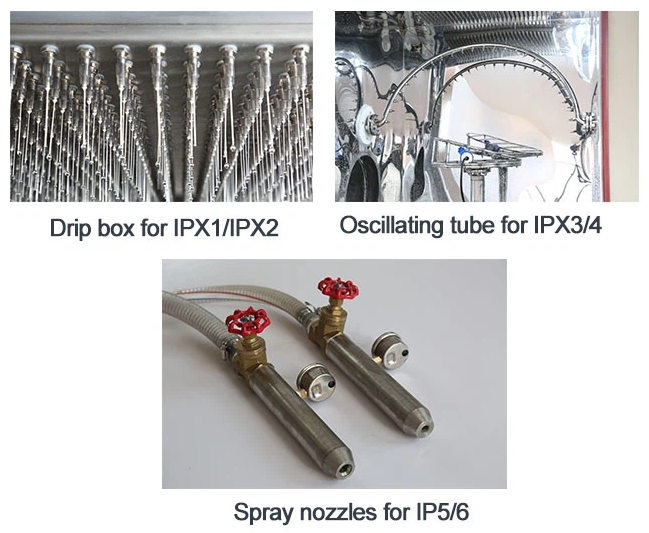
IPX1 and IPX2 use a static drip tray with specific water drop size and fall distance. IPX3 and IPX4 employ an oscillating tube that sprays water at varying angles. IPX5 and IPX6 use a high-pressure nozzle delivering powerful jets from 6.3mm (IPX5) or 2.5mm (IPX6) diameter holes. IPX7 requires immersion in 1 meter of water for 30 minutes. IPX8 demands continuous submersion beyond 1 meter as specified by the manufacturer, often for 24-48 hours or more.
Standard-Specific Nuances
IEC 60529 is the foundational global standard. ISO 20653 provides additional guidance, particularly for automotive applications where IPX9K (high-pressure/steam jet) is common. Military and aerospace specifications may modify parameters like water temperature, pressure, or duration. A waterproof test machine must be configurable to meet these variations - adjustable drip hole spacing, oscillating tube radius, and precise flow meters are critical for compliance across multiple standards.
Advantages of Dynamic Water Spray Testing Systems
Realistic Environmental Replication
Spray testing replicates the erratic, directional nature of real-world water exposure - driving rain, splashing from puddles, or high-pressure washdowns. Unlike static immersion, it exposes products to water impact at angles that challenge seals around seams, display edges, and connector gaskets. This dynamic stress reveals weaknesses that a uniform hydrostatic pressure might miss, such as capillary wicking along cable entries or inadequate adhesive seals at housing joints.
Targeted Weakness Identification
The oscillating tube in advanced systems sweeps across a sample on a rotating turntable, ensuring 100% surface coverage without manual repositioning. This systematic exposure highlights exactly where water ingress initiates - be it a specific screw hole seal, a button membrane edge, or a housing mating line. Technicians can then perform post-test disassembly to pinpoint failure paths, providing actionable feedback for design improvements.
Efficiency and Scalability
Modern waterproof test machines feature programmable controllers with pre-sets for each IPX level. Operators load products, select the protocol, and the system automates spray duration, turntable rotation, and angle adjustments. This consistency eliminates human error and allows multiple samples to run concurrently. Integrated water circulation with filtration and automatic refill reduces water consumption by up to 90% compared to single-use immersion tanks, lowering operational costs and environmental impact.
|
Benefit |
Impact on Testing Process |
|
Programmable Protocols |
Reduces setup time, ensures repeatability |
|
360° Coverage via Turntable |
Eliminates blind spots in testing |
|
Water Recycling System |
Cuts water usage and waste disposal costs |
|
Adjustable Parameters |
Adapts to custom or emerging standards |
|
In-Chamber Observation |
Allows real-time monitoring of test progress |
When Water Immersion Testing Is Most Effective?
Validating Sealed Enclosures for Submersion
Immersion testing is indispensable for products designed for underwater use: dive watches, underwater cameras, marine sensors, and pool lights. It directly verifies that internal cavities remain dry after prolonged submersion. The hydrostatic pressure also tests the crush resistance of transparent windows (like watch crystals) and the integrity of welded housings that might collapse under external pressure.
Assessing Pressure Equalization Mechanisms
Some devices feature pressure relief valves or membranes that allow internal air to escape during depth changes while blocking water entry. Immersion testing at varying depths in a waterproof test machine (simulating depth changes) confirms these mechanisms function correctly without leaking. Spray testing cannot evaluate this critical function for diving equipment or depth-rated scientific instruments.
Simulating Accidental Submersion Events
For portable electronics or industrial tools not rated for permanent immersion, IPX7 testing (1 meter for 30 minutes) simulates accidental drops in water - a common failure scenario. The test ensures a device can be retrieved and dried without internal damage. This is a regulatory requirement for many portable medical devices and handheld industrial equipment sold globally.
Comparing Test Accuracy for Different Product Applications
Correlation with Real-World Failure Modes
Spray testing's accuracy lies in its ability to mimic directional water impact, making it highly predictive for products used outdoors or in wet environments (e.g., streetlights, automotive headlights, outdoor cabinets). Immersion testing accurately predicts failures for products that will be fully submerged, such as waterproof speakers or pool automation controllers. Using the wrong method can yield a passing result that doesn't reflect actual field performance.
Material and Seal Behavior Differences
Elastomeric seals behave differently under dynamic spray versus static pressure. Spray can cause seal flutter or "pumping" action if not properly constrained, leading to fatigue failures over time. Immersion tests seal compression set under constant load. For products with moving parts (e.g., hinges on waterproof cases), spray testing is more relevant. For static O-ring seals on pipe unions or sensor housings, immersion provides direct validation.
Statistical Reliability and Pass/Fail Criteria
Immersion testing offers a clear binary outcome - water inside or dry - after a defined period. Spray testing uses visual rating scales (e.g., 0-10 per IEC 60529) that can be more subjective, requiring experienced inspectors. However, modern waterproof test machines with internal cameras and lighting can document ingress progression, improving repeatability. The choice also affects sample size; immersion often requires fewer units to prove statistical confidence due to its definitive nature.
Choosing the Right Waterproof Method for Compliance Testing
Start with the Target IP Rating
The required IPX digit is the primary determinant. If your specification calls for IPX4 (splash water), a spray test machine is mandatory. For IPX8 (submersion), immersion testing is non-negotiable. Some products need both: a handheld marine radio might require IPX5 (jet) and IPX7 (immersion). Consult the exact wording of the applicable standard (IEC 60529, ISO 20653, or a customer-specific procurement spec) to avoid misinterpreting requirements.
Consider Product Design and Usage Context
Analyze how the product will actually be used. A construction tablet used in rainstorms needs spray validation. A depth gauge for scuba diving requires immersion at pressure. Sometimes, a product's design suggests the more severe test: if it has many openings (buttons, ports, vents), spray testing is more stringent. If it's a hermetically sealed canister, immersion might suffice. When in doubt, testing to the higher standard (often spray) provides greater safety margin.
Factor in Laboratory Capabilities and Cost
A dedicated waterproof test machine represents a larger investment than a simple immersion tank but covers multiple IPX levels. If your product line spans IPX3 to IPX6, a spray chamber is more economical long-term. For a single IPX8 product, a custom immersion tank may be adequate initially. Also, consider throughput: spray chambers with turntables can test multiple samples per cycle, while immersion tanks might require individual fixtures for large or oddly shaped items.
|
Decision Factor |
Leads Toward Spray Testing |
Leads Toward Immersion Testing |
|
Required IP Rating |
IPX1 – IPX6 |
IPX7 – IPX8 |
|
Product Use Case |
Rain, splashes, jets |
Submersion, accidental drops |
|
Design Features |
Moving parts, openings, seams |
Solid housing, O-rings, welded seals |
|
Throughput Need |
High volume, multiple samples |
Low volume, large single items |
|
Budget Constraints |
Higher upfront, lower per-test cost |
Lower upfront, higher per-test cost |
LIB Industry Provides Advanced Spray-Based Waterproof Testing Technology
|
|
IPX1 IPX2 Water Drip Test Apparatus |
|
|
|
|
|
|
|
||
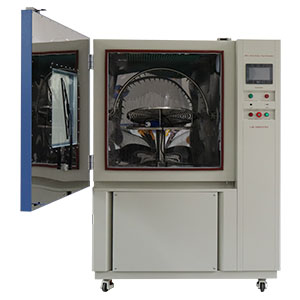
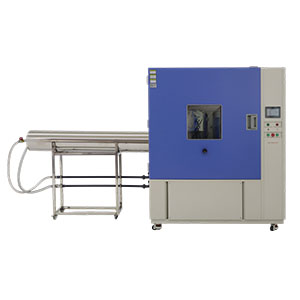
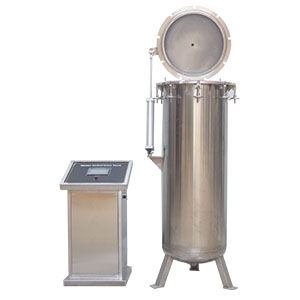
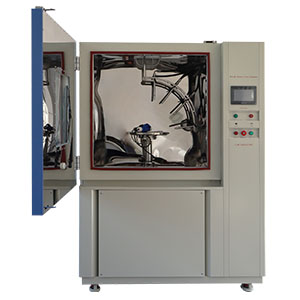

Comprehensive IPX1-6 Coverage in One System
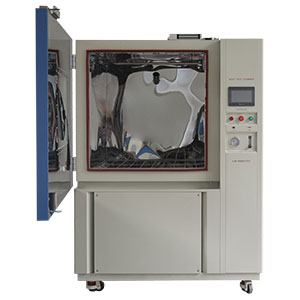
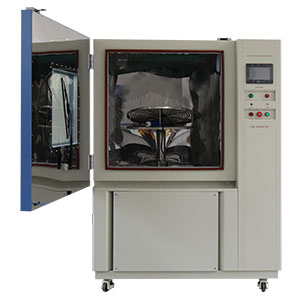
LIB Industry's waterproof test machines, such as the R-800C and R-1200C models, are engineered to perform all spray-based IPX tests from drip to high-pressure jet. The oscillating tube system adjusts from ±45° to ±180°, and the turntable rotates at 1 rpm, ensuring uniform exposure. This eliminates the need for separate drip trays and jet nozzles, consolidating your compliance testing into a single, space-efficient unit with a stainless steel interior and double-layer viewing window.
Precision Water Management and Sustainability
Our systems incorporate a closed-loop water circulation with automatic filtration and purification, reducing water consumption by up to 90% compared to traditional methods. The booster pump maintains precise flow rates via digital meters, while the saturated air barrel (in salt spray chambers) and water level controls ensure consistent test conditions. This design not only cuts operational costs but also aligns with green laboratory initiatives by minimizing wastewater.
Safety and Reliability for Powered Device Testing
Testing live electronics demands rigorous electrical safety. LIB chambers include waterproof outlets with protective covers, sealed cable glands for external connections, and Earth Leakage Circuit Breakers (ELCB). The SUS304 stainless steel construction resists corrosion, and safety devices like over-temperature, water shortage, and phase sequence protection allow unattended operation. These features are critical for testing consumer electronics, automotive ECUs, and medical devices where operator safety and product integrity are paramount.
Customization and Turnkey Support
Beyond standard models, LIB Industry offers customization for special requirements: heated water up to 90°C for thermal cycling, larger drip trays (800x800mm or 1000x1000mm), and integration with laboratory information management systems (LIMS) via Ethernet. Our turnkey solution includes research consultation, design validation, factory acceptance testing, delivery, installation, and operator training. This end-to-end service ensures your team can immediately begin compliant testing with confidence.
Conclusion
The choice between spray testing and immersion hinges on your product's intended IP rating and real-world exposure. Spray test machines excel for IPX1-6 scenarios involving directional water, offering dynamic stress simulation and efficient multi-sample throughput. Immersion remains the sole valid method for IPX7-8 submersion ratings. For most manufacturers, a versatile spray-based system provides the broadest compliance coverage and realistic failure prediction. Partnering with a specialist like LIB Industry ensures you select, configure, and operate the optimal system for your specific waterproofing challenges, backed by engineering support and calibration integrity.
FAQ
Can a waterproof test machine replace immersion testing for IPX7?
No. IPX7 specifically requires immersion in 1 meter of water for 30 minutes. Spray testing cannot replicate hydrostatic pressure. Some products need both methods if they target multiple IP ratings, like IPX6 (jet) and IPX7 (submersion).
How does water circulation in spray systems affect test accuracy?
Recirculation with filtration maintains consistent water purity and temperature, preventing nozzle clogging and ensuring repeatable droplet size and flow rate. This improves accuracy versus single-use water, though standards require periodic solution changes to avoid contaminant buildup.
What safety features are essential when testing powered electronics?
Look for waterproof internal outlets with residual current devices (RCD/ELCB), sealed cable entries, interlocked doors, and dry-run protection for pumps. The chamber interior should be fully isolated from the operator, and all electrical components must meet the same or higher IP rating as the test.
Partner with a Leading Waterproof Testing Equipment Manufacturer
LIB Industry manufactures and supplies advanced waterproof test machines covering IPX1-6 with turnkey installation, training, and global support. Our systems combine precision, safety, and sustainability for electronics, automotive, and industrial product testing. Contact our engineering team at ellen@lib-industry.com to discuss your application and receive a customized quotation.