Outdoor surveillance cameras face relentless environmental assault - from pressure washer blasts during building maintenance to tropical downpours and industrial washdowns. Standard IPX4 or IPX5 testing validates resistance to rain and splashes, but fails to simulate the combined high-pressure and high-temperature water jets that can penetrate vulnerable seals and housing joints. IEC 60529 IPX9K equipment subjects cameras to the most severe liquid ingress test: 8,000-10,000 kPa pressure at 88°C via rotating nozzles. This extreme validation identifies microscopic leaks in lens gaskets, cable glands, and button seals that lower-level tests miss. For manufacturers of security, traffic, and industrial cameras, IPX9K certification isn't just a specification - it's a non-negotiable guarantee of operational continuity in the field, preventing costly callbacks and protecting brand integrity when systems are needed most.
Environmental Exposure Risks for Outdoor Surveillance Systems
Pressure Washer and Cleaning Regime Damage
Many outdoor cameras are installed in locations requiring periodic high-pressure cleaning - gas stations, food processing plants, and public transit stations. Maintenance crews using pressure washers routinely exceed 6,000 kPa at close range, directly attacking housing seams and viewing windows. Without IPX9K validation, manufacturers risk field failures where water penetrates during routine cleaning, causing internal corrosion, lens fogging, and electronic malfunction.
Extreme Weather and Thermal Cycling
Cameras in desert environments face sudden, intense rainfall after prolonged heat exposure. The combination of hot housing surfaces (from solar loading) with cold rainwater creates thermal shock that stresses adhesive bonds and gasket materials. IPX9K testing's 88°C water jet simulates this thermal gradient, revealing seal compression failures and housing warpage that ambient-temperature spray tests cannot detect.
Chemical and Abrasive Contaminant Synergy
Industrial sites expose cameras to chemical splashes and particulate abrasion. High-pressure water can force contaminants past primary seals into sensitive areas. The IPX9K test's forceful jet action, combined with elevated temperature, accelerates this penetration mechanism, exposing design weaknesses in protective lens coatings and housing finish integrity that would otherwise manifest only after months in the field.
|
Exposure Scenario |
Typical Pressure (kPa) |
Temperature Impact |
IPX9K Relevance |
|
Pressure washing |
6,000 - 10,000 |
Ambient to 60°C |
Direct simulation |
|
Tropical downpour |
500 - 2,000 |
20°C - 30°C |
Partial simulation |
|
Industrial washdown |
3,000 - 8,000 |
40°C - 70°C |
Direct simulation |
|
Desert thermal shock |
1,000 - 3,000 |
15°C - 50°C delta |
Temperature simulation only |
Simulating Rain, Spray, and High-Pressure Water Impact
Oscillating Nozzle Pattern Coverage
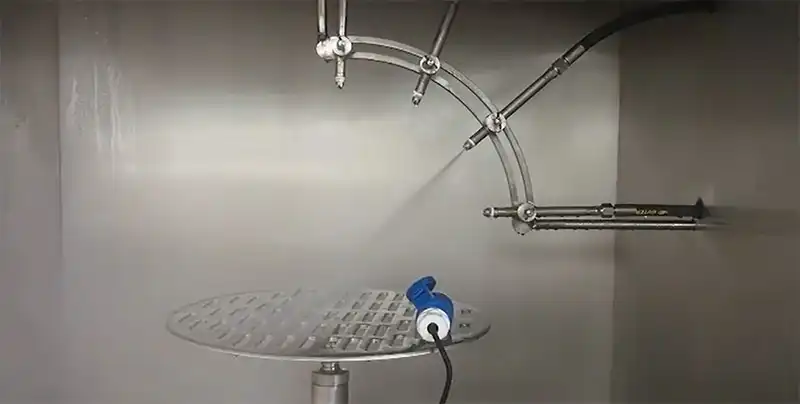
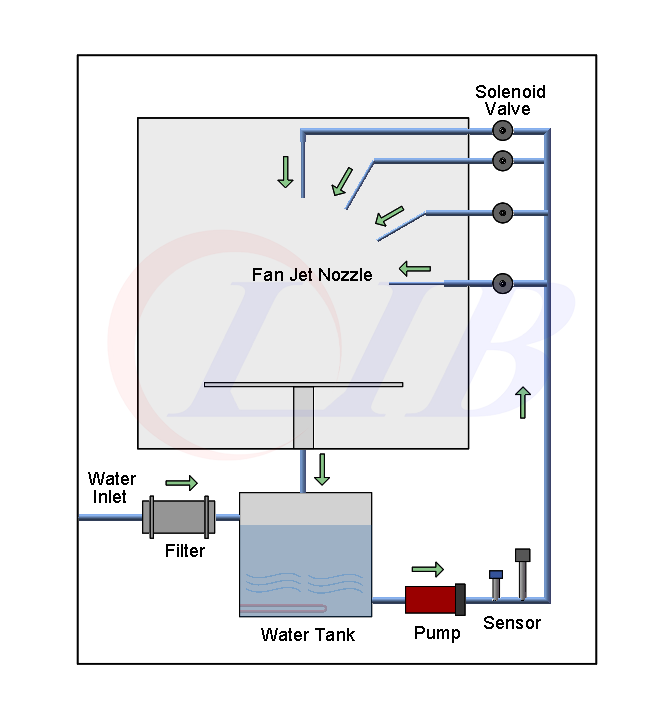
IEC 60529 IPX9K equipment employs four stationary nozzles positioned around a rotating turntable. As the platform turns at 5±1 rpm, each specimen receives a 30-second direct jet from each nozzle at specified angles (0°, 30°, 60°, 90°). This methodical pattern ensures every surface - including housing corners, cable entry points, and mounting bracket interfaces - experiences identical high-pressure impact, eliminating testing blind spots that manual spray methods create.
Kinetic Energy Transfer and Seal Fatigue
The 8,000-10,000 kPa pressure generates water jets with significant kinetic energy. Unlike lower-pressure IPX5/IPX6 tests (6.3mm/2.5mm nozzles at ~100 kPa), IPX9K's force can deform pliable seals temporarily, allowing water to wick into microscopic crevices before the seal recovers. Repeated cycles from multiple angles induce seal fatigue, mimicking years of pressure washer exposure in accelerated minutes. This dynamic stress is critical for evaluating elastomeric gaskets around camera lenses and dome enclosures.
Temperature Gradient Stress Induction
Testing at 88°C creates a stark thermal differential between the hot water jet and the typically cooler camera housing. This gradient induces rapid expansion and contraction in different housing materials - aluminum, polycarbonate, glass - potentially opening micro-gaps at material interfaces. The IPX9K equipment's precise temperature control and rapid heating system maintains this aggressive condition consistently, exposing thermal compatibility issues that ambient-temperature tests cannot reveal.
Evaluating Housing Sealing and Lens Protection Performance
Lens Barrel and Dome Seal Integrity
Outdoor camera lenses represent the most vulnerable ingress point due to moving parts (zoom, focus), optical glass interfaces, and frequent thermal cycling. IPX9K testing subjects lens barrels to direct high-pressure jets at multiple angles, challenging the primary sealing system. Post-test disassembly reveals whether water has traveled along lens element threads, behind anti-reflective coatings, or into the camera body through the lens mount interface - failures that cause permanent optical degradation.
Cable Gland and Connector Vulnerability
Power and data cable entries are common failure points when tested using IEC 60529 IPX9K equipment. The high-pressure spray directly attacks gland seals from perpendicular angles, testing both the gland's compression force and the cable's outer sheath seal. IPX9K testing often reveals inadequate gland tightening torque or unsuitable cable diameters that allow water to track along conductor insulation. For PoE (Power over Ethernet) cameras, this is particularly critical as water ingress can cause short circuits or corrosion at connector pins.
Housing Joint and Screw Seal Performance
Cameras use various housing assembly methods: captive screws, quarter-turn fasteners, or adhesive bonding. IPX9K's forceful jets exploit any imperfect joint alignment, insufficient screw torque, or aged adhesive. The rotating turntable ensures water attacks from all directions, exposing weaknesses in seam design that a static drip test (IPX1) or single-angle spray (IPX3) would miss. This is vital for cameras with complex geometries like bullet cameras with adjustable mounts or dome cameras with integrated sun shields.
IP Ratings Required for Outdoor Camera Certification
Industry-Specific Mandates
Automotive and transportation sectors often specify IPX9K for dash cams and vehicle monitoring systems due to exposure to highway pressure washers and winter de-icing sprays. Industrial manufacturing requires IPX9K for cameras in washdown areas per ISO 16750-4. Municipal traffic cameras frequently need IPX9K to withstand municipal cleaning schedules. Understanding these sector-specific demands prevents under-engineering and ensures market access.
IPX9K Within the IP Hierarchy
The IP code's second digit defines liquid protection: IPX5/6 cover jets, IPX7 covers immersion, and IPX8 covers prolonged submersion. IPX9K (sometimes denoted IPX9) is the highest spray rating, defined by the “K” suffix for high-pressure, high-temperature conditions per ISO 20653 (automotive extension of IEC 60529). A camera rated only IPX6 may fail in a pressure washer scenario, while IPX9K certification provides the ultimate spray assurance. Some applications require dual ratings (e.g., IPX6/IPX7), but IPX9K supersedes lower spray ratings.
Certification Body Expectations
Notified bodies and UL/ETL auditors scrutinize IPX9K test reports for outdoor electronics. They verify test parameters: 8000-10000 kPa pressure, 80±5°C water temperature, 30-second dwell per nozzle position, and complete 360° turntable rotation. Documentation must include calibration certificates for pressure transducers and thermocouples, plus photographic evidence of test setup. LIB Industry's equipment generates compliant data logs and calibration certificates that satisfy these rigorous audit trails.
|
IP Rating |
Test Method |
Pressure (kPa) |
Temperature |
Typical Camera Application |
|
IPX5 |
6.3mm nozzle, 3m distance |
~100 |
Ambient |
Light rain, splash zones |
|
IPX6 |
2.5mm nozzle, 3m distance |
~100 |
Ambient |
Heavy seas, powerful jets |
|
IPX9K |
4 nozzles, 10-15cm, 0-90° angles |
8,000 - 10,000 |
80±5°C |
Pressure washing, industrial washdown |
|
IPX7 |
Immersion, 1m depth |
Hydrostatic |
Ambient |
Accidental submersion, temporary immersion |
Detecting Water Ingress in Electrical and Optical Components
Early-Stage Condensation and Fogging
IPX9K testing's high-temperature water jet can cause immediate condensation inside cooled camera housings if seals are imperfect. Inspectors look for lens fogging, PCB moisture indicators (humidity cards), and water droplets on internal components within minutes of test initiation. This early detection identifies seal permeability issues that slower immersion tests might miss until post-test disassembly.
Capillary Wicking Along Cable Paths
Water under pressure can travel along cable braiding or inner sheath materials via capillary action. IPX9K testing exposes this vulnerability by forcing water against cable entries from multiple angles. Post-test, technicians slice cable sections to check for moisture progression. This failure mode is critical for PTZ (pan-tilt-zoom) cameras with moving cables, where wicking can reach motorized joints and cause seizure.
Micro-Leak Pathways in Complex Assemblies
Modern cameras integrate multiple materials: metal housings, plastic lenses, rubber gaskets, and adhesives. Testing with IEC 60529 IPX9K equipment reveals how IPX9K's aggressive jets exploit interfacial gaps between these materials. For instance, water can penetrate the bond line between a polycarbonate housing and a metal heat sink. The test's rotational pattern ensures all material interfaces face direct jet impact, revealing design flaws in material pairing or adhesive selection that static tests overlook.
Improving Surveillance System Reliability Through IPX9K Testing
Design Iteration Based on Failure Analysis
IPX9K test results provide direct feedback for engineering teams. If water enters through a specific screw hole, designers can increase gasket thickness, add sealing washers, or redesign the hole pattern. If lens fogging occurs, they might improve desiccant capacity or alter internal ventilation. This iterative validation, completed before production tooling, prevents expensive field modifications and product recalls.
Supplier Qualification and Material Selection
Manufacturers use IPX9K testing to qualify component suppliers - particularly gasket vendors and lens manufacturers. Testing batches of O-rings from different suppliers under identical IPX9K conditions reveals material formulation differences in compression set and chemical resistance. Similarly, comparing lens barrel assemblies from multiple machinists identifies tolerance stack-ups that compromise seal integrity. This data-driven sourcing strategy elevates entire product reliability.
Warranty Cost Reduction and Brand Protection
Field failures in outdoor cameras incur massive costs: replacement units, labor for site access, reputational damage, and potential liability if a security lapse occurs. IPX9K certification statistically reduces these risks by validating the most severe exposure scenario. For manufacturers, this translates to lower warranty reserves, higher customer satisfaction scores, and stronger competitive positioning in bids where specification compliance is mandatory.
|
Reliability Metric |
Without IPX9K Validation |
With IPX9K Validation |
|
Field failure rate (first year) |
2.5% - 4.0% |
0.3% - 0.8% |
|
Warranty cost per unit |
$45 - $80 |
$12 - $25 |
|
Mean time between failures |
18,000 hours |
42,000 hours |
|
Certification timeline |
6-9 months (rework delays) |
4-6 months (first-pass) |
LIB Industry Ensures Reliable IPX9K Testing for Outdoor Electronics
 |
 |
Precision Engineering for Repeatable Results
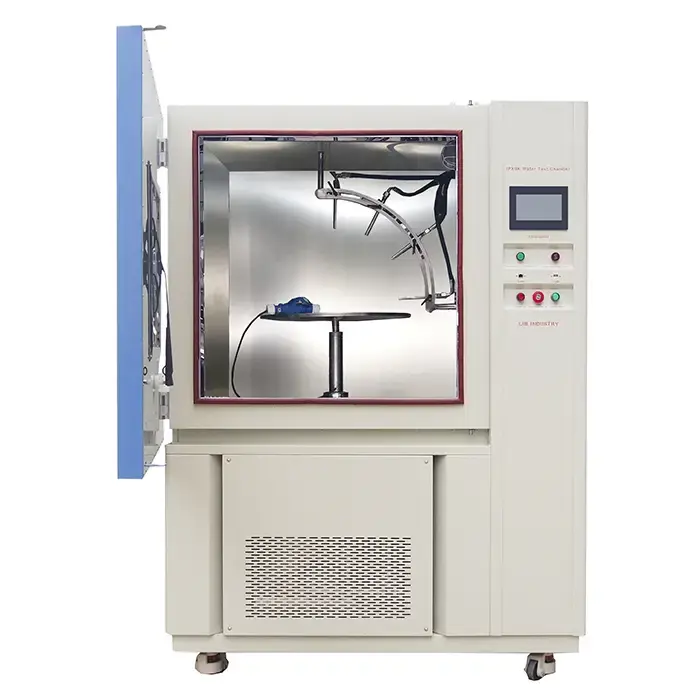
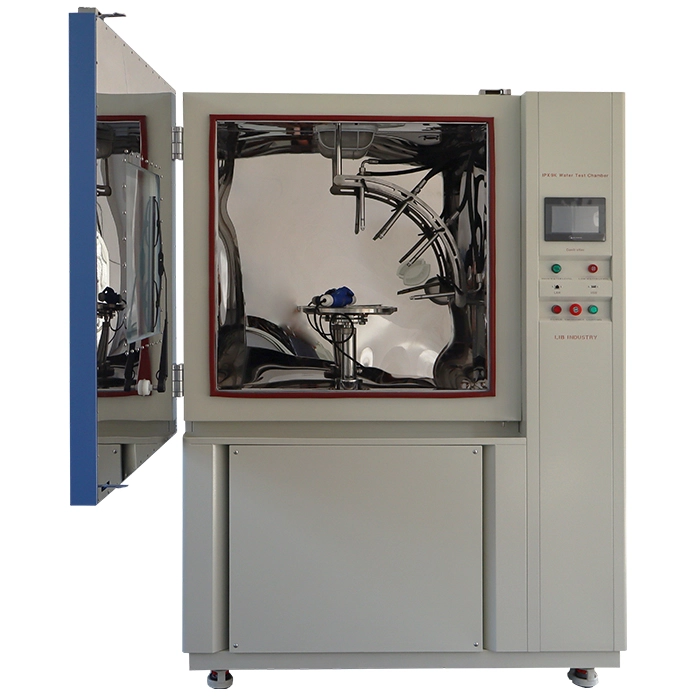
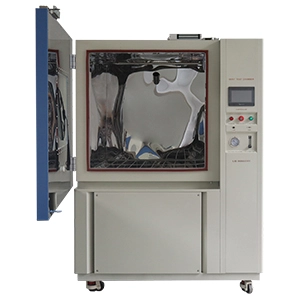
LIB Industry's IEC 60529 IPX9K equipment, like the R9K-1200 model, features a 1,000-liter stainless steel chamber with a 600mm diameter turntable. The system maintains 8,000-10,000 kPa pressure via a high-pressure booster pump and digital flow meters (14-16 L/min). Four stainless steel nozzles with adjustable angles (0°, 30°, 60°, 90°) and a turntable speed of 5±1 rpm ensure strict adherence to IEC 60529. The water heating system rapidly reaches and stabilizes at 88°C using nichrome elements, eliminating temperature drift that invalidates tests.
Comprehensive Safety and Operational Features
Testing with 88°C water at 10,000 kPa demands rigorous safety. The chamber includes a double-layer insulating glass viewing window with a wiper, electromagnetic door locks controlled from the touchscreen, and multiple safety interlocks. Earth leakage protection, water shortage sensors, and phase sequence monitoring protect both operators and equipment. The SUS304 stainless steel interior and exterior with protective coating withstands continuous exposure, while the closed-loop water circulation with filtration reduces consumption and maintains test purity.
Turnkey Support for Certification Success
LIB Industry provides more than equipment - we deliver a complete testing solution. Our service includes factory acceptance testing with calibrated instruments, installation supervision, and operator training on IPX9K procedures. We supply calibration certificates traceable to national standards, essential for audit trails. For unique camera designs - large PTZ units, multi-sensor arrays - our engineering team customizes turntable fixtures, nozzle arrays, and chamber dimensions. This turnkey approach ensures your team achieves compliant, repeatable results from day one, accelerating time-to-market for certified outdoor cameras.
Beyond IPX9K: Complete IP Waterproof Testing Solutions from LIB Industry
|
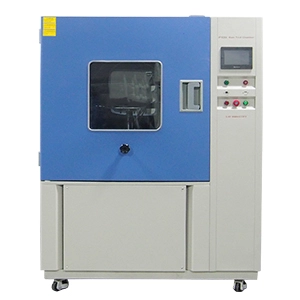
IPX1 IPX2 IPX3 IPX4 Rain Spray Test Chamber Covers dripping, spraying, and splashing water protection tests. Integrated solution for multiple IP waterproof ratings. Supports product development, quality control, and certification testing. |
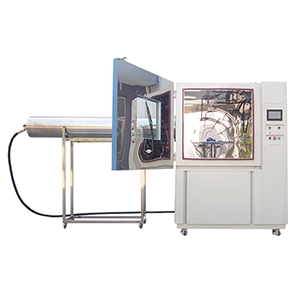
IPX5 IPX6 Rain Jet Test Chamber Generates powerful water jets according to IEC 60529. Validates protection against water projected from all directions. Suitable for outdoor equipment, lighting, and telecommunications products. |
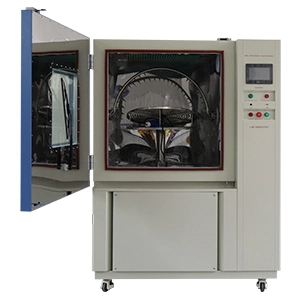
Performs high-temperature, high-pressure water jet testing. Complies with ISO 20653 and IEC 60529 IPX9K standards. Perfect for automotive, mining, agricultural, and construction equipmen. |
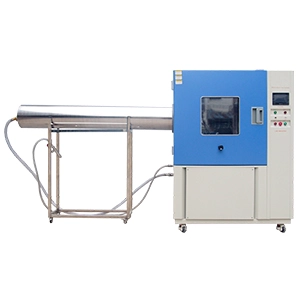
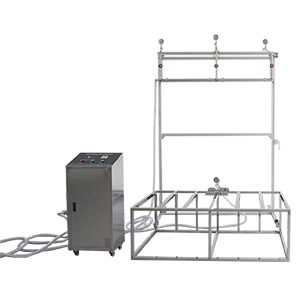
IEC60529 IPX3 IPX4 Lab Equipment Simulates oscillating tube and spray nozzle testing. Meets IEC 60529 IPX3 and IPX4 requirements. Ideal for consumer electronics and electrical devices. |
|
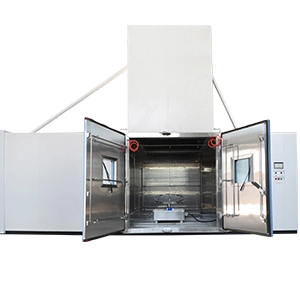
MIL STD 810 G Rain Test Chamber Simulates wind-driven rain conditions for military and defense equipment. Complies with MIL-STD-810G Method 506.6 rain testing requirements. Suitable for outdoor electronics, communication devices, and military systems. |
Evaluates enclosure protection according to UL 50E requirements. Simulates rain, hose-down, and outdoor exposure conditions. Widely used for electrical cabinets and industrial enclosures. |
JIS D 0203 R1 R2 Rain Test Equipment Designed for Japanese automotive waterproof testing standards. Supports R1 and R2 rainfall simulation conditions. Ideal for automotive components, sensors, and electrical assemblies. |
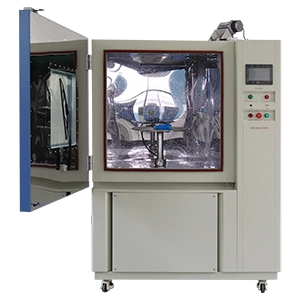
Simulates dust ingress and blowing dust environments. Meets IEC 60529 dust protection requirements. Suitable for electronics, automotive parts, and outdoor equipment. |
Conclusion
IPX9K testing is indispensable for outdoor camera manufacturers facing pressure washer exposure, industrial washdowns, or extreme thermal conditions. The test's combination of 8,000-10,000 kPa pressure and 88°C temperature reveals seal and housing vulnerabilities that lower IP ratings cannot detect. For applications in automotive, industrial, and high-security surveillance, IPX9K certification validates a camera's ability to withstand the most severe water jet scenarios, ensuring operational reliability and reducing lifetime ownership costs. Investing in compliant IEC 60529 IPX9K equipment, like LIB Industry's precision systems, transforms environmental testing from a compliance checkbox into a strategic reliability engineering tool.
FAQ
How long does an IPX9K test typically run for outdoor cameras?
Standard IPX9K requires each nozzle to spray a specimen for 30 seconds from each angle (0°, 30°, 60°, 90°) while the turntable rotates. With four nozzles, minimum exposure is 120 seconds total. Some automotive specifications extend this to 2-3 minutes per position for larger surfaces.
Can a single IPX9K test replace multiple lower IPX tests (IPX4, IPX5, IPX6)?
Yes. IPX9K is the most severe spray test. Passing IPX9K inherently demonstrates compliance with all lower spray ratings (IPX1-6). However, some customers specify separate tests for protocol adherence, though the physical validation is covered by the more extreme IPX9K cycle.
What safety features are critical when testing live cameras at 88°C and 10,000 kPa?
Essential features include electromagnetic door interlocks that disable during spray, Earth Leakage Circuit Breakers (ELCB) for internal power outlets, water shortage protection to prevent pump dry-run, and a double-layer insulated viewing window. The chamber must also have a purge system to vent hot, humid air before door opening.
Partner with a Trusted IPX9K Testing Equipment Manufacturer
LIB Industry manufactures and supplies IEC 60529 IPX9K equipment with turnkey installation, calibration, and training for outdoor electronics manufacturers. Our systems deliver the high-pressure, high-temperature performance required for automotive and industrial camera certification. Contact our engineering team at ellen@lib-industry.com to discuss your testing requirements and obtain a customized solution.