Accelerated Weathering Tester for Automotive Exterior Parts
Automotive exterior components face relentless environmental assault from ultraviolet radiation, temperature extremes, moisture cycles, and chemical pollutants throughout their operational lifespan. An accelerated weathering tester compresses decades of natural exposure into controlled laboratory timeframes, enabling automotive manufacturers to validate paint systems, polymer bumpers, headlight lenses, and rubber seals before production commitment. This sophisticated testing equipment replicates the full solar spectrum using xenon arc technology while precisely controlling temperature, humidity, and spray cycles that mirror real-world climate conditions. By identifying potential failures - color fading, gloss reduction, surface cracking, mechanical degradation - during development phases, manufacturers protect brand reputation, reduce warranty costs, and deliver vehicles that maintain aesthetic appeal and structural integrity across diverse geographic markets.
Environmental Stress Factors Affecting Exterior Automotive Parts
Photodegradation from Solar Ultraviolet Radiation
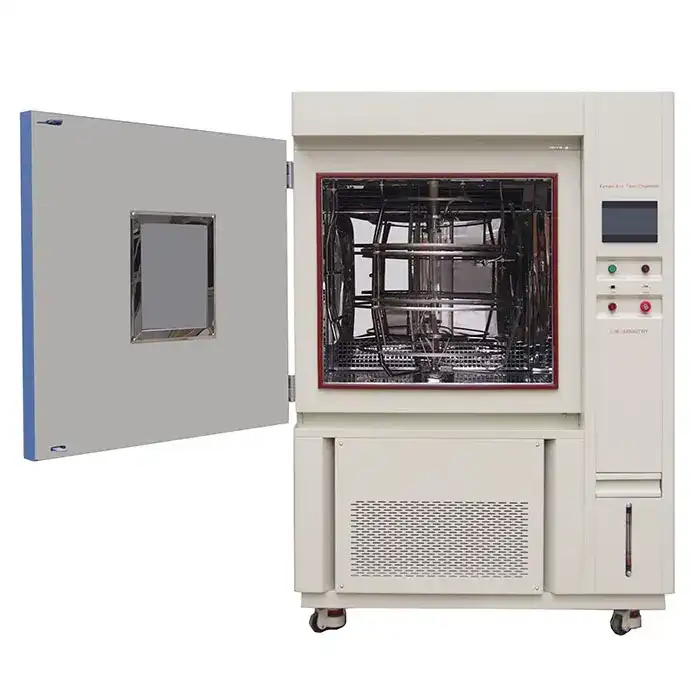
Solar UV radiation, particularly wavelengths between 280-400nm, initiates photochemical reactions that break polymer chains in plastics, degrade pigments in paint systems, and embrittle rubber compounds. These photolytic processes accumulate continuously whenever vehicles remain outdoors, causing irreversible material damage. An accelerated weathering tester equipped with a 4500W water-cooled xenon arc lamp reproduces this destructive UV spectrum with spectral fidelity, enabling researchers to observe years of photodegradation within weeks of controlled exposure.
Thermal Cycling and Heat-Induced Material Stress
Automotive surfaces experience dramatic temperature fluctuations - from scorching dashboard temperatures exceeding 90°C in summer sunlight to sub-zero winter conditions. These thermal cycles generate expansion-contraction stresses within multi-layer coating systems and composite components. Black panel temperature control ranging from 35-85°C with ±2°C accuracy simulates these surface temperature extremes, revealing how repeated thermal stress causes coating delamination, interfacial adhesion failure, and dimensional instability in plastic assemblies.
Moisture Attack Through Humidity and Precipitation
Water intrusion accelerates weathering through multiple mechanisms: hydrolytic degradation of polymer backbones, corrosion at coating-substrate interfaces, and freeze-thaw cycling that propagates microcracks. Humidity control spanning 30-98% RH combined with programmable water spray cycles replicates morning dew condensation, rainfall events, and sustained high-humidity exposure. This moisture simulation proves critical for evaluating paint blister resistance, elastomer swelling behavior, and adhesive bond durability in door seals and window gaskets.
Table 1: Environmental Stress Factors and Their Impact on Automotive Materials
|
Stress Factor |
Wavelength/Range |
Primary Degradation Mechanism |
Affected Components |
Typical Failure Mode |
|
UV-B Radiation |
280-315nm |
Direct polymer chain scission |
Bumpers, mirror housings, trim |
Surface chalking, embrittlement |
|
UV-A Radiation |
315-400nm |
Photooxidation via free radicals |
Painted surfaces, headlights |
Color fading, gloss loss |
|
Visible Light |
400-700nm |
Pigment photochemistry |
Metallic/pearlescent paints |
Color shift, loss of brilliance |
|
Thermal Cycling |
-40°C to +90°C |
Differential expansion stress |
Multi-layer coatings |
Cracking, delamination |
|
Humidity |
30-98% RH |
Hydrolysis, corrosion |
Clearcoats, adhesives |
Blistering, adhesion loss |
Simulating Long-Term Sunlight and Climate Exposure
Full-Spectrum Solar Radiation Replication
Natural sunlight contains ultraviolet, visible, and infrared wavelengths, each contributing distinct degradation effects. UV initiates chemical breakdown, visible light affects colorants, while infrared provides thermal energy driving reaction kinetics. The xenon arc lamp technology in advanced accelerated weathering tester produces continuous spectral output across 280-800nm, closely matching terrestrial solar radiation after atmospheric filtration. Interchangeable filter systems - daylight, window glass, and UV-extended configurations - customize spectral distribution for specific testing requirements and geographic conditions.
Geographic Climate Zone Simulation
Vehicles marketed globally encounter vastly different weathering conditions: intense tropical UV in equatorial regions, high-altitude solar radiation in mountainous areas, marine salt exposure in coastal zones, and industrial pollutants in urban environments. Testing protocols incorporate these regional variations by adjusting irradiance levels from 35-150 W/m² and programming temperature-humidity profiles matching specific climates. This geographic customization ensures exterior components maintain performance whether deployed in Arizona deserts or Scandinavian winters.
Acceleration Factors and Real-Time Correlation
Controlled laboratory exposure accelerates natural weathering by eliminating nighttime periods, maximizing UV intensity, and maintaining optimal degradation temperatures. Typical acceleration factors range from 5:1 to 12:1 depending on material sensitivity and exposure conditions. Correlation studies comparing accelerated weathering tester results with outdoor exposure in Florida, Arizona, or Australia establish material-specific acceleration factors, enabling accurate lifetime predictions from laboratory data. These correlations prove essential when validating 10-year exterior durability warranties.
Evaluating Paint, Plastic, and Rubber Weather Resistance
Automotive Coating System Performance Assessment
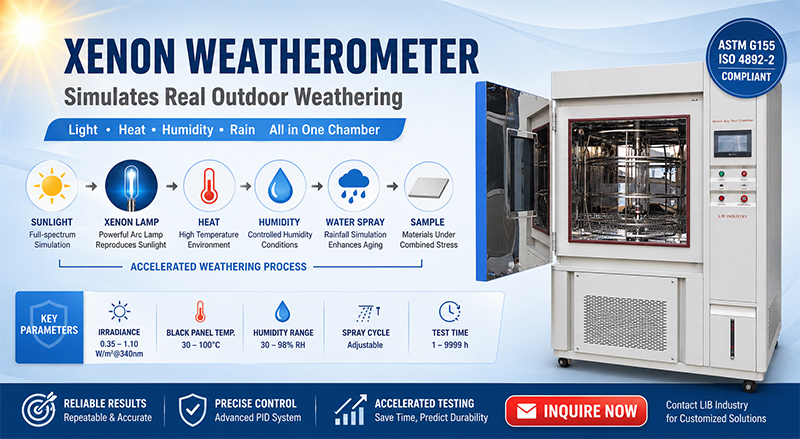
Modern automotive paint comprises multiple layers: electrocoat primer for corrosion protection, primer-surfacer for adhesion and smoothness, basecoat for color, and clearcoat providing gloss and UV protection. Each layer responds differently to weathering stress. Testing protocols expose complete coating systems on metal substrates, then measure gloss retention, color change (ΔE values), and crosshatch adhesion. The rotating specimen holder accommodating 42 samples simultaneously enables parallel testing of multiple paint formulations, accelerating development cycles.
Thermoplastic and Thermoset Polymer Degradation
Exterior plastics - polypropylene bumpers, polycarbonate headlight lenses, ABS grilles, nylon mirror housings - require weathering resistance while maintaining impact strength and dimensional stability. UV exposure causes surface chalking where degraded polymer particles accumulate, reducing gloss and creating rough textures. Mechanical property testing following accelerated aging quantifies embrittlement through tensile strength, elongation at break, and impact resistance measurements. Material specifications typically require 80% property retention after specified exposure durations.
Elastomer Seal and Weatherstrip Validation
Rubber components including door seals, window weatherstrips, and sunroof gaskets must maintain flexibility, compression set resistance, and sealing effectiveness despite ozone attack, UV degradation, and thermal aging. Accelerated weathering tester exposure combined with mechanical cycling simulates simultaneous environmental and functional stress. Post-exposure hardness testing using Shore A durometers, compression set measurements, and water leak testing validate long-term sealing performance critical for cabin quietness and water ingress prevention.
Table 2: Material-Specific Weathering Test Parameters and Acceptance Criteria
|
Material Category |
Key Test Parameters |
Measurement Methods |
Typical Exposure Duration |
Acceptance Criteria |
|
Clearcoat Systems |
Gloss retention, crack resistance |
60° gloss meter, visual inspection |
1000-2000 hours |
>80% gloss retention, no cracking |
|
Basecoat Colors |
Color stability, fading |
Spectrophotometer (ΔE measurement) |
1000-1500 hours |
ΔE < 2.0 units |
|
Polymer Bumpers |
Surface appearance, impact strength |
Visual grading, Izod impact test |
1500-2500 hours |
No chalking, >70% impact retention |
|
Headlight Lenses |
Transmission, haze |
UV-Vis spectroscopy, hazemeter |
2000-3000 hours |
>90% transmission, <5% haze |
|
Rubber Seals |
Hardness change, compression set |
Shore A durometer, ASTM D395 |
1000-1500 hours |
<10 points hardness increase |
Accelerated Aging Standards in Automotive Material Testing
SAE International Test Procedures for Automotive Materials
The Society of Automotive Engineers publishes comprehensive standards governing exterior component weathering. SAE J2527 specifies performance-based requirements for automotive exterior graphics, demanding specific xenon arc exposure conditions and pass/fail criteria. SAE J1960 addresses accelerated exposure of automotive interior trim using controlled irradiance at 340nm, while SAE J2412 covers accelerated weathering of automotive coatings. These standards mandate precise irradiance control, temperature monitoring, and humidity regulation - specifications met by advanced accelerated weathering testers featuring closed-loop control systems.
ISO 4892 Plastics Weathering Methods
International Organization for Standardization document ISO 4892-2 establishes methods for exposing plastics to xenon arc lamp sources. This standard specifies spectral power distribution requirements, calibration procedures for irradiance monitoring, and black panel/black standard temperature measurement protocols. Compliance requires radiometric equipment measuring UV intensity at specific wavelengths (typically 340nm or 420nm) with ±5% tolerance, ensuring test reproducibility across global laboratories. The built-in intelligent PID control system in modern chambers maintains these stringent parameters automatically.
ASTM G155 Standard Practice for Xenon Arc Exposure
American Society for Testing and Materials standard G155 provides detailed operating procedures for xenon arc light apparatus used in non-metallic material exposure. This specification addresses critical variables including light source specifications, specimen mounting requirements, temperature measurement locations, and spray cycle programming. ASTM G155 emphasizes the importance of Solar Eye technology that continuously monitors irradiance and compensates for lamp aging - functionality integrated into sophisticated weathering chambers maintaining measurement accuracy throughout the xenon lamp's 1600-hour operational lifespan.
Manufacturer-Specific Internal Test Standards
Leading automotive manufacturers develop proprietary testing protocols more stringent than industry standards, reflecting brand-specific quality expectations and warranty commitments. BMW GS 97034, Ford FLTM BO 116-01, GM GMW 3414, and VW PV 3930 specify unique exposure cycles, irradiance levels, and performance thresholds. An accelerated weathering tester with programmable cycling capabilities and multi-language interface flexibility accommodates these diverse requirements, enabling tier-one suppliers to validate components against multiple OEM specifications using a single testing platform.
Detecting Fading, Cracking, and Surface Performance Loss
Quantitative Color Change Measurement Techniques
Color stability represents a primary aesthetic concern for automotive exteriors, as visible fading diminishes perceived quality and resale value. Spectrophotometric analysis measures color coordinates in CIE Lab* color space, calculating total color difference (ΔE) between unexposed controls and weathered specimens. Industry specifications typically limit ΔE to 2.0 units for critical visible surfaces. The uniform sample exposure conditions provided by the rotating specimen holder ensure all test panels receive equivalent radiant exposure, eliminating position-dependent variability in color change measurements.
Gloss Retention and Surface Texture Degradation
Surface gloss quantifies the mirror-like reflective quality of automotive finishes, directly influencing visual appeal. Glossmeters measuring specular reflectance at 20°, 60°, or 85° angles track how weathering reduces surface smoothness through microcracking, chalking, or erosion. Premium automotive coatings maintain >80% initial gloss after 2000 hours of accelerated exposure. Parallel measurements of surface roughness using profilometry reveal texture changes invisible to visual inspection but perceptible through tactile assessment - critical for components like door handles requiring smooth touch feedback.
Mechanical Integrity and Structural Failure Detection
Surface appearance degradation often precedes mechanical failure, but structural evaluation remains essential for safety-critical components. Post-weathering mechanical testing includes tensile strength, flexural modulus, impact resistance, and elongation at break measurements. Comparing aged versus control specimens quantifies property retention percentages. The observation window with interior lighting in advanced weathering chambers enables real-time crack monitoring during exposure, capturing the exact moment when critical damage initiates - valuable data for establishing safe exposure limits and warranty durations.
Table 3: Performance Degradation Detection Methods and Industry Thresholds
|
Performance Parameter |
Measurement Technique |
Testing Frequency |
Critical Threshold |
Business Impact |
|
Color Change (ΔE) |
Spectrophotometry (CIE Lab*) |
Every 250 hours |
ΔE < 2.0 |
Customer complaints, warranty claims |
|
Gloss Retention |
60° specular gloss meter |
Every 250 hours |
>80% retention |
Perceived quality degradation |
|
Surface Cracking |
Visual inspection (ASTM D4587) |
Every 500 hours |
No visible cracks |
Coating system failure |
|
Tensile Strength |
ASTM D638 mechanical test |
Post-exposure |
>70% retention |
Structural component failure |
|
Adhesion Loss |
Cross-hatch tape test (ASTM D3359) |
Post-exposure |
4B minimum rating |
Coating delamination |
Enhancing Automotive Component Reliability Through Weathering Tests
Material Selection and Formulation Optimization
Developing weather-resistant automotive materials requires evaluating numerous candidates: different polymer grades, UV stabilizer packages, pigment systems, and surface treatments. Simultaneous testing of multiple formulations in an accelerated weathering tester expedites material selection by generating comparative performance data within compressed timeframes. This parallel evaluation approach identifies optimal formulations balancing cost, processability, and durability - enabling informed decisions before committing to expensive tooling and production ramp-up.
Supplier Qualification and Quality Assurance Programs
Automotive manufacturers rely on global supplier networks providing components, raw materials, and sub-assemblies. Consistent quality across this supply chain requires rigorous validation protocols. Accelerated weathering testing serves as a critical gate in supplier qualification processes, verifying that delivered materials meet performance specifications. Periodic surveillance testing of production batches detects formulation drift or process variations before defective components enter vehicle assembly, protecting quality and avoiding costly field failures.
Warranty Cost Reduction and Field Failure Prevention
Exterior component degradation generates substantial warranty expenses through paint refinishing, part replacement, and customer goodwill gestures. Weathering chamber testing during development phases identifies vulnerabilities when corrections cost thousands rather than millions. Correlation between accelerated test results and early warranty claims enables predictive modeling, flagging potential issues before widespread market exposure. This proactive approach transforms weathering testing from compliance verification into strategic business tool reducing total cost of quality.
|
Xenon Test Chamber (ASTM G155) LIB Xenon Test Chamber simulates full-spectrum sunlight, temperature, humidity, and rain for accelerated weathering testing of coatings, plastics, and composites. 4500W water-cooled xenon lamp ASTM G155 / ISO 4892-2 compliant 35–98% RH humidity control Rotating specimen rack for 42 samples 👉 Ideal for long-term outdoor durability simulatio |
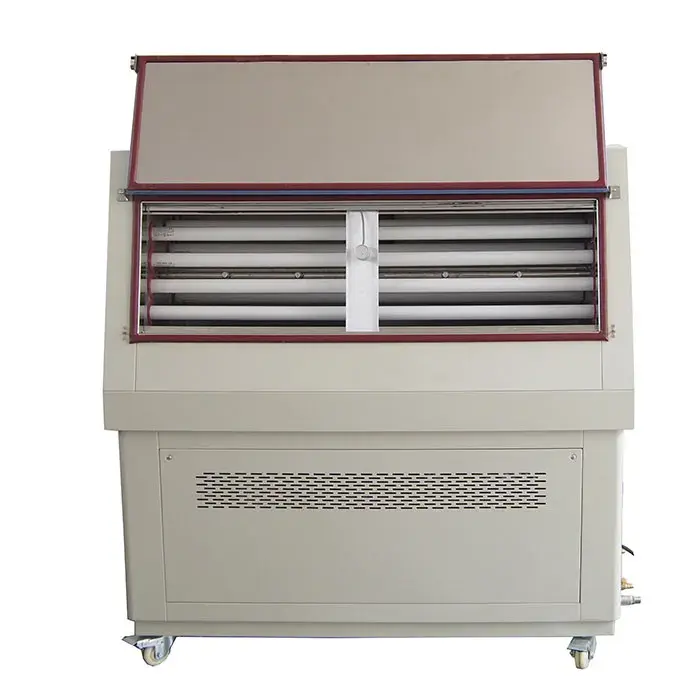
UV Weathering Test Chamber (ASTM G154)Designed for rapid UV aging of materials using fluorescent UV lamps to simulate sunlight degradation. UVA-340 / UVB-313 lamps ASTM G154 / ISO 4892-3 compliant Fast material screening 👉 Best for quick UV resistance evaluation |
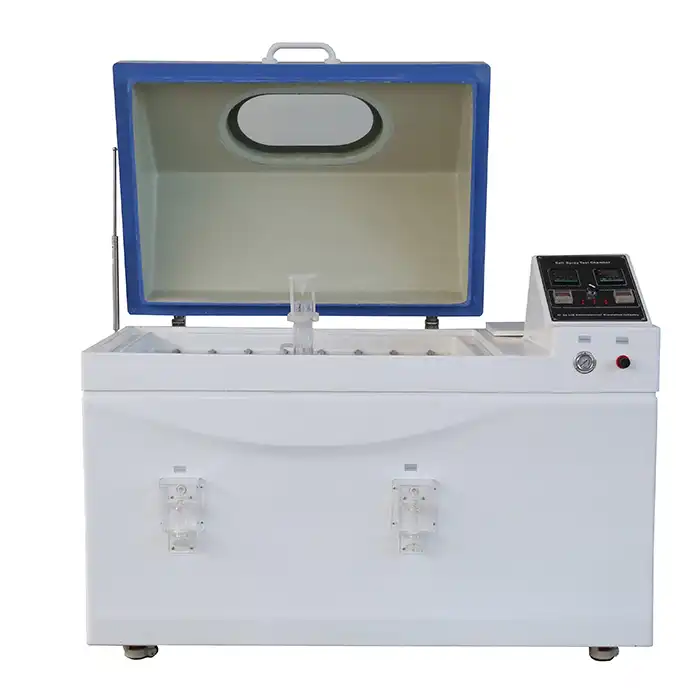
Spray Test Chamber (ASTM B117)Used for corrosion resistance testing under simulated marine and industrial salt fog environments. ASTM B117 / ISO 9227 compliant Continuous or cyclic spray modes Corrosion resistance evaluation 👉 Suitable for metal and coating protection testing |
LIB Industry Enables High-Precision Automotive Weathering Performance Testing
|
|
 |
 |
|
|
Model |
XL-S-750 Xenon Arc Weathering Test Chamber |
|
Internal Dimension (mm) |
950*950*850 mm |
|
Overall Dimension (mm) |
1300*1420*1800 mm |
|
Sample holder |
Adjustable speed, 1r /min |
|
Chamber Type |
Rotating Holder |
|
Irradiation Source |
1 piece of 4500w water-cooled xenon arc lamp with inner quartz and outer borosilicate filter |
|
Irradiance Range |
150 W/㎡ |
|
Bandwidth Measurement |
300~400 nm |
|
Chamber Temperature Range |
-40~ 100 ℃ ±2 ℃ |
|
Black Panel Temperature |
BPT 35 ~ 85 ℃ ±2 ℃ |
|
Humidity Range |
30 % ~ 98 % RH |
|
Water Spray Cycle |
1~9999 H 59 M (Adjustable) |
|
Controller |
Programmable color LCD touch screen controller |
|
Radiometer |
UV Radiometer, Tolerance: ±5 % |

Multi-standard compatibility including ASTM G155, ISO 4892-2, and SAE J2527
|
|
|


xenon lamp and filters
 |
 |
Advanced Xenon Arc Technology with Spectral Accuracy
LIB Industry's accelerated weathering tester incorporates a 4500W water-cooled xenon arc lamp delivering stable spectral power distribution across the complete solar spectrum. The water-cooling system maintains consistent lamp temperature, preventing spectral shift and output variation that compromise test reproducibility. Multiple filter options - including daylight simulation, window glass filtration, and UV-extended configurations - provide flexibility matching specific automotive testing requirements. This spectral precision ensures laboratory results correlate reliably with outdoor exposure data from global weathering sites.
Closed-Loop Environmental Control Systems
Maintaining precise test conditions throughout extended exposure cycles demands sophisticated control technology. The intelligent PID control system continuously monitors irradiance using calibrated radiometers, automatically adjusting lamp power to compensate for output decay as lamps age. Black panel temperature sensors with ±2°C accuracy ensure surface temperature stability, while humidity control spanning 30-98% RH with ±2.5% precision replicates diverse climate conditions. This closed-loop regulation delivers the reproducibility essential for comparative testing and regulatory compliance documentation.
Comprehensive Data Management and Connectivity
Modern automotive quality systems require complete test documentation supporting design validation, supplier qualification, and regulatory submissions. Ethernet and Wi-Fi connectivity enable real-time data streaming to laboratory information management systems (LIMS), while USB interfaces facilitate data export for analysis software. Multi-language touchscreen controllers with programmable cycling support complex test sequences mimicking diurnal temperature fluctuations, seasonal variations, and geographic climate patterns - capabilities essential for comprehensive component validation.
Global Service Infrastructure and Application Expertise
LIB Industry's worldwide presence includes 29 service centers across Europe, North America, and Asia-Pacific regions, providing localized technical support, calibration services, and spare parts availability. Application engineers collaborate with automotive manufacturers developing custom test protocols, establishing acceleration factors, and interpreting results. This consultative approach, combined with ISO 9001 quality certification and partnerships with major automotive OEMs including Mercedes-Benz, BYD, and Great Wall Motors, demonstrates proven expertise in automotive weathering testing requirements.
Conclusion
Accelerated weathering testing represents an indispensable validation tool for automotive exterior component development, enabling manufacturers to predict long-term durability within practical development timeframes. By replicating the destructive synergy of UV radiation, thermal cycling, and moisture attack, these sophisticated chambers reveal potential failures before market introduction. The resulting data informs material selection, guides formulation optimization, supports warranty period determination, and validates supplier quality - ultimately delivering vehicles that maintain aesthetic appeal and functional integrity throughout ownership lifecycles. Investing in precision weathering testing infrastructure protects brand reputation while reducing total quality costs.
FAQ
How does accelerated weathering testing time correlate with real-world automotive exposure?
Correlation factors typically range from 5:1 to 12:1 depending on material type, geographic location, and exposure conditions. Xenon arc testing at 0.55 W/m²/nm irradiance often simulates 1-2 years Florida outdoor exposure in 1000 hours. Establishing material-specific correlations requires parallel accelerated and outdoor exposure programs.
Can weathering chambers test complete automotive assemblies or only material coupons?
While rotating specimen holders accommodate flat panels and small components, complete assemblies like headlamp modules, mirror assemblies, or door handles can be tested if dimensionally compatible with chamber interior (typically 950×950×850mm). Custom fixtures enable proper positioning and ensure uniform exposure across complex three-dimensional geometries.
What maintenance requirements ensure consistent weathering tester performance over time?
Xenon lamps require replacement after approximately 1600 operational hours to maintain spectral output and irradiance levels. Regular radiometer calibration (annually recommended) ensures measurement accuracy. Water purification systems need periodic filter replacement, while spray nozzles require cleaning to maintain uniform distribution. Preventive maintenance contracts available through LIB Industry simplify these requirements.
Advance Your Automotive Testing Capabilities with LIB Industry
As a leading accelerated weathering tester manufacturer and supplier, LIB Industry delivers complete testing solutions backed by global technical support and automotive industry expertise. Contact our application specialists at ellen@lib-industry.com to discuss custom testing protocols and equipment configurations for your automotive component validation requirements.