Automotive Component Testing with Temperature Cycling Chambers
Modern vehicles endure extreme temperature variations throughout their lifecycle, from arctic cold starts to desert highway cruising. Temperature cycling chambers provide automotive manufacturers with controlled environments to validate component reliability before field deployment. These specialized test systems rapidly transition between temperature extremes, simulating years of thermal stress within weeks. By subjecting parts to accelerated aging conditions, engineers identify weaknesses in materials, joints, and assemblies that could lead to warranty claims or safety issues. This proactive approach reduces development time, minimizes costly recalls, and ensures vehicles meet stringent quality standards across global markets.
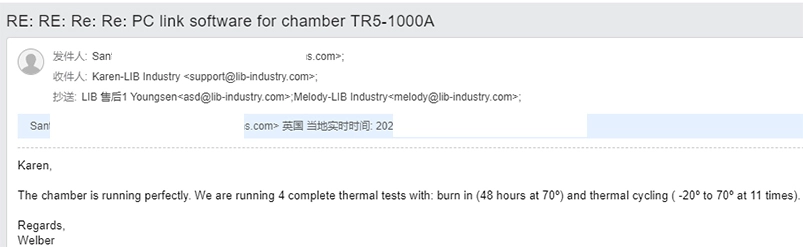
Users consistently report strong performance and dependable operation under real testing conditions. For example, an energy research organization in the United Kingdom carried out a series of demanding thermal evaluations, including long-duration burn-in procedures and repeated temperature cycling tests. Throughout these intensive trials, the system maintained stable control and precise performance without fluctuation. Their results demonstrate the equipment’s durability and control accuracy, confirming its suitability for mission-critical engineering applications where reliability and consistency cannot be compromised.
How Thermal Cycling Affects Automotive Material Performance?
Coefficient of Thermal Expansion Mismatches
Different materials expand and contract at varying rates when exposed to temperature changes. Automotive assemblies combine metals, polymers, adhesives, and composites that respond differently to thermal stress. When an aluminum housing bonds to a plastic connector, the dissimilar expansion rates create interfacing stress. Repeated cycling amplifies these mechanical forces, eventually causing delamination, cracking, or joint separation. Engineers use thermal cycling data to select compatible material combinations and design stress-relief features into critical interfaces.
Microstructural Changes in Metals and Alloys
Temperature fluctuations alter the crystalline structure of metallic components at the microscopic level. Steel fasteners may experience grain boundary weakening, while aluminum castings develop precipitation patterns that affect mechanical properties. Solder joints in electronic control units undergo phase transformations that reduce electrical conductivity and structural integrity. These microstructural changes accumulate gradually, making accelerated testing essential for predicting long-term performance. Metallurgical analysis after cycling reveals degradation mechanisms invisible during standard room-temperature evaluation.
Polymer Degradation and Embrittlement
Plastic components face unique challenges during thermal cycling. High temperatures accelerate oxidation and chain scission in polymers, while low temperatures increase brittleness. Elastomeric seals lose flexibility, becoming prone to cracking and leakage. Interior trim pieces develop surface crazing that affects appearance and customer satisfaction. UV stabilizers and plasticizers migrate out of materials during heat exposure, permanently altering mechanical characteristics. Understanding these degradation pathways helps formulators develop resilient compounds for automotive applications.
Common Automotive Components Tested for Thermal Fatigue
Electronic Control Modules and Sensors
Modern vehicles contain dozens of electronic systems managing powertrain, safety, and comfort functions. These modules operate in harsh underhood environments where temperatures swing from -40°C during cold soaks to 125°C near exhaust components. Thermal cycling validates solder joint reliability, capacitor stability, and semiconductor performance across operational ranges. Sensors measuring pressure, temperature, and position must maintain calibration accuracy despite thermal stress. Failure of these critical components can trigger check engine lights, performance issues, or safety system malfunctions.
|
Component Type |
Typical Test Range |
Critical Failure Mode |
|
Engine Control Unit |
-40°C to +125°C |
Solder joint fatigue |
|
ABS Sensor |
-40°C to +105°C |
Signal drift |
|
Battery Management System |
-30°C to +85°C |
Cell balancing errors |
Lighting Systems and Lenses
Headlamps, taillights, and interior lighting assemblies experience significant thermal stress during operation. LED heat dissipation creates localized hot spots, while external exposure subjects housings to ambient temperature extremes. Polycarbonate lenses may develop hazing or cracking when cycled between temperature extremes. Adhesive bonds securing lenses to housings weaken, allowing moisture ingress that causes condensation and corrosion. Reflector coatings degrade under repeated thermal expansion, reducing light output and beam pattern quality. Comprehensive cycling in a temp cycle chamber validates the complete optical assembly's durability.
Fluid System Components
Coolant hoses, fuel lines, transmission seals, and brake system components directly contact fluids while experiencing temperature variations. Rubber compounds must resist both thermal cycling and chemical attack from automotive fluids. Hose connections may develop leaks as clamps loosen during thermal expansion cycles. Plastic fuel system components face permeation challenges that worsen at elevated temperatures. O-rings and gaskets lose compression set resistance, allowing fluid seepage at critical junctions. Testing these components with actual fluids during thermal cycling provides realistic validation.
Designing Automotive Thermal Cycling Test Profiles
Establishing Temperature Range Requirements
Test profile development begins with understanding real-world operating conditions for specific components. Underhood environments demand wider temperature ranges than passenger compartment parts. Geographic market considerations influence testing parameters, as vehicles sold in northern climates require enhanced cold performance. Data loggers placed in development vehicles capture actual temperature exposure during various driving scenarios. This field data informs laboratory test specifications that replicate worst-case conditions. Conservative margins account for variability in production materials and assembly processes.
Determining Appropriate Ramp Rates
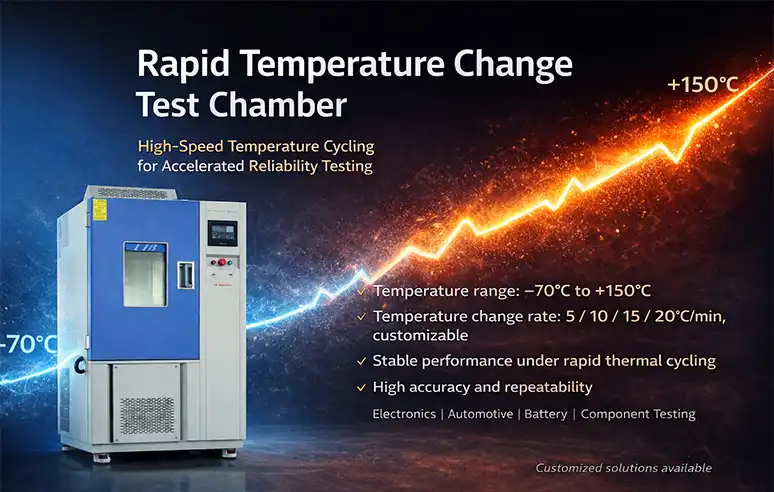
The speed of temperature transitions significantly impacts test relevance and duration. Rapid ramp rates of 10-15°C per minute create thermal shock conditions that accelerate failure mechanisms. Slower transitions allow components to reach thermal equilibrium, providing different stress patterns. Automotive applications typically employ ramp rates between 5-15°C per minute to balance test acceleration with realistic conditions. Electronic assemblies benefit from rapid cycling that stresses solder joints, while polymer components may require slower transitions to reveal material degradation. Chamber selection must accommodate the required ramp rate capabilities.
|
Test Objective |
Recommended Ramp Rate |
Dwell Time at Extremes |
|
Solder joint fatigue |
10-15°C/min |
15-30 minutes |
|
Seal integrity |
5-10°C/min |
30-60 minutes |
|
Material characterization |
5°C/min |
60+ minutes |
Selecting Cycle Count and Dwell Times
The number of cycles and hold periods at temperature extremes determines test duration and stress accumulation. Automotive standards often specify 500-1000 cycles to simulate years of vehicle operation. Dwell times allow components to stabilize at extreme temperatures, ensuring uniform thermal exposure. Short dwells of 15-30 minutes emphasize transition stress, while extended holds reveal time-dependent degradation. Engineers balance accelerated testing goals with laboratory capacity constraints. Statistical analysis helps determine the minimum cycle count needed for reliable failure prediction.
Integrating Temperature Cycling Into Vehicle Qualification Programs
Component-Level Validation Strategies
Individual part testing forms the foundation of thermal durability validation. Suppliers conduct preliminary cycling on raw components before system integration. This approach isolates material and design issues early in development when changes remain cost-effective. Test fixtures position components to replicate mounting stress and thermal coupling found in vehicle assemblies. Data from component testing feeds design iterations, material selections, and process improvements. Rigorous component qualification reduces the risk of system-level failures during later testing phases.
System and Subsystem Testing Approaches
Once components pass individual validation, they progress to system-level testing within functional assemblies. Complete wiring harnesses undergo cycling with connectors mated and circuits energized. Lighting modules test with bulbs illuminated to replicate operational heat generation. This integrated approach reveals interface issues, electromagnetic compatibility concerns, and cumulative stress effects. System testing identifies problems that component-level evaluation might miss, such as tolerance stack-up or assembly-induced stress. Successful subsystem qualification demonstrates readiness for vehicle integration.
Vehicle-Level Environmental Testing
Complete vehicles or body-in-white structures enter temperature cycling test chambers for whole-vehicle thermal cycling. This comprehensive validation ensures all systems interact properly under thermal stress. Climate-controlled chassis dynamometers simulate real driving loads while varying ambient conditions. Technicians monitor hundreds of parameters during cycling, detecting anomalies in real-time. Vehicle-level testing catches issues related to harness routing, panel expansion, fluid system interactions, and NVH characteristics. This final qualification phase confirms production readiness and verifies warranty predictions.
Interpreting Test Results for Automotive Durability
Failure Analysis Techniques
When components fail during thermal cycling, detailed analysis reveals root causes. Visual inspection identifies obvious cracks, delamination, or discoloration. Metallurgical cross-sectioning exposes internal fractures and material degradation. Scanning electron microscopy examines failure surfaces at high magnification, revealing fatigue striations or brittle fracture characteristics. Chemical analysis detects contamination or material composition deviations. This forensic approach transforms failures into actionable improvements that strengthen design and manufacturing processes.
Statistical Reliability Modeling
Test data feeds statistical models that predict field failure rates and warranty costs. Weibull analysis characterizes failure distributions across sample populations. Engineers calculate B10 life values representing the cycle count when 10% of parts fail. These metrics inform warranty period decisions and inventory planning. Confidence intervals account for sample size limitations and production variability. Reliability modeling converts laboratory data into business-relevant predictions that guide executive decisions about product launch readiness.
Correlation With Field Performance Data
Laboratory test results require validation against actual vehicle performance in customer hands. Warranty claim patterns provide feedback on prediction accuracy. When field failures occur earlier than models predicted, test profiles require adjustment to capture missing stress factors. Successful correlation builds confidence in testing methodologies and allows optimization of test parameters. This iterative refinement process continuously improves the relationship between laboratory cycling and real-world durability, reducing the risk of unexpected field issues.
Reducing Field Failures Through Thermal Cycling Validation
Identifying Design Vulnerabilities Early
Thermal cycling during development phases reveals weaknesses while design changes remain economical. Prototypes undergo cycling immediately after concept validation, catching fundamental flaws before tooling investment. Engineers iterate designs based on cycling results, strengthening attachment points, improving material selections, and adding stress-relief features. This front-loaded validation approach prevents costly redesigns during production ramp-up. Companies that invest in comprehensive thermal testing report significantly lower warranty costs and higher customer satisfaction ratings.
Optimizing Manufacturing Processes
Production processes introduce variability that affects thermal cycling performance. Inconsistent adhesive application, torque specifications, or curing conditions create quality escapes. Validation testing on production-intent samples identifies process sensitivities requiring tighter controls. Statistical process control monitors critical parameters affecting thermal durability. When cycling results show degraded performance, manufacturing investigations often reveal process drift or supplier material changes. This closed-loop system ensures production maintains the durability validated during development.
Establishing Robust Warranty Predictions
Accurate warranty forecasting depends on correlating thermal cycling data with field exposure. Engineers develop thermal cycling equivalency factors that relate laboratory cycles to customer usage years. Conservative assumptions account for extreme users who accumulate thermal stress rapidly. Financial models incorporate these predictions into warranty reserve calculations and pricing strategies. Robust validation reduces warranty surprise costs that damage profitability. Companies with mature thermal testing programs demonstrate superior warranty cost control compared to industry averages.
Validate Automotive Durability with LIB Industry Temperature Cycling Chambers
Advanced Temperature Control Technology
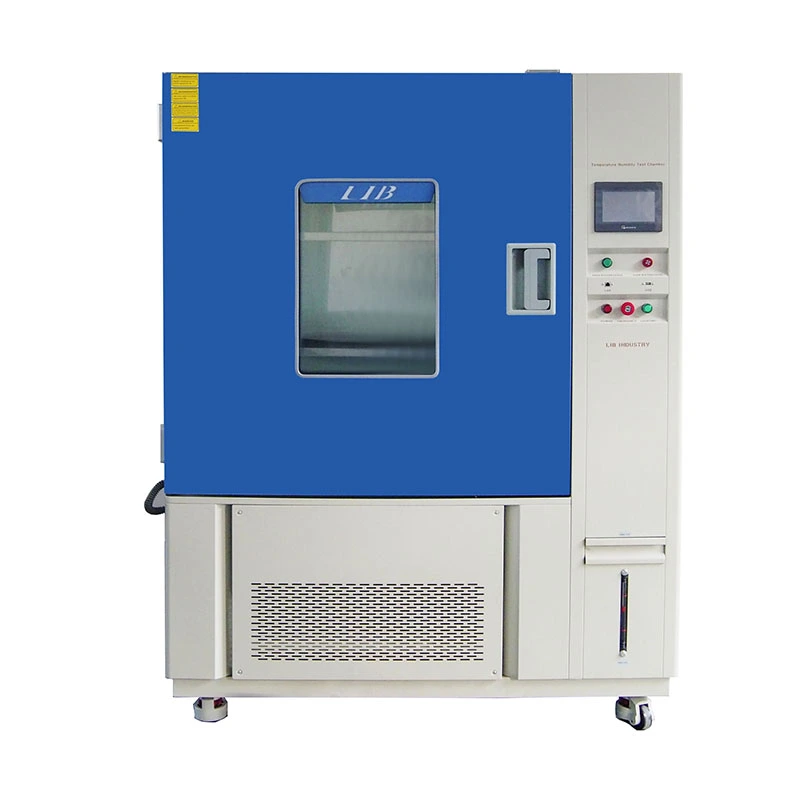
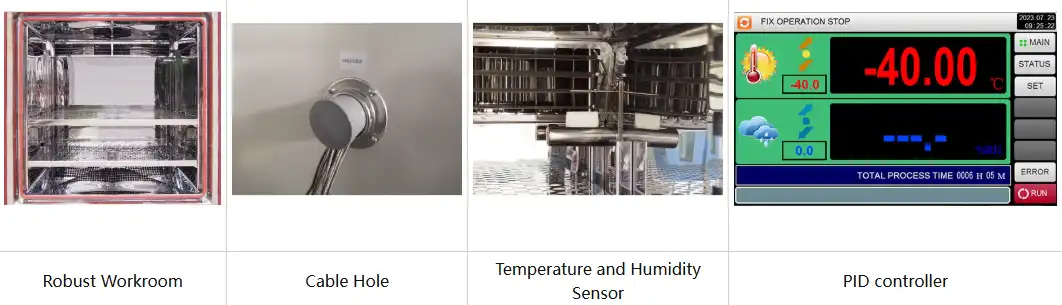
LIB Industry temperature cycling chambers deliver precise thermal cycling with programmable ramp rates from 5-15°C per minute. The multi-stage refrigeration system utilizes premium Bitzer cascade technology for reliable operation during intensive testing schedules. Electronic expansion valves automatically adjust refrigerant flow to maintain optimal performance across the full temperature range. PT100 Class A sensors provide 0.001°C resolution with ±0.5°C temperature uniformity throughout the chamber volume. This precision ensures consistent sample exposure and repeatable results across testing campaigns.
|
Chamber Model |
Internal Volume |
Temperature Range |
Ramp Rate Capability |
|
TR5-225 |
225L |
-70°C to +150°C |
5-15°C/min |
|
TR5-500 |
500L |
-70°C to +150°C |
5-15°C/min |
|
TR5-1000 |
1000L |
-70°C to +150°C |
5-15°C/min |
Safety Features for Battery and Electronic Testing
Automotive testing often involves lithium-ion batteries and high-voltage electronic systems requiring enhanced safety measures. Optional explosion-proof configurations include reinforced doors, viewing windows, and integrated smoke detection. Automated fire suppression systems activate upon detecting combustion byproducts, protecting valuable equipment and facilities. Pressure relief valves automatically adjust internal pressure during rapid temperature transitions. Independent hardware temperature limiters provide backup protection beyond software controls, ensuring safe operation even during controller malfunctions.
Comprehensive Support and Customization
Since 2009, LIB Industry has partnered with automotive manufacturers including Mercedes-Benz to develop tailored testing solutions. Engineering teams customize chamber dimensions, sample fixtures, and integration with existing laboratory systems. Global service centers in Malaysia, Canada, the UK, and the US provide 24/7 support minimizing testing downtime. Every chamber includes a three-year warranty with lifetime service support. When repairs aren't possible during the warranty period, LIB provides complete replacement units maintaining testing continuity.
Conclusion
Thermal cycling validation has become indispensable for automotive manufacturers competing in global markets with diverse climate conditions. Accelerated testing identifies material incompatibilities, design vulnerabilities, and manufacturing process weaknesses before vehicles reach customers. Statistical modeling translates laboratory data into actionable warranty predictions and business decisions. As vehicle complexity increases with electrification and advanced electronics, thermal durability validation grows even more critical. Investment in comprehensive testing programs delivers measurable returns through reduced warranty costs, enhanced brand reputation, and improved customer satisfaction.
FAQ
How many thermal cycles simulate typical vehicle lifetime exposure?
Automotive components typically undergo 500-1000 thermal cycles during validation testing. This range represents approximately 10-15 years of customer usage under normal driving conditions. Engineers adjust cycle counts based on component criticality, warranty period requirements, and specific application thermal severity.
What temperature range should automotive electronic modules withstand?
Most automotive electronic control units require operation from -40°C to +125°C to accommodate global market conditions. Underhood applications near exhaust systems may experience localized temperatures exceeding 150°C. Cold climate markets demand reliable cold-start performance at temperatures below -40°C.
Can thermal cycling replace long-term field testing?
Thermal cycling provides accelerated validation that complements but doesn't entirely replace field testing. Laboratory conditions isolate thermal stress from other environmental factors like vibration, humidity, and chemical exposure. Comprehensive validation programs combine accelerated laboratory testing with controlled field trials to ensure complete durability confirmation.
Contact LIB Industry, your trusted temperature cycling chamber manufacturer and supplier, for comprehensive automotive testing solutions tailored to your validation requirements. Our engineering team develops customized chambers and test protocols that accelerate your product development timeline. Reach us at ellen@lib-industry.com to discuss your specific testing needs.