Common Vibration Test Requirements for Mechanical Components
Mechanical components encounter dynamic forces throughout their operational lifespan, from transportation shocks to continuous operational vibrations. Establishing appropriate vibration test requirements ensures components withstand these conditions without premature failure. A vibration test chamber replicates real-world mechanical stress under controlled laboratory conditions, enabling engineers to validate design assumptions, identify weaknesses, and certify product reliability before market release. Understanding these test requirements helps manufacturers balance performance expectations with practical durability standards across diverse applications.
Which Mechanical Components Are Most Sensitive to Vibration?
Fasteners and Connection Systems
Bolted joints, threaded connections, and mechanical fasteners experience loosening under sustained vibration exposure. These components require specific testing protocols that evaluate torque retention, thread galling, and connection stability across frequency ranges. Testing typically involves monitoring preload loss over extended vibration cycles to predict maintenance intervals.
Electronic Assemblies Within Mechanical Systems
Printed circuit boards, sensors, and control modules mounted on mechanical structures face both direct vibration transmission and resonant amplification. Solder joints represent particular vulnerability points where fatigue cracks develop rapidly. Combined environmental testing using a vibration test chamber with thermal cycling reveals interaction effects between temperature expansion and mechanical stress.
Bearings and Rotating Elements
Rolling element bearings, shaft couplings, and rotary seals deteriorate through vibration-induced brinelling, false brinelling, and accelerated wear patterns. Test requirements for these components emphasize continuous operation under combined radial and axial vibration loads while monitoring noise signatures and lubricant degradation.
Standard Vibration Test Parameters for Mechanical Reliability
Frequency Range Selection
Most mechanical component testing operates within 10 to 2000 Hz, covering both structural resonances and operational forcing frequencies. Lower frequencies (5-50 Hz) simulate transportation and installation handling, while higher ranges (200-2000 Hz) represent machinery operation and acoustic coupling. Sweep testing identifies critical resonant frequencies that require focused investigation.
Acceleration and Displacement Specifications
Acceleration levels in a vibration test chamber typically range from 0.5g to 50g depending on application severity. General industrial components undergo 1-5g testing, automotive parts experience 5-15g, and aerospace applications may reach 20-50g. Displacement amplitude becomes the limiting factor at lower frequencies, where physical stroke limitations constrain achievable acceleration levels.
Test Duration and Cycle Count
Reliability testing balances accelerated stress with realistic damage accumulation. Standard protocols include 2-8 hour continuous exposure or million-cycle fatigue testing. Duration calculations consider cumulative damage models that correlate laboratory exposure with expected field life. Extended testing in a climate-controlled vibration test chamber also evaluates interaction with humidity and temperature variations.
How Load, Frequency, and Acceleration Affect Test Outcomes?
Load Distribution Impact
Static preload significantly influences component vibration response through stiffness modification and damping characteristics. A component tested under no-load conditions may exhibit vastly different failure modes compared to operational loading. Test fixtures must replicate actual mounting configurations and force boundary conditions to generate meaningful results.
Frequency-Dependent Failure Mechanisms
Different failure modes activate across the frequency spectrum. Low-frequency vibration (below 50 Hz) primarily induces gross deformation and yielding in structural elements. Mid-range frequencies (50-500 Hz) excite component resonances, causing high-cycle fatigue. High frequencies (above 500 Hz) generate surface wear, fretting, and acoustic fatigue in thin-walled sections.
Acceleration Magnitude and Fatigue Life
Relationship between acceleration amplitude and component life follows power-law behavior, where doubling acceleration may reduce life by factors of 8-16 depending on material properties. This sensitivity enables accelerated testing but requires careful correlation with field conditions. Multi-axis testing reveals interaction effects that single-axis protocols cannot capture.
|
Parameter |
Industrial Components |
Automotive Applications |
Aerospace Systems |
|
Frequency Range |
10-500 Hz |
5-2000 Hz |
20-4000 Hz |
|
Acceleration Level |
1-5g |
5-15g |
10-50g |
|
Test Duration |
4-8 hours |
8-24 hours |
24-100 hours |
|
Temperature Range |
-20°C to +60°C |
-40°C to +85°C |
-55°C to +125°C |
Industry Standards Governing Mechanical Component Vibration Testing

International Electrotechnical Commission Standards
IEC 60068-2-6 provides comprehensive guidance for sinusoidal vibration testing in a vibration chamber, defining test severity levels, mounting methods, and acceptance criteria. This standard applies broadly across electrical and mechanical components. IEC 60068-2-64 addresses random vibration testing, which better simulates complex real-world environments than single-frequency testing.
Military and Defense Specifications
MIL-STD-810 Method 514 establishes vibration test procedures for military equipment, emphasizing extreme environmental conditions and mission profiles. This specification includes specific test schedules for different platform types (ground vehicles, aircraft, naval vessels). The standard requires demonstration of performance during vibration exposure, not just survival.
Automotive Industry Standards
SAEJ1455 defines recommended environmental practices for electronic equipment in automotive applications. GM, Ford, and Chrysler maintain manufacturer-specific standards that extend beyond general industry requirements. These protocols incorporate combined temperature-humidity-vibration testing to replicate underhood and chassis-mounted component environments within specialized vibration test chamber configurations.
|
Standard |
Application Scope |
Key Requirements |
|
IEC 60068-2-6 |
General industrial and electronic |
Sinusoidal sweep, fixed frequency endurance |
|
MIL-STD-810G/H |
Military and defense systems |
Multi-axis, operational testing during exposure |
|
ISO 16750-3 |
Automotive electrical/electronic |
Combined environmental stress screening |
Failure Analysis Based on Vibration Test Results
Fatigue Crack Initiation and Propagation
Vibration-induced fatigue manifests through crack initiation at stress concentration points including fillet radii, thread roots, and material transitions. Metallurgical examination reveals characteristic beach marks indicating progressive crack growth. Understanding these patterns enables design modifications targeting specific stress risers identified during testing.
Wear and Surface Degradation Patterns
Fretting wear develops at contact interfaces experiencing micro-motion under vibration loading. This mechanism produces distinctive oxidized debris and surface pitting. Bearing surfaces show accelerated wear patterns that correlate with specific frequency ranges and load combinations. Documentation of these degradation modes guides material selection and surface treatment specification.
Resonance-Related Structural Damage
Components tested near natural frequencies experience amplified stress levels that can exceed design limits. Permanent deformation, fastener yielding, and catastrophic fracture result from insufficient damping or structural stiffness. Modal analysis combined with vibration testing identifies critical frequency ranges requiring design intervention or operational restrictions.
Optimizing Vibration Test Conditions for Mechanical Design Validation
Test Profile Development from Field Data
Effective test protocols replicate actual service conditions through analysis of field vibration measurements. Power spectral density functions characterize real-world vibration environments more accurately than arbitrary test levels. Time-compressed testing accelerates damage accumulation while maintaining representative stress distributions.
Combined Environmental Testing Strategies
Mechanical components rarely experience vibration in isolation from thermal cycling, humidity exposure, or pressure variations. Sequential testing misses critical interaction effects between environmental stressors. Simultaneous application of temperature, humidity, and vibration within an integrated vibration test chamber reveals synergistic degradation mechanisms that single-factor testing cannot detect.
Fixture Design and Mounting Considerations
Test fixtures introduce boundary conditions that significantly influence component response characteristics. Rigid mounting may suppress critical deflection modes, while overly compliant fixtures introduce spurious resonances. Fixture design should replicate actual installation hardware and interface compliance to ensure test validity and correlation with field performance.
|
Test Configuration |
Advantages |
Limitations |
|
Single-axis sinusoidal |
Precise frequency control, resonance identification |
Doesn't replicate multi-directional field conditions |
|
Random vibration |
Realistic broad-spectrum simulation |
Requires sophisticated analysis and longer test duration |
|
Combined environmental |
Reveals interaction effects |
Equipment complexity, higher cost |
Validate Component Durability with LIB Industry's Vibration Test Chambers
|
Chamber Specification |
Performance |
Application |
|
Temperature fluctuation |
±0.5℃ |
Precision testing |
|
Vibration frequency range |
2-4000 Hz |
Full spectrum simulation |
|
Maximum load capacity |
500 kg |
Pack-level validation |
|
Cooling/Heating rate |
5℃/min |
Rapid thermal cycling |
|
|
|
 |
|
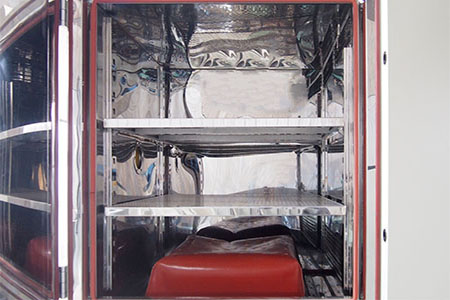
SUS 304 Climatic Workroom |
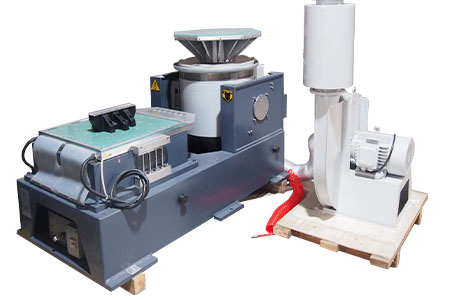
Versatile Vibration Testing |
Smart Control & Monitoring System |
Integrated Climate and Vibration Capabilities
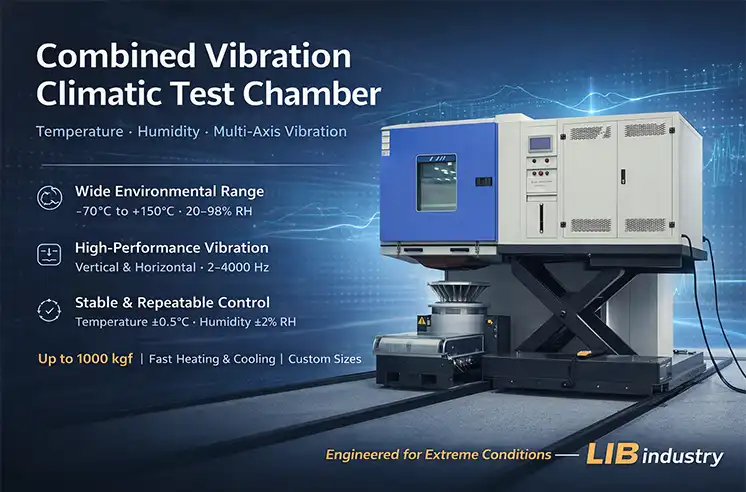
LIB vibration test chamber systems combine temperature control from -70°C to +150°C with humidity regulation (20-98% RH) and precision vibration generation. This integration enables comprehensive evaluation of mechanical components under realistic operational stresses. The mechanical compression refrigeration system delivers 5°C/min cooling rates while maintaining uniform temperature distribution throughout the test volume.
Advanced Vibration Control Technology
Digital power amplifier systems with sine pulse width modulation provide accurate vibration generation across 2-4000 Hz frequency range. The φ240mm armature diameter shaker delivers 1000kgf rated force with both vertical and horizontal axis capability. Extended head expanders (600×600mm) accommodate diverse component geometries and mounting configurations while maintaining uniform acceleration across the test plane.
Comprehensive Safety and Monitoring Systems
Multiple protection mechanisms including over-temperature, over-current, refrigerant high-pressure, and water shortage safeguards ensure operator safety and equipment longevity. SUS304 stainless steel interior construction resists corrosion during combined humidity-vibration testing. Polyurethane foam insulation maintains thermal stability while reducing energy consumption during extended test programs.
Conclusion
Establishing appropriate vibration test requirements for mechanical components demands thorough understanding of operational environments, failure mechanisms, and standardized test methodologies. Proper selection of frequency ranges, acceleration levels, and test durations ensures meaningful validation of component durability while avoiding unnecessary over-testing. Combined environmental testing using integrated vibration test chamber systems reveals critical interaction effects that influence real-world performance. Adherence to industry standards while customizing test protocols to specific applications balances regulatory compliance with practical design validation needs.
FAQ
What acceleration levels should be used for general industrial mechanical components?
Most industrial mechanical components undergo testing at 1-5g acceleration levels across 10-500 Hz frequency ranges. Specific levels depend on actual service conditions, with transportation scenarios requiring 0.5-2g and operating machinery generating 3-8g. Field measurement of actual vibration environments provides the most accurate basis for test level selection.
How does combined temperature and vibration testing differ from sequential testing?
Combined testing applies thermal and mechanical stresses simultaneously, revealing interaction effects such as thermal expansion affecting vibration response and vibration accelerating corrosion under humidity. Sequential testing misses these synergistic mechanisms. Equipment capable of simultaneous environmental control becomes essential for realistic durability validation across aerospace, automotive, and electronics applications.
What test duration adequately validates mechanical component reliability?
Test duration depends on expected service life and acceleration factors applied. Typical protocols range from 4-8 hours for commercial products to 24-100 hours for critical aerospace components. Cumulative damage calculations correlate laboratory exposure with field life expectancy, ensuring tests compress years of operation into practical timeframes without introducing unrealistic failure modes.
Partner with LIB Industry for Comprehensive Vibration Testing Solutions
As a leading vibration test chamber manufacturer and supplier, we deliver turn-key environmental testing systems tailored to your validation requirements. Contact our technical team at ellen@lib-industry.com to discuss your mechanical component testing needs.