Using Salt Spray Test Chambers in Surface Treatment Testing
Surface treatment testing demands rigorous corrosion resistance validation to ensure protective layers withstand real-world environmental challenges. Salt spray test chambers replicate accelerated corrosive conditions, enabling manufacturers to evaluate plating, anodizing, powder coating, and conversion treatments before market release. These controlled environments expose treated surfaces to continuous or cyclic salt fog, revealing weaknesses in adhesion, coverage, and protective efficacy. By simulating months or years of coastal exposure within days, salt spray testing provides quantifiable data on treatment durability, helping industries from automotive to marine equipment optimize their finishing processes and meet international quality standards.
What Surface Treatments Require Corrosion Resistance Validation?
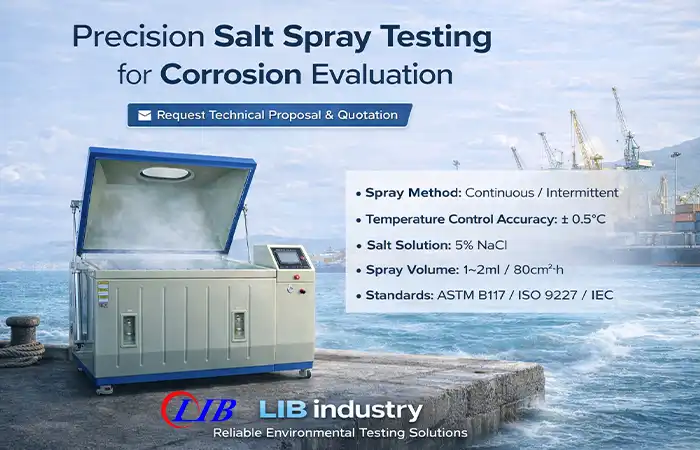

E lectroplated Metal Finishes
Electroplating deposits thin metallic layers onto substrates through electrochemical processes. Zinc, nickel-chromium, and tin plating require validation because microscopic pores or inconsistent thickness create corrosion pathways. Salt spray chambers expose these vulnerabilities by penetrating defects and measuring protection duration through red rust formation timing.
Anodized Aluminum Surfaces
Anodizing transforms aluminum surfaces into durable oxide layers with enhanced corrosion resistance. However, anodizing quality varies with electrolyte composition, current density, and sealing effectiveness. Testing chambers verify seal integrity and oxide layer thickness by measuring mass loss and surface degradation under standardized salt fog exposure.
Organic Coating Systems
Powder coatings, liquid paints, and e-coats protect substrates through barrier properties and chemical resistance. These treatments demand validation because film thickness variations, insufficient curing, or poor substrate preparation compromise performance. Accelerated corrosion testing identifies coating failures like blistering, undercutting, and delamination before field deployment.
Chemical Conversion Coatings
Phosphate, chromate, and chromate-free conversion coatings provide temporary protection and paint adhesion promotion. These treatments create crystalline layers that must withstand both direct corrosion and serve as adhesion substrates. Chamber testing evaluates conversion coating stability and their ability to prevent substrate oxidation during storage or subsequent processing.
Thermal Spray Coatings
Thermal spray processes deposit metallic or ceramic materials at high velocities, creating protective barriers on critical components. Porosity levels and coating-substrate bonding strength directly influence corrosion resistance. Salt spray exposure quantifies how effectively these coatings prevent electrolyte penetration to underlying metals.
Vapor Deposition Treatments
Physical vapor deposition (PVD) and chemical vapor deposition (CVD) create ultra-thin protective films with specific functional properties. Despite their precision, these treatments require corrosion validation because coating uniformity on complex geometries affects long-term protection. Testing chambers reveal localized corrosion initiation points under aggressive conditions.
Salt Spray Testing for Plating, Anodizing, and Coating Processes
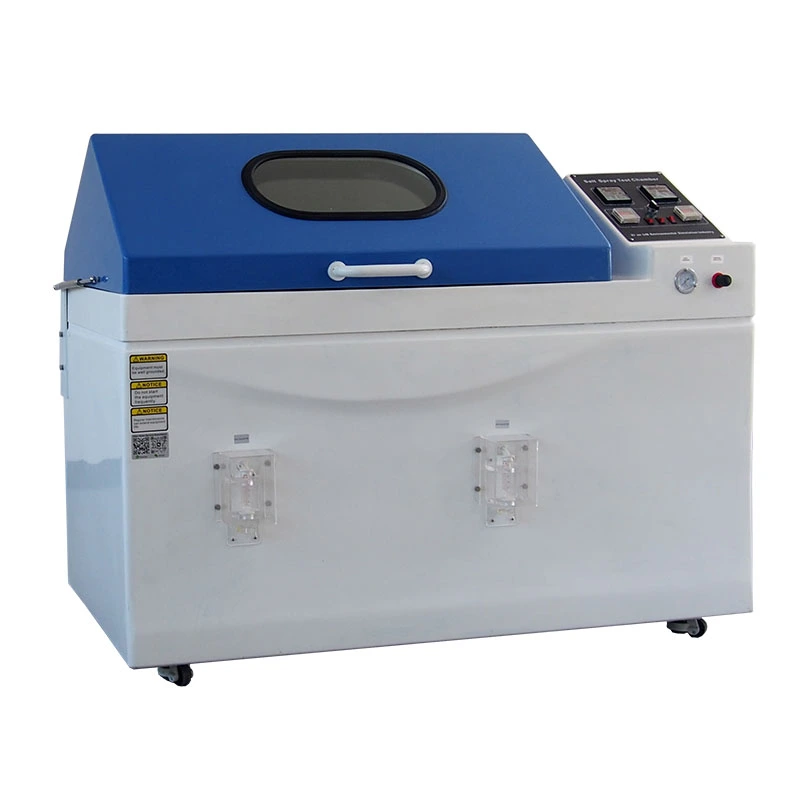
Neutral Salt Spray Testing Protocol
ASTM B117 neutral salt spray testing exposes samples to 5% sodium chloride solution atomized at 35°C, creating a standardized corrosive environment. This method evaluates baseline corrosion resistance across diverse surface treatments. Test durations range from 24 hours for preliminary screening to 1,000+ hours for automotive and aerospace specifications.
Acetic Acid Salt Spray Methodology
Acetic acid salt spray (AASS) accelerates corrosion by lowering pH to approximately 3.0-3.2, intensifying the attack on protective layers. This variant proves particularly effective for evaluating decorative plating systems and detecting defects in multi-layer coating architectures. The acidic environment simulates industrial pollution and acid rain exposure.
Copper-Accelerated Salt Spray Testing
Copper-accelerated acetic acid salt spray (CASS) introduces copper chloride to the test solution, dramatically increasing corrosion rates compared to neutral testing. Conducted in a salt spray test machine, this aggressive method suits anodized aluminum validation and thin organic coating assessment, reducing test cycles from weeks to days while maintaining correlation with field performance.
|
Test Method |
Temperature |
Solution pH |
Application Focus |
|
Neutral Salt Spray (NSS) |
35°C |
6.5-7.2 |
General corrosion resistance, zinc plating |
|
Acetic Acid Salt Spray (AASS) |
35°C |
3.0-3.2 |
Decorative plating, multi-layer systems |
|
Copper-Accelerated (CASS) |
50°C |
3.0-3.2 |
Anodized aluminum, thin organic coatings |
Cyclic Corrosion Testing Integration
Modern surface treatment validation increasingly employs cyclic corrosion testing, alternating between salt spray, humidity, and ambient drying phases. These cycles replicate diurnal temperature fluctuations and wet-dry transitions that accelerate real-world degradation mechanisms. Cyclic protocols like ISO 11997 and SAE J2334 provide superior correlation with field failures.
Sample Preparation and Positioning
Proper sample preparation prevents artificial test results. Surfaces must be cleaned without altering the treatment, and cut edges require masking to isolate the intended test area. Sample positioning at 15-30° angles ensures uniform salt fog distribution and proper drainage, eliminating artificial pooling that skews results.
Continuous Monitoring During Exposure
Advanced chambers incorporate digital monitoring systems tracking temperature, spray rate, and salt concentration throughout testing. Periodic interim inspections document corrosion progression without prematurely terminating exposure, creating time-dependent degradation curves that inform accelerated testing correlations and warranty predictions.
Test Conditions for Comparing Surface Treatment Performance
Chamber Environment Calibration
Precise environmental control separates valid testing from unreliable results. Temperature maintenance within ±0.5°C and humidity control at 95-98% RH ensure reproducible conditions. Salt fog deposition rates of 1-2 mL per 80 cm² hourly provide consistent exposure intensity, verified through standardized collection funnel measurements.
Solution Preparation Standards
Test solution quality directly impacts corrosion mechanisms and result reliability. Sodium chloride purity specifications (99.0% minimum) and conductivity requirements (less than 20 μS/cm for dilution water) prevent contamination effects. pH monitoring ensures neutral salt spray remains within 6.5-7.2 range, while AASS requires precise acetic acid addition for pH 3.0-3.2.
Exposure Duration Determination
Surface treatment comparison requires standardized exposure durations aligned with application severity. Automotive under-body components may demand 1,000-hour neutral salt spray exposure, while consumer electronics plating might require only 48-96 hours. Duration selection balances accelerated testing benefits against correlation with actual service life.
|
Surface Treatment Type |
Typical NSS Duration |
Pass Criteria |
|
Decorative Chrome Plating |
24-96 hours |
No substrate corrosion |
|
Zinc-Nickel Alloy Plating |
240-720 hours |
5% red rust maximum |
|
Class II Anodizing |
168-336 hours |
Pitting rating ≤ 8 |
|
Powder Coating on Steel |
500-1000 hours |
Scribe creepage < 2mm |
Atmospheric Contamination Prevention
Chamber construction materials must resist corrosion without contaminating the test environment. Glass fiber reinforced plastics provide inert surfaces that neither corrode nor introduce metallic ions affecting test chemistry. Regular chamber cleaning removes salt buildup that could alter spray characteristics or fall onto samples as solid deposits.
Reference Standard Utilization
Concurrent testing of reference standards validates chamber operation and provides performance benchmarks. Known-performance samples from previous production batches or standardized reference materials confirm that chamber conditions produce expected results, enabling valid treatment comparisons across test sessions.
Documentation and Traceability Requirements
Complete test documentation includes solution preparation records, calibration certificates, atmospheric readings throughout exposure, and photographic evidence at specified intervals. These records are maintained using a salt fog chamber to ensure accurate and consistent testing conditions. This traceability supports ISO 9001 quality management systems and provides defendable evidence for warranty claims or customer disputes regarding surface treatment performance.
Visual and Quantitative Evaluation After Salt Spray Exposure
Corrosion Rating Standards Application
ISO 10289 and ASTM D1654 provide standardized rating scales for corrosion severity assessment. These visual rating systems classify corrosion extent, blistering density, and rust distribution using numerical scales, enabling objective comparisons between treatments. Rating consistency requires trained evaluators and controlled lighting conditions during assessment.
Color Difference Measurement Techniques
Spectrophotometric analysis quantifies color changes resulting from corrosion or staining. Delta E measurements capture subtle degradation on decorative finishes that might pass visual inspection but indicate incipient failure. Color stability specifications vary by industry, with automotive exteriors demanding stricter retention than industrial equipment.
Adhesion Testing After Exposure
Post-exposure adhesion evaluation reveals coating-substrate bond degradation caused by underfilm corrosion. Cross-cut tape testing per ASTM D3359 or pull-off testing per ASTM D4541 quantifies adhesion loss. Significant reductions indicate that corrosive species penetrated the coating-metal interface, compromising long-term durability.
Mass Loss Determination Methods
Gravimetric analysis measures coating or substrate material loss through precise weighing before and after exposure, following chemical stripping of corrosion products. Mass loss data provides absolute protection performance metrics independent of subjective visual assessment, particularly valuable for comparing barrier coating effectiveness.
Microscopic Examination Protocols
Optical and electron microscopy reveal corrosion morphology, pit depth, and coating degradation mechanisms invisible to unaided visual inspection. Cross-sectional analysis shows underfilm corrosion penetration and coating delamination extent. Scanning electron microscopy coupled with energy-dispersive X-ray spectroscopy identifies corrosion product composition and chloride penetration depth.
Electrochemical Impedance Spectroscopy
Advanced evaluation employs electrochemical impedance spectroscopy (EIS) to assess coating barrier properties and corrosion rates quantitatively. EIS measurements during or after salt spray exposure provide real-time degradation kinetics and predict remaining service life based on coating resistance and capacitance changes.
Failure Analysis of Surface Treatments Under Corrosive Stress
Identifying Coating Defect Patterns
Salt spray testing reveals systematic defects originating from application processes. Pinholes from contamination, thin spots from improper spray technique, and edge recession from insufficient coverage manifest as localized corrosion patterns. Defect pattern recognition guides process improvement by linking failure modes to specific production variables.
Substrate Preparation Inadequacies
Surface contamination, insufficient roughening, or incomplete conversion coating formation create weak adhesion zones that salt spray exposure rapidly exposes. Corrosion initiating at the coating-substrate interface and spreading laterally indicates preparation failures rather than coating material deficiencies, directing corrective actions toward cleaning or pretreatment optimization.
Galvanic Corrosion Acceleration
Multi-metal assemblies tested in salt spray chambers experience accelerated galvanic corrosion when dissimilar metals contact within electrolyte solutions. Failure patterns concentrated at metal junctions identify inadequate electrical isolation or sacrificial protection. Understanding galvanic effects prevents over-specification of individual component treatments when assembly-level protection proves critical.
|
Failure Mode |
Visual Characteristics |
Root Cause Category |
|
Edge Corrosion |
Rust initiating from cut edges or corners |
Insufficient edge coverage |
|
Undercutting |
Coating separation spreading from corrosion site |
Poor adhesion or substrate preparation |
|
Filiform Corrosion |
Thread-like corrosion tracks under coating |
Moisture ingress through coating defects |
|
Pitting |
Localized deep corrosion spots |
Pinholes or coating discontinuities |
Curing and Cross-Linking Deficiencies
Insufficient thermal curing or UV cross-linking leaves organic coatings with incomplete polymer networks vulnerable to corrosive electrolyte penetration. Salt spray testing distinguishes between under-cured and properly cured samples through accelerated blistering and delamination. Time-temperature profiles require adjustment when testing reveals premature coating breakdown.
Seal Quality Assessment for Anodizing
Anodized aluminum performance depends critically on hydrothermal sealing that closes oxide pores. Salt spray testing differentiates between well-sealed and poorly sealed anodizing through mass loss measurements and corrosion product formation. White corrosion products appearing early in testing indicate incomplete sealing requiring process parameter modification.
Material Compatibility Verification
Surface treatments applied to incompatible substrate alloys fail prematurely regardless of application quality. Salt spray chambers reveal substrate-treatment mismatches when corrosion occurs despite proper coating application. Material substitution or alternative treatment selection becomes necessary when testing demonstrates fundamental incompatibility.
Optimizing Surface Treatment Processes Using Test Results
Statistical Process Control Integration
Salt spray test data feeds statistical process control systems, establishing control limits for treatment performance. Trending analysis identifies process drift before producing nonconforming parts. Control charts tracking time-to-failure or corrosion ratings enable predictive maintenance of plating baths, anodizing tanks, or coating equipment.
Design of Experiments Methodology
Systematic process optimization employs design of experiments (DOE) using salt spray testing as the response variable. Factorial experiments varying plating current density, bath temperature, or coating thickness identify optimal parameter combinations. Statistical significance testing distinguishes true process improvements from random variation.
Accelerated Testing Correlation Development
Establishing correlations between accelerated salt spray results and field exposure enables predictive service life modeling. Outdoor exposure sites in coastal, industrial, and rural environments provide validation data. Correlation factors convert chamber hours to equivalent service years, supporting warranty period determination and replacement interval recommendations.
Quality Specification Refinement
Test results guide specification development balancing performance requirements against production costs. Over-specification wastes resources while under-specification risks field failures. Salt spray data quantifies the performance improvement from each process enhancement, enabling cost-benefit analysis for specification decisions.
Supplier Qualification and Incoming Inspection
Surface treatment suppliers undergo qualification testing demonstrating consistent performance meeting specifications. Periodic lot sampling with abbreviated salt spray testing verifies continued compliance. Documented test results provide objective evidence for supplier selection and support quality agreements protecting both parties.
Continuous Improvement Documentation
Longitudinal databases tracking surface treatment performance across product generations reveal improvement trends and successful process modifications. Historical test data prevents regression to inferior processes and preserves institutional knowledge despite personnel changes. Continuous improvement initiatives leverage accumulated testing experience to drive innovation.
Achieve Precision Surface Analysis with LIB Industry Salt Spray Test Chambers
|
|
Model |
S-150 |
|
|
Internal dimensions (mm) |
470*590*400 |
||
|
Overall dimensions (mm) |
620*1400*1050 |
||
|
Temp. Range |
Ambient ~ +60 degree |
||
|
Temp. Fluctuation |
± 0.5 ℃ |
||
|
Temp. Deviation |
± 2.0℃ |
||
|
Humidity Range |
95 % ~ 98 % RH |
||
|
Salt Fog Deposition |
1~2ml / 80cm2 · h |
||
|
Spray Type |
Continuous / Periodic |
||
|
Heating Element |
Nichrome heater |
||
|
Salt Fog Collected |
Fog collector and fog measure cylinder |
||
|
Controller |
PID controller |
||
|
Material |
Glass fiber reinforced plastics |
||
|
Standard Configuration |
8 round bars and 7 V-shaped grooves |
||
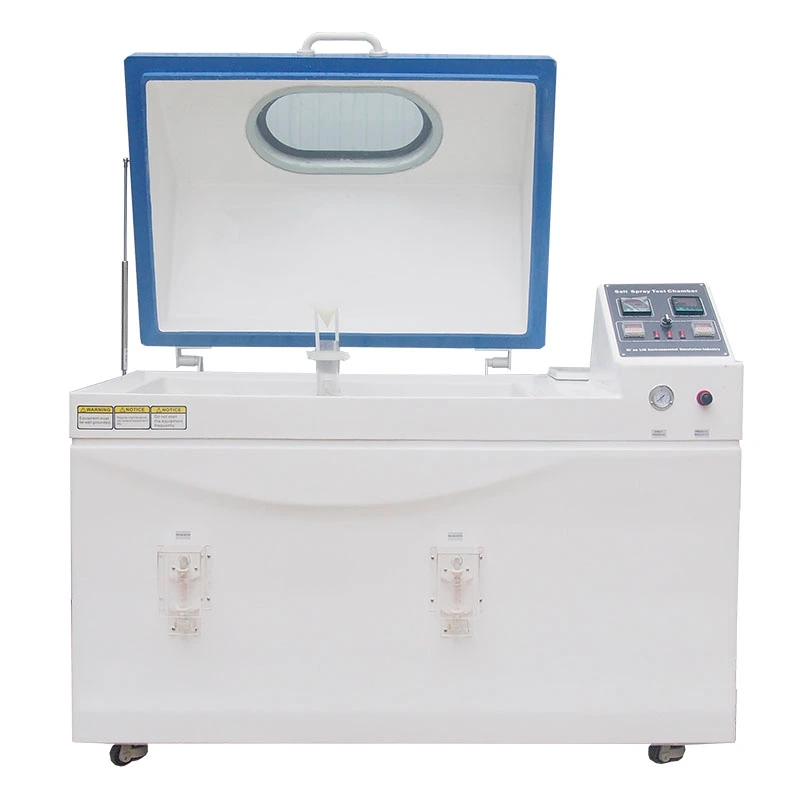
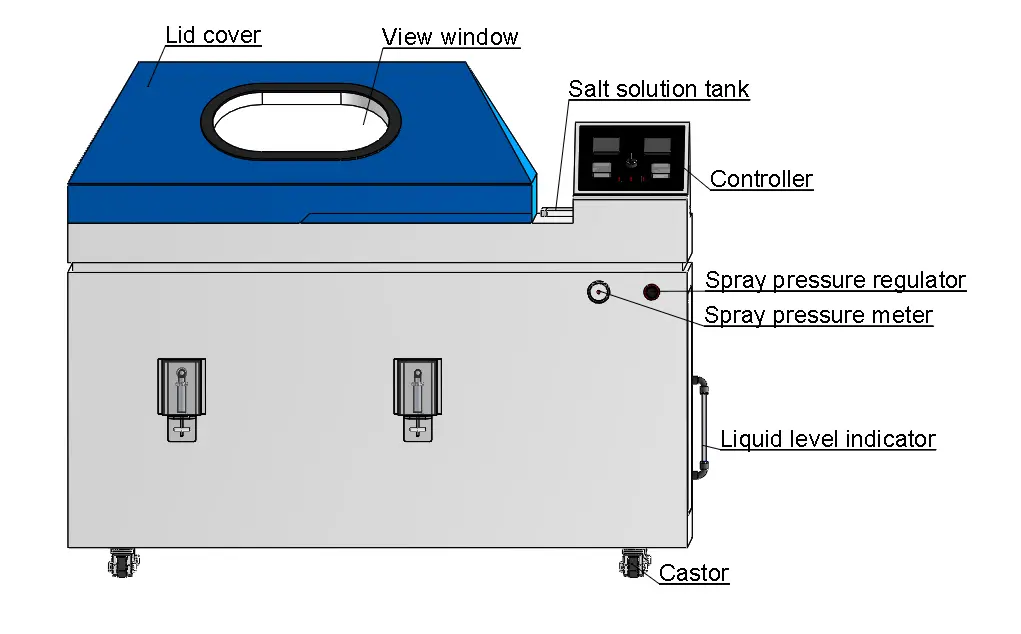
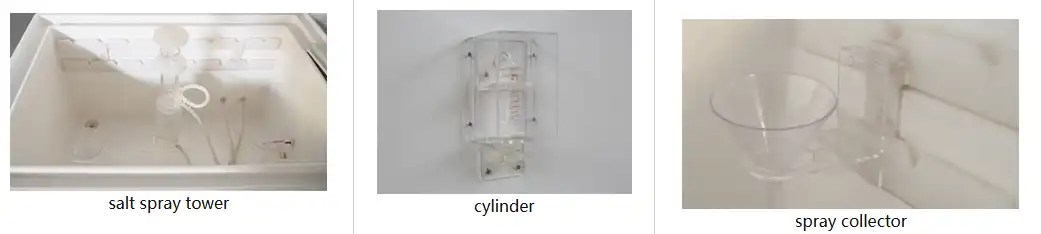
Chamber Range and Capacity Options
LIB Industry manufactures salt spray test chambers from compact 110-liter units suitable for research laboratories to expansive 1,600-liter production models accommodating full assemblies. Model selection depends on sample sizes and testing volume requirements. Glass fiber reinforced plastic construction ensures decades of corrosion-free service across all capacity ranges.
Temperature and Humidity Control Precision
Advanced PID control systems maintain chamber temperatures from ambient to 60°C with ±0.5°C fluctuation, ensuring reproducible accelerated corrosion kinetics. Humidity control at 95-98% RH prevents premature sample drying while avoiding excessive condensation. Precision environmental control enables valid comparison of treatments tested months apart.
International Standards Compliance
LIB chambers conform to ASTM B117 and ISO 9227 specifications, satisfying global automotive, aerospace, and electronics industry requirements. Standardized spray towers, collection funnels, and fog distribution systems ensure test reproducibility between facilities. Compliance documentation supports laboratory accreditation and customer audit requirements.
User-Friendly Operation Interface
Multilingual touchscreen controllers (English, French, Spanish, German, Russian) simplify operation across international facilities. Network connectivity enables remote monitoring and data logging for quality management systems. Programmable test sequences automate cyclic corrosion protocols, reducing operator intervention and improving consistency.
Safety Features and Protection Systems
Comprehensive safety systems include dry-combustion protection for humidifiers, over-temperature shutdown, over-current protection, water shortage detection, and earth leakage protection. These redundant safeguards prevent equipment damage and personnel injury during unattended operation, supporting 24/7 testing schedules.
Turnkey Solutions and Technical Support
LIB Industry provides complete turnkey solutions encompassing research, design, manufacturing, commissioning, delivery, installation, and operator training. This comprehensive approach ensures chambers operate optimally from commissioning through decades of service. Technical support assists with method development, troubleshooting, and performance optimization throughout equipment lifetime.
Conclusion
Salt spray test chambers provide indispensable validation for surface treatments requiring corrosion resistance verification. From electroplating and anodizing to powder coating and conversion treatments, accelerated testing reveals protection weaknesses before field deployment. Standardized protocols enable objective performance comparison, failure analysis guides process optimization, and quantitative evaluation supports specification development. Precision chambers delivering reproducible environmental control transform surface treatment development from trial-and-error into data-driven continuous improvement.
FAQ
How long should salt spray testing last for automotive coating validation?
Automotive exterior coatings typically require 500-1,000 hours neutral salt spray exposure depending on warranty duration and climate zone. Under-body components may demand extended testing up to 1,500 hours. Cyclic corrosion testing increasingly supplements traditional continuous exposure for improved field correlation.
Can salt spray chambers test assembled products or only individual components?
Modern chambers accommodate assembled products up to 1,600 liters volume, enabling full-system corrosion validation. Large capacity models test complete assemblies revealing galvanic corrosion between dissimilar metals and protection at fastener interfaces that component-level testing cannot predict.
What maintenance do salt spray chambers require for consistent performance?
Regular maintenance includes weekly cleaning of spray nozzles preventing clogging, monthly chamber interior cleaning removing salt deposits, quarterly solution reservoir descaling, and annual calibration verification. Proper maintenance ensures test reproducibility and extends chamber service life beyond 20 years.
LIB Industry, a leading salt spray test chamber manufacturer and supplier, delivers precision corrosion testing solutions globally. Our factory produces chambers meeting international standards with comprehensive support services. Contact us at ellen@lib-industry.com to discuss your surface treatment testing requirements.