Dust Testing Essentials for HVAC Air Filter Efficiency
HVAC air filters represent the frontline defense against airborne contaminants in residential, commercial, and industrial environments. Validating their performance requires rigorous dust testing that accurately simulates real-world particle exposure conditions. A dust test chamber provides controlled environments where engineers can measure filtration efficiency, pressure drop characteristics, and dust-holding capacity under standardized conditions. These specialized testing apparatus replicate varying particle concentrations, sizes, and environmental parameters to predict filter longevity and effectiveness. Without comprehensive dust testing protocols, manufacturers risk releasing inadequate filtration products that compromise indoor air quality, increase energy consumption through excessive airflow restriction, or fail prematurely under actual operating conditions. Understanding dust testing fundamentals ensures HVAC systems deliver reliable performance throughout their service life.
Why Dust Testing Is Critical for HVAC Filtration Performance?
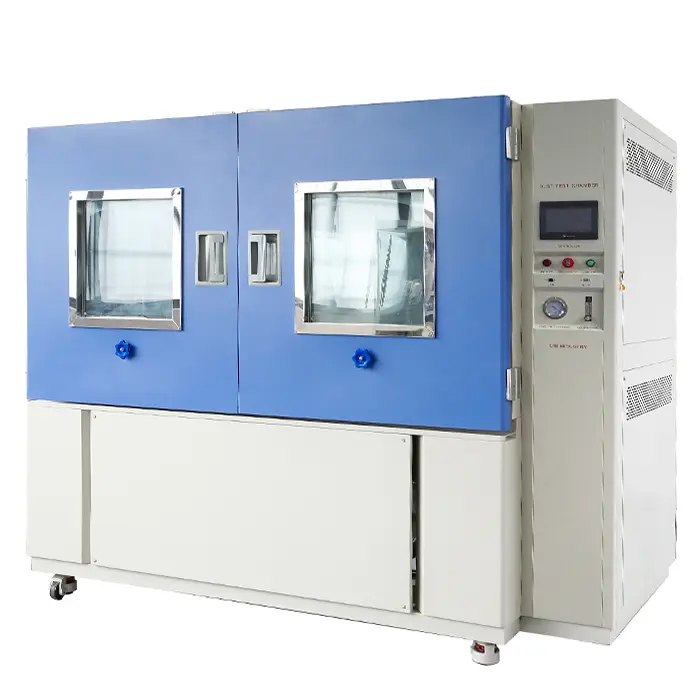 Air filtration systems must perform consistently across diverse operating conditions and particle challenges. Systematic evaluation through controlled testing protocols ensures products meet performance claims and regulatory requirements.
Indoor Air Quality Dependencies on Filter Effectiveness
Building occupants depend on HVAC filtration to remove particulate matter ranging from pollen and mold spores to combustion particles and industrial contaminants. Filters rated for specific efficiency levels must demonstrate those capabilities through standardized testing rather than theoretical calculations. Inadequate filtration allows harmful particles to circulate, triggering respiratory issues and reducing occupant productivity.
Energy Efficiency Implications of Filter Performance
Filter resistance directly impacts HVAC system energy consumption, with excessive pressure drops forcing blowers to work harder and consume more electricity. Conversely, low-efficiency filters may require more frequent air changes to maintain acceptable indoor air quality. Dust testing quantifies this balance, identifying optimal filter designs that maximize particle capture while minimizing energy penalties.
Regulatory Compliance and Market Access
International standards governing air filter performance require documented testing evidence. ASHRAE 52.2, ISO 16890, and EN 779 specify testing methodologies that manufacturers must follow for product certification. Markets increasingly demand third-party verification of filter ratings, making accredited dust chamber testing essential for commercial viability and competitive positioning.
Particle Size Distribution and Its Impact on Filter Efficiency
Different filtration mechanisms target specific particle size ranges, making standardized test dust composition critical for meaningful performance evaluation.
Understanding the Most Penetrating Particle Size
Filter efficiency varies dramatically across the particle size spectrum, with a characteristic dip occurring at the Most Penetrating Particle Size (MPPS), typically between 0.1 and 0.3 micrometers. Particles larger than MPPS are captured through impaction and interception mechanisms, while smaller particles succumb to diffusion. Testing must specifically challenge filters at MPPS to validate their weakest performance point.
Standardized Test Dust Composition
Testing protocols in a dust test chamber employ carefully formulated synthetic dust mixtures that represent real-world particle distributions. ASHRAE 52.2 utilizes potassium chloride aerosol for fractional efficiency testing, while coarse dust loading tests employ standardized mineral compositions. These controlled dust formulations ensure reproducibility across different laboratories and eliminate variability inherent in natural atmospheric particles.
Particle Size-Dependent Capture Mechanisms
Mechanical filtration relies on four primary capture mechanisms: inertial impaction (particles >1 μm), interception (0.3-1 μm), diffusion (<0.3 μm), and electrostatic attraction. High-efficiency filters combine dense fiber matrices with electrostatic charging to enhance capture across all size ranges. Dust testing reveals how these mechanisms perform individually and synergistically under varying particle challenges.
|
Particle Size Range |
Primary Capture Mechanism |
Typical Filter Efficiency |
|
>10 μm |
Inertial impaction |
95-99% (most filters) |
|
1-10 μm |
Interception + impaction |
70-95% (varies by media) |
|
0.3-1 μm |
Interception + diffusion |
40-85% (MPPS challenge) |
|
<0.3 μm |
Brownian diffusion |
60-99.97% (HEPA territory) |
Evaluating Airflow Resistance and Dust Loading Capacity
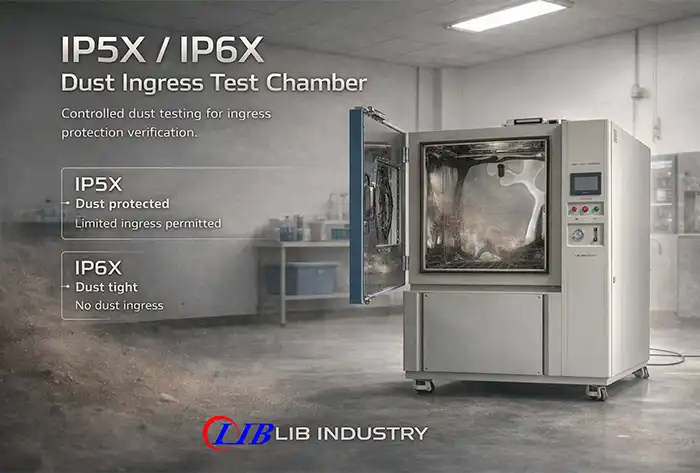
Pressure drop measurements and dust-holding capacity testing reveal how filters perform throughout their operational lifecycle rather than just in pristine condition.
Initial Pressure Drop Characterization
Clean filter resistance establishes the baseline airflow impedance before dust accumulation begins. Lower initial pressure drops reduce fan energy requirements and operating costs. Testing at multiple airflow velocities characterizes the relationship between flow rate and resistance, revealing whether filters maintain linear performance or exhibit turbulent flow characteristics at higher velocities.
Dynamic Pressure Increase During Dust Loading
As filters capture particles, accumulated dust increases flow resistance progressively. Dust loading tests measure pressure drop increases as specific quantities of standardized dust pass through the filter media. This data predicts service intervals and replacement schedules, preventing excessive resistance that strains HVAC equipment or reduces building ventilation rates.
Dust-Holding Capacity Quantification
The total mass of dust a filter captures before reaching terminal pressure drop defines its dust-holding capacity. Higher capacity extends replacement intervals, reducing maintenance costs and labor requirements. A dust test chamber enables precise capacity measurement by feeding controlled dust quantities while continuously monitoring pressure differential until predetermined resistance thresholds are reached.
Calculating Filter Service Life
Combining dust-holding capacity data with actual building particle concentrations enables accurate service life predictions. A filter capturing 500 grams of dust before reaching terminal resistance will last substantially longer in a clean suburban office than a manufacturing facility with high particulate generation. Testing provides the foundational data for these calculations.
Standard Methods for HVAC Filter Dust Penetration Testing
International testing standards provide frameworks ensuring consistent, comparable performance evaluation across manufacturers and laboratories.
ASHRAE 52.2 Testing Protocol
The American Society of Heating, Refrigerating and Air-Conditioning Engineers developed ASHRAE 52.2 specifically for evaluating general ventilation air-cleaning devices in a dust test chamber. This standard measures Minimum Efficiency Reporting Value (MERV) ratings from 1 to 16 based on particle removal efficiency across six size ranges (0.3–10 μm). Testing involves challenging filters with potassium chloride aerosol while measuring upstream and downstream particle concentrations.
ISO 16890 International Standard
ISO 16890 replaced EN 779 as the European standard, introducing classifications based on particulate matter categories (PM1, PM2.5, PM10). This approach better correlates with environmental air quality concerns and health impacts. Testing protocols specify synthetic dust compositions, airflow rates, and conditioning procedures that ensure reproducible results across international testing laboratories.
IEC 60529 Ingress Protection Testing
Beyond filtration efficiency, ingress protection standards evaluate how effectively sealed filter assemblies prevent dust intrusion into protected equipment. IP5X and IP6X ratings require exposing filter housings to dust clouds within specialized chambers, then inspecting for internal contamination. These tests validate gasket designs, housing integrity, and assembly quality.
|
Standard |
Primary Focus |
Rating System |
Key Applications |
|
ASHRAE 52.2 |
Filtration efficiency |
MERV 1-16 |
Commercial/residential HVAC |
|
ISO 16890 |
PM-based efficiency |
ePM1, ePM2.5, ePM10 |
Global markets, health focus |
|
IEC 60529 |
Dust ingress prevention |
IP5X, IP6X |
Electronics, control panels |
|
EN 1822 |
HEPA/ULPA testing |
H10-H14, U15-U17 |
Cleanrooms, medical facilities |
Comparative Testing of HEPA and Industrial Air Filters
Different filter technologies serve distinct applications, requiring tailored testing approaches that address specific performance criteria and operating environments.
HEPA Filter Verification Standards
High-Efficiency Particulate Air filters must demonstrate minimum 99.97% efficiency at 0.3 μm particle size to meet classification requirements. EN 1822 testing protocols verify both local and integrated efficiency across the entire filter surface, identifying potential leak paths or manufacturing defects. Particle counters with sensitivity to individual 0.3 μm particles enable precise efficiency calculations.
Industrial Cartridge Filter Testing
Manufacturing and process industries employ cartridge filters with pleated media configurations maximizing surface area. Testing these filters requires higher dust concentrations and coarser particle distributions than residential HVAC applications. Pulse-cleaning effectiveness becomes an additional evaluation criterion, measuring how well compressed air pulses dislodge accumulated dust to restore airflow.
Electrostatic vs. Mechanical Media Comparison
Electrostatic filters incorporate charged fibers that attract particles through electrostatic forces, achieving higher efficiency at lower resistance than purely mechanical alternatives. Testing must evaluate both initial charged performance and efficiency degradation as electrostatic charges dissipate during service. Comparative chamber testing reveals these differences across extended dust loading cycles.
Antimicrobial Treatment Validation
Some filter media incorporate antimicrobial treatments claiming to inhibit microbial growth on accumulated dust. Validating these claims requires specialized testing combining dust loading with biological challenge testing. Chamber environments can be modified to include controlled humidity and temperature conditions promoting microbial proliferation, revealing whether treatments effectively suppress growth.
Optimizing Filter Design Based on Dust Chamber Test Data
Empirical testing data drives iterative design improvements, transforming theoretical filtration concepts into high-performance commercial products.
Media Selection and Pleating Density
Filter efficiency in a dust test chamber correlates with media fiber density and diameter, while pleat geometry determines effective surface area. Testing different media types - from synthetic polyester to melt-blown polypropylene and glass fiber - reveals trade-offs between efficiency, resistance, and dust-holding capacity. Pleat density optimization balances maximum surface area against reduced pleat channel airflow.
Frame and Gasket Seal Optimization
Bypass leakage around filter frames negates media efficiency gains, making seal design critical. Testing with particle counters positioned strategically around filter perimeters identifies leak paths. Gasket material selection influences compression characteristics, durability, and compatibility with different housing designs. Chamber testing validates seal effectiveness across pressure differentials and temperature ranges.
Media Treatment and Coating Technologies
Chemical treatments can enhance filtration performance through multiple mechanisms: hydrophobic coatings prevent moisture accumulation, oleophobic treatments resist oil aerosols, and flame-retardant additives meet safety requirements. Testing treated versus untreated media quantifies performance improvements and validates treatment durability through extended dust loading cycles.
|
Design Parameter |
Testing Objective |
Performance Impact |
|
Media fiber diameter |
Optimize MPPS efficiency |
Smaller fibers increase efficiency, raise resistance |
|
Pleat depth/spacing |
Maximize dust capacity |
Deeper pleats hold more dust, require optimal spacing |
|
Frame seal design |
Eliminate bypass leakage |
Poor seals reduce system efficiency by 20-40% |
|
Media treatments |
Enhance specialized performance |
Hydrophobic coatings extend life in humid environments |
LIB Industry Chambers for Accurate HVAC Filtration Performance Testing
| Dust Proof Tester |
IP6X Dust Test Chamber |
|
Workroom dimension (mm) |
800*800*800 D*W*H |
|
External dimension (mm) |
950*3150*1800 D*W*H |
|
Interior Volume (L) |
510 |
|
Diameter of Turntable (mm) |
600 |
|
Turntable loads |
20kgs Max |
|
Turntable Rotation Speed |
0~7r/min (Adjustable) |
|
Internal Diameter of IPX5 Nozzle |
6.3 mm |
|
Internal Diameter of IPX6 Nozzle |
12.5 mm |
|
Water Flow Rate IPX5/ IPX6 |
12.5L/min ±5% / 100L/min ±5% |
|
Controller |
Programmable color LCD touch screen controller |
|
Ethernet connection, PC Link, USB |
|
|
Build-in Water Tank(mm) |
370*375*950 |
|
View Window Size(mm) |
475*475 |

 |
 |
|
| Test Area | LAN and USB | Controller |

Specialized dust testing equipment provides the controlled environments necessary for reproducible filter evaluation, with features addressing industry-specific requirements.
Precision Dust Distribution Systems
LIB Industry dust test chambers incorporate advanced circulation systems creating uniform particle clouds throughout the test volume. The funnel-shaped bottom design prevents powder accumulation and ensures consistent dust concentration during extended testing cycles. Mesh sieves with 75-micron nominal gap widths filter agglomerated particles, maintaining precise size distributions that match standardized test dust specifications.
Programmable Environmental Controls
Filter performance varies with temperature and humidity conditions, requiring precise environmental control during testing. LIB chambers offer programmable temperature ranges (ambient to 50°C) with exceptional accuracy, while maintaining low humidity (<30% RH) to prevent dust clumping. These capabilities enable testing across representative operating conditions from temperate offices to industrial facilities.
Versatile Chamber Configurations
Testing requirements vary from small filter media samples to full-sized HVAC filter assemblies. LIB Industry provides chamber models ranging from 800L to 2000L internal volumes, accommodating diverse specimen sizes. The DI-1500 and DI-2000 models handle industrial cartridge filters and commercial HVAC units, while compact configurations suit research and development applications.
Integrated Vacuum and Pressure Systems
IEC 60529 ingress protection testing requires creating negative pressure conditions within test specimens to draw dust into potential leak paths. LIB chambers include integrated vacuum systems with pressure gauges, air filters, and regulators enabling precise pressure control. Dust-proof 16A power outlets allow energizing test specimens during evaluation without compromising chamber integrity.
Advanced Monitoring and Data Acquisition
Modern filter testing demands comprehensive data logging and remote monitoring capabilities. LIB programmable controllers with color LCD touchscreens provide intuitive operation and real-time parameter display. Ethernet connectivity enables PC integration, remote monitoring, and automated data export. These features streamline testing workflows and support quality management documentation requirements.
Safety and Observation Features
Dust chamber operation involves fine particulate handling requiring robust safety provisions. Electromagnetic door locks prevent accidental opening during testing, while observation windows with interior wipers maintain visibility throughout dust cloud generation. LED interior lighting ensures clear specimen observation. Multiple safety interlocks including over-temperature, over-current, and earth leakage protection safeguard operators and equipment.
Conclusion
Dust testing forms the cornerstone of HVAC filter development and quality assurance, providing empirical evidence of filtration efficiency, pressure characteristics, and service life. Standardized testing protocols enable meaningful performance comparisons while ensuring regulatory compliance across global markets. Advanced dust test chambers deliver the precision environmental control and particle distribution uniformity necessary for reproducible results. As indoor air quality concerns intensify and energy efficiency requirements tighten, comprehensive dust testing becomes increasingly vital for manufacturers seeking to deliver superior filtration solutions that protect occupant health while minimizing operational costs.
FAQ
How does dust chamber testing differ from real-world filter performance?
Accelerated testing employs higher dust concentrations and controlled particle distributions to compress months of real-world exposure into hours or days. Correlation studies comparing chamber results with field installations establish equivalency factors, though actual performance depends on specific environmental conditions, particle types, and HVAC system operating parameters.
What test dust compositions best represent typical HVAC operating environments?
ASHRAE 52.2 employs fine synthetic dust and coarse Arizona road dust for loading tests, representing general commercial conditions. Industrial applications may require custom dust formulations matching specific process particulates. ISO 16890 utilizes DEHS aerosol and potassium chloride for efficiency testing, while loading tests use standardized synthetic dust mixtures.
Can dust chambers evaluate electrostatic filter performance degradation over time?
Advanced chambers support extended testing cycles revealing electrostatic charge dissipation effects. By measuring efficiency at regular intervals during dust loading, testing quantifies performance degradation as charged fibers neutralize. Controlled humidity conditions accelerate charge loss, simulating years of field exposure within compressed timeframes for realistic performance predictions.
Discover LIB Industry's Dust Testing Solutions
LIB Industry stands as your trusted dust test chamber manufacturer and supplier, offering comprehensive testing solutions tailored to HVAC filtration validation requirements. Our engineering expertise spans custom chamber design, installation, operator training, and ongoing technical support worldwide. Contact our team at ellen@lib-industry.com to discuss your specific filter testing applications.