Ensuring Communication Device Stability at High Altitude
Communication devices deployed in mountainous regions, aircraft, and high-altitude platforms encounter extreme environmental conditions that challenge their operational reliability. Reduced atmospheric pressure, temperature extremes, and low humidity create multifaceted stresses affecting electronic components, signal propagation, and thermal management systems. Validating device performance before deployment requires systematic testing within controlled environments that accurately replicate these harsh conditions. An altitude chamber enables engineers to expose communication equipment to simulated elevations reaching 30,000 meters, revealing potential failure modes and design weaknesses. This preemptive evaluation prevents costly field failures, ensures regulatory compliance, and maintains critical communication links in aviation, telecommunications infrastructure, and emergency response systems where reliability directly impacts safety and operational effectiveness.
How High Altitude Conditions Affect Signal Transmission Quality?
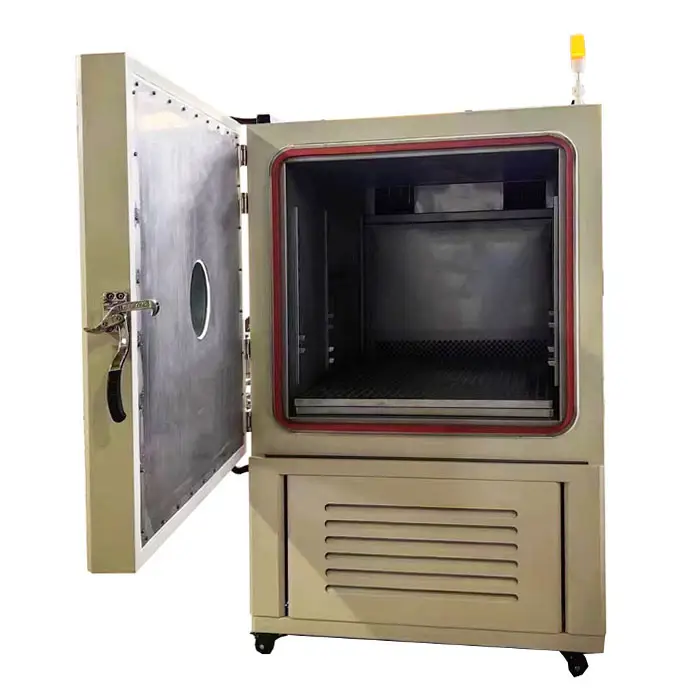 Electromagnetic wave propagation characteristics change substantially as atmospheric density decreases with elevation, introducing challenges for wireless communication systems operating in mountainous or airborne environments.
Atmospheric Attenuation Reduction at Elevation
Radio frequency signals experience lower atmospheric absorption at high altitudes due to reduced air molecule density. While this might seem advantageous, the phenomenon creates unexpected challenges including extended interference ranges and altered propagation patterns. Communication systems designed for sea-level operations may encounter interference from distant transmitters that would normally be attenuated by dense atmospheric layers.
Ionospheric Effects on Radio Wave Propagation
High-frequency communication systems depend on ionospheric reflection for long-distance transmission. Altitude variations affect the signal path between transmitter and ionosphere, altering skip distances and signal strength patterns. Aircraft traversing different altitudes experience dynamic changes in communication channel characteristics, requiring adaptive systems capable of maintaining stable links across varying atmospheric layers.
Antenna Performance in Rarefied Atmospheres
Antenna radiation patterns and impedance characteristics can shift under low-pressure conditions due to changes in dielectric properties surrounding radiating elements. Corona discharge phenomena become more prevalent at reduced atmospheric pressure, particularly affecting high-voltage RF transmission systems. These effects necessitate thorough testing to validate antenna performance across operational altitude ranges.
Pressure and Temperature Variations in Mountain and Flight Environments
Communication equipment must withstand extreme environmental gradients encountered during deployment and operation at various elevations, from sea level to stratospheric altitudes.
Rapid Pressure Changes During Flight Operations
Aircraft communication systems experience pressure variations from approximately 101 kPa at sea level to 20 kPa at 12,000 meters within minutes during ascent or descent. These rapid transitions stress sealed enclosures, create differential pressures across component housings, and can trigger outgassing from internal materials. Testing protocols must replicate these dynamic pressure profiles rather than static altitude conditions.
Temperature Extremes at Cruising Altitudes
Commercial aircraft cruise at altitudes where outside air temperatures routinely reach -50°C to -60°C in an altitude chamber, while unpressurized equipment bays may approach these ambient conditions. Conversely, electronic heat dissipation in low-density air creates localized hot spots. Communication devices must function reliably across temperature ranges spanning -40°C to +85°C or wider depending on installation location and operational requirements.
Humidity Depletion and Electrostatic Risks
High-altitude environments typically exhibit extremely low relative humidity, often below 10%. This desiccation affects hygroscopic materials, increases electrostatic discharge susceptibility, and alters dielectric properties of insulating materials. Polymeric components may become brittle, while connector contacts face increased friction and wear. Environmental testing must incorporate these low-humidity conditions alongside pressure and temperature stresses.
|
Altitude (meters) |
Atmospheric Pressure (kPa) |
Typical Temperature (°C) |
Relative Humidity (%) |
|
Sea Level (0) |
101.3 |
+15 |
40-70 |
|
3,000 |
70.1 |
+5 |
30-50 |
|
6,000 |
47.2 |
-5 |
20-35 |
|
9,000 |
30.8 |
-25 |
10-20 |
|
12,000 |
19.4 |
-50 |
<10 |
Electronic Component Performance Under Low Air Density Conditions
Reduced atmospheric density fundamentally alters thermal management, electrical performance, and mechanical stress patterns within electronic assemblies, requiring careful characterization through environmental testing.
Thermal Dissipation Challenges in Rarefied Air
Convective heat transfer efficiency decreases proportionally with air density, reducing cooling effectiveness by 50% or more at typical aircraft cruising altitudes. Components relying on natural or forced air convection experience elevated operating temperatures unless thermal designs account for reduced air density. Heat sinks, fans, and ventilation systems require validation under low-pressure conditions to prevent thermal runaway.
Arcing and Corona Discharge at Reduced Pressure
Paschen's Law governs electrical breakdown voltage as a function of pressure and gap distance, with minimum breakdown occurring around 5-10 kPa for typical electrode spacing. High-voltage circuits, such as power supplies and amplifier stages, become vulnerable to arcing at altitudes where previously adequate clearances prove insufficient. Conformal coatings and potting compounds provide mitigation, but require validation testing.
Capacitor and Inductor Parameter Shifts
Passive components exhibit subtle but measurable parameter changes under varying atmospheric conditions. Film capacitors may experience capacitance shifts due to dielectric material compression under external pressure differential. Air-core inductors see inductance variations as surrounding air density changes. While these effects are small, precision communication circuits may require compensation or component selection validated across operational pressure ranges.
Outgassing and Contamination Concerns
Many electronic materials release volatile compounds when exposed to vacuum or low-pressure conditions. Plastics, adhesives, and conformal coatings outgas molecules that can condense on sensitive optical components, contaminate connector contacts, or create conductive paths. Testing protocols must identify problematic materials before integration into altitude-deployed communication systems.
Altitude Chamber Simulation for Communication System Testing
Specialized altitude chambers replicate the complex interplay of pressure, temperature, and humidity encountered at high altitudes, enabling comprehensive device validation under controlled, repeatable conditions.
Controlled Pressure Profile Generation
Modern altitude chambers employ precision vacuum pumps and control valves to create user-programmable pressure profiles spanning atmospheric pressure (101 kPa) to near-vacuum conditions (0.5 kPa), equivalent to altitudes exceeding 30,000 meters. Depressurization rates can be controlled to simulate gradual climbs or rapid ascents, stressing devices with realistic pressure transition profiles rather than instantaneous changes.
Simultaneous Temperature and Humidity Control
Altitude effects rarely occur in isolation - realistic testing requires simultaneous pressure, temperature, and humidity control. Advanced chambers integrate heating and cooling systems capable of maintaining temperatures from -40°C to +150°C while managing humidity from 10% to 98% RH at pressures above 50 kPa. This tri-variate environmental control reveals failure modes invisible in single-parameter testing.
Live Device Operation During Testing
Communication systems must demonstrate functional performance throughout altitude exposure, not merely survive the environment. Altitude chambers incorporate feedthrough ports with diameters ranging from 50mm to 200mm, enabling cable connections to external test equipment. Devices can transmit and receive signals, undergo protocol testing, and demonstrate sustained operation while subjected to simulated high-altitude conditions.
Thermal Cycling Under Vacuum
Rapid temperature transitions at reduced pressure create extreme thermal stress. Chambers supporting heating rates of 3°C/min and cooling rates of 2°C/min enable thermal cycling protocols that reveal solder joint failures, component delamination, and thermal expansion mismatches. These accelerated tests compress months of altitude exposure into days of laboratory testing.
|
Chamber Specification |
Standard Range |
Testing Capability |
|
Pressure Range |
101 kPa to 0.5 kPa |
Simulates sea level to >30,000m altitude |
|
Temperature Range |
-40°C to +150°C |
Covers stratospheric cold to equipment heat |
|
Humidity Control |
10% to 98% RH |
Replicates moisture extremes |
|
Depressurization Time |
<30 min to 0.5 kPa |
Simulates rapid altitude changes |
|
Temperature Uniformity |
±2.0°C |
Ensures consistent exposure across specimens |
Industry Standards for High Altitude Communication Reliability
Regulatory frameworks and industry consensus standards establish baseline performance requirements ensuring communication devices meet safety and reliability expectations across diverse operational scenarios.
RTCA DO-160 Environmental Testing Requirements
The Radio Technical Commission for Aeronautics publishes DO-160, the definitive standard for airborne equipment environmental conditions and test procedures. Section 4 specifically addresses altitude testing, requiring demonstration of functionality at operational and maximum altitudes. Categories range from ground-based equipment to high-altitude long-endurance platforms, each with specific pressure exposure requirements.
MIL-STD-810 Method 500.6 Low Pressure Testing
Military Standard 810 provides comprehensive environmental engineering considerations for defense equipment. Method 500.6 outlines low-pressure testing procedures addressing storage, operation, and decompression scenarios. The standard recognizes that equipment may encounter altitudes during transport or deployment beyond normal operational ranges, requiring survival testing at extreme elevations.
ETSI Environmental Engineering Standards
The European Telecommunications Standards Institute publishes environmental specifications for telecommunications equipment. ETSI EN 300 019 series documents define environmental classes and severity levels including altitude exposure. These standards ensure network infrastructure deployed in mountainous regions maintains performance despite reduced atmospheric pressure.
IEC 60068-2-13 Pressure Testing Guidelines
International Electrotechnical Commission standard 60068-2-13 provides general guidance for low air pressure testing of electronic equipment. The standard addresses test setup, conditioning periods, functional performance verification, and measurement requirements. Compliance demonstrates equipment suitability for high-altitude deployment scenarios.
Improving Device Stability Through Environmental Stress Testing
Systematic environmental testing reveals design weaknesses and enables iterative improvements, transforming theoretical concepts into robust communication systems validated for altitude deployment.
Identifying Thermal Management Deficiencies
Altitude chamber testing quickly exposes inadequate thermal designs through component temperature monitoring during low-pressure operation. Devices that operate acceptably at sea level may experience overheating as reduced air density hampers convective cooling. Thermal imaging during testing pinpoints hot spots, guiding heat sink redesigns, fan selection, or ventilation improvements.
Validating Hermetic Sealing Effectiveness
Pressure-sensitive components require hermetic sealing to maintain internal atmospheric pressure regardless of external altitude. Helium leak testing combined with altitude chamber cycling validates seal integrity. Devices demonstrating pressure leakage undergo seal redesign or alternative encapsulation methods before production release.
Optimizing Material Selection
Testing different material candidates under altitude conditions reveals performance variations invisible during ambient testing. Adhesives maintaining strength at sea level may debond under thermal cycling at reduced pressure. Plastics exhibiting acceptable properties normally may become brittle at low temperatures and humidity. Comparative testing guides material selection toward altitude-compatible options.
|
Common Failure Mode |
Root Cause |
Testing Solution |
|
Component overheating |
Reduced convective cooling |
Thermal cycling at low pressure with temperature monitoring |
|
Electrical arcing |
Reduced breakdown voltage |
High-voltage operation at minimum pressure |
|
Seal leakage |
Pressure differential stress |
Helium leak testing during pressure cycling |
|
Connector failure |
Low-humidity contact corrosion |
Extended exposure with electrical continuity testing |
LIB Industry Altitude Chambers for Communication System Reliability
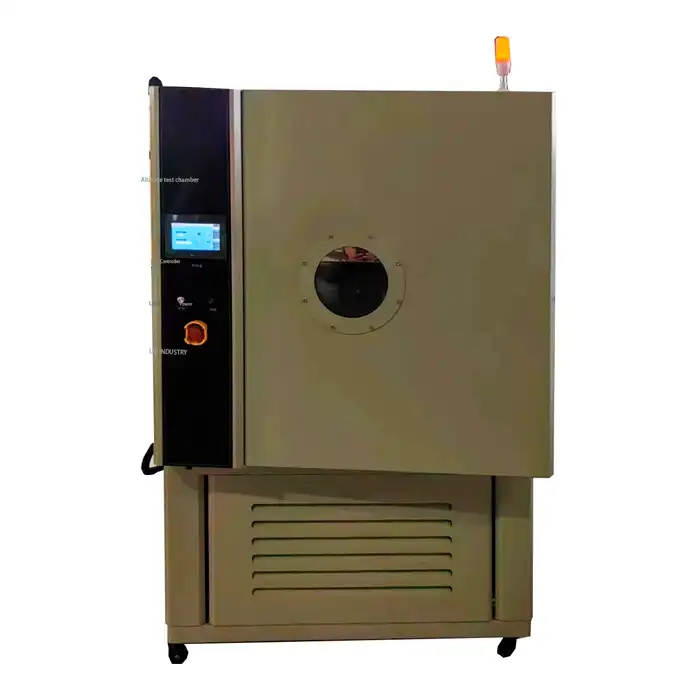 Specialized environmental simulation equipment provides the controlled testing environments essential for validating communication device performance across extreme altitude conditions.
Precision Environmental Control Systems
LIB Industry altitude chambers deliver exceptional environmental parameter control through advanced sensor networks and closed-loop regulation. Temperature stability within ±0.5°C and pressure accuracy of ±2 kPa ensure test condition repeatability across multiple test campaigns. This precision enables meaningful comparison of design iterations and validates marginal performance improvements.
Versatile Chamber Configurations
Communication device testing requirements vary from compact RF modules to complete avionics systems. LIB provides altitude chambers spanning 50L benchtop units to walk-in configurations exceeding 2000L internal volume. The A-1000 model offers 1500mm depth accommodating antenna assemblies and larger communication units, with explosion-proof viewing windows enabling visual monitoring throughout testing.
Manganese Steel Pressure Vessel Construction
Safety represents paramount importance when operating equipment under near-vacuum conditions. LIB chambers employ manganese steel pressure vessels with spray-treated surfaces, providing structural integrity to withstand atmospheric pressure differentials safely. SUS304 stainless steel interior surfaces resist corrosion from humidity cycling and provide easy cleaning between test programs.
Comprehensive Vacuum System Integration
Achieving rapid depressurization requires properly sized vacuum pumps and control valving. LIB altitude chambers incorporate vacuum systems capable of reducing pressure from atmospheric to 0.5 kPa within 30 minutes, simulating rapid aircraft ascents. Air pumping regulating valves and inflation valves enable precise pressure profile programming, supporting both static altitude holds and dynamic pressure transitions.
Advanced Monitoring and Data Logging
Modern communication device testing demands comprehensive data acquisition beyond basic chamber parameter logging. LIB systems support Ethernet connectivity enabling remote monitoring and PC-based data logging. Programmable controllers allow complex test sequences combining pressure, temperature, and humidity variations synchronized with external communication test equipment.
Safety and Observation Features
Operating under extreme conditions requires robust safety systems protecting both operators and test specimens. LIB altitude chambers incorporate over-temperature protection, over-current protection, earth leakage protection, and phase sequence protection. Explosion-proof glass observation windows with small round configurations withstand pressure differentials while maintaining visibility of operating devices throughout testing.
Conclusion
Communication device reliability at high altitudes depends on comprehensive environmental testing that accurately replicates the pressure, temperature, and humidity extremes encountered in real-world deployments. Altitude chambers provide controlled environments revealing design weaknesses, validating thermal management approaches, and ensuring regulatory compliance before production release. As communication infrastructure expands into mountainous regions and aircraft become increasingly dependent on complex communication systems, systematic altitude testing transitions from optional validation to essential quality assurance, protecting both equipment investments and the safety-critical functions these systems support.
FAQ
What altitude should communication devices be tested to for commercial aviation applications?
Commercial aircraft typically cruise between 9,000-12,000 meters, requiring communication equipment testing to at least 15,000 meters to provide safety margins. RTCA DO-160 specifies testing altitudes based on equipment installation location and aircraft type, with unpressurized areas requiring more stringent testing than environmentally controlled equipment bays.
How does altitude chamber testing differ from thermal vacuum chamber testing?
Altitude chambers focus on atmospheric pressure simulation while maintaining breathable internal atmospheres and supporting relatively modest vacuum levels (0.5 kPa minimum). Thermal vacuum chambers achieve much deeper vacuums (<10^-4 Pa) for space applications, creating different outgassing and thermal transfer conditions despite some operational overlap.
Can altitude chambers simulate rapid decompression events for safety testing?
Standard altitude chambers depressurize over 20-30 minute intervals, unsuitable for explosive decompression simulation. Specialized rapid decompression chambers incorporate quick-opening valves achieving pressure drops within seconds, testing communication equipment survival during catastrophic aircraft pressurization failures requiring different chamber designs and safety provisions.
Advance Your Testing Capabilities with LIB Industry
LIB Industry operates as a leading altitude chamber manufacturer and supplier, delivering customized environmental simulation solutions supporting communication device validation worldwide. Our turnkey approach encompasses chamber design, manufacturing, installation, commissioning, and operator training tailored to your specific testing requirements. Contact our engineering team at ellen@lib-industry.com to discuss communication system altitude testing solutions.