Solar Radiation Test Chambers for Testing Greenhouse Film Performance
Greenhouse films represent a critical investment for modern agriculture, requiring rigorous performance validation before deployment. Solar radiation test chambers provide controlled environments where manufacturers can assess how protective films withstand prolonged exposure to sunlight, temperature fluctuations, and humidity variations. These specialized testing solutions replicate years of outdoor weathering in accelerated timeframes, enabling agricultural film producers to optimize formulations, verify durability claims, and ensure their products meet international quality standards. By subjecting greenhouse films to precise environmental stressors, manufacturers can confidently deliver materials that protect crops while maintaining optical clarity and structural integrity throughout multiple growing seasons.
Why Greenhouse Films Require Solar Radiation Resistance Testing?
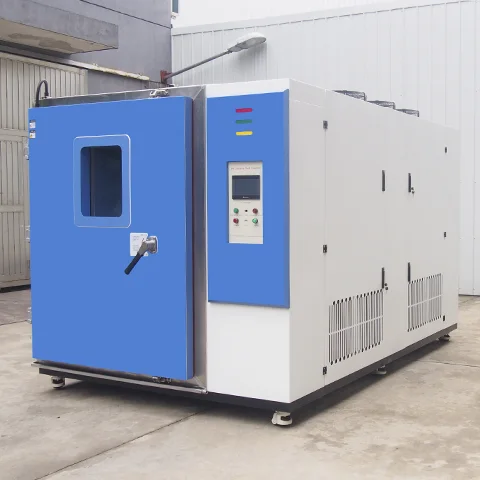 Agricultural films face harsh environmental challenges that directly impact crop productivity and farm economics. Understanding the necessity of comprehensive testing reveals why controlled evaluation environments have become indispensable for film manufacturers.
Economic Consequences of Premature Film Failure
Greenhouse operators invest substantial capital in covering materials, with replacement costs extending beyond the film itself. Labor expenses, operational downtime, and potential crop losses from unexpected film degradation create significant financial burdens. Testing programs that accurately predict service life help farmers make informed purchasing decisions and plan maintenance schedules effectively.
Variable Climate Exposure Across Agricultural Regions
Greenhouses operate in diverse geographical locations, from tropical zones with intense UV radiation to temperate regions experiencing dramatic temperature swings. A single film formulation must perform reliably across these varying conditions. Controlled chamber testing allows manufacturers to simulate specific regional climates and validate performance claims.
Quality Assurance for Customer Confidence
Agricultural businesses depend on transparent performance data when selecting greenhouse coverings. Documented test results from standardized environmental chambers provide the evidence needed to differentiate premium products from inferior alternatives. This verification process builds market credibility and supports premium pricing strategies.
Effects of UV Exposure on Plastic Film Transparency and Strength
Ultraviolet radiation represents one of the most destructive forces acting on polymer-based greenhouse films. Understanding degradation mechanisms enables better material selection and stabilizer formulation.
Photodegradation Mechanisms in Polymer Chains
UV photons possess sufficient energy to break chemical bonds within polyethylene and other common film materials. This chain scission process reduces molecular weight, compromising mechanical properties while creating discoloration. Advanced solar radiation test chambers incorporate calibrated light sources that replicate the UV spectrum found in natural sunlight, accelerating this degradation for assessment purposes.
Transmission Loss and Crop Impact
Agricultural productivity depends heavily on photosynthetically active radiation reaching plant canopies. As films yellow and lose transparency, light transmission decreases, directly reducing crop yields. Spectrophotometric measurements taken during accelerated weathering tests quantify this optical degradation, helping growers understand real-world performance expectations.
Mechanical Property Deterioration
Tensile strength and elongation capacity decline as UV exposure progresses. Films that initially withstand wind loads and snow accumulation may suddenly fail after months of service. Testing protocols measure these mechanical changes at defined intervals, creating degradation curves that predict field performance and establish replacement guidelines.
Thermal Aging and Its Impact on Agricultural Film Lifespan
Temperature extremes, both alone and combined with solar radiation, accelerate chemical reactions that limit film service life. Comprehensive testing addresses these thermal stresses systematically.
Heat-Induced Oxidation Processes
Elevated temperatures catalyze oxidative reactions within polymer matrices, particularly when oxygen permeates the film structure. This thermo-oxidative degradation becomes especially problematic in greenhouse environments where internal temperatures regularly exceed ambient conditions. Environmental chambers with precise temperature control capabilities enable researchers to quantify these effects across relevant temperature ranges.
Thermal Cycling and Fatigue
Daily temperature fluctuations create expansion and contraction cycles that stress film attachments and induce micro-cracking. Solar radiation test chambers equipped with programmable temperature cycling capabilities replicate these real-world conditions, revealing weaknesses in film formulations or installation methods before field deployment.
Combined Temperature-Humidity Interactions
Moisture absorption influences polymer degradation rates, with humidity effects varying significantly across temperature ranges. Multi-factor testing that simultaneously controls temperature, humidity, and radiation intensity provides the most accurate prediction of greenhouse film performance under actual agricultural conditions.
|
Environmental Factor |
Testing Range |
Performance Impact |
|
Temperature |
-40°C to +150°C |
Oxidation rate, mechanical properties |
|
Humidity |
10% to 98% RH |
Moisture absorption, dimensional stability |
|
UV Intensity |
0.55 W/m²/nm at 340nm |
Photodegradation, transparency loss |
|
Thermal Cycling |
Day/night simulation |
Fatigue resistance, attachment integrity |
Simulating Outdoor Agricultural Conditions in Test Chambers
Accurate environmental simulation requires sophisticated equipment design and precise parameter control. Modern testing facilities bridge the gap between laboratory evaluation and field performance.
Spectral Distribution Matching
Natural sunlight contains specific ratios of UV, visible, and infrared radiation. Quality solar radiation test chambers utilize specialized lamps that reproduce this spectral distribution, ensuring degradation mechanisms match outdoor exposure. Xenon arc lamps currently provide the closest approximation to natural sunlight across relevant wavelengths.
Geographic Climate Replication
Different agricultural regions present unique environmental challenges. Chamber programmability allows manufacturers to recreate Mediterranean summers, Nordic winters, or tropical monsoon conditions. This geographic specificity enables targeted product development for regional markets and validates performance claims for specific deployment locations.
Accelerated Versus Real-Time Testing
While accelerated testing concentrates environmental stresses to reduce evaluation time, correlation with actual outdoor exposure remains essential. Leading manufacturers maintain both accelerated chamber testing and natural weathering programs, developing algorithms that translate chamber hours into field years with validated accuracy.
Standards for Greenhouse Film Weathering and Durability
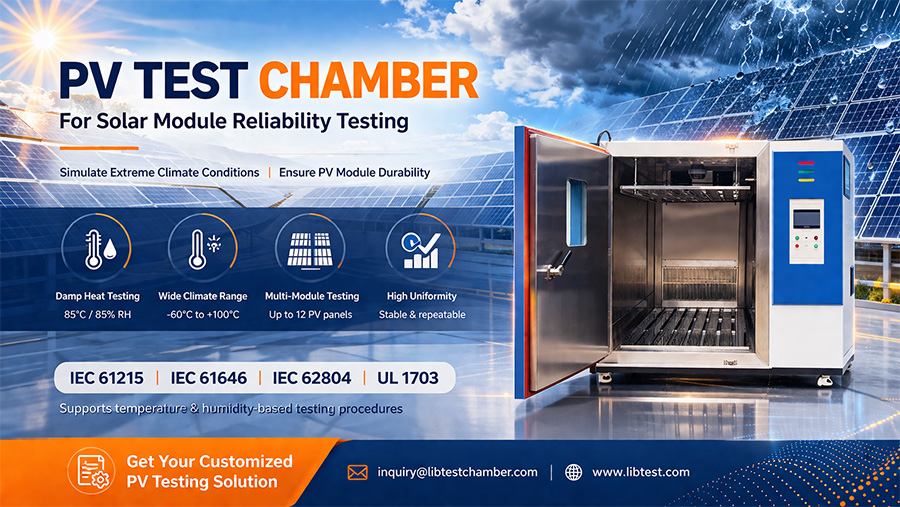
International testing standards provide frameworks that ensure consistency, repeatability, and comparability across different laboratories and manufacturers.
ISO and ASTM Testing Protocols
Organizations like the International Organization for Standardization and ASTM International publish detailed methodologies for evaluating agricultural film durability. These documents specify light sources, exposure durations, sample preparation methods, and property measurement techniques. Compliance with recognized standards facilitates market acceptance and regulatory approval.
Industry-Specific Performance Benchmarks
Agricultural film associations have established performance criteria reflecting actual greenhouse requirements. These benchmarks address critical parameters including light transmission percentage, tensile strength retention, and service life expectations. Solar radiation test chambers must possess the technical capabilities to execute these standardized evaluation programs.
Certification and Third-Party Validation
Independent testing laboratories provide unbiased performance verification that enhances product credibility. Manufacturers increasingly seek third-party certification demonstrating compliance with established standards. This objective validation differentiates quality products in competitive agricultural markets.
|
Standard |
Focus Area |
Key Parameters |
|
ISO 4892-2 |
Xenon arc exposure |
Spectral distribution, irradiance control |
|
ASTM G155 |
Accelerated weathering |
Temperature, humidity, spray cycles |
|
EN 13206 |
Agricultural film thermoplastics |
Mechanical properties, light transmission |
Optimizing Film Materials for Long-Term Agricultural Use
Testing insights drive formulation improvements that extend service life and enhance performance characteristics. Data-driven development accelerates innovation in agricultural film technology.
UV Stabilizer Selection and Concentration
Hindered amine light stabilizers (HALS) and UV absorbers protect polymer chains from photodegradation. Chamber testing allows systematic evaluation of different stabilizer packages, determining optimal concentrations that balance protection effectiveness against cost considerations. This optimization process typically reduces development time from years to months.
Antioxidant System Development
Phenolic and phosphite antioxidants combat thermo-oxidative degradation during both processing and service. Solar radiation test chamber testing under elevated temperatures reveals synergistic effects between different antioxidant combinations, guiding formulators toward robust protection systems that maintain film integrity throughout expected service periods.
Multi-Layer Film Architecture
Coextruded films incorporate functional layers that address specific performance requirements - UV barriers, infrared retention, anti-condensation surfaces. Solar radiation test chambers evaluate how layer adhesion and individual layer properties evolve under environmental stress, ensuring the entire film structure maintains integrity rather than delaminating prematurely.
LIB Industry Chambers for Greenhouse Film Weather Resistance Testing
 |
 |
|
|
|
|
| High-Quality Workroom | Precise Sensors | Smart PID controller |


Specialized testing equipment designed specifically for agricultural film evaluation addresses industry requirements with precision and reliability.
Customizable Chamber Configurations
LIB Industry solar radiation test chambers accommodate various sample sizes from small coupons to full-scale greenhouse film sections. The DHPV-04 model offers a 1220L interior volume with adjustable SUS304 stainless steel shelving, allowing simultaneous testing of multiple film samples under identical conditions. Custom configurations support panels up to 2 meters in length, enabling realistic testing of actual greenhouse covering materials.
Precise Environmental Control Systems
PT-100 Class A sensors detect temperature variations at 0.001-degree resolution, maintaining setpoint accuracy within ±0.5°C fluctuation. This precision ensures consistent test conditions throughout extended evaluation periods. Humidity control systems achieve ±2.5% RH deviation across the 10-98% RH operational range, replicating moisture conditions from arid to tropical climates.
Extended Duration Testing Capabilities
Greenhouse film durability assessment requires prolonged exposure periods, often extending to 1000 hours or more. LIB Industry chambers feature robust construction and reliable component selection that supports continuous operation without performance degradation. Temperature ranges from -70°C to +150°C accommodate both thermal cycling protocols and elevated temperature aging studies.
|
Chamber Specification |
DHPV-04 Model |
Application Benefit |
|
Internal Dimensions |
1300×700×1350 mm |
Accommodates multiple film samples |
|
Temperature Range |
-70°C to +150°C |
Thermal aging and cycling tests |
|
Humidity Range |
10% to 98% RH |
Moisture interaction studies |
|
Test Duration |
1000+ hours |
Long-term durability validation |
|
Temperature Stability |
±0.5°C fluctuation |
Consistent test conditions |
|
Standard Cable Port |
50/100/200mm diameter |
Easy sensor integration |
Versatile Testing Applications
Beyond greenhouse film evaluation, these environmental chambers support testing for photovoltaic modules, automotive components, and building materials. The benchtop, floor stand, and walk-in configurations provide scalability matching different operational requirements. Combined testing capabilities integrate temperature, humidity, vibration, and altitude simulation within unified platforms.
User-Friendly Operation and Monitoring
Intuitive control interfaces simplify programming complex test sequences involving multiple environmental parameters. Real-time data logging captures temperature, humidity, and exposure duration, creating comprehensive test records that support quality documentation and regulatory compliance. Remote monitoring capabilities allow researchers to track test progress without laboratory visits.
Energy-Efficient Design Philosophy
LIB Industry incorporates energy-saving technologies throughout solar radiation test chamber design, reducing operational costs during extended test programs. Efficient insulation minimizes temperature maintenance energy, while optimized refrigeration systems balance performance against power consumption. This efficiency consideration becomes particularly relevant for facilities running multiple concurrent test programs.
Comprehensive Technical Support
LIB Industry provides turn-key solutions encompassing research consultation, custom design, manufacturing, commissioning, delivery, installation, and operator training. This comprehensive service model ensures chambers operate at optimal performance levels and testing protocols align with specific evaluation objectives. Ongoing technical support maintains equipment reliability throughout operational lifecycles.
Related LIB Industry Solar Radiation & Weathering Test Equipment
|
|
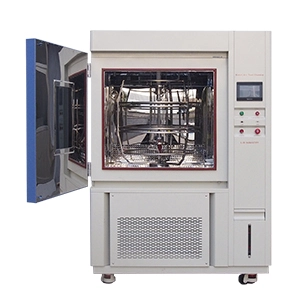
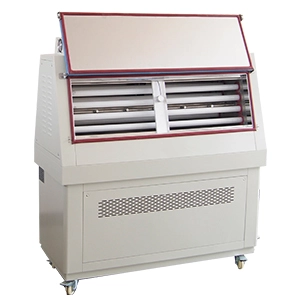
UV Accelerated Weathering Test ChamberUV-SI-260 UV Aging Test Chamber |
|

Conclusion
Solar radiation test chambers have become indispensable tools for greenhouse film manufacturers seeking to deliver reliable, long-lasting products. By replicating years of environmental exposure in controlled timeframes, these specialized systems enable data-driven formulation optimization, performance validation, and quality assurance. As agricultural demands intensify globally, the role of precise environmental testing will only grow in importance, supporting innovations that enhance crop protection while reducing replacement costs.
FAQ
How long does accelerated weathering testing typically take for greenhouse films?
Standard protocols range from 500 to 2000 hours depending on target service life predictions. Advanced chambers with intensified radiation can compress multi-year outdoor exposure into several months of continuous testing while maintaining correlation accuracy with field performance.
Can solar radiation test chambers evaluate both polyethylene and specialty agricultural films?
Yes, modern environmental chambers accommodate diverse film types including low-density polyethylene, ethylene vinyl acetate, and multilayer coextruded structures. Programmable parameters adjust to material-specific testing requirements, ensuring appropriate evaluation conditions regardless of polymer composition or additive packages.
What differentiates agricultural film testing from general UV exposure testing?
Greenhouse film evaluation requires simultaneous control of temperature, humidity, and radiation matching agricultural environments. Standard UV chambers may lack precise humidity control or thermal cycling capabilities essential for predicting real-world greenhouse performance, making specialized agricultural testing equipment necessary.
Ready to validate your greenhouse film performance with precision environmental testing? LIB Industry, a leading environmental test chamber manufacturer and supplier, delivers customized solar radiation testing solutions tailored to agricultural material evaluation. Contact our technical team at ellen@lib-industry.com to discuss your specific testing requirements.