How Climatic Testing Supports Product Certification Standards?
Product certification represents a critical gateway to global markets, requiring manufacturers to demonstrate compliance with stringent environmental performance standards before regulatory approval. Climatic testing validates product resilience against temperature extremes, humidity variations, and combined environmental stresses that products encounter throughout their operational lifecycle. A climatic test chamber provides the controlled, repeatable conditions necessary to generate certification evidence meeting international regulatory frameworks. By subjecting products to accelerated environmental exposure protocols defined in standards like IEC 60068, ISO 9001, and industry-specific certifications, manufacturers generate quantitative performance data satisfying regulatory authorities. This systematic validation approach transforms compliance from uncertain speculation into documented proof, expediting market access while ensuring products deliver reliable performance across diverse geographic regions and climatic zones where they will ultimately serve end users.
Overview of Climatic Testing in Global Certification Requirements
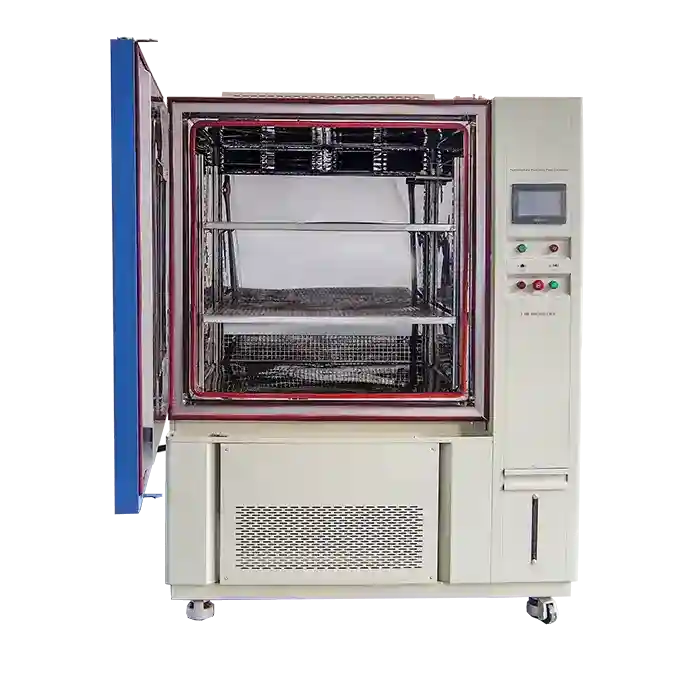 Environmental qualification testing has evolved into a universal prerequisite for product certification across virtually all regulated industries, reflecting growing awareness that climatic stresses significantly impact product longevity and safety.
Certification as Market Access Prerequisite
Regulatory bodies worldwide mandate environmental testing documentation before granting market authorization. The European Union's CE marking requires conformity assessment demonstrating products withstand expected environmental conditions per applicable directives. North American markets demand similar evidence for UL certification, while Asian markets enforce regional standards. Without climatic testing validation, products face market exclusion regardless of functional capabilities.
Harmonization of International Testing Standards
Global trade necessitates internationally recognized testing protocols preventing redundant qualification across different markets. Organizations like the International Electrotechnical Commission (IEC) and International Organization for Standardization (ISO) publish harmonized standards adopted by national regulatory bodies. This standardization enables manufacturers to conduct single test campaigns satisfying multiple regional requirements, reducing certification timelines and costs.
Liability Mitigation Through Documented Performance
Climatic testing generates traceable evidence protecting manufacturers from liability claims. When products fail prematurely due to environmental exposure, documented qualification testing demonstrates due diligence in design validation. This protection extends beyond legal requirements, supporting warranty claims analysis and providing data for continuous improvement initiatives that enhance product reputation.
Key Standards Requiring Environmental and Climatic Validation
Numerous international and industry-specific standards mandate climatic testing, each addressing particular product categories, environmental stresses, and performance criteria relevant to specific applications.
IEC 60068 Environmental Testing Standards
The IEC 60068 series represents the foundational framework for environmental testing across electronics and electrical equipment in a climatic test chamber. Test Db (damp heat cyclic) validates performance under alternating temperature and high humidity, while Test Ca (damp heat steady state) assesses continuous humid operation. These protocols define precise chamber parameters including temperature ranges, humidity levels, cycling rates, and exposure durations that certification bodies reference during approval evaluations.
ISO 9001 Quality Management System Requirements
While ISO 9001 establishes quality management principles rather than specific test protocols, certification demands documented validation of product performance claims. Climatic testing provides objective evidence supporting quality control processes. Manufacturers must demonstrate systematic approaches to identifying environmental risks, implementing testing protocols, and maintaining calibrated equipment - all elements requiring capable climatic chambers and rigorous procedures.
Automotive Industry Standards
Automotive components face extraordinarily diverse environmental conditions from arctic cold starts to desert heat exposure. IATF 16949 automotive quality management standards reference specific testing requirements in customer specifications. AEC-Q qualification standards for automotive electronics mandate temperature cycling, high-temperature storage, and thermal shock testing. These automotive-specific protocols often exceed general electronics standards in severity and duration.
Medical Device Environmental Qualification
Medical device regulations including FDA 21 CFR Part 820 and ISO 13485 require environmental testing validating device safety and effectiveness throughout expected service life. IEC 60601-1 specifically addresses medical electrical equipment environmental conditions. Sterilizable devices undergo additional testing confirming materials withstand repeated autoclave cycles without degradation affecting functionality or biocompatibility.
|
Standard |
Scope |
Key Climatic Tests |
Typical Industries |
|
IEC 60068-2-30 |
Damp heat cyclic testing |
Temperature/humidity cycling |
Electronics, telecommunications |
|
IEC 60068-2-78 |
Damp heat steady state |
Constant high temperature/humidity |
Consumer electronics, industrial |
|
ISO 16750 |
Road vehicle components |
Temperature shock, humidity exposure |
Automotive, transportation |
|
MIL-STD-810 |
Defense equipment |
Extreme temperature, humidity, combined |
Military, aerospace |
|
ASTM D4169 |
Transport packaging |
Temperature cycling during shipping |
Packaging, logistics |
Role of Climatic Chambers in IEC and ISO Compliance Testing

Precision environmental simulation equipment enables manufacturers to execute standardized test protocols with the accuracy, repeatability, and documentation necessary for certification acceptance.
Temperature and Humidity Profile Execution
Certification standards specify exact environmental profiles that climatic test chambers must reproduce faithfully. IEC 60068-2-30 Test Db requires precise cycling between temperature extremes with controlled humidity levels at specific rates. A climatic test chamber must achieve temperature uniformity within ±2.0°C and humidity deviation under ±2.5% RH throughout the test volume, ensuring all specimens experience identical conditions regardless of position.
Calibration and Measurement Traceability
Regulatory acceptance demands verifiable measurement accuracy traceable to national or international standards. Climatic chambers require periodic calibration against reference instruments certified by accredited laboratories. Temperature sensors (typically PT100 Class A) and humidity probes maintain calibration certificates documenting measurement uncertainty. This traceability chain proves test conditions met standard requirements within acceptable tolerances.
Multi-Parameter Simultaneous Control
Many certification protocols combine temperature, humidity, and duration parameters simultaneously. Testing pharmaceutical packaging might require 40°C at 75% RH for six months, simulating tropical storage. Automotive electronics undergo -40°C to +85°C cycling at varying humidity levels. Advanced climatic chambers manage these complex multi-parameter profiles through programmable controllers supporting 120+ programs with 100 segments each, accommodating diverse certification requirements.
Chamber Qualification and Validation
Before conducting certification testing, chambers themselves undergo qualification demonstrating capability to achieve and maintain specified conditions. Installation Qualification (IQ) verifies proper installation and safety systems. Operational Qualification (OQ) confirms performance across the operational range. Performance Qualification (PQ) validates chamber performance under actual testing loads. This three-stage qualification process satisfies GMP and quality system requirements.
How Test Data Supports Regulatory Approval Processes?
Systematic data collection, analysis, and presentation transform raw environmental exposure into persuasive certification evidence satisfying regulatory scrutiny.
Quantitative Performance Metrics
Regulatory authorities require objective, quantifiable evidence rather than subjective assessments. Climatic testing generates numerical data including resistance measurements, leakage currents, dimensional changes, and functional parameters measured before, during, and after environmental exposure. Statistical analysis demonstrates whether performance degradation exceeds acceptable limits defined in product specifications or standards.
Comparative Testing Against Standards
Certification testing often compares product performance against standard reference conditions or competitive benchmarks. Testing identical products in different climatic profiles reveals margin-to-failure, indicating how comfortably products exceed minimum requirements. This comparative data provides confidence that manufacturing variations or unexpected conditions won't trigger field failures, supporting approval decisions.
Failure Mode Documentation
When products fail in a climatic test chamber during climatic testing, detailed failure analysis provides valuable certification insights. Photographic documentation, electrical failure signatures, and material degradation patterns reveal whether failures result from design limitations, manufacturing defects, or test condition severity. This transparency demonstrates manufacturer competence in understanding product limitations and implementing appropriate corrections.
Long-Term Stability Predictions
Accelerated environmental testing enables prediction of real-world longevity supporting warranty claims and product lifecycle declarations. Arrhenius relationships correlate accelerated temperature stress with field aging, while Coffin-Manson equations relate thermal cycling to fatigue life. These models transform weeks of chamber testing into decade-long performance predictions, crucial for medical devices, infrastructure components, and other long-service products.
|
Test Output |
Regulatory Value |
Documentation Requirements |
|
Pass/Fail Determination |
Demonstrates minimum compliance |
Test report with clear criteria |
|
Performance Degradation Curves |
Shows safety margins |
Graphical data with trend analysis |
|
Failure Analysis Reports |
Proves understanding of limits |
Photos, measurements, root cause |
|
Statistical Confidence Intervals |
Validates production consistency |
Sample sizes, distribution analysis |
Documentation and Traceability in Climatic Qualification Testing
Comprehensive documentation transforms test execution into legally defensible certification evidence, supporting both initial approval and ongoing regulatory surveillance.
Test Protocol Development
Certification testing begins with detailed protocols specifying chamber conditions, specimen preparation, measurement parameters, acceptance criteria, and contingency procedures. Protocols reference applicable standards, justify any deviations, and define responsibilities. Regulatory reviewers scrutinize protocols ensuring tests adequately challenge products without introducing artificial failure modes unrepresentative of real-world exposure.
Real-Time Data Logging
Modern climatic chambers incorporate automated data acquisition systems continuously recording temperature, humidity, and chamber status throughout testing. Time-stamped data files provide irrefutable evidence that specified conditions were maintained continuously. Alarms captured in logs demonstrate chamber monitoring and operator response to any deviation events, proving test integrity.
Chain of Custody for Test Specimens
Regulatory compliance demands demonstrable specimen identity throughout testing. Documentation tracks each specimen from receipt through testing to final disposition. Serial numbers, photographs, and custody logs prove tested items represent production units rather than hand-built prototypes. This traceability extends to component lots, manufacturing dates, and assembly facilities.
Non-Conformance and Deviation Management
When chamber malfunctions, power failures, or other events interrupt testing, formal deviation reports document the occurrence, impact assessment, and corrective actions. Regulatory submissions include these reports demonstrating how test integrity was maintained or why affected results remain valid. Transparent deviation management builds regulatory confidence in test rigor.
Optimizing Test Procedures for Faster Certification Approval
Strategic testing approaches balance thoroughness with efficiency, accelerating certification timelines without compromising evidence quality or regulatory acceptance.
Parallel Testing Strategies
Rather than sequential testing through different environmental conditions, parallel approaches expose multiple specimen sets to different stresses simultaneously. While one climatic test chamber executes high-temperature storage, another performs humidity cycling, and a third conducts thermal shock. This parallelization compresses certification schedules from months to weeks, particularly valuable for products targeting multiple markets with different requirements.
Risk-Based Testing Prioritization
Not all products require exhaustive climatic testing across every conceivable condition. Risk analysis identifies critical environmental stresses most likely to cause failures or affect safety. Safety-critical functions undergo rigorous testing, while non-critical features receive abbreviated protocols. This focused approach allocates testing resources efficiently, satisfying regulatory requirements without unnecessary expense or delay.
Leveraging Previous Certification Data
Products sharing design heritage with previously certified models can reference historical test data supporting abbreviated testing. Similarity assessments document unchanged components, materials, and manufacturing processes. New testing focuses on modified elements while citing existing evidence for unchanged portions. Regulatory bodies increasingly accept this approach when properly justified, dramatically reducing qualification burdens.
Pre-Compliance Testing Programs
Conducting internal environmental testing before formal certification trials identifies problems early when corrections cost less. Pre-compliance chambers operated in development labs reveal design weaknesses during prototype stages. Addressing failures before certification testing prevents costly test failures requiring redesign, remanufacture, and retesting that delay market introduction.
LIB Industry Chambers for Fast and Compliant Certification Testing
 |
 |
|
|
|
|
|
|
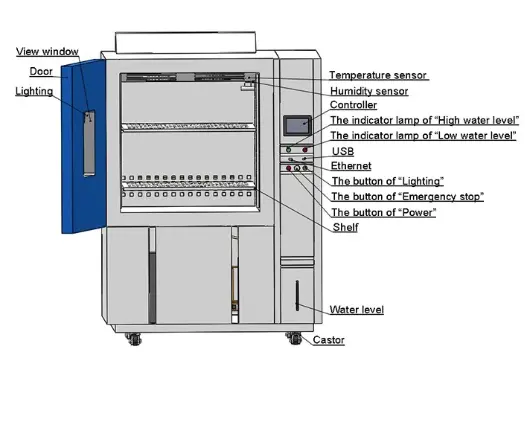
| Robust Workroom | Cable Hole | Temperature and Humidity Sensor | PID controller | |


Purpose-designed environmental chambers provide the precision, reliability, and documentation capabilities essential for efficient certification campaigns meeting diverse regulatory requirements.
Comprehensive Temperature and Humidity Ranges
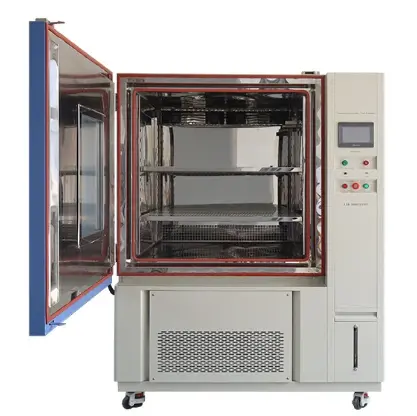
LIB Industry climatic test chambers span temperature ranges from -86°C to +150°C with humidity control from 10% to 98% RH, encompassing virtually all certification standard requirements. This capability eliminates the need for multiple specialized chambers, enabling manufacturers to conduct complete certification test suites within single facilities. The TH-series offers five standard volumes (100L to 1000L) accommodating diverse product sizes.
Precision Environmental Control Systems
Certification testing demands exceptional environmental uniformity and stability. LIB chambers maintain temperature fluctuation within ±0.5°C and humidity deviation under ±2.5% RH through advanced control algorithms and high-quality components. French Tecumseh compressors provide reliable refrigeration, while nichrome heaters deliver rapid, uniform heating. This precision ensures test results reflect product performance rather than chamber variability.
Programmable Multi-Segment Control
Complex certification profiles require sophisticated programming capabilities. LIB controllers support 120 programs with 100 segments each, enabling recreation of intricate temperature-humidity-time sequences specified in standards. Multi-language interfaces (English, French, Spanish, German, Russian) facilitate international operations. Ethernet connectivity enables remote monitoring and data export supporting quality management systems.
Observation and Access Features
Monitoring specimens during testing provides insights into progressive degradation. Double-layer tempered glass observation windows (80mm thick) with interior LED lighting allow visual inspection without interrupting environmental conditions. Standard cable ports with plugs enable electrical connections to specimens, supporting functional testing during environmental exposure. These features prove particularly valuable for failure analysis during development testing.
Water Quality Management
Humidity testing reliability depends on consistent water quality preventing mineral deposits and biological contamination. LIB climatic test chambers incorporate water purification systems ensuring deionized water feeds humidification systems. Automatic water supply with shortage protection prevents test interruption from depleted reservoirs. Stainless steel surface evaporation humidifiers resist corrosion, maintaining humidity accuracy throughout extended testing campaigns.
Comprehensive Safety Infrastructure
Unattended long-duration certification testing requires robust safety systems. LIB chambers incorporate humidifier dry-combustion protection, over-temperature protection, over-current protection, refrigerant high-pressure protection, water shortage protection, and earth leakage protection. These interlocked systems prevent equipment damage and facility hazards during the weeks-long exposure periods common in certification protocols.
Compliance with International Standards
LIB manufacturing facilities maintain ISO 9001 certification for quality and environmental management, demonstrating systematic approaches to production quality. Chambers carry CE certification for European markets and comply with CSA requirements for North America. Third-party testing by SGS and TUV organizations validates performance claims, providing regulatory authorities confidence in chamber capabilities.
|
LIB Chamber Model |
Internal Volume |
Temperature Range |
Ideal Applications |
|
TH-100 |
100L |
-70°C to +150°C |
Component qualification, small assemblies |
|
TH-225 |
225L |
-70°C to +150°C |
Consumer electronics, medical devices |
|
TH-500 |
500L |
-70°C to +150°C |
Industrial products, automotive components |
|
TH-1000 |
1000L |
-70°C to +150°C |
Large assemblies, telecommunications equipment |
|
Custom Walk-In |
>2000L |
Configurable |
Complete systems, packaging validation |
Conclusion
Climatic testing constitutes an indispensable element of product certification, transforming regulatory compliance from bureaucratic burden into systematic validation of environmental durability. Standards-based testing within precision-controlled chambers generates quantitative evidence satisfying regulatory authorities while revealing design improvements enhancing product competitiveness. Manufacturers investing in capable environmental test equipment, rigorous protocols, and comprehensive documentation accelerate certification timelines, expand market access, and build customer confidence through demonstrated environmental resilience. As global markets increasingly demand evidence-based performance claims, climatic testing infrastructure becomes strategic assets differentiating industry leaders from followers.
FAQ
How long does typical climatic certification testing require?
Duration varies dramatically by standard and product type. Basic electronics might require 500-1000 hours (3-6 weeks) for temperature-humidity cycling per IEC 60068, while pharmaceutical stability testing demands 6-12 months at accelerated conditions. Automotive qualification often spans 2-3 months combining multiple environmental stresses sequentially or in parallel.
Can single chamber tests satisfy multiple international certification requirements simultaneously?
Many certification standards reference common IEC or ISO test methods, enabling single test campaigns to generate data satisfying multiple markets. Strategic test protocol design incorporating the most stringent requirements from relevant standards allows efficient multi-market certification. Regulatory submissions highlight how testing meets or exceeds each specific standard's criteria.
What documentation must accompany climatic test data for regulatory submissions?
Complete submissions include test protocols referencing applicable standards, chamber qualification records demonstrating calibration traceability, continuous data logs proving conditions were maintained, specimen identification and handling logs, measurement data with statistical analysis, failure reports if applicable, and photographic evidence. Many regulatory bodies provide specific submission templates outlining required elements.
Accelerate Your Certification Success with LIB Industry
LIB Industry stands as your dedicated climatic test chamber manufacturer and supplier, providing comprehensive environmental testing solutions supporting global product certification requirements. Our engineering expertise encompasses chamber specification, custom design, manufacturing, installation, calibration, and operator training worldwide. Contact our certification testing specialists at ellen@lib-industry.com to discuss your regulatory compliance requirements.