Evaluating Industrial Sensors in High-Dust Environments
Industrial sensors operating in mining facilities, cement plants, grain processing centers, and automotive manufacturing face relentless exposure to airborne particulates that compromise measurement accuracy and operational reliability. Evaluating sensor performance under these challenging conditions requires specialized testing equipment that replicates real-world dust intrusion scenarios with scientific precision. A dust test chamber creates controlled particulate environments where engineers can assess ingress protection ratings, identify sealing vulnerabilities, and validate long-term durability before deployment. This systematic evaluation process prevents costly field failures, ensures compliance with international protection standards, and enables manufacturers to optimize sensor designs for demanding industrial applications where dust contamination represents an ongoing operational threat.
How Dust Particles Interfere with Sensor Signal Accuracy?
_1730198997291.webp "blog-1-1") Particulate contamination affects sensor functionality through multiple mechanisms, each requiring specific evaluation methodologies to understand and mitigate performance degradation.
Particulate contamination affects sensor functionality through multiple mechanisms, each requiring specific evaluation methodologies to understand and mitigate performance degradation.
Optical Path Obstruction in Photoelectric Sensors
Photoelectric sensors depend on unobstructed light transmission between emitters and receivers. Fine dust accumulation on optical surfaces scatters incident light, reducing signal strength and causing false triggering or detection failures. Talc powder testing at 2 kg/m³ concentration reveals how quickly optical components degrade under continuous particulate exposure. Sensors lacking adequate lens protection show measurable performance decline within hours of dust exposure.
Mechanical Interference with Moving Components
Proximity sensors and position encoders often incorporate mechanical elements vulnerable to dust infiltration. Abrasive particles entering bearing surfaces accelerate wear, increase friction, and introduce measurement errors. Particle sizes below 75 microns prove particularly problematic, penetrating seemingly tight clearances and accumulating in critical zones. Environmental chamber testing with controlled particle distribution identifies design weaknesses before production deployment.
Electrical Contact Degradation
Conductive dust creates short-circuit pathways between exposed terminals, while insulating particles prevent proper electrical connections. Temperature sensors using resistive elements experience measurement drift as particulates alter thermal transfer characteristics. Humidity below 30% RH during testing prevents moisture-related clumping, isolating pure dust effects from combined environmental stresses that occur in actual industrial settings.
Sealing and Protection Strategies for Industrial Sensor Design
Effective dust protection requires integrated design approaches that balance ingress prevention against functional requirements like thermal management and pressure equalization.
Gasket Material Selection and Compression
Silicone rubber gaskets provide superior sealing against fine particulates when properly compressed. Double-layer configurations create redundant barriers, dramatically reducing dust penetration rates. Chamber testing validates gasket performance by maintaining negative pressure differentials while exposing sealed enclosures to concentrated dust clouds. Effective designs prevent particle ingress even under 2000 Pa vacuum conditions specified in IP6X protocols.
Labyrinth Seal Geometries
Complex pathway designs force dust-laden air through multiple directional changes, causing particles to settle before reaching sensitive components. These passive protection systems require no maintenance while providing robust defense against particulate intrusion. Dust test chamber evaluation with talcum powder - selected for its fine particle size and flowability - tests labyrinth effectiveness across various configurations and pressure differentials.
Hermetic Sealing Techniques
Welded metal enclosures and glass-to-metal seals offer absolute protection against dust ingress, achieving IP6X ratings with complete particle exclusion. This approach suits high-value sensors where cost justifies manufacturing complexity. Validation testing in chambers equipped with vacuum systems confirms hermetic integrity by detecting even minute seal failures through pressure decay measurements.
|
Protection Strategy |
IP Rating Potential |
Application Suitability |
Validation Method |
|
Elastomeric Gaskets |
IP5X - IP6X |
General industrial sensors |
Vacuum differential testing |
|
Labyrinth Seals |
IP5X |
Ventilated enclosures |
Particle concentration monitoring |
|
Hermetic Sealing |
IP6X |
Critical measurement devices |
Helium leak detection + dust exposure |
|
Conformal Coatings |
IP5X enhancement |
Circuit board protection |
Combined dust/humidity cycling |
Dust Chamber Testing for Optical and Proximity Sensors
Different sensor technologies respond uniquely to particulate exposure, necessitating customized evaluation protocols that address technology-specific vulnerabilities.
Laser Distance Measurement Devices
Laser ranging sensors employ focused beams that prove extremely sensitive to lens contamination. Even microscopic dust layers introduce measurement errors by scattering coherent light. Testing protocols cycle between dust exposure periods and functional measurements, quantifying accuracy degradation over time. Chambers with programmable dust circulation patterns simulate both continuous exposure and intermittent contamination events matching industrial duty cycles.
Capacitive Proximity Detection
Capacitive sensors detect target presence through electromagnetic field changes. Conductive dust accumulation on sensing surfaces alters capacitance baselines, causing detection range variations and false triggering. Environmental chambers maintaining specific humidity levels below 30% RH isolate capacitive effects from moisture-induced changes. This controlled approach identifies pure dust sensitivity separate from combined environmental influences.
Inductive Sensor Evaluation
While generally robust against non-metallic dust, inductive sensors suffer performance issues when metallic particles enter detection zones. Iron-rich dust from machining operations proves particularly problematic. Specialized testing employs custom dust mixtures matching actual workplace particulate composition. This application-specific approach provides realistic performance data rather than standardized talc powder results.
Reliability Validation of Sensors in Harsh Industrial Conditions
Long-term reliability prediction requires accelerated testing methodologies that compress years of operational exposure into manageable timeframes while maintaining correlation with field performance.
Accelerated Life Testing Protocols
Extended duration testing from 24 to 99 hours in a dust test chamber in concentrated dust environments simulates months or years of industrial exposure. Programmable fight time and blowing time parameters replicate duty cycles matching actual sensor operating patterns. Temperature elevation to 50°C accelerates chemical reactions and mechanical wear processes, though correlation factors must account for non-linear aging relationships between test conditions and normal operation.
Functional Performance Monitoring
Continuous measurement of sensor output during dust exposure reveals degradation patterns invisible in pre/post testing approaches. Dust-proof power outlets supporting 16A loads enable energized testing of complete sensor assemblies. Real-time data acquisition through Ethernet-connected controllers captures transient failures and intermittent malfunctions that occur during particulate intrusion events.
Post-Exposure Teardown Analysis
Disassembly inspection following chamber testing reveals dust accumulation patterns, seal failure modes, and component degradation mechanisms. This forensic approach guides design improvements targeting specific vulnerabilities. Combining quantitative performance data with qualitative physical examination provides comprehensive understanding of dust-related failure progression.
|
Test Duration |
Dust Concentration |
Temperature Setting |
Equivalent Field Exposure |
Application |
|
8 hours |
2 kg/m³ talc |
Ambient |
3-6 months light duty |
IP5X verification |
|
8 hours |
2 kg/m³ talc |
50°C |
6-12 months moderate duty |
IP6X certification |
|
24-72 hours |
2 kg/m³ talc |
50°C |
2-5 years heavy industrial |
Reliability validation |
|
Cyclic (99H max) |
Variable |
Temperature cycling |
Lifetime prediction |
Development testing |
Industry Standards for Dust Resistance in Sensor Systems
International specifications provide frameworks ensuring consistent testing methodologies and comparable performance claims across manufacturers and markets.
IEC 60529 Ingress Protection Ratings
This foundational standard defines IP5X and IP6X dust protection levels universally recognized in sensor specifications. IP5X permits limited dust ingress that doesn't interfere with operation, while IP6X requires complete particle exclusion. Testing procedures specify talc powder characteristics, chamber configurations, vacuum pressure levels, and exposure durations. Compliance requires specialized equipment maintaining precise particulate concentrations and environmental conditions throughout eight-hour test cycles.
ISO 20653 Road Vehicle Protection
Automotive sensors face unique dust challenges from road debris, brake dust, and environmental particulates. ISO 20653 extends IEC 60529 with additional IP5KX and IP6KX ratings addressing vehicle-specific requirements. Enhanced testing protocols account for vibration, temperature extremes, and moisture combinations occurring in automotive applications. Sensors passing these stringent evaluations demonstrate suitability for underbody mounting and engine compartment installation.
MIL-STD-810 Military Environmental Testing
Military applications demand extreme reliability under combat and field conditions. Method 510.7 addresses sand and dust exposure scenarios exceeding commercial requirements. Testing employs Arizona road dust and other standardized particulates simulating desert operations. Chamber modifications supporting these protocols include higher dust concentrations, extended test durations, and combined environmental stressors. Sensors meeting military specifications reliably operate in the harshest industrial environments.
Improving Sensor Performance Through Dust Exposure Analysis
Systematic testing generates insights that drive iterative design improvements, transforming dust vulnerability into competitive differentiation.
Identifying Critical Failure Mechanisms
Dust test chamber testing under controlled conditions isolates specific failure modes obscured in complex field environments. Particulate accumulation patterns reveal inadequate sealing locations, while performance degradation curves identify vulnerable components. This diagnostic capability accelerates development cycles by focusing engineering resources on actual weakness points rather than speculative concerns.
Material Selection Optimization
Comparative testing of alternative materials under identical dust conditions quantifies performance differences objectively. Gasket compounds, lens coatings, and housing materials demonstrating superior dust resistance receive prioritization in production designs. Evidence-based material selection reduces costs by avoiding over-specification while ensuring adequate protection for intended applications.
Protective Feature Validation
New protective technologies - nano-coatings, air purge systems, self-cleaning mechanisms - require validation before production integration. Dust test chambers provide controlled environments where incremental improvements receive quantitative assessment. Side-by-side comparison testing eliminates subjective evaluation, generating data supporting design decisions and marketing claims.
Cost-Performance Balancing
Enhanced dust protection typically increases manufacturing costs through additional components, tighter tolerances, or premium materials. Chamber testing establishes minimum protection levels meeting application requirements, avoiding unnecessary over-engineering. This optimization balances reliability against commercial viability, particularly important in price-sensitive industrial markets.
LIB Industry Dust Test Chambers for Industrial Sensor Validation
 Specialized testing equipment designed specifically for sensor evaluation addresses unique requirements while maintaining standards compliance and operational flexibility.
Comprehensive Chamber Configurations
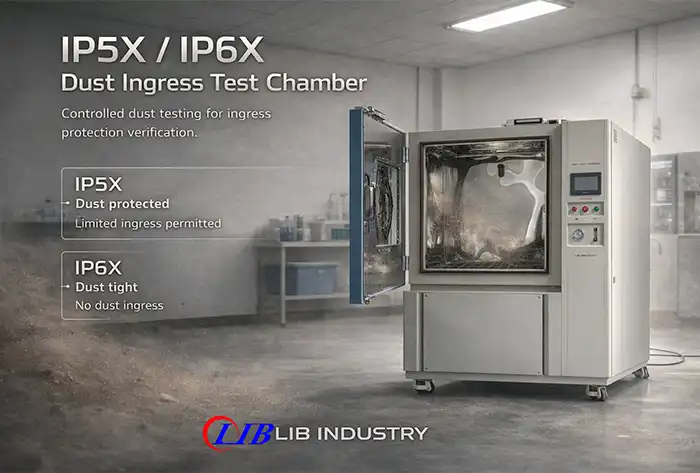
LIB Industry offers dust test chambers ranging from 800L to 2000L useful volumes, accommodating everything from individual sensor assemblies to complete integrated systems. The DI-1000 model provides 1000×1000×1000mm internal dimensions suitable for most sensor testing applications. Larger DI-2000 configurations support full sensor panel assemblies and multi-unit simultaneous testing. Stainless steel SUS304 interior construction ensures chemical inertness and easy cleaning between test cycles.
Precision Environmental Control
Programmable color LCD touchscreen controllers manage all testing parameters through intuitive interfaces. Temperature regulation from ambient to 50°C with ±0.5°C accuracy ensures consistent thermal conditions throughout exposure periods. Humidity maintenance below 30% RH prevents moisture effects that confound pure dust sensitivity assessment. PID control algorithms adjust circulation fan speeds, maintaining uniform particulate distribution across the entire chamber volume.
Standards-Compliant Testing Capabilities
LIB dust test chambers meet IEC 60529 requirements for IP5X and IP6X testing with factory-calibrated vacuum systems, precision mesh sieves featuring 75-micron nominal gap widths, and certified talc powder supplies. ISO 20653 protocols receive support through programmable test sequences and data logging capabilities. Additional equipment packages enable MIL-STD-810 compliance for military and aerospace sensor applications requiring enhanced testing rigor.
|
Model |
Internal Dimensions (mm) |
Volume (L) |
Max Specimens |
Typical Applications |
|
DI-800 |
800×1000×1000 |
800 |
8-12 sensors |
Component-level testing |
|
DI-1000 |
1000×1000×1000 |
1000 |
12-16 sensors |
Standard validation programs |
|
DI-1500 |
1000×1500×1000 |
1500 |
20-30 sensors |
Production lot sampling |
|
DI-2000 |
1000×2000×1000 |
2000 |
30-40 sensors |
System-level integration testing |
Advanced Powder Management Systems
The funnel-shaped chamber bottom prevents talc accumulation and simplifies powder recovery between tests. Sloped interior surfaces eliminate clumping issues that cause non-uniform dust distribution and test invalidation. Electric heating systems maintain optimal powder moisture content, preventing humidity absorption that alters particle flow characteristics. Integrated mesh sieves filter agglomerated particles, ensuring only properly sized talc reaches test specimens.
Safety and Observation Features
Double-layer thermostable silicone rubber sealing on observation windows maintains chamber integrity while enabling visual monitoring throughout test cycles. Interior LED lighting illuminates specimens without introducing heat that affects temperature control. Electromagnetic door locks prevent accidental opening during pressurized or vacuum conditions. Windshield wiper systems clear dust from observation windows, maintaining visibility during high-concentration exposure phases.
Intelligent Data Management
Ethernet connectivity enables remote monitoring and control through networked computers or mobile devices. Real-time data logging captures temperature, humidity, dust circulation status, and test timing with timestamp precision. Automated report generation compiles test parameters and results in formats supporting quality documentation and regulatory submissions. PC Link functionality integrates chamber control into broader laboratory information management systems.
Comprehensive Service Support
LIB Industry provides turnkey solutions encompassing chamber selection consultation, custom configuration design, manufacturing, on-site installation, operator training, and ongoing technical support. Three-year warranty coverage with lifetime service availability ensures long-term operational reliability. Global 24/7 support teams address technical questions and troubleshooting needs regardless of geographic location or time zone. Replacement unit provision during warranty periods minimizes testing program disruptions.
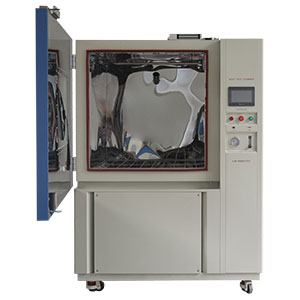
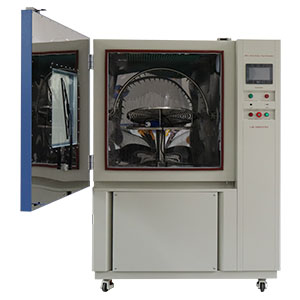
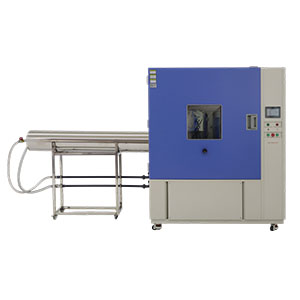
Popular Dust/Water Ingress Test Equipment
|
|
|
|
|
|
|
|

Conclusion
Industrial sensor reliability in dust-laden environments depends on rigorous evaluation using specialized testing equipment that replicates real-world particulate exposure conditions. Dust test chambers provide controlled environments where engineers validate ingress protection ratings, identify design vulnerabilities, and optimize protective features before field deployment. Compliance with international standards ensures consistent performance claims, while accelerated testing protocols compress years of operational exposure into manageable timeframes. This systematic approach transforms dust resistance from uncertain speculation into quantifiable engineering data supporting confident sensor deployment across challenging industrial applications.
FAQ
What particle size distribution does talc powder testing represent in actual industrial environments?
Standardized talc powder features particles predominantly below 75 microns, matching fine dust found in cement plants, pharmaceutical manufacturing, and electronics assembly facilities. This size range proves most challenging for sensor ingress protection since larger particles filter naturally while smaller particulates penetrate conventional seals.
How does dust test chamber evaluation differ from field testing for sensor validation?
Chamber testing provides controlled repeatability impossible in actual installations where dust composition, concentration, temperature, and humidity vary unpredictably. Accelerated exposure compresses months of field operation into hours, while isolated variable testing identifies specific failure mechanisms obscured by combined environmental stresses encountered during normal service.
Can dust chambers evaluate sensors requiring energized operation during particulate exposure?
Yes, modern chambers incorporate dust-proof power outlets supporting up to 16A loads, enabling continuous sensor operation throughout testing cycles. This energized testing reveals functional degradation patterns invisible in passive exposure followed by post-test measurement approaches, particularly important for thermal sensors and active optical devices.
Enhance your industrial sensor validation capabilities with precision dust testing solutions from LIB Industry, a leading environmental test chamber manufacturer and supplier. Our engineering team specializes in customized testing systems meeting your specific sensor evaluation requirements. Contact us at ellen@lib-industry.com to discuss your dust resistance testing needs.