How Manufacturers Use Vibration Testing to Reduce Field Failures?
Manufacturers across industries face a persistent challenge: products that perform flawlessly in controlled environments often fail unexpectedly once deployed in real-world conditions. Vibration testing has emerged as a critical solution to this problem, enabling companies to simulate the mechanical stresses their products will encounter throughout their lifecycle. By exposing prototypes and production units to controlled oscillatory motion within a vibration test chamber, engineers can identify structural weaknesses, material fatigue points, and design flaws before products reach customers. This proactive approach not only reduces warranty claims and costly recalls but also enhances brand reputation and customer satisfaction. Modern testing protocols combine temperature, humidity, and mechanical stress to replicate actual operating environments, providing manufacturers with actionable data to refine designs and manufacturing processes systematically.
What Are the Most Common Field Failures Linked to Vibration?
Mechanical Fatigue and Structural Cracks
Repeated exposure to oscillatory forces causes microscopic cracks in materials that gradually propagate until catastrophic failure occurs. Metal components in automotive assemblies, aircraft structures, and industrial machinery are particularly susceptible to this phenomenon. The cyclic loading creates stress concentrations at joints, welds, and material transitions where different coefficients of thermal expansion compound the problem. Manufacturers who skip comprehensive testing often discover these issues only after thousands of units have been distributed, resulting in expensive recalls and safety investigations.
Loose Fasteners and Connection Failures
Vibration-induced loosening of bolts, screws, and connectors represents one of the most frequent causes of product malfunction in field conditions. Electronic assemblies experience intermittent electrical connections as vibration works fasteners loose over time. Aerospace components face similar challenges where even minor connection degradation can compromise system integrity. The problem intensifies when products experience transportation vibration before installation, followed by operational stresses that accelerate the loosening process beyond design expectations.
Electronic Component Solder Joint Failures
Printed circuit boards suffer particularly from vibration-related damage as solder joints crack under repeated flexing. The differential movement between components and board substrates creates shear forces that exceed the mechanical strength of solder alloys. Surface-mount devices with larger thermal masses experience greater inertial forces during vibration, making them more vulnerable to detachment. Field failures often manifest as intermittent operation before complete failure, complicating diagnosis and frustrating end users who cannot reproduce the problem consistently.
Using Vibration Testing to Identify Weak Points in Product Design

Resonance Frequency Mapping
Every structure has natural frequencies at which it vibrates with maximum amplitude when excited. Testing across a frequency sweep from 2 to 4000 Hz reveals these critical points where minimal input energy produces dramatic responses. Engineers use this data to redesign components, adding damping materials or adjusting mass distribution to shift resonance away from anticipated operating frequencies. Identifying these vulnerabilities during development prevents catastrophic failures when products encounter matching frequencies during transportation or operation.
Stress Analysis Through Accelerometer Data
Modern vibration chambers incorporate multiple accelerometers to measure response at critical locations simultaneously. The data reveals how forces propagate through assemblies, highlighting paths where energy concentrates and where isolation might be beneficial. Three-axis measurement captures the complex motion patterns that occur in real environments rather than simplified single-axis assumptions. This comprehensive approach uncovers interaction effects between components that might appear robust in isolation but fail when integrated into complete systems.
Material Selection Validation
Different materials exhibit varying responses to vibration based on their damping characteristics and fatigue resistance. Testing allows engineers to compare alternatives under identical conditions, generating empirical data that supplements theoretical calculations. Composite materials, for instance, may offer superior strength-to-weight ratios but demonstrate unexpected failure modes under certain vibration profiles. Direct comparison testing eliminates guesswork and provides concrete evidence for material specification decisions that impact both performance and cost.
|
Design Vulnerability |
Detection Method |
Typical Solution |
|
Resonance amplification |
Frequency sweep analysis |
Structural stiffening or damping |
|
Poor component mounting |
Multi-axis acceleration mapping |
Isolation mounts or reinforcement |
|
Material fatigue susceptibility |
Extended duration testing |
Alternative material specification |
Accelerated Vibration Testing and Failure Prediction
Time Compression Through Intensified Protocols
Accelerated testing applies higher vibration levels than products will experience in service, compressing years of exposure into days or weeks of laboratory testing. The approach relies on cumulative damage models that correlate test severity with field exposure duration. A vibration test chamber operating at elevated amplitudes can reveal fatigue mechanisms that would require months of real-time observation, enabling manufacturers to iterate designs rapidly without waiting for long-term field data.
Statistical Life Prediction Models
Test data from multiple samples generates statistical distributions of failure times that engineers use to predict field reliability. Weibull analysis and other reliability engineering techniques transform raw test results into confidence intervals for product lifespan under specified conditions. This quantitative approach replaces subjective assessments with defendable metrics that support business decisions about warranty periods, maintenance intervals, and product positioning.
Combined Environmental Stress Screening
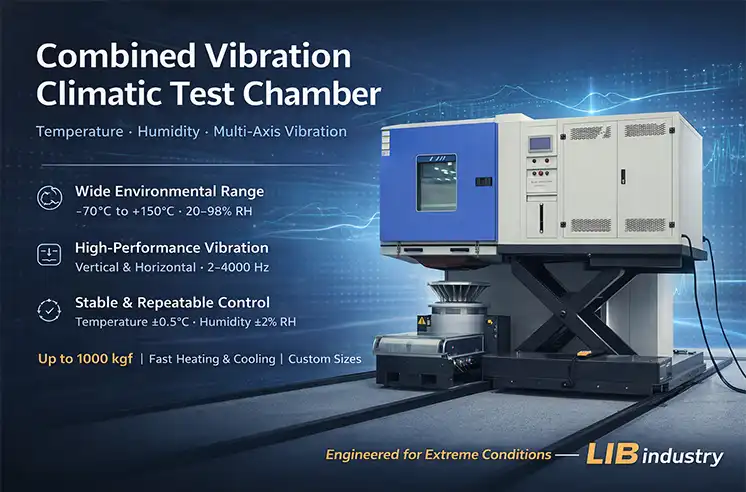
Products rarely encounter vibration in isolation from other environmental factors. Chambers that combine temperature cycling from -70℃ to +150℃ with humidity variation and mechanical stress reveal interactions that single-factor testing misses. Thermal expansion and contraction alter mechanical fits while moisture affects material properties, creating failure modes that appear only under combined conditions. This realistic testing approach uncovers problems that sequential single-factor tests cannot detect.
Integrating Vibration Test Data into Quality Improvement Processes
Design Validation Checkpoints
Incorporating vibration testing at multiple development stages prevents problems from propagating through the product lifecycle. Initial concept validation confirms fundamental design viability, while detailed testing of production-intent units verifies manufacturing implementation. Each checkpoint generates specific acceptance criteria that must be met before advancing to subsequent phases, creating quality gates that prevent flawed designs from reaching production.
Manufacturing Process Optimization
Vibration testing of production samples conducted in a vibration test chamber reveals how manufacturing variations affect product robustness. Samples from different production runs, shifts, or facilities undergo identical testing to identify process inconsistencies that compromise reliability. This data drives root cause investigations into assembly techniques, material batches, or equipment calibration issues that may not produce immediate failures but reduce safety margins.
Supplier Component Qualification
Components from different suppliers may meet dimensional and electrical specifications yet exhibit different vibration resistance. Qualification testing establishes performance baselines that become part of supplier agreements and incoming inspection protocols. When field failures occur, comparison with qualification data helps determine whether supplier changes or process drift contributed to the problem, facilitating targeted corrective action.
|
Quality Stage |
Test Application |
Decision Outcome |
|
Concept validation |
Prototype screening |
Design architecture approval |
|
Production readiness |
Pilot run sampling |
Manufacturing process certification |
|
Supplier qualification |
Component-level testing |
Approved vendor list updates |
Vibration Testing in Pre-Production and Mass Production Stages
Prototype Refinement Cycles
Early prototypes undergo aggressive testing that deliberately pushes designs beyond expected service conditions. Failures guide redesign efforts, with each iteration receiving progressively more severe testing until performance margins meet targets. This iterative approach systematically eliminates weaknesses, though it requires careful documentation to ensure that changes addressing one failure mode don't create new vulnerabilities elsewhere.
Production Validation Runs
Pre-production units manufactured with production tooling and processes verify that design intent translates correctly to mass manufacturing. Testing these units under both standard and accelerated protocols confirms that assembly variations remain within acceptable tolerance ranges. Discrepancies between prototype and production unit performance trigger investigations into tooling adequacy, assembly sequence, or specification interpretation issues.
Ongoing Production Sampling
Continuous sampling from production lines ensures that quality doesn't degrade over time as tooling wears or process discipline relaxes. Statistical sampling plans balance testing cost against risk tolerance, with higher-risk products justifying more frequent testing. Trend analysis of test results provides early warning of process drift before it produces field failures, enabling proactive intervention rather than reactive correction.
Case Insights: Reducing Warranty Claims Through Vibration Testing
Automotive Electronics Success
An automotive supplier reduced warranty claims by 73% after implementing comprehensive vibration testing for engine control modules. Previous field failures traced to solder joint cracks that occurred during vehicle operation on rough roads. The manufacturer developed a test protocol combining temperature cycling between -40℃ and 125℃ with vibration profiles matching measured vehicle data. Design modifications based on test results included conformal coating application and revised component placement that distributed stresses more evenly.
Aerospace Component Reliability
A manufacturer of aircraft cabin systems eliminated in-service failures of overhead bin mechanisms through targeted vibration testing. Earlier designs passed standard qualification testing but exhibited unexpected wear when exposed to combined vibration and temperature variations. Enhanced testing using chambers with both environmental and mechanical capabilities revealed polymer component degradation under combined stress. Material substitution and improved lubrication practices derived from test data eliminated the failure mode entirely.
Consumer Electronics Durability
A smartphone manufacturer extended product lifespan by incorporating drop and vibration testing that simulated typical user handling patterns. Testing revealed that camera module mounting methods adequate for static loads failed under repeated impact. Redesigned mounting systems with increased compliance absorbed shock energy without transmitting it to sensitive optical components. Post-implementation field data showed a 64% reduction in camera-related returns during the warranty period.
|
Industry |
Failure Mode Addressed |
Warranty Claim Reduction |
|
Automotive |
Solder joint fatigue |
73% decrease |
|
Aerospace |
Polymer degradation |
100% elimination |
|
Consumer electronics |
Camera module damage |
64% reduction |
Prevent Field Failures with LIB Industry's Vibration Test Chambers
Comprehensive Testing Capabilities
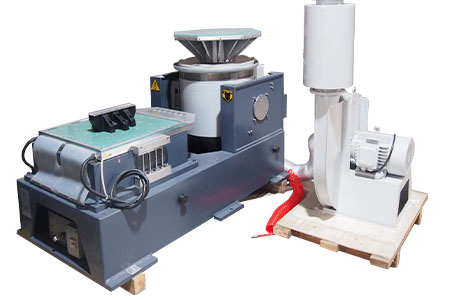
LIB Industry vibration test chambers integrate temperature control from -70℃ to +150℃, humidity regulation across 20% to 98% RH, and vibration systems generating forces up to 1000kgf across frequencies from 2 to 4000 Hz. This combination enables simulation of complex real-world environments within a single controlled space. The digital power amplifier ensures precise waveform generation while the expanded head provides 600mm × 600mm testing area accommodating substantial assemblies. Both vertical and horizontal axis testing with 500kg maximum load capacity addresses diverse product geometries and mounting configurations.
Advanced Control and Safety Features
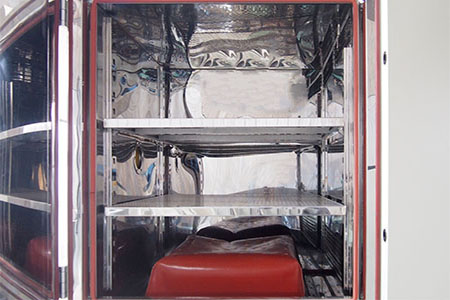
Multiple protection systems including over-temperature, over-current, refrigerant high-pressure, and earth leakage protection ensure safe operation during extended test runs. The SUS304 stainless steel interior resists corrosion from humidity exposure while polyurethane foam insulation maintains temperature stability. Programmable controllers enable complex test sequences that automatically transition between environmental conditions and vibration profiles, reducing operator intervention and ensuring consistent execution of validated protocols.
Customization for Specific Applications
LIB Industry provides both standard configurations and customized solutions tailored to specific industry requirements. Walk-in chambers accommodate large assemblies while benchtop units suit component-level testing in space-constrained laboratories. The modular design allows integration of specialized instrumentation or fixtures unique to particular test requirements. This flexibility ensures manufacturers can validate products ranging from microelectronics to complete vehicle subsystems using appropriate-scale equipment.
|
|
|
 |
|
SUS 304 Climatic Workroom |
Versatile Vibration Testing |
Smart Control & Monitoring System |
Conclusion
Vibration testing represents an essential investment for manufacturers committed to delivering reliable products that withstand real-world conditions. By systematically identifying weaknesses during development and production, companies transform potential field failures into design improvements implemented before customer impact. The integration of environmental and mechanical testing provides insights impossible to obtain through analysis alone, while accelerated protocols compress validation timelines without sacrificing confidence. Organizations that embrace comprehensive testing reduce warranty costs, protect brand reputation, and build competitive advantage through demonstrable quality superiority.
FAQ
What vibration frequency range is most critical for product testing?
Most mechanical failures occur between 10 and 500 Hz where structural resonances typically exist. Comprehensive testing sweeps from 2 to 4000 Hz to capture both low-frequency transportation vibration and high-frequency operational stresses. The specific critical range varies by product type and application environment.
How long should accelerated vibration tests run to predict field reliability?
Test duration depends on acceleration factors and required confidence levels. Typical programs run 8 to 72 hours at elevated stress levels equivalent to years of field exposure. Statistical models correlate test severity and duration with field lifespan predictions based on material fatigue characteristics.
Can vibration testing damage products that would otherwise function properly?
Properly designed test protocols replicate realistic service conditions without introducing artificial failures. Accelerated testing applies higher stress levels but follows damage accumulation principles validated through field correlation. Products failing appropriate testing would likely fail prematurely in service under unpredictable circumstances.
Partner with LIB Industry for Reliable Testing Solutions
LIB Industry stands ready as your trusted vibration test chamber manufacturer and supplier, offering turn-key solutions from initial consultation through installation and training. Our factory-direct approach ensures competitive pricing without compromising the quality essential for accurate, repeatable testing. Contact our team at ellen@lib-industry.com to discuss your specific testing requirements and discover how our chambers can strengthen your quality assurance processes.