How Vibration Test Chambers Are Used in Automotive Durability Testing?
In today's automotive industry, durability and reliability are no longer competitive advantages—they are baseline expectations. From powertrain systems to sensitive electronic modules, vehicle components must withstand years of vibration, shock, and environmental stress across diverse road and climate conditions. Vibration test chambers play a pivotal role in this validation process, enabling manufacturers to reproduce real-world mechanical loads within controlled laboratory environments. By accelerating fatigue exposure and revealing potential failure mechanisms early, these systems help reduce development risk, shorten validation cycles, and ensure consistent compliance with international automotive standards.
This performance is not only proven in theory, but also confirmed in real-world applications. An Italian electronics equipment manufacturer recently shared positive feedback following the installation of a LIB Industry vibration test chamber, reporting stable operation and reliable performance with no issues encountered during use. The customer emphasized their confidence in both the equipment quality and LIB’s ongoing technical support, reinforcing the chamber’s suitability for demanding electronic and automotive testing environments. Such feedback highlights how LIB vibration test chambers deliver dependable results for precision-driven industries across Europe and beyond.

Vibration test chambers serve as critical tools in automotive durability evaluation, enabling manufacturers to simulate years of real-world road conditions within controlled laboratory environments. These sophisticated systems replicate the mechanical stress, oscillations, and dynamic forces that vehicles encounter throughout their operational lifetime. By subjecting automotive components to accelerated vibration protocols, engineers can identify potential failure points, validate design improvements, and ensure compliance with international quality standards before mass production begins. This predictive testing methodology significantly reduces warranty claims while enhancing vehicle safety and reliability across diverse driving conditions.
What Types of Automotive Components Require Vibration Durability Testing?
Engine and Powertrain Assemblies
Engine components face continuous vibrational stress during vehicle operation, making durability validation essential. Critical elements including cylinder heads, engine mounts, transmission housings, and exhaust manifolds undergo rigorous testing to prevent catastrophic failures. The vibration test chamber applies multi-axis excitation patterns that mirror actual combustion forces, drivetrain oscillations, and road-induced vibrations. Engineers analyze stress concentration points, weld integrity, and material fatigue characteristics under sustained dynamic loads. Advanced sensor arrays monitor crack propagation, bolt loosening, and structural deformation throughout extended test cycles.
Electronic Control Units and Sensors
Modern vehicles incorporate numerous electronic systems that must withstand harsh vibrational environments. Electronic control units (ECUs), sensor modules, and wiring harnesses require specialized testing protocols to ensure signal integrity and connection reliability. Vibration chambers expose these components to frequency sweeps ranging from 2 to 4000 Hz, identifying resonance frequencies that could cause solder joint failures or connector disengagement. Temperature cycling combined with mechanical excitation reveals thermal-mechanical interaction effects that might compromise circuit board assemblies or cause intermittent electrical faults during vehicle operation.
Suspension and Chassis Components
Suspension systems absorb the majority of road-induced vibrations, necessitating comprehensive durability assessment. Control arms, shock absorbers, spring assemblies, and subframe structures undergo multi-million cycle tests replicating diverse terrain conditions. The testing protocol incorporates random vibration profiles derived from actual road data, including potholes, speed bumps, and highway irregularities. Material wear patterns, bushing degradation, and structural integrity receive continuous monitoring to establish realistic service life predictions and optimize component designs for maximum durability.
Automotive Vibration Profiles and Real-World Road Simulation
Random Vibration Testing Methodology
Random vibration testing provides the most accurate representation of actual driving conditions by incorporating unpredictable frequency content and varying amplitude characteristics. Unlike sinusoidal testing with fixed frequencies, random profiles reflect the chaotic nature of road surfaces, wind buffeting, and vehicle dynamics. Test engineers develop power spectral density (PSD) specifications based on field data collection from instrumented vehicles operating across different terrains. The vibration test chamber generates statistically equivalent load histories that compress months of operational exposure into accelerated test sequences.
|
Road Surface Type |
Dominant Frequency Range |
Typical PSD Level |
Acceleration Peak |
|
Highway Smooth |
5-30 Hz |
0.01-0.05 g²/Hz |
1.5-2.5 g |
|
Urban Pavement |
10-80 Hz |
0.05-0.15 g²/Hz |
3.0-5.0 g |
|
Rough Gravel |
20-200 Hz |
0.15-0.40 g²/Hz |
6.0-10.0 g |
|
Off-Road Terrain |
5-150 Hz |
0.30-0.80 g²/Hz |
12.0-20.0 g |
Sine Sweep and Resonance Detection
Sine sweep testing systematically explores the component's frequency response characteristics, identifying critical resonance points where amplification occurs. The vibration shaker gradually increases frequency from low values (typically 2 Hz) through the entire operational range while maintaining constant acceleration or displacement amplitude. When the test article reaches its natural frequency, dramatic amplitude magnification reveals potential vulnerability to resonance-induced failures. Engineers modify designs to shift resonant frequencies away from common excitation sources or implement damping solutions to mitigate vibration amplification effects.
 |
 |
|
Program Selection Automatic operating program |
Test Area Temperature and humidity vibration test |
Shock Pulse Simulation
Beyond continuous vibration exposure, automotive components must survive transient shock events representing curb strikes, pothole impacts, and emergency braking scenarios. The vibration test chamber generates controlled shock pulses with specific peak acceleration, duration, and waveform characteristics. Half-sine, triangular, and trapezoidal pulse shapes replicate different impact mechanisms, while programmable shock sequences simulate cumulative damage from repeated severe events. This testing capability proves particularly valuable for evaluating battery pack retention systems, airbag sensors, and structural integrity of safety-critical assemblies.
Key Vibration Test Standards for Automotive Durability Evaluation
International Standardization Framework
Automotive vibration testing adheres to globally recognized standards ensuring consistent evaluation methodologies across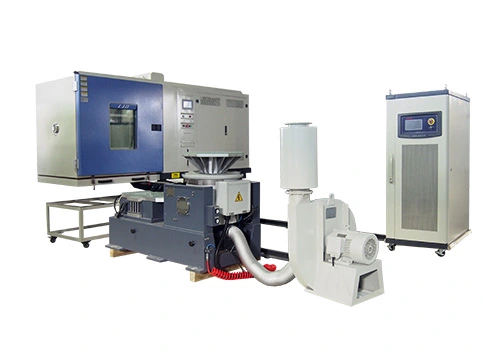 manufacturers and suppliers. ISO 16750-3 establishes mechanical testing requirements for electronic equipment in automotive applications, specifying vibration profiles, mounting configurations, and acceptance criteria. This standard defines multiple test severity levels corresponding to different vehicle locations and expected service environments. Components destined for underbody installation face more aggressive testing parameters compared to interior-mounted electronics due to proximity to road-induced excitation sources.
Military and Aerospace-Derived Protocols
Military standards, particularly MIL-STD-810, influence automotive testing approaches for ruggedized applications including defense vehicles and specialized equipment. These protocols incorporate broader frequency ranges, higher acceleration levels, and longer duration requirements reflecting extreme operational scenarios. Automotive manufacturers adapt these stringent methodologies for commercial applications requiring exceptional reliability, such as autonomous vehicle sensors, emergency response systems, and safety-critical control modules. The crossover between military and automotive testing practices drives continuous improvement in chamber capabilities and measurement precision.
|
Standard |
Application Focus |
Frequency Range |
Key Test Parameters |
|
ISO 16750-3 |
Automotive Electronics |
10-2000 Hz |
Random vibration, Temperature cycling |
|
SAE J1455 |
Recommended Practice |
5-2000 Hz |
Road load data simulation |
|
MIL-STD-810 |
Military/Ruggedized |
1-2000 Hz |
Extended duration, High severity |
|
IEC 60068-2-64 |
General Electronics |
10-500 Hz |
Broad-band random testing |
OEM-Specific Testing Requirements
Major automotive manufacturers supplement international standards with proprietary testing specifications reflecting brand-specific quality expectations and customer usage patterns. These internal protocols often exceed published standard requirements, incorporating accelerated aging factors, multi-environmental stress combinations, and pass/fail criteria derived from extensive field failure analysis. Suppliers must demonstrate compliance with both universal standards and customer-specific requirements, necessitating flexible vibration test chamber configurations capable of executing diverse test protocols without extensive
reconfiguration time.
How Vibration Test Chambers Replicate Long-Term Vehicle Stress?
Accelerated Life Testing Principles
Vibration test chambers compress decades of operational exposure into weeks or days through scientifically validated acceleration methodologies. The fundamental principle involves applying higher stress levels than normal service conditions while maintaining failure mechanism consistency. Engineers utilize Miner's cumulative damage rule and S-N curve relationships to calculate equivalent test durations producing comparable fatigue damage. Temperature elevation, increased vibration amplitude, and condensed duty cycles multiply stress accumulation rates without introducing unrealistic failure modes that wouldn't occur during actual vehicle operation.
Combined Environmental Stress Testing
Real-world automotive components simultaneously experience multiple environmental stressors rather than isolated mechanical vibration. Modern vibration test chambers integrate temperature control (-70°C to +150°C), humidity regulation (20% to 98% RH), and mechanical excitation within a single test enclosure. This combined capability reveals synergistic degradation mechanisms invisible during single-factor testing, such as thermal expansion exacerbating vibration-induced fretting wear or moisture ingress compromising structural adhesives under dynamic loading. The integrated approach provides superior correlation with field performance compared to sequential testing methodologies.
Multi-Axis Excitation Capabilities
Vehicles experience three-dimensional vibrational inputs rather than simple vertical oscillations, requiring vibration test chambers capable of multi-axis stimulation. Advanced systems incorporate horizontal sliding tables (600x600 mm) working in conjunction with vertical shakers to generate complex motion patterns. Simultaneous excitation along perpendicular axes reveals coupling effects and cross-axis sensitivity that single-axis testing overlooks. The extended table configuration accommodates full assemblies including mounted subframes, battery packs, and instrument panel structures, enabling system-level validation rather than component-only evaluation.
Correlating Vibration Test Data with Vehicle Lifetime Performance
Field Data Collection and Analysis
Establishing accurate correlation between laboratory testing and real-world performance requires extensive field data acquisition from instrumented vehicles. Accelerometers, strain gauges, and data logging systems capture actual vibration environments across diverse driving conditions, geographic regions, and customer usage patterns. Statistical analysis of this field data identifies characteristic vibration signatures, frequency content distribution, and cumulative exposure levels typical of vehicle lifetimes. Test engineers transform raw measurements into standardized vibration profiles programmed into chamber controllers, ensuring laboratory tests accurately represent customer experience.
|
Vehicle Location |
Average Daily Exposure |
Cumulative 10-Year Cycles |
Dominant Failure Mode |
|
Engine Bay |
240 min active vibration |
87.6 million cycles |
Fatigue cracking, Bolt loosening |
|
Passenger Cabin |
180 min moderate vibration |
65.7 million cycles |
Connector wear, Fastener relaxation |
|
Trunk/Cargo Area |
200 min variable vibration |
73.0 million cycles |
Mounting bracket failure |
|
Underbody |
280 min severe vibration |
102.2 million cycles |
Corrosion-fatigue interaction |
Damage Equivalence Calculations
Translating field exposure into laboratory test duration requires sophisticated damage equivalence modeling accounting for stress amplitude, cycle count, and material properties. The Palmgren-Miner linear damage hypothesis provides a foundational framework, though refinements address sequence effects and non-linear damage accumulation observed in certain materials. Engineers develop acceleration factors comparing laboratory test severity to typical service loads, enabling rational test duration determination. A properly designed accelerated test might replicate fifteen years of customer usage within two weeks of chamber operation while maintaining identical failure mechanisms and damage progression characteristics.
Warranty Data Validation
The ultimate measure of test correlation accuracy emerges from comparison between laboratory predictions and actual warranty claim patterns. Manufacturers analyze returned components exhibiting field failures, conducting metallurgical examination and failure mode classification to verify laboratory testing correctly identified vulnerable design elements. Discrepancies between predicted and observed failures drive continuous refinement of test protocols, acceleration factors, and damage models. This feedback loop progressively improves correlation accuracy, reducing over-engineering waste while ensuring adequate safety margins for critical systems.
Common Challenges in Automotive Vibration Durability Testing
Fixture Design and Mounting Authenticity
Proper fixturing represents one of the most critical yet frequently problematic aspects of vibration testing. The mounting interface must accurately replicate in-vehicle boundary conditions while avoiding artificial constraint or damping that distorts dynamic response characteristics. Inadequate fixturing introduces spurious resonances, altered load paths, and unrealistic stress distributions invalidating test results. Engineers invest substantial effort designing fixtures that preserve actual mounting stiffness, attachment point geometry, and interface compliance. Advanced approaches employ topology optimization and finite element validation ensuring fixtures faithfully represent vehicle structure without adding excessive mass or complexity.
Controlling Multi-Environmental Interactions
Simultaneously managing temperature, humidity, and vibration within acceptable tolerance bands presents significant technical challenges. Temperature gradients within large vibration test chambers can reach several degrees, potentially causing non-uniform thermal expansion affecting vibration transmission characteristics. Humidity control becomes particularly difficult during temperature cycling, as rapid cooling can cause condensation affecting electrical components and introducing unintended environmental factors. The mechanical compression refrigeration system must maintain stable conditions despite heat input from vibration system operation, requiring sophisticated control algorithms balancing competing environmental parameters without excessive overshoot or oscillation.
Interpreting Intermittent Failures
Vibration testing frequently reveals intermittent failures that prove extremely difficult to diagnose and reproduce consistently. Temporary connector disconnections, transient electrical shorts, or momentary signal interruptions may occur randomly during testing without causing permanent damage or obvious physical evidence. High-speed data acquisition systems capturing electrical parameters, mechanical response, and environmental conditions synchronously help identify failure triggers. Engineers employ statistical analysis of failure occurrence patterns, correlating events with specific test conditions or vibration characteristics. Some intermittent issues only manifest after thousands of hours, requiring extended testing durations and automated monitoring systems capable of detecting subtle anomalies.
Boost Your Testing Precision with LIB Industry's Vibration Test Chambers
Advanced Chamber Specifications
LIB Industry manufactures vibration test chambers combining precision environmental control with powerful mechanical excitation systems tailored for automotive applications. The temperature range spanning -70°C to +150°C accommodates extreme climate simulation from Arctic cold starts to desert thermal soak conditions. Humidity regulation from 20% to 98% RH enables corrosion acceleration and moisture ingress evaluation critical for long-term reliability assessment. The digital power amplifier employing sine pulse width modulation technology delivers exceptional control accuracy across the complete 2 to 4000 Hz frequency spectrum, ensuring precise execution of complex random vibration profiles.
|
Model |
THV-1000 |
||
|
Internal Dimension (mm) |
1000*1000*1000 |
||
|
Overall Dimension (mm) |
1800*4600*2600 |
||
|
Interior Volume |
1000L |
||
|
Parameter
|
Temperature Range |
—50℃ ~ +150 ℃ |
|
|
Temperature Fluctuation |
± 0.5 ℃ |
||
|
Temperature Deviation |
± 2.0 ℃ |
||
|
Humidity Range |
30% ~ 98% RH |
||
|
Humidity Deviation |
± 2.5% RH |
||
|
Cooling Rate |
5 ℃ / min |
||
|
Heating Rate |
5 ℃ / min |
||
|
Rated Force of Vibration |
1000kgf |
||
|
Frequency Range of Vibration |
2 to 4000 Hz |
||
|
Armature Diameter of shaker |
φ240mm |
||
|
Structure
|
Cooling |
Cooling system |
Mechanical compression refrigeration system |
|
Refrigerating unit |
French TECUMSEH compressor |
||
|
Refrigerant |
R404A, R23 |
||
|
Heating Element |
Nichrome heater |
||
|
Controller |
Programmable color LCD touch screen controller,Ethernet connection, USB |
||
|
Humidity
|
Water supply system |
Automatic water supply |
|
|
Water supply system |
Water purification system |
||
|
Humidifier |
External isolation, stainless steel surface evaporation humidifier |
||
|
Dehumidification |
Evaporator |
||
|
Vibration
|
horizontal sliding table |
600*600 mm |
|
|
Power Amplifier |
Digital power amplifier |
||
|
Head Expander |
600*600 mm |
||
|
Blower |
4Kw blower, including muffler. |
||
|
Max load |
500kgs |
||
|
Sensor |
Temperature Sensor |
PTR Platinum Resistance PT100Ω/MV A-class, accuracy 0.001℃ |
|
|
|
Humidity Sensor |
Dry and wet bulb sensor |
|
|
Build-in Water Tank (mm) |
270*300*450 |
||
|
View Window Size (mm) |
330*370 |
||
|
Air Circulation |
Centrifugal wind fan |
||
|
Safety Device |
Humidifier dry-combustion protection; over-temperature protection; over-current protection; Refrigerant high-pressure protection; Water shortage protection; Earth leakage protection |
||
|
Material
|
Exterior Material |
Steel Plate with protective coating |
|
|
Interior Material |
SUS304 stainless steel |
||
|
Thermal Insulation |
Polyurethane foam and insulation cotton |
||
|
Observation Window |
Interior lighting, double-layer thermo stability silicone rubber sealing |
||
|
Standard Configuration |
Cable hole with plug; 2 shelves |
||
|
Power Supply |
380V 50Hz |
||
The vibration system provides 1000 kgf rated force capability supporting substantial test articles including complete powertrain assemblies, battery modules, and chassis components. The φ240mm armature diameter and 600x600mm horizontal sliding table offer versatile mounting options for diverse component geometries. Mechanical compression refrigeration achieves rapid thermal transitions at 5°C/min heating and cooling rates, minimizing test duration while maintaining temperature stability within ±0.5°C fluctuation tolerance. Polyurethane foam and insulation cotton construction ensures minimal thermal loss while SUS304 stainless steel interior resists corrosion from humidity exposure.
Comprehensive Safety and Monitoring Systems
Safety represents paramount importance when operating high-force vibration equipment under extreme environmental conditions. LIB chambers incorporate multiple protection systems including humidifier dry-combustion prevention, over-temperature shutdown, over-current detection, refrigerant high-pressure safeguards, water shortage monitoring, and earth leakage protection. These redundant safety mechanisms prevent equipment damage while protecting personnel and test articles from hazardous conditions. Real-time monitoring displays provide continuous visibility into chamber status, enabling operators to verify proper operation and quickly identify anomalies requiring intervention.
The control system architecture supports programmable test sequences executing complex multi-stage protocols without manual intervention. Operators define temperature profiles, humidity schedules, and vibration parameters through intuitive interfaces, with automated transitions between test phases ensuring consistency and repeatability. Data logging capabilities capture environmental conditions, vibration characteristics, and test article responses throughout extended evaluation periods. This comprehensive documentation supports regulatory compliance, customer reporting requirements, and internal quality assurance processes essential for automotive qualification programs.
Turnkey Solutions and Technical Support
LIB Industry concentrates on providing turnkey solutions for environmental testing, encompassing research, design, production, commissioning, delivery, installation, and training. This comprehensive approach ensures customers receive fully operational systems configured specifically for their automotive testing requirements. Experienced applications engineers collaborate with customers during specification development, incorporating industry-specific knowledge regarding automotive test standards, component configurations, and validation protocols. On-site installation services include chamber positioning, utility connections, calibration verification, and operator training ensuring productive operation from day one.
Ongoing technical support maintains optimal chamber performance throughout its operational lifetime. Preventive maintenance programs, calibration services, and spare parts availability minimize downtime while preserving measurement accuracy critical for reliable test results. As automotive technology evolves toward electrification, autonomous systems, and advanced materials, LIB Industry continuously enhances chamber capabilities addressing emerging testing requirements. This commitment to innovation ensures customers maintain competitive advantages through access to cutting-edge validation technologies supporting next-generation vehicle development.
Conclusion
Vibration test chambers constitute indispensable tools enabling automotive manufacturers to validate component durability, ensure regulatory compliance, and minimize costly field failures. The sophisticated integration of controlled environmental conditions with precise mechanical excitation replicates years of operational stress within compressed timeframes, accelerating development cycles while maintaining rigorous quality standards. Successful implementation requires understanding component-specific vulnerabilities, accurate field condition modeling, standardized testing protocols, and proper correlation with real-world performance data. Overcoming challenges related to fixturing, multi-environmental control, and failure interpretation demands both advanced equipment capabilities and experienced engineering expertise.
FAQs
What is the typical test duration required to validate automotive component durability using vibration chambers?
Test duration varies based on component criticality and acceleration factors applied, typically ranging from several days to several weeks. Engineers calculate equivalent exposure using damage accumulation models that correlate laboratory stress levels with expected field conditions. Critical safety components often undergo extended validation exceeding standard protocols to ensure adequate reliability margins.
Can vibration test chambers simultaneously evaluate multiple components, and what are the limitations?
Multiple components can undergo concurrent testing if their size, weight, and mounting requirements remain compatible with chamber capacity and fixture design. The total mass must not exceed the shaker's rated load capacity, and individual components should exhibit similar resonance characteristics to avoid interaction effects. Separate fixturing for each component ensures independent evaluation while maximizing chamber utilization efficiency.
How do manufacturers determine appropriate vibration test severity levels for new automotive components?
Severity determination involves analyzing mounting location within the vehicle, expected service environment, and safety criticality classification. Engineers reference historical field data from similar components, consult applicable industry standards, and consider customer usage profiles. Prototype testing at graduated severity levels helps establish thresholds where failure mechanisms transition from realistic to laboratory-induced artifacts, guiding final specification development.
Partner with LIB Industry for Superior Vibration Testing Solutions
Ready to elevate your automotive durability validation programs? LIB Industry, a leading vibration test chamber manufacturer and supplier, delivers precision-engineered solutions tailored to your specific requirements. Contact our technical team at ellen@lib-industry.com to discuss your testing challenges and discover how our advanced chambers can enhance your product development processes.