Test Procedure of JIS Z 2371 Salt Spray Test Chamber
The JIS Z 2371 salt spray test chamber operates through a systematic procedure: prepare the salt solution (5% NaCl), set chamber temperature to 35°C with 95-98% RH, position samples at designated angles (15° or 20°), activate the atomization system to maintain 1-2ml/80cm² hourly deposition, run continuous or cyclic spray programs, and collect settlement data using calibrated funnels. LIB Industry's chambers automate these steps with programmable controllers, ensuring compliance with neutral salt spray (NSS), acetic acid spray (AASS), and copper-accelerated (CASS) test protocols while maintaining precision pH control and temperature stability.
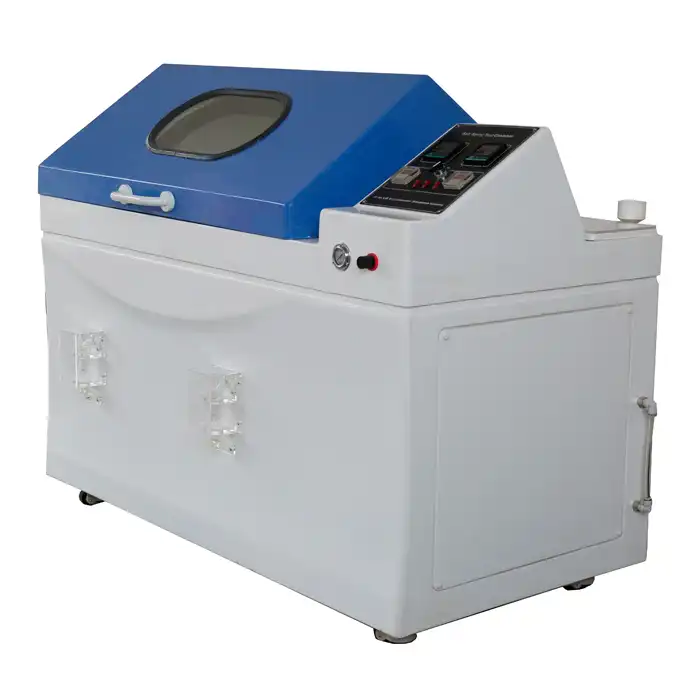
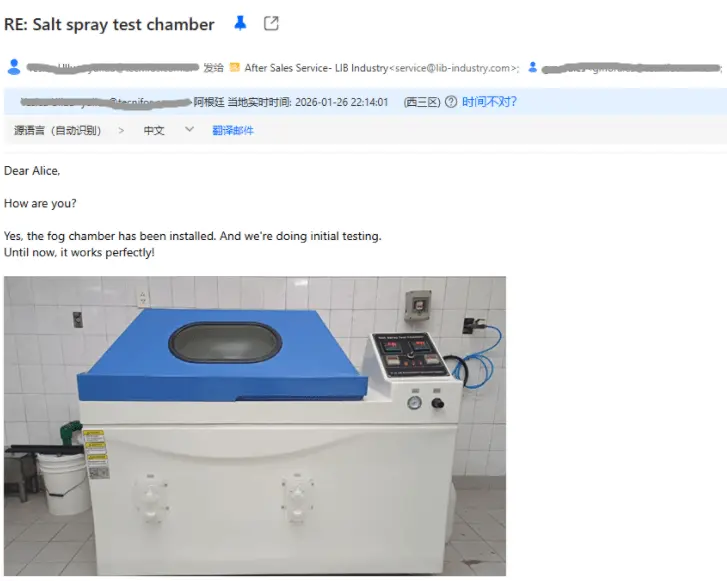
An Argentine paint coating manufacturer recently shared positive feedback on the LIB industry S-150 salt fog test machine: “The chamber has been installed, and initial tests are running perfectly.” They are using the equipment to evaluate coating durability and corrosion resistance under continuous salt fog conditions. The team appreciated its stable performance and precise environmental control, which help ensure accurate and reliable corrosion testing results.
What is the JIS Z 2371 Salt Spray Test Standard?
Origin and Regulatory Framework
JIS Z 2371 constitutes the Japanese Industrial Standard governing salt spray corrosion testing methods. Developed by the Japanese Standards Association, this specification defines procedures for evaluating metallic and non-metallic materials' resistance to saline environments. The standard aligns with international protocols like ASTM B117 while incorporating unique Japanese precision requirements. Manufacturing sectors globally recognize JIS Z 2371 certification as evidence of superior corrosion resistance, particularly in high-humidity coastal regions where salt-laden air accelerates degradation.
Three Test Methods Defined
The standard encompasses three distinct methodologies. Neutral Salt Spray (NSS) testing employs a 5% sodium chloride solution at pH 6.5-7.2, simulating general atmospheric corrosion. Acetic Acid Salt Spray (AASS) introduces glacial acetic acid to lower pH to 3.1-3.3, creating more aggressive conditions for decorative coatings. Copper Accelerated Acetic Acid Salt Spray (CASS) adds copper chloride to the acidic solution, dramatically intensifying corrosion rates for rapid assessment of anodized aluminum and thin organic coatings.
Application Industries and Materials
Automotive manufacturers utilize JIS Z 2371 protocols to validate painted body panels, fasteners, and undercarriage components. Electronics producers test printed circuit boards, connectors, and housing materials. The marine industry applies these methods to evaluate shipbuilding materials, offshore equipment, and hardware assemblies. LIB Industry's chambers accommodate diverse sample geometries through customizable holder configurations, supporting quality control across these varied applications.
Key Parameters in the JIS Z 2371 Salt Spray Test Procedure
Temperature and Humidity Requirements
|
Parameter |
NSS Test |
AASS Test |
CASS Test |
|
Chamber Temperature |
35°C ± 2°C |
35°C ± 2°C |
50°C ± 2°C |
|
Saturator Temperature |
47°C ± 1°C |
47°C ± 1°C |
63°C ± 1°C |
|
Humidity Range |
95-98% RH |
95-98% RH |
95-98% RH |
Temperature uniformity affects corrosion kinetics significantly. LIB Industry JIS Z 2371 salt spray test chamber's dual temperature control system maintains chamber conditions independent of external fluctuations through multi-layer insulation. The advanced air saturator design employs premium SUS304/316 stainless steel construction, achieving ±0.1°C precision. This eliminates thermal gradients that could skew results, ensuring consistent exposure across all sample positions.
Salt Solution Composition and pH Control
NSS testing demands 50±5 grams of sodium chloride per liter of distilled water, while AASS requires additional glacial acetic acid to achieve pH 3.1-3.3. CASS testing incorporates 0.26±0.02 grams copper chloride per liter alongside acetic acid. Solution preparation accuracy directly impacts test validity. Our brine mixing system maintains homogeneous salt concentration through continuous circulation, preventing stratification during extended test cycles. Built-in pH monitoring ports enable quick verification without disrupting test conditions.
Settlement Rate Verification
JIS Z 2371 specifies 1.0-2.0 milliliters of solution must collect per 80 square centimeters hourly. This measurement validates proper atomizer function and fog density. LIB Industry's movable funnel collectors position anywhere within the chamber, accommodating various sample arrangements while ensuring accurate settlement measurement. The fog measure cylinder provides graduated markings for precise volume determination. Our programmable controllers automatically log settlement data, creating audit-ready traceability documentation.
How to Set Up a Salt Spray Test Chamber According to JIS Z 2371?
Pre-Test Chamber Preparation
Begin by inspecting the glass fiber reinforced plastics (FRP) interior for residue from previous tests. Clean all surfaces with distilled water, avoiding abrasive materials that might damage the chamber lining. Verify the saturated air barrel contains sufficient distilled water and heating elements function correctly. Check spray nozzle integrity - LIB Industry's nozzles resist high temperatures, corrosion, and clogging, but periodic visual inspection ensures optimal atomization patterns.
Sample Positioning and Holder Configuration
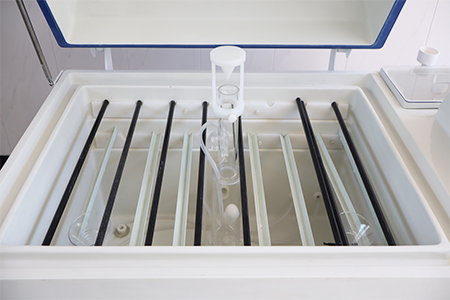
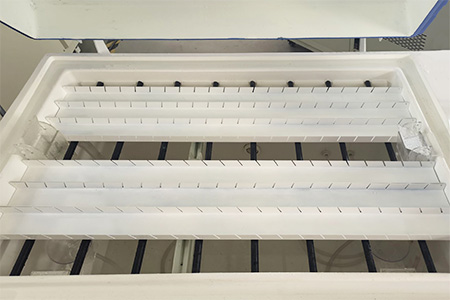
Position test specimens at angles specified by the standard - typically 15° or 20° from vertical. LIB Industry's pre-calibrated V-type and O-type holders eliminate manual angle adjustments, ensuring immediate compliance. The standard configuration includes six round bars and five V-shaped grooves accommodating flat panels, threaded fasteners, and irregularly shaped components. Arrange samples so condensate drains away rather than pooling on horizontal surfaces. Maintain adequate spacing to prevent shadowing effects where one sample blocks fog exposure to adjacent pieces.
Solution Preparation and System Priming
|
Test Type |
NaCl (g/L) |
Acetic Acid |
CuCl₂·2H₂O (g/L) |
Target pH |
|
NSS |
50 ± 5 |
None |
None |
6.5-7.2 |
|
AASS |
50 ± 5 |
To pH |
None |
3.1-3.3 |
|
CASS |
50 ± 5 |
To pH |
0.26 ± 0.02 |
3.1-3.3 |
|
|
||||
Dissolve reagents in distilled or deionized water meeting conductivity requirements below 20 μS/cm. Filter the solution to remove particulates that could clog atomizers. Fill the external salt water tank to marked levels - LIB Industry Temperature uniformity affects corrosion kinetics significantly. LIB Industry JIS Z 2371 salt spray test chamber's dual temperature control system maintains chamber conditions independent of external fluctuations through multi-layer insulation. The advanced air saturator design employs premium SUS304/316 stainless steel construction, achieving ±0.1°C precision. This eliminates thermal gradients that could skew results, ensuring consistent exposure across all sample positions.
's automatic water refill system prevents dry-running damage by monitoring reservoir levels continuously. Activate the brine circulation pump, allowing solution to equilibrate temperature and concentration before initiating spray.
JIS Z 2371 Salt Spray Test Chamber Test Process
Initialization and Parameter Programming
Power up the chamber and access the programmable controller. LIB Industry's systems support 120 programs with 100 steps each, enabling complex cyclic protocols. Input temperature setpoints, spray duration, and rest periods matching your selected test method. NSS typically runs continuously for 24-720 hours depending on material type. AASS and CASS tests may employ alternating spray and dry cycles. The controller automatically records temperature, spray duration, and settlement data throughout execution, eliminating manual logging errors.
Monitoring and Data Collection
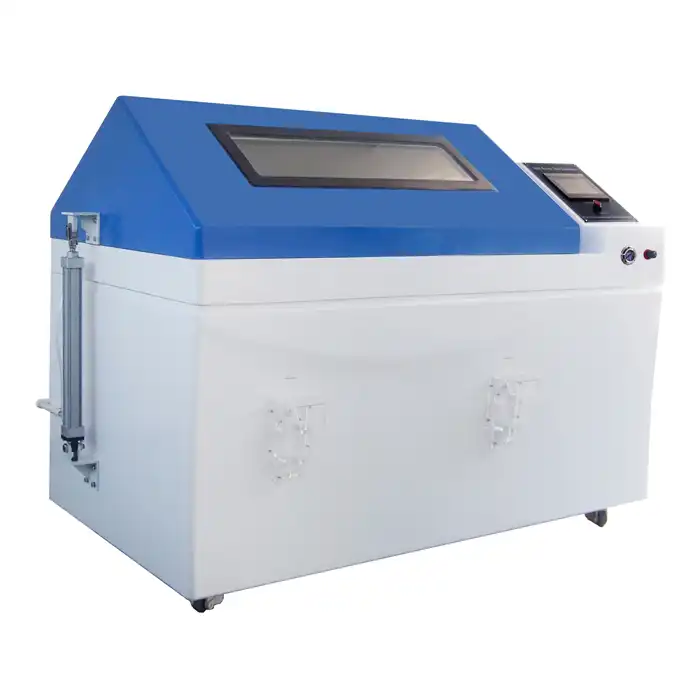
During testing, visually inspect the chamber through transparent observation windows without opening the door, which would disrupt temperature and humidity equilibrium. LIB Industry's modified V-shaped transparent top design prevents condensation from dripping onto specimens, maintaining test validity. Every eight hours for continuous tests, measure settlement rate using the fog collector. Document readings on standardized forms or export directly from the digital controller. The humidifier dry-combustion protection, over-temperature protection, and over-current protection systems activate automatically if parameters drift outside acceptable ranges.
Sample Evaluation and Post-Test Procedures
Upon test completion, carefully remove samples and rinse gently with distilled water below 38°C to halt corrosion reactions. Avoid mechanical contact with corroded surfaces during rinsing. Dry specimens using clean compressed air or ambient temperature exposure. Evaluate corrosion extent according to JIS Z 2371 rating scales, documenting blister size, rust coverage percentage, and coating adhesion. Photograph specimens under standardized lighting for archival records. Clean the chamber interior thoroughly, draining residual solution and flushing spray lines with distilled water to prevent salt crystallization.
Troubleshooting Common Issues
Insufficient settlement rates often indicate clogged nozzles or inadequate air pressure. LIB Industry Temperature uniformity affects corrosion kinetics significantly. LIB Industry JIS Z 2371 salt spray test chamber's dual temperature control system maintains chamber conditions independent of external fluctuations through multi-layer insulation. The advanced air saturator design employs premium SUS304/316 stainless steel construction, achieving ±0.1°C precision. This eliminates thermal gradients that could skew results, ensuring consistent exposure across all sample positions.
's nozzles feature easy-clean designs - simply remove and flush with warm distilled water. Low air pressure may require compressor adjustment or saturator barrel inspection. Uneven corrosion patterns across multiple samples suggest temperature gradients or fog distribution problems. Verify saturator operation and check for obstructions blocking air flow. pH drift during extended tests indicates solution degradation; replace the salt solution and verify reservoir contamination hasn't occurred.
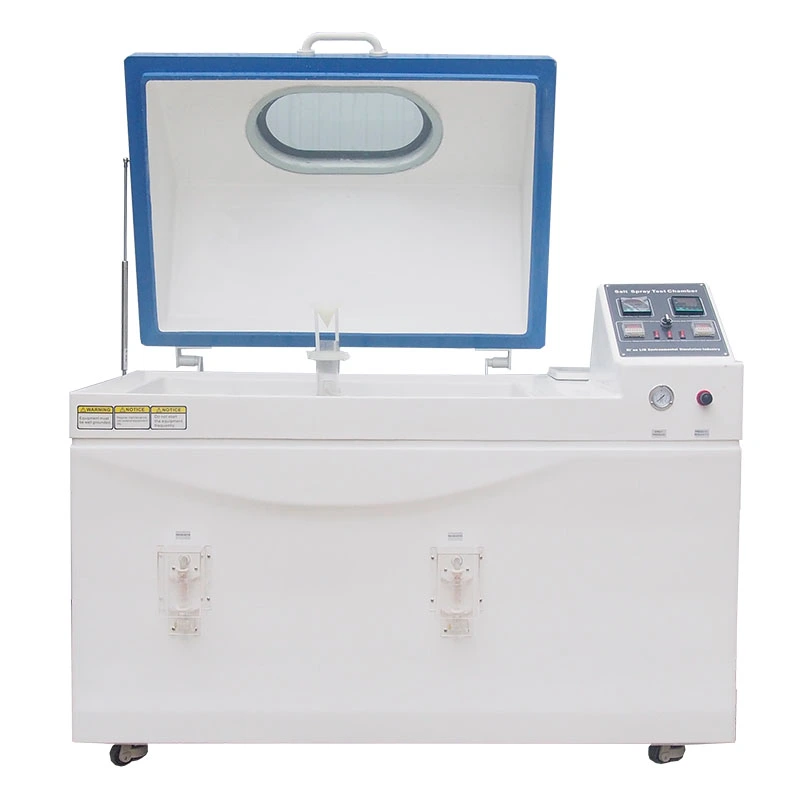
LIB JIS Z 2371 Salt Spray Test Chamber
 |
 |
|
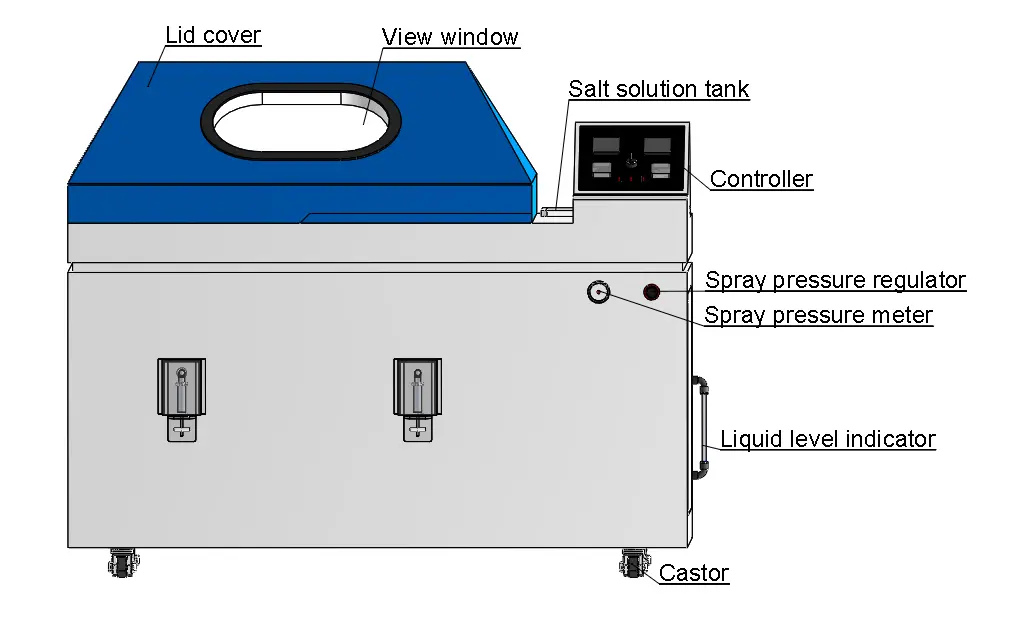
Durable, Leak-Resistant Workspace |
Flexible Sample Rack System |
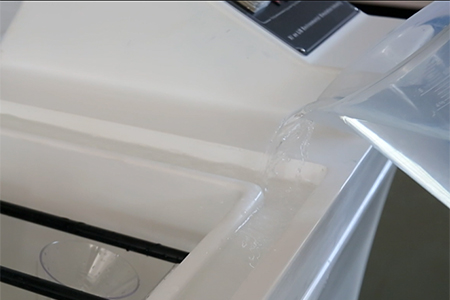
Water-Sealed Lid Design |
|
Intelligent Controller |
Uniform Salt Solution Agitation |
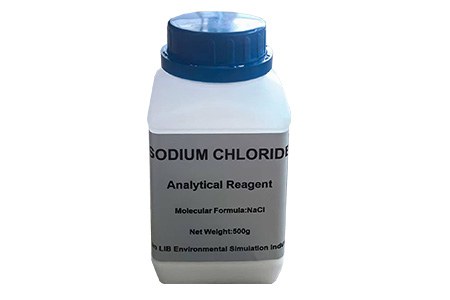
Included Industrial-Grade Salt |
Multi-Model Range for Diverse Applications
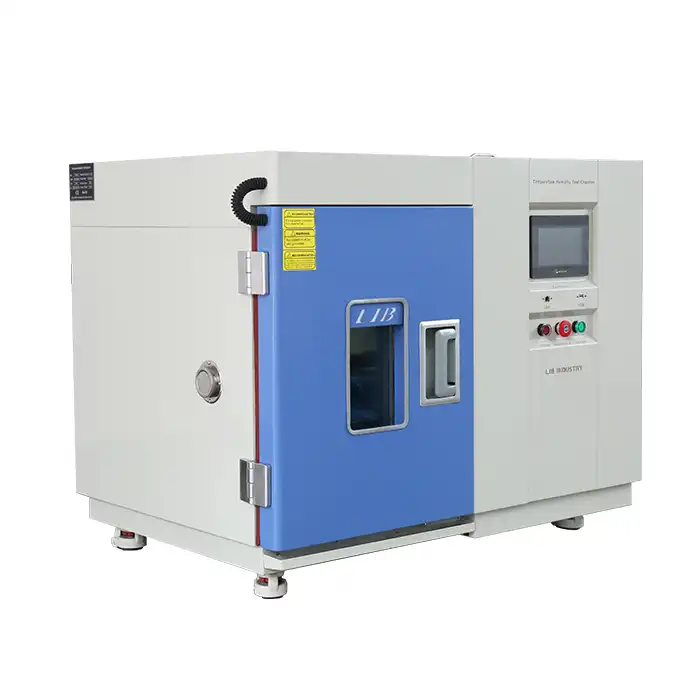
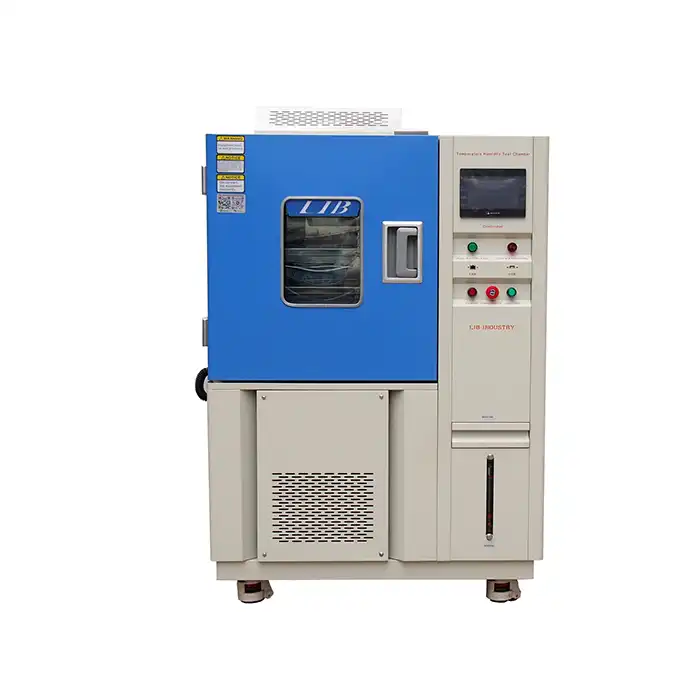
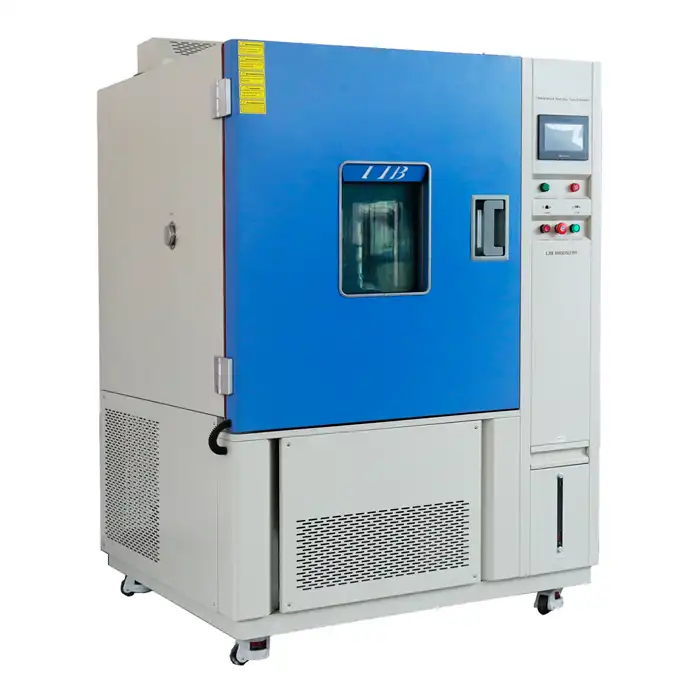
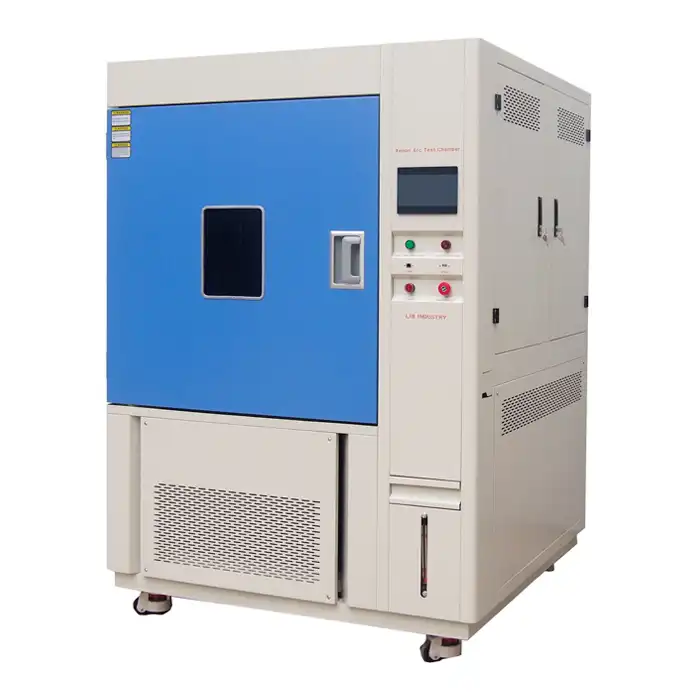
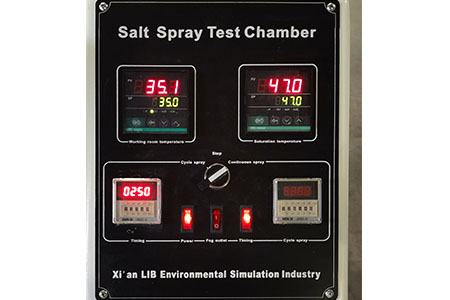
LIB Industry manufactures six chamber models spanning 110 to 1600 liters internal volume. The compact S-150 (590×470×400mm) suits laboratory environments with space constraints, accommodating small batch testing of fasteners, connectors, or coating panels. Mid-range models S-250 and S-750 serve general manufacturing quality control needs. Large-capacity units S-010, S-016, and S-020 accommodate automotive body panels, marine equipment assemblies, and high-volume production testing. All models maintain identical temperature precision (±0.5°C fluctuation, ±2.0°C deviation) regardless of chamber size.
Advanced Engineering Features
The saturated air barrel employs premium SUS304/316 stainless steel construction, precisely humidifying and heating compressed air while eliminating contaminants. This component delivers uniform moisture distribution with temperature control reaching ±0.1°C accuracy. Independent chamber and laboratory temperature controls prevent external interference through multi-layer insulation, isolating internal conditions from ambient fluctuations. The atomizer tower and spray nozzle system generates fog particles within the 1-40 micrometer range specified by JIS Z 2371, ensuring proper deposition characteristics.
Customization and Global Support
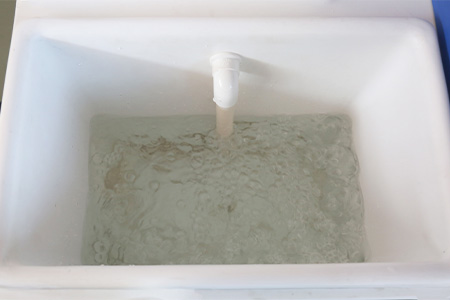
LIB Industry's engineering team specializes in non-standard designs matching unique testing requirements. Automotive manufacturers might need extended chambers for complete door assemblies. Aerospace suppliers may require specialized holders for turbine blades or landing gear components. Our customization expertise extends to material compatibility - while standard chambers use FRP construction, certain applications demand full stainless steel interiors. Every unit includes a three-year warranty with lifetime service support. Our 24/7 global response team provides rapid assistance, with complete unit replacement available if repairs prove impossible during warranty periods.
FAQ
How often should I replace the salt solution in my JIS Z 2371 salt spray test chamber during extended testing?
Replace the solution when pH drifts beyond specified ranges (6.5-7.2 for NSS, 3.1-3.3 for AASS/CASS) or visible contamination appears. Continuous NSS tests exceeding 500 hours typically require weekly solution changes. Monitor settlement rates - declining deposition often indicates degraded solution chemistry requiring replacement.
Can one chamber perform all three JIS Z 2371 test methods (NSS, AASS, CASS)?
Quality chambers like LIB Industry's models accommodate all three methodologies through programmable temperature control and solution flexibility. CASS testing requires higher temperatures (50°C versus 35°C), which modern dual-control systems handle seamlessly. Thorough cleaning between test types prevents cross-contamination affecting result validity.
What causes uneven corrosion patterns on samples, and how can I prevent this issue?
Uneven corrosion typically results from improper sample positioning blocking fog exposure, temperature gradients within the chamber, or condensate dripping. Position specimens at correct angles using calibrated holders, verify saturator function maintains uniform temperature distribution, and ensure the chamber's anti-drip top design prevents condensation from contaminating samples during testing.
Partner with LIB Industry for Precision Corrosion Testing Solutions
LIB Industry delivers turn-key JIS Z 2371 salt spray test chamber solutions as a trusted manufacturer and supplier. Our Japanese-engineered chambers combine precision controls, robust FRP construction, and customizable configurations tailored to your testing requirements. From initial design through installation and training, we provide comprehensive support backed by ISO 9001 certification and CE compliance. Contact our technical team at ellen@lib-industry.com to discuss your corrosion testing needs today.