Altitude Chamber for UAV and Drone Performance Validation
An altitude chamber for UAV and drone performance validation simulates the low air pressure, cold temperatures, and thin air that a drone would experience at a high altitude. This lets engineers check the battery output, motor thrust, and stability of navigation before any flight tests are done. As UAVs are used for more tasks above sea level, like surveying in mountains, delivering packages at high altitudes, and military reconnaissance, manufacturers are under more and more pressure to show that their products work reliably. In a lab setting, a controlled altitude room creates conditions as high as tens of thousands of feet. This helps find problems with engines, power systems, and flight controls long before they are used in real life. This guide talks about how height changes the way a UAV flies, what happens to batteries and motors at high altitude, and which room requirements are most important for a UAV testing program.
How Altitude Conditions Affect UAV Flight Dynamics

Thinner Air Reduces Lift and Control Authority
At higher altitudes, the density of the air drops by a lot, which means that rotor blades and fixed wings produce less lift per unit of airspeed. To keep the same level of flight performance, pilots and flight controllers must make up for it by increasing either the rotor speed or the airspeed.
Reduced Pressure Affects Sensor Calibration
Barometric altimeters and monitors that are based on pressure need correct readings of the air pressure. Testing these sensors over a wide range of pressures shows that they give accurate and consistent altitude data, even when conditions are very different.
Cold Temperatures Compound Aerodynamic Stress
When you're at a high altitude, the air is usually thin, and the temperatures are very low. This puts stress on the materials in the airframe and the control surfaces at the same time, and the altitude itself makes the aerodynamics worse.
Battery Efficiency and Power Loss at High Elevation
| Condition | Effect on Battery Performance | Consequence for Flight |
|---|---|---|
| Low temperature | Reduced chemical reaction rate inside cells | Lower available discharge capacity |
| Low pressure | Altered internal cell pressure balance | Potential swelling or venting risk |
| Combined cold + altitude | Compounded voltage sag under load | Shortened flight time, early low-voltage cutoff |
Cold Temperature Slows Chemical Reactions
Lithium batteries work by moving ions more slowly when it's cold outside. This makes the battery's usable capacity and peak discharge current lower when it's in the air at high altitudes.
Low Pressure Changes Internal Cell Dynamics
When the air pressure drops, it changes the difference in pressure inside sealed battery cells. Swelling, leaking, or changes in capacity can be seen in altitude chamber testing that simulates high-elevation conditions.
Voltage Sag Shortens Effective Flight Time
When exposed to cold and low pressure, voltage drops more when the motor is running. This means that a battery that is rated for a certain flight duration at sea level may not last as long at high altitude.
Motor and Propeller Performance in Low Air Density Environments
Propeller Thrust Drops With Air Density
The force that a moving propeller makes goes down straight with the density of the air. This means that the same propeller and RPM mix creates significantly less thrust at higher elevations compared to sea level.
Motors Compensate With Increased RPM Demand
Flight controls usually tell motors to spin faster to make up for less engine power. This increases the amount of electricity they use and makes more heat, which can be measured in an altitude chamber.
Cooling Efficiency Changes With Air Density
Thinner air also doesn't carry heat away from motor windings as well, which means that motors that are already working harder at higher altitude have less ability to cool down.
Altitude Chamber Testing for Drone Navigation and Stability Systems
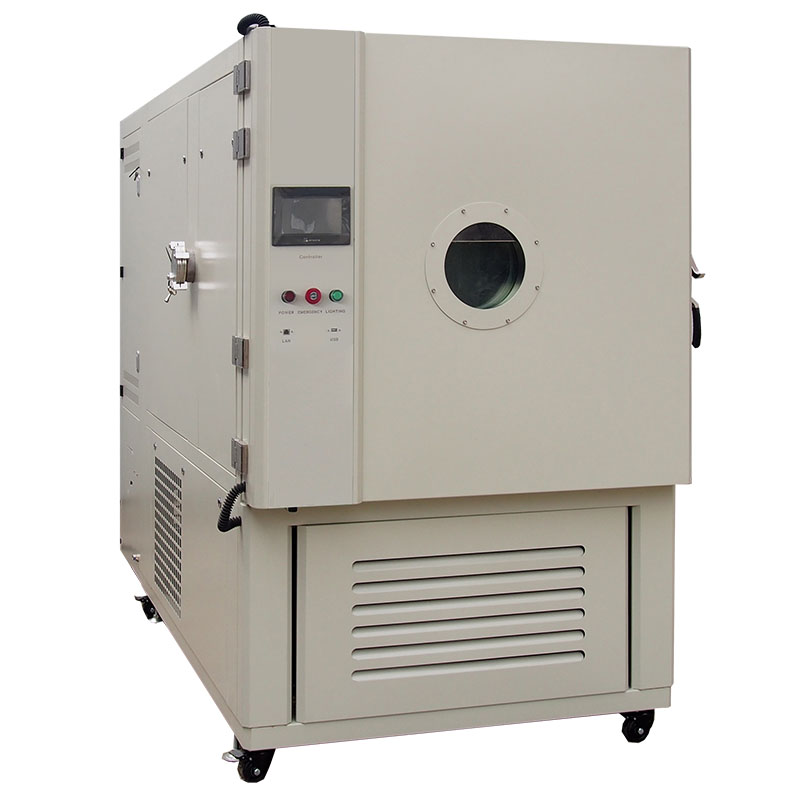 In a special room called an "altitude chamber," engineers can put a whole UAV system through extremes of pressure, temperature, and humidity that are similar to what it would be like to operate at a high altitude.
- Wide range of pressures: testing from atmospheric pressure to a few kilopascals simulates conditions up to an altitude of about 30,000 meters.
- Combined temperature and pressure control: exposing drones to cold air and lower pressure at the same time is like the added stress they feel when they are flying high.
- Controlled depressurization rate: Engineers can mimic both quick ascents and slow descents in elevation within the same test procedure by setting the time of the pressure ramp.
- Access to observe without risk of explosion: reinforced viewing windows let technicians keep an eye on how a flight controller or component responds to changes in pressure without entering the test environment.
GPS and Barometric Sensor Verification
When GPS and barometer altitude tracking are used together in navigation systems, it is important to use an Altitude Chamber to simulate different pressure conditions and make sure that the sensor fusion methods stay accurate even when the air pressure drops. This is because incorrect altitude estimates directly threaten flight safety.
IMU Stability Under Combined Stress
Inertial measurement units that control flight stabilization need to keep their standard accuracy even when testing at different altitudes and with different changes in temperature and pressure. If they don't, drift can lead to noticeable flight instability.
Communication Link Reliability at Altitude
Extreme temperatures and less dense air can affect how well antennas and signal processing circuits work. This is why mixed weather testing is useful for making sure that the command-and-control link works reliably at elevation.
Regulatory Requirements for UAV Environmental Testing
| Standard | Scope | Relevant Focus |
|---|---|---|
| RTCA DO-160 | Airborne equipment environmental qualification | Combined temperature and altitude testing (Section 4) |
| MIL-STD-810 | Military and defense equipment durability | Low pressure/altitude testing (Method 500) |
| ISO 9001 | Quality management systems | Manufacturing process consistency |
DO-160 Guides Avionics-Grade Qualification
RTCA DO-160 sets out combined temperature and altitude test categories that were first created for aircraft avionics. Its Section 4 procedures are now being used more and more for drone systems that are meant to operate in controlled airspace.
MIL-STD-810 Covers Broader Environmental Durability
MIL-STD-810's Method 500 low-pressure process covers more than just altitude. It also covers ruggedized UAV uses, especially for military and industry drones that need to be able to work in difficult field conditions.
Category Selection Depends on Installation Environment
Both standards use intensity categories that are linked to the predicted working altitude and installation location. This means that makers choose the right test category based on the mission plan instead of using a single standard for everything.
Optimizing Drone Design Through Altitude Simulation Results
Refining Propeller and Motor Sizing
Improving Battery Thermal Management
Manufacturers are moving toward battery protection or active heating solutions because cold weather consistently leads to capacity loss. These solutions keep usable flight time when drones operate at high altitudes or in cold areas.
Validating Firmware Compensation Logic
You can directly compare changes made to the flight controller software for altitude-related energy loss to test data from the chamber. This makes sure that the automatic correction methods work correctly before they are put into use in the field.
LIB Industry Altitude Chambers for Advanced UAV Performance Testing
Precision Simulation Across Full Altitude Range
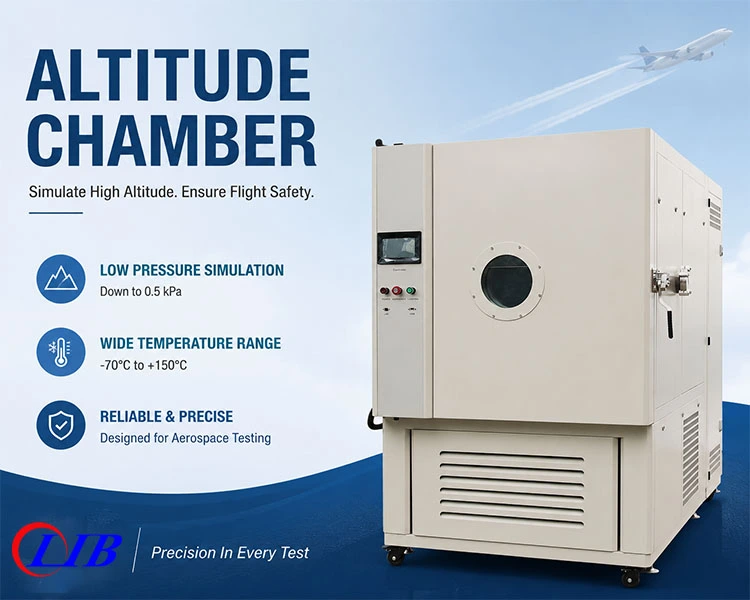
LIB Industry altitude chambers simulate heights of up to about 30,000 meters and can control temperature from -120°C to +150°C and pressure down to 0.5 kPa. This gives UAV manufacturers a single platform for testing both temperature and pressure.
Configurable for Diverse Testing Programs
LIB Industry chambers come in tabletop, floor stand, and walk-in styles, and can hold anywhere from 50L to 1,500L of stuff. They can hold everything from single battery packs and motors to fully built drone airframes.
Turnkey Support From Design Through Installation
LIB Industry offers a complete service that includes research, design, production, commissioning, delivery, installation, and training. Their products are made in a way that meets ISO 9001 standards and safety standards set by CE, CSA, and ISO 17025.
Conclusion
Checking that the batteries, motors, sensors, and flight controls still work together when the air gets thin and cold is part of validating UAV performance at altitude. When an altitude chamber is set up correctly, it can take that high-elevation stress and compress it into a controlled, repeatable lab environment. This gives manufacturers real data instead of guesses before they start field trials. Putting money into thorough altitude chamber validation protects both flight safety and a product's reputation as drones are used more in mountain, high-altitude delivery, and defense roles.
Looking for a dependable company that can make, supply, or build an altitude chamber for your UAV and drone testing program? Email ellen@lib-industry.com to talk to LIB Industry about turnkey environmental testing solutions that are made to fit your needs for high-altitude performance validation.
FAQ
How high can an altitude chamber simulate for drone testing?
LIB Industry altitude chambers replicate elevations up to roughly 30,000 meters, combining precise pressure control with temperature ranges from -120°C to +150°C for comprehensive UAV component and system validation.
Why does drone battery performance drop at high altitude?
Cold temperatures slow the chemical reactions inside lithium cells, reducing usable capacity, while low pressure alters internal cell dynamics. Combined, these effects compound voltage sag and shorten effective flight time.
Do drones need to meet aviation standards like DO-160?
Not always mandatory, but RTCA DO-160 and MIL-STD-810 are increasingly referenced for UAVs operating in regulated airspace or defense applications, giving manufacturers a recognized framework for altitude qualification testing.