How to Choose a Temperature Cycling Chamber Manufacturer: A Complete Guide for Engineers
Choosing the right temperature cycling chamber manufacturer is critical for reliability engineers who need accurate, repeatable results throughout long qualification programs.
Temperature cycling chambers simulate repeated heating and cooling to evaluate how products respond to thermal stress. Materials with different coefficients of thermal expansion (CTE) expand and contract at different rates, creating mechanical stress that can lead to solder joint fatigue, micro-cracks, sealing failures, and component degradation. For industries such as automotive electronics, batteries, semiconductors, photovoltaic modules, and consumer electronics, unreliable test equipment can mean inaccurate qualification data, delayed launches, and unexpected field failures.
Selecting a manufacturer therefore requires more than checking temperature range or chamber volume. Engineers should weigh:
Temperature control accuracy and uniformity
Ramp rate capability
Refrigeration system reliability
Customization experience
Data recording functions
Long-term technical support
This guide explains how temperature cycling chambers work, which specifications matter most, and how to select a reliable manufacturer for demanding reliability testing programs.
What Is a Temperature Cycling Chamber and How Does It Work?
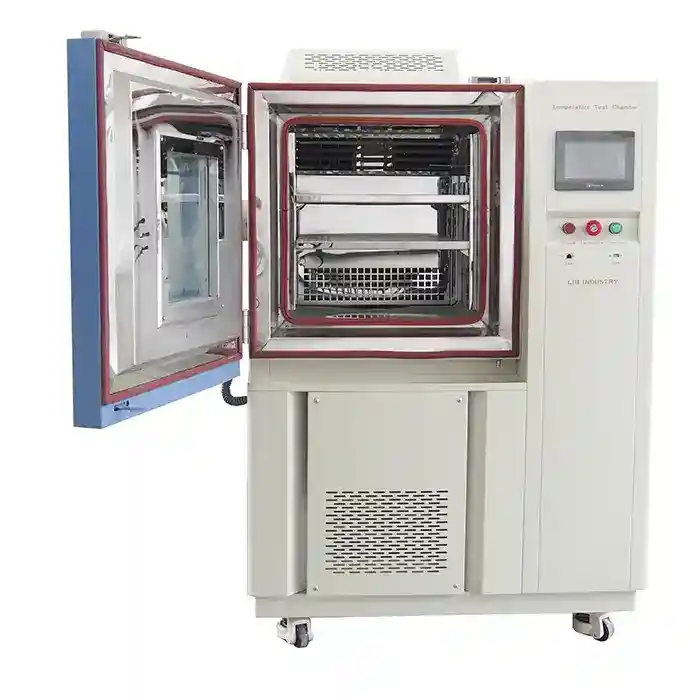 A temperature cycling chamber exposes test samples to repeated transitions between high and low temperature conditions. Unlike thermal shock chambers, which rapidly transfer specimens between separate hot and cold zones, cycling chambers use a controlled heating and cooling process inside one test space — letting engineers evaluate long-term thermal fatigue under realistic operating conditions.
During a test, engineers define the high and low temperature limits, the ramp rates, the dwell time at each extreme, and the total number of cycles. The chamber then follows this programmed profile automatically, letting products experience the same thermal stress conditions they might see during actual service. Many failures come from mismatched thermal expansion between bonded materials — semiconductor chips, PCB substrates, solder joints, adhesives, and encapsulation materials all expand and contract at different rates. After hundreds or thousands of cycles, this can create solder fatigue, cracked connections, and sealing degradation, which a reliable chamber helps engineers catch before products reach customers.
Modern chambers also support customized programs with multiple temperature segments, adjustable ramp rates, and automatic cycle counting, letting one chamber serve several qualification requirements. For regulated industries, Ethernet and PC-based monitoring can log temperature curves, cycle counts, and alarms — data quality teams need for traceable audit and certification reports.
Key Specifications to Evaluate
Technical specifications directly affect test accuracy and long-term reliability:
| Specification | Why It Matters | Typical Requirement |
|---|---|---|
| Temperature range | Meets qualification requirements | -70°C to +150°C |
| Ramp rate | Controls thermal stress and test efficiency | 5–15°C/min |
| Temperature fluctuation | Affects repeatability | ±0.5°C |
| Temperature uniformity | Ensures consistent sample conditions | Optimized airflow design |
| Chamber volume | Determines sample quantity and flexibility | 100L to 3000L+ |
| Data logging | Supports traceability and audits | Ethernet/PC monitoring |
Ramp rate determines test flexibility — semiconductor testing under JEDEC JESD22-A104, for example, often requires controlled transition rates and dwell times, so a capable manufacturer should offer adjustable rates rather than a fixed mode.
Temperature uniformity directly affects accuracy. Poor airflow can cause different samples in the same batch to see different thermal conditions, undermining comparison results. Experienced manufacturers optimize air circulation, heater placement, and sensor positioning to keep conditions stable.
Refrigeration quality determines equipment lifetime, since cycling tests often run continuously for weeks or months. Reliable suppliers use high-quality compressors and long-life refrigeration components to reduce downtime and maintain performance throughout long programs.
Why Choose an Experienced Manufacturer?
Selecting a chamber is a long-term investment in product reliability, not just an equipment purchase. Cycling chambers combine precision temperature control, refrigeration engineering, air circulation design, and data monitoring — experience helps a manufacturer optimize these systems for continuous operation, while less experienced suppliers may meet initial specs but struggle to maintain performance over months of continuous cycling.
Standards knowledge also speeds up validation. A professional manufacturer should understand JEDEC JESD22-A104, MIL-STD-883 Method 1010, IEC 61215, and ISO 16750-4, so it can recommend suitable configurations before installation and help engineers reduce setup time during qualification.
Because reliability tests can run for hundreds or thousands of cycles, unexpected downtime can delay product release. Engineers should weigh spare parts availability, remote support, response time, and local service capability when picking a long-term testing partner.
How to Evaluate a Supplier
Before purchasing, check whether the supplier:
Has experience with similar testing requirements and can share application examples
Supports customized chamber designs and configurations
Holds ISO 9001, CE, and RoHS certifications
Can accommodate special needs like battery safety interfaces or remote monitoring
A manufacturer experienced across multiple industries is more likely to understand complex testing requirements and offer real engineering customization rather than only standard models.
LIB Industry Temperature Cycling Chambers for Reliability Testing

|
|
|
|
|
|
| Robust Workroom | Cable Hole | Temperature and Humidity Sensor | PID controller |


Engineers need more than a chamber that reaches extreme temperatures — it must provide stable performance and reliable operation throughout demanding programs. LIB Industry designs chambers for automotive electronics, battery systems, semiconductors, photovoltaic products, and material testing, helping engineers catch thermal fatigue and sealing problems before products reach the field.
Wide temperature range. -70°C to +150°C, with benchtop, floor-standing, and customized large-capacity configurations for different sample sizes and test volumes.
Precision control. Fluctuation as low as ±0.5°C, optimized airflow, programmable profiles, and continuous monitoring for consistent, trustworthy data.
Flexible programs. Customizable temperature limits, transition rates, dwell times, and cycle counts aligned with JEDEC JESD22-A104, MIL-STD-883, IEC 61215, and ISO 16750-4.
Reliable refrigeration. Built for stable low-temperature operation, efficient recovery, and reduced maintenance over extended programs.
These chambers serve several industries: automotive electronics teams evaluate ECUs, sensors, and connectors for failures tied to repeated environmental change; battery and new energy teams test modules, BMS units, and storage components for reliability and safety; semiconductor teams detect early thermal fatigue in IC packages and solder joints; and photovoltaic teams assess module and encapsulation durability under repeated outdoor temperature swings.
Why Choose LIB Industry?
Founded in 2012, LIB Industry specializes in environmental simulation equipment and provides complete reliability testing solutions worldwide. Its product line also includes:
Temperature & humidity chambers
Thermal shock chambers
Salt spray corrosion chambers
UV and xenon weathering chambers
This lets customers work with one supplier across multiple environmental testing needs. Customized engineering — chamber size modifications, special fixtures, automated monitoring — is backed by ISO 9001 certified manufacturing, CE and RoHS compliance, a 3-year warranty, and lifetime technical support from consultation through long-term maintenance.
Related Products
Alongside temperature cycling chambers, LIB Industry offers other environmental testing equipment that often supports the same reliability programs:
| Product | Best For |
|---|---|
|
Temperature & Humidity Chamber |
Combined thermal and moisture stress testing for electronics and materials |
|
Thermal Shock Chamber |
Rapid hot-cold transitions to evaluate extreme thermal stress resistance |
|
Salt Spray Corrosion Chamber |
Corrosion resistance testing for coatings, metals, and connectors |
|
Walk-In Environmental Chamber |
Large-scale testing of full assemblies, vehicles, or battery packs |


These solutions let engineers cover multiple qualification standards with a single, consistent supplier.
Common Mistakes When Selecting a Manufacturer
Many buyers focus only on whether a chamber reaches the required temperature, but reliability also depends on ramp rate accuracy, uniformity, refrigeration stability, and data recording — a chamber with an extreme range but poor control can still produce unreliable, unrepeatable results. Choosing the lowest-cost supplier without evaluating technical support can also cause problems later in a qualification program, so parts availability and response time deserve equal weight to purchase price. And without reliable data logging, proving testing history during audits or certification reviews becomes difficult, if not impossible.
FAQs
What temperature range is recommended for temperature cycling testing? It depends on the application and standard, but -70°C to +150°C covers most demanding automotive, electronics, battery, and material testing needs.
What ramp rate is commonly used? Many standards use rates around 5°C/min or higher, though exact requirements vary — a flexible chamber lets engineers adjust rates per procedure.
How can I evaluate whether a manufacturer is reliable? Review manufacturing experience, industry applications, quality certifications, customization capability, technical support, and customer references.
What's the difference between temperature cycling and thermal shock testing? Cycling uses controlled transitions inside one chamber; thermal shock rapidly transfers samples between separate hot and cold zones, creating higher stress in less time. Both evaluate thermal reliability but target different failure mechanisms.
Conclusion
Choosing the right temperature cycling chamber manufacturer requires evaluating technical capability, testing accuracy, equipment reliability, and long-term support — not just temperature range and chamber size. LIB Industry brings over 15 years of environmental simulation experience, customized engineering capability, a 3-year warranty, and lifetime technical support to help customers build reliable testing programs with confidence.
Looking for a temperature cycling chamber manufacturer for your reliability testing program? Contact LIB Industry for customized environmental testing solutions designed to meet your application and qualification requirements.
Email: ellen@lib-industry.com