Why Medical Device Makers Need Benchtop Environmental Chambers?
Medical device manufacturers operate in one of the most demanding regulatory landscapes, where product reliability isn't just preferred - it's mandatory. A benchtop environmental chamber has become an indispensable tool for validating device performance under varied climatic conditions. These compact testing systems simulate temperature extremes, humidity fluctuations, and accelerated aging scenarios that medical devices will encounter throughout their lifecycle. From implantable sensors to diagnostic equipment, every component must withstand environmental stressors while maintaining precision and safety. Benchtop chambers deliver laboratory-grade validation without consuming excessive floor space, enabling continuous quality assurance throughout product development cycles. Their ability to reproduce real-world conditions in controlled settings makes them essential for meeting FDA requirements, ISO standards, and global market compliance demands.
Environmental Challenges in Medical Device Manufacturing
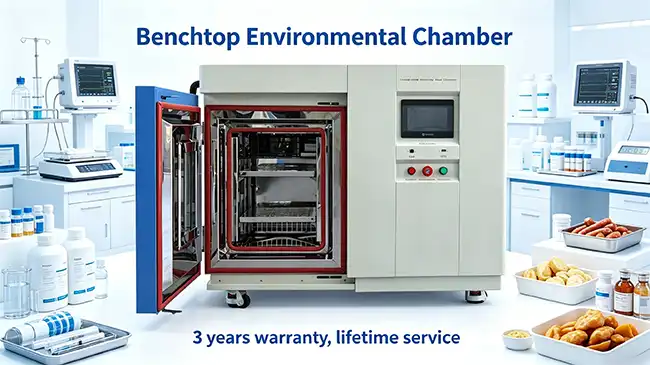
Real-World Exposure Scenarios Medical Devices Face
Medical devices journey through diverse climates - from refrigerated hospital storage units to tropical field clinics. Pacemakers implanted in patients experience constant body temperature around 37°C with varying humidity from perspiration. Portable diagnostic equipment travels between air-conditioned laboratories and humid outdoor environments. These temperature differentials create expansion-contraction cycles that stress electronic components, adhesives, and housing materials.
Unpredictable Storage and Transportation Conditions
Distribution networks expose devices to uncontrolled warehouse conditions, cargo holds with temperature swings, and loading docks under direct sunlight. Insulin pumps shipped to desert regions might encounter 50°C ambient temperatures, while the same products destined for Nordic countries face -30°C winters. Without rigorous environmental testing, manufacturers risk product failures that endanger patient safety and trigger costly recalls.
Material Compatibility Issues Under Stress
Polycarbonate housings become brittle at low temperatures. Silicone seals lose elasticity during thermal cycling. LCD displays fog when humidity condenses internally. Adhesive bonds weaken under prolonged heat exposure. A benchtop environmental chamber reveals these material incompatibilities before mass production, allowing engineers to reformulate components or adjust assembly processes.
|
Environmental Factor |
Potential Impact on Medical Devices |
Testing Solution |
|
Temperature Extremes (-40°C to +150°C) |
Electronic component failure, material brittleness, expansion/contraction stress |
Controlled thermal cycling tests |
|
Humidity Fluctuations (10%-98% RH) |
Corrosion, condensation, seal degradation, electrical shorting |
Humidity stability validation |
|
Rapid Temperature Changes |
Thermal shock damage, cracking, delamination |
Accelerated stress screening |
Temperature and Humidity Testing for Device Reliability
Validating Electronic Component Performance
Microprocessors in glucose monitors operate reliably within specific temperature ranges. Circuit boards expand at different rates than solder joints, creating mechanical stress during thermal cycling. Temperature testing in benchtop chambers identifies the exact threshold where resistance values drift, capacitors fail, or battery performance degrades. Engineers program chambers to cycle between -20°C and +60°C repeatedly, simulating years of daily temperature variations within weeks.
Assessing Sensor Accuracy Across Conditions
Biosensors measuring blood oxygen levels must deliver consistent readings whether used in chilly operating rooms or warm patient homes. Temperature fluctuations alter electrochemical reaction rates, potentially skewing diagnostic results. Humidity affects impedance measurements in respiratory devices. By exposing sensors to calibrated environmental conditions inside benchtop chambers, manufacturers verify measurement accuracy across the entire specified operating range.
Battery Life and Safety Under Thermal Stress
Lithium-ion batteries powering portable medical devices pose fire risks if tested improperly. Modern benchtop environmental chambers incorporate specialized safety features - flame-retardant interior materials, explosion-proof construction, and emergency ventilation systems. These safety options allow manufacturers to conduct thermal runaway testing, charge-discharge cycling at extreme temperatures, and capacity fade analysis while protecting laboratory personnel.
Preventing Condensation-Related Failures
When cold devices enter warm humid environments, condensation forms on internal electronics. This moisture creates short circuits, corrodes contacts, and degrades optical components. Controlled humidity testing reveals whether device sealing adequately protects internals. Chambers with humidity ranges from 10% to 98% RH reproduce everything from arid desert conditions to tropical monsoon climates.
Regulatory Requirements for Medical Device Validation
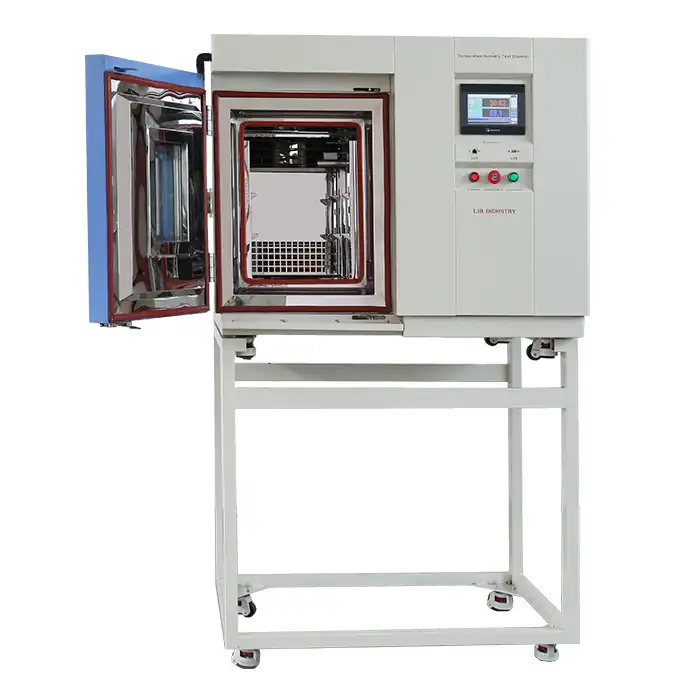
FDA Premarket Approval Demands
The FDA's 21 CFR Part 820 Quality System Regulation requires medical device manufacturers to validate that products perform as intended under normal and extreme conditions. Environmental testing documentation demonstrates due diligence in design verification and validation activities. Submission packages must include test protocols, chamber calibration certificates, and detailed failure analysis reports from environmental stress testing.
ISO 13485 Quality Management Expectations
ISO 13485 certification mandates controlled conditions for design validation activities. Benchtop environmental chambers provide the repeatable, documented testing environment auditors expect. Calibrated sensors, programmable test profiles, and automated data logging create audit trails proving compliance. The color LCD touchscreen controllers on modern chambers timestamp every temperature and humidity data point, generating reports that satisfy regulatory scrutiny.
IEC 60601-1-11 Home Healthcare Standards
Medical devices intended for home use must withstand environments manufacturers cannot control. IEC 60601-1-11 specifies rigorous environmental testing requirements reflecting residential conditions - dusty bedrooms, humid bathrooms, cold garages. Temperature ranges from 5°C to 40°C and humidity conditions up to 95% RH must be validated. Benchtop chambers recreate these scenarios precisely, enabling manufacturers to claim home-use suitability.
|
Regulatory Standard |
Key Environmental Testing Requirements |
Documentation Needed |
|
FDA 21 CFR Part 820 |
Design verification under normal and extreme conditions |
Test protocols, calibration certificates, failure reports |
|
ISO 13485:2016 |
Controlled validation environment with traceability |
Automated data logs, chamber qualification records |
|
IEC 60601-1-11 |
Home environment simulation (5°C-40°C, up to 95% RH) |
Compliance test reports, environmental stress screening |
Accelerated Aging Tests for Packaging and Components
Simulating Years of Shelf Life in Weeks
Medical device packaging must protect sterile contents for years before use. Accelerated aging testing applies elevated temperature and humidity to speed chemical degradation processes. The Arrhenius equation guides protocol development - storing packaged devices at 55°C and 75% RH for 12 weeks simulates approximately 2 years at room temperature. Benchtop chambers maintain these precise conditions continuously, allowing manufacturers to validate expiration dates without real-time waiting.
Seal Integrity Under Environmental Stress
Tyvek-foil pouches protecting sterile surgical instruments must maintain hermetic seals despite warehouse temperature swings. Thermal cycling between hot and cold causes materials to expand and contract at different rates, potentially creating microscopic gaps. Environmental chambers cycle packaged devices through temperature extremes while subsequent testing checks for microbial ingress, moisture penetration, and seal strength degradation.
Polymer and Elastomer Material Degradation
Silicone catheters, polyurethane tubing, and rubber gaskets degrade over time through oxidation, plasticizer migration, and cross-linking changes. Elevated temperature accelerates these chemical processes proportionally. Testing medical-grade polymers at 70°C reveals brittleness, discoloration, or mechanical property changes that would eventually occur at room temperature. This proactive approach identifies formulation issues before market release.
Adhesive Bond Longevity Testing
Medical wearables use skin-safe adhesives that must maintain bonding strength throughout product life. Humidity weakens adhesive interfaces while temperature affects tackiness. Accelerated aging in controlled humidity chambers exposes bonded assemblies to worst-case conditions - sustained high humidity followed by thermal cycling. Peel strength testing afterward quantifies whether bonds remain within specification.
Detecting Material Degradation Under Controlled Conditions
Optical Component Clarity Preservation
Transparent housings on pulse oximeters must remain clear for optical sensors to function. Polycarbonate and acrylic materials yellow when exposed to UV light and elevated temperatures. Benchtop chambers with built-in lighting systems allow visual monitoring of optical degradation during extended thermal exposure. Engineers observe when transmittance falls below acceptable thresholds, informing material selection decisions.
Corrosion Resistance Validation
Stainless steel surgical instruments and titanium implant components must resist corrosion despite sterilization cycles and body fluid exposure. Humidity chambers create corrosive environments accelerating oxidation processes. Salt spray alternatives using controlled humidity at elevated temperatures reveal whether passivation treatments adequately protect metal surfaces. The SUS304 stainless steel interior construction of quality chambers prevents cross-contamination during corrosion testing.
Plasticizer Migration and Outgassing
Medical-grade PVC tubing contains plasticizers maintaining flexibility. Over time, these additives migrate to the surface or volatilize, making materials stiff and brittle. Temperature-controlled chambers quantify outgassing rates by capturing and analyzing volatiles released during thermal exposure. This testing ensures tubings remain pliable throughout labeled shelf life and don't release harmful substances during patient contact.
|
Material Type |
Degradation Mechanism |
Chamber Test Method |
Acceptance Criteria |
|
Polymers/Elastomers |
Oxidation, cross-linking, plasticizer loss |
Thermal aging at 70°C-85°C |
Mechanical properties within ±15% of baseline |
|
Optical Components |
Yellowing, hazing, cracking |
UV/thermal exposure with visual monitoring |
Transmittance >90% after aging |
|
Metal Components |
Corrosion, oxide formation |
High humidity (85%-95% RH) at elevated temperature |
No visible corrosion, specified coating integrity |
|
Adhesive Bonds |
Moisture weakening, thermal degradation |
Humidity/thermal cycling |
Peel strength >75% of initial value |
Supporting Product Quality and Compliance with Benchtop Chambers
Space-Efficient Laboratory Integration
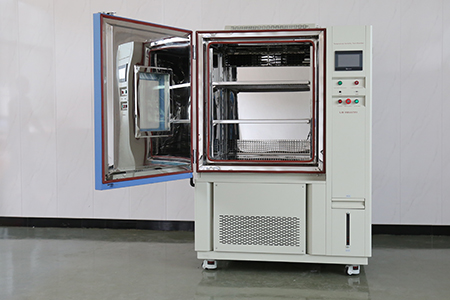
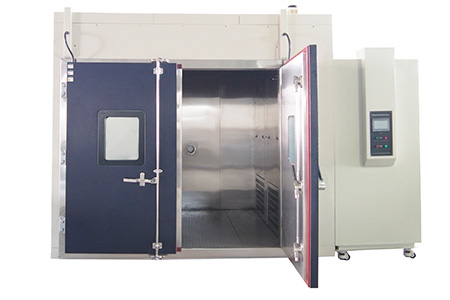
Medical device startups and established manufacturers alike face laboratory space constraints. Traditional walk-in environmental rooms consume significant floor area and require dedicated facilities. Benchtop environmental chambers solve this challenge by sitting directly on laboratory workbenches. Models like the TH-50 (50L internal volume) and TH-80 (80L capacity) provide generous testing space within compact footprints - the TH-50 measures just 820×1160×950mm externally, fitting comfortably in standard laboratory layouts.
Cost-Effective Validation Infrastructure
Building dedicated environmental rooms costs tens of thousands of dollars with ongoing HVAC expenses. Benchtop chambers operate on standard electrical supplies - 110V/220V single-phase power - eliminating expensive electrical infrastructure upgrades. The mechanical compression refrigeration system efficiently achieves temperature ranges from -40°C to +150°C without requiring external chillers or specialized cooling water systems. This plug-and-play convenience dramatically reduces capital expenditure for quality assurance laboratories.
Multi-Product Parallel Testing Capabilities
Device manufacturers develop multiple products simultaneously, each requiring environmental validation. The adjustable SUS304 stainless steel shelving inside benchtop chambers accommodates various device sizes and configurations. Two standard shelves support concurrent testing of different components - implantable electronics on one shelf, packaging materials on another. The 50mm cable port allows power connections and data cables to reach devices under test without compromising chamber sealing.
Remote Monitoring for Continuous Operations
Modern medical device development operates around the clock, but laboratory staff don't. Programmable controllers with Ethernet connectivity enable engineers to monitor long-duration environmental tests remotely via smartphones or web browsers. Temperature and humidity data uploads to cloud platforms, triggering alerts if conditions drift outside specifications. This remote visibility ensures testing continuity without requiring constant physical presence, accelerating validation timelines.
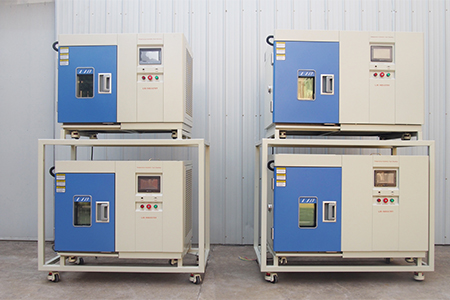
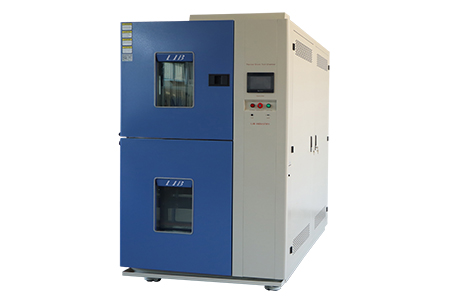
Discover the Full Range of LIB Industry Temperature & Humidity Test Chambers
|
|
|
|
|
|
LIB Industry Delivers Compliance-Ready Medical Device Testing Solutions
Precision Control Meeting Validation Standards
LIB Industry's benchtop environmental chambers achieve temperature fluctuation of just ±0.5°C and temperature deviation within ±2.0°C across the workspace. This precision ensures uniform exposure for all test samples, eliminating positional bias in validation data. Humidity control maintains ±2.5% RH accuracy throughout the 20%-98% RH range. Such tight tolerances generate reproducible results satisfying the most demanding regulatory reviewers.
Safety Systems for Lithium Battery Testing
Medical devices increasingly incorporate rechargeable lithium batteries requiring specialized safety protocols during environmental testing. LIB chambers feature multiple protection systems specifically addressing battery testing risks: over-temperature shutdown prevents thermal runaway propagation, refrigerant high-pressure protection safeguards cooling systems, and earth leakage protection eliminates shock hazards. The polyurethane foam and insulation cotton construction provides thermal barriers containing unexpected exothermic events.
Documentation and Traceability Features
Regulatory compliance demands comprehensive documentation of every test parameter. The programmable color LCD touchscreen controller creates and stores up to 120 programs with 100 segments each, defining complex thermal profiles replicating device lifecycle conditions. Automated data logging timestamps temperature, humidity, and alarm events throughout test durations. These digital records export directly into validation reports, streamlining regulatory submission preparation.
Global Support Network and Service Commitment
Medical device manufacturers operate globally, requiring equipment suppliers who understand international standards and provide responsive support. LIB Industry follows ISO 9001 Quality Management System standards with CE certification and third-party testing by SGS and TUV. The comprehensive 3-year warranty and lifetime service commitment includes 24/7 global support. If repairs cannot be completed within the warranty period, LIB provides brand-new replacement units - a guarantee demonstrating confidence in product reliability.
Customization for Specialized Applications
Standard benchtop environmental chambers address most medical device testing requirements, but specialized applications sometimes demand unique configurations. LIB Industry's experienced engineering team excels at custom design and non-standard applications. Whether incorporating specific cable port configurations for complex device connections, modifying shelf layouts for unusual component geometries, or integrating specialized safety features for hazardous material testing, the company collaborates with manufacturers to create optimal solutions.
Conclusion
Medical device manufacturers cannot afford environmental testing gaps that risk patient safety or regulatory rejection. Benchtop environmental chambers deliver the precision, documentation, and safety features required for rigorous validation without consuming excessive laboratory resources. From accelerated aging of packaging to thermal stress screening of electronics, these compact testing solutions support compliance throughout product development cycles. Investing in quality environmental testing infrastructure protects brand reputation, accelerates time-to-market, and ultimately ensures medical devices perform reliably when patients depend on them most.
FAQ
What temperature range is required for medical device environmental testing?
Most medical devices require validation across -20°C to +60°C representing storage and operating conditions. Specialized applications may need extended ranges to -40°C or -70°C for cryogenic components or Arctic deployment scenarios. The benchtop environmental chamber temperature capabilities should match your device's labeled specifications plus safety margins.
How long does accelerated aging testing typically take in benchtop chambers?
Accelerated aging duration depends on the Arrhenius equation calculations for specific materials. Typical protocols run 12-26 weeks at elevated temperatures (55°C-70°C) to simulate 2-5 years of real-time aging. Shorter thermal cycling tests validating robustness might complete within 2-4 weeks depending on cycle parameters.
Can benchtop environmental chambers test multiple devices simultaneously?
Absolutely. The 50L and 80L internal volumes accommodate multiple small devices or several packaged units simultaneously. Adjustable shelving allows vertical stacking of different components. Just ensure adequate air circulation around each test sample for uniform temperature and humidity exposure across all devices being validated.
Contact LIB Industry for Your Medical Device Testing Solution
As a leading benchtop environmental chamber manufacturer, LIB Industry provides turn-key testing solutions tailored to medical device validation requirements. Contact our technical team at ellen@lib-industry.com to discuss your specific testing needs and discover how our compliance-ready chambers accelerate your product development timeline.