Chemical processing valves operate in demanding industrial environments where exposure to high-pressure water jets, caustic chemicals, and temperature fluctuations represents the norm rather than the exception. Testing these critical components requires rigorous validation protocols that simulate real-world conditions. IEC 60529 IPX9K equipment delivers precisely this capability - subjecting valves to 8,000-10,000 kPa high-pressure sprays at temperatures up to 88°C while rotating test specimens at 5±1 rpm. This comprehensive testing methodology ensures seal integrity, prevents catastrophic leakage, and validates structural durability. Manufacturers relying on such equipment gain confidence that their valve systems will withstand the most punishing industrial applications, from automotive component bays to chemical processing facilities and outdoor electrical installations.
Why Chemical Processing Valves Require High-Level Waterproof Protection?
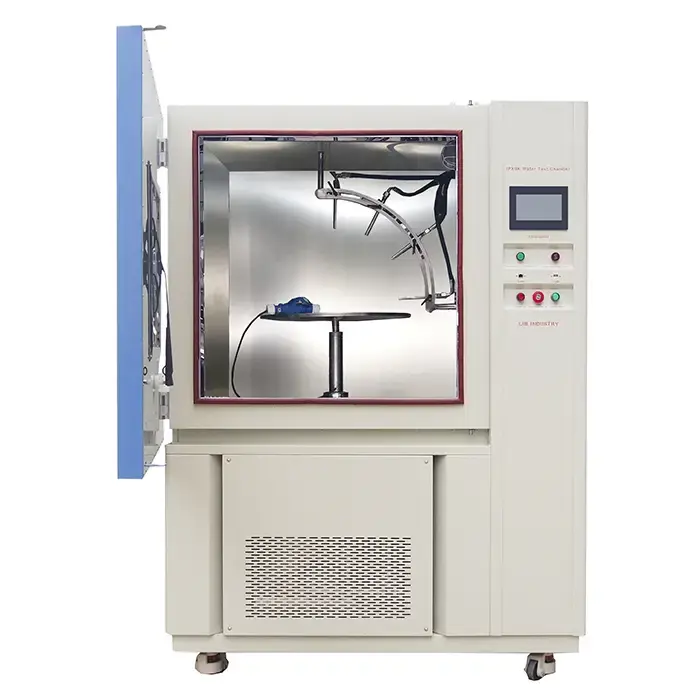
Understanding the Operational Demands on Industrial Valves
Chemical processing facilities expose valves to conditions far beyond standard operating parameters. Pressurized water jets used in plant cleaning cycles can exceed 10,000 kPa - conditions that compromise inadequately sealed components within hours. These environments combine aggressive hydraulic forces with thermal stress, creating vulnerability points at threaded connections, packing glands, and actuator interfaces. Valve manufacturers cannot rely on assumption; they need empirical validation that their designs withstand such punishment.
Preventing Catastrophic System Failures Through Validation
A single leaking valve in a chemical processing system can contaminate product batches, create safety hazards, or trigger environmental violations. Rigorous testing protocols eliminate guesswork from product development cycles. By subjecting prototypes to IEC 60529 IPX9K conditions during design phases, engineers identify weakness patterns before field deployment. This proactive approach prevents expensive recalls, protects facility workers, and maintains regulatory compliance.
Meeting Regulatory Compliance and Certification Requirements
Global markets demand documented proof of waterproofing capability. IEC 60529 IP code classification provides universal recognition that products meet specific protection levels. Automotive suppliers shipping components internationally, marine equipment manufacturers, and industrial valve producers all require third-party certification demonstrating their products achieve IPX9K standards. Without such validation, market access remains restricted across major economies.
High-Pressure Cleaning Conditions in Industrial Environments
The Reality of High-Pressure Water Jet Applications
Industrial facilities employ high-pressure washing systems for sanitation, equipment maintenance, and production line cleaning. These systems routinely generate pressures of 8,000-10,000 kPa - equivalent to hydraulic forces that can strip protective coatings and exploit microscopic manufacturing defects. Automotive manufacturing plants, food processing facilities, and chemical production sites all utilize such equipment. Valves positioned within spray zones experience cumulative exposure to these extreme conditions across operational lifecycles spanning 5-10 years.
Temperature Variations During Spray Cycles
Water temperature during cleaning operations varies significantly based on facility protocols. Some applications employ ambient-temperature spray systems, while others utilize heated water for improved pathogen elimination and chemical dissolution. IEC 60529 IPX9K equipment tests at temperatures up to 88°C, replicating these thermal conditions. Higher temperatures accelerate polymer degradation, reduce seal elasticity, and amplify corrosion processes on metal surfaces - factors that static testing cannot evaluate.
Nozzle Configuration and Spray Pattern Complexity
Industrial cleaning rarely involves single-angle water application. Facilities employ multi-directional spray systems approaching equipment from multiple angles simultaneously. The standardized four-nozzle configuration in IEC 60529 IPX9K equipment (0°, 30°, 60°, 90° angles) simulates this complexity. Each 30-second spray cycle applies cumulative stress, testing whether seals maintain integrity as pressure impact occurs from varying geometries. This methodology reveals design vulnerabilities that wouldn't emerge under single-directional testing protocols.
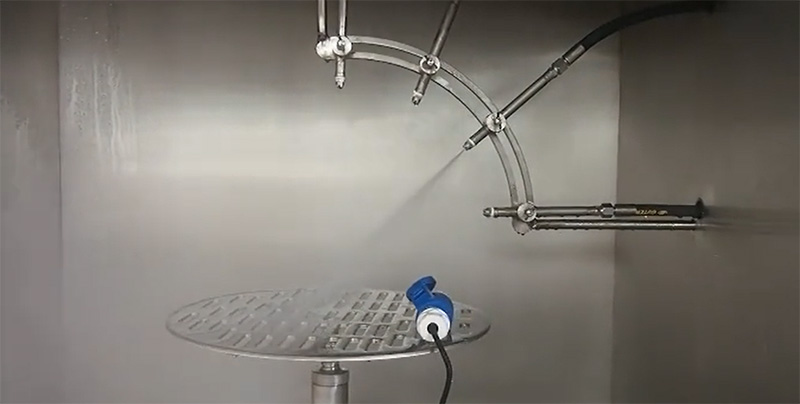
Evaluating Seal Materials Under IPX9K Test Conditions
Material Selection Criteria for High-Pressure Environments
Valve seal materials must balance multiple competing requirements. Elastomers like EPDM and fluorocarbon compounds (Viton) offer excellent chemical resistance but may degrade under sustained high-temperature exposure. Polytetrafluoroethylene (PTFE) provides superior temperature stability but exhibits higher compression-set characteristics. Metal-to-metal seals offer durability but require precise manufacturing tolerances. IEC 60529 IPX9K testing reveals how different material combinations perform under conditions that static lab analysis cannot adequately simulate.
Compression-Set and Elasticity Degradation Analysis
Elastomeric seals experience permanent deformation when exposed to sustained pressure and elevated temperatures. IEC 60529 IPX9K equipment cycles test materials through compression stress over extended periods, measuring residual deformation post-testing. Materials exhibiting compression-set values exceeding 25% typically show accelerated leakage development during subsequent operational cycles. This data enables manufacturers to optimize material specifications, selecting compounds that maintain seal geometry despite industrial exposure.
Chemical Compatibility Testing Within Waterproofing Protocols
While IEC 60529 IPX9K equipment emphasizes water-jet resistance, many chemical processing applications expose valve seals to corrosive liquids simultaneously. Progressive testing methodologies involve pre-exposure to target chemical environments followed by IPX9K validation. This sequential approach reveals whether seals compromised by chemical attack maintain structural integrity during high-pressure assault. Data demonstrates that certain seal materials that withstand pure water jets fail catastrophically when previously exposed to acidic or alkaline processing chemicals.
|
Test Parameter |
Specification |
Industrial Relevance |
|
Water Pressure |
8,000-10,000 kPa |
Matches facility cleaning systems |
|
Temperature Range |
Ambient to +88°C |
Replicates heated cleaning cycles |
|
Spray Angles |
0°, 30°, 60°, 90° |
Simulates multi-directional exposure |
|
Nozzle Duration |
30 seconds per position |
Establishes cumulative stress baseline |
|
Distance Parameters |
10-15 cm specimen spacing |
Maintains standardized impact intensity |
Corrosion and Leakage Risks in Chemical Processing Systems
Metal Corrosion Acceleration Under High-Pressure Conditions
High-pressure water jets enhance oxygen diffusion to metal surfaces, accelerating electrochemical corrosion processes. Stainless steel valve bodies (such as SUS304 material used in IEC 60529 IPX9K test chambers) resist general corrosion but remain vulnerable to pitting and crevice corrosion in chloride-rich environments. Testing equipment interior surfaces using mirror-finish 304 stainless steel ensures that observed corrosion patterns directly correlate to material performance expectations. Progressive pit development under repeated IPX9K cycles predicts long-term field performance with remarkable accuracy.
Seal Degradation and Secondary Leakage Pathways
Primary seals may withstand initial IPX9K exposure, but degradation creates micro-cracks enabling secondary leakage pathways. These hair-line defects remain invisible during post-test visual inspection but become critical failure points during subsequent operational cycles. Advanced testing protocols employ dye-penetrant analysis and helium leak detection immediately following IPX9K exposure, identifying incipient seal failure before components reach field deployment. This two-stage approach prevents field failures that compromise safety and product integrity.
Cavitation Erosion and Surface Degradation Mechanisms
Repeated high-pressure spray impacts induce cavitation effects - microscopic bubble collapse creating localized material erosion. This phenomenon particularly affects soft sealing materials and elastomeric coatings on valve stems. Extended IPX9K exposure reveals whether cavitation erosion limits component lifespan. Manufacturers may need to apply erosion-resistant coatings, modify material selections, or adjust seal geometries to prevent premature failure. Evidence-based design modifications derived from controlled testing ensure superior field performance.
Industry Standards for Valve Waterproof and Safety Testing
IEC 60529 IP Code Classification System
The IEC 60529 standard establishes international classifications for enclosure protection against solid objects and liquids. IPX9K designation specifically addresses high-pressure, high-temperature water jet resistance - the most demanding water-ingress classification. This standardized framework enables global manufacturers to communicate protective capability using consistent metrics. Buyers across automotive, aerospace, marine, and industrial sectors understand that IPX9K-certified valves have undergone rigorous validation under controlled conditions meeting international expectations.
Comparative Analysis of Testing Standards and Requirements
Different industries emphasize varying test parameters. Automotive applications prioritize temperature cycling combined with water jet exposure, replicating seasonal temperature swings alongside wash systems. Marine equipment demands extended salt-water exposure preceding pressure testing, establishing baseline corrosion before mechanical stress application. Industrial chemical processing valves undergo simultaneous chemical exposure and water jet testing, evaluating synergistic degradation mechanisms. IEC 60529 IPX9K equipment provides the foundational testing framework, with supplementary protocols accommodating industry-specific requirements through customized fixture modifications and environmental pre-conditioning.
Third-Party Certification and Regulatory Documentation
Achieving ISO 9001 Quality Management System certification and obtaining CE marking requires comprehensive testing documentation. Third-party validation from recognized laboratories (SGS, TUV) provides independent verification that claimed performance characteristics are accurate. This certification infrastructure protects manufacturers by establishing objective performance baselines and provides liability protection through documented compliance with recognized standards. Customers purchasing IPX9K-certified valves receive assurance that products meet internationally recognized safety and durability benchmarks.
|
Industry Sector |
Primary Testing Focus |
IPX9K Integration |
|
Automotive |
Temperature cycling + wash exposure |
Core requirement for component certification |
|
Marine |
Salt-water corrosion + pressure jets |
Sequential pre-exposure then IPX9K testing |
|
Industrial Chemical |
Simultaneous chemical + water exposure |
Custom chamber modifications required |
|
Aerospace |
Rapid pressure cycling and thermal shock |
IPX9K baseline with enhanced temperature cycling |
|
Food Processing |
Sanitation chemical exposure + spray |
Pre-treatment protocols preceding standard IPX9K |
Enhancing Operational Safety Through IPX9K Validation
 |
 |
Worker Protection and Environmental Containment
Valve failures in chemical processing facilities create immediate hazard escalation. Pressurized chemical leakage endangers worker safety, triggers facility evacuations, and causes environmental contamination. IPX9K validation ensures seal integrity under worst-case conditions - high-pressure exposures combined with elevated temperatures that would otherwise trigger catastrophic failure. Equipment incorporating validated components operates with measurably lower incident rates, protecting personnel and surrounding environments from chemical exposure risks.
System Reliability and Production Continuity
Unplanned valve failures disrupt production schedules, generating substantial financial losses exceeding component costs by orders of magnitude. Chemical batch contamination from leaking control valves may destroy entire production runs valued at hundreds of thousands of dollars. IPX9K testing eliminates weak designs before field deployment, dramatically reducing failure rates and extending component service intervals. Manufacturers demonstrating IPX9K compliance gain competitive advantage through reputation for reliability - a differentiator that influences buyer decisions across supply chains.
Predictive Maintenance and Asset Longevity
Validated valve components enable predictive maintenance strategies rather than reactive failure management. Understanding how materials degrade under controlled IPX9K conditions allows facilities to schedule component replacement during planned maintenance windows rather than responding to unexpected failures. This planning capability optimizes resource allocation, reduces emergency service costs, and extends overall system longevity. Facilities implementing predictive maintenance based on IPX9K-validated component lifecycles typically achieve 20-30% cost reductions compared to reactive maintenance strategies.
LIB Industry Provides Precise IPX9K Valve Sealing Validation Systems
 |
Model | R9K-1200 |
| Internal Dimensions (mm) | 1000*1000*1000 | |
| Overall Dimensions (mm) | 1300*1500*2030 | |
| Interior Volume (L) | 1000 | |
| Water Spray Angle | 0°, 30°, 60°, 90° | |
| Water Spray Temperature | Ambient ~ +88℃ (Adjustable) | |
| Spray Nozzle | Four, 30 Seconds each position | |
| Distance from Water Spraying to Specimens | 10~15 cm | |
| Water Pressure | 8000-10000 Kpa (Adjustable) | |
| Water Flow Rate | 14L-16L/min | |
| Testing Platform Speed | 5±1 r.p.m | |
| Testing Platform Height | 200-400 nm (Adjustable) | |
| Testing Platform Diameters | 600 mm |
Advanced Equipment Specifications and Precision Control
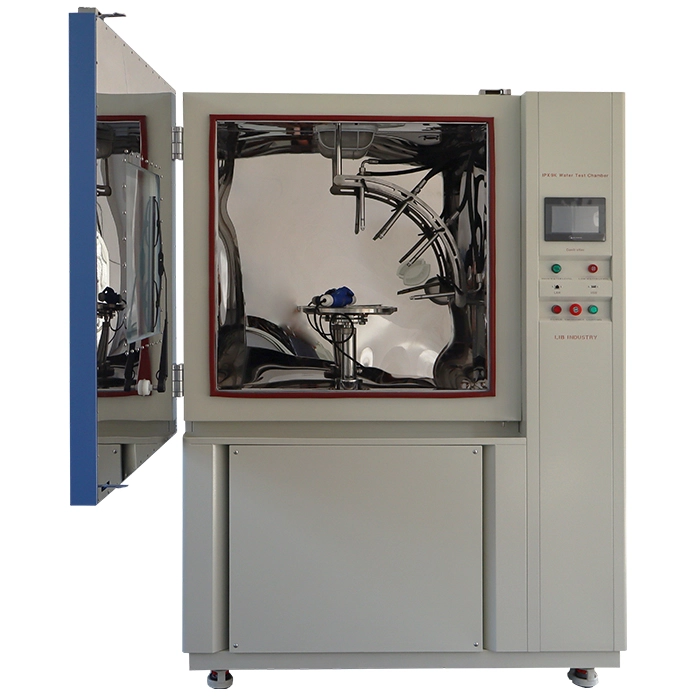
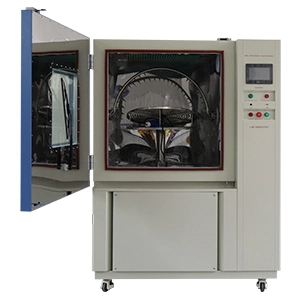
LIB Industry's IEC 60529 IPX9K equipment (Model R9K-1200) delivers precise control over all critical testing parameters. The programmable color LCD touch screen controller enables granular adjustment of water pressure (8,000-10,000 kPa), temperature (ambient to +88°C), and spray angles (0°, 30°, 60°, 90°). Real-time pressure monitoring maintains consistency throughout test cycles, while the Ethernet connectivity facilitates automated testing sequences and remote parameter adjustment. This precision engineering ensures repeatable results that satisfy stringent certification requirements from recognized validation authorities.
Comprehensive Testing Capability and Customization Expertise
Standard R9K-1200 specifications accommodate typical valve testing requirements, but chemical processing applications frequently demand specialized configurations. LIB Industry's engineering team specializes in custom modifications - alternative spray nozzle arrangements, expanded chamber dimensions for oversized valve assemblies, and modified fixture designs accommodating unique component geometries. The 600mm diameter testing platform handles standard loads up to 50kg, with optional upgrades to 200kg capacity for large-format valves. This customization expertise ensures customers receive equipment precisely matched to their specific testing requirements rather than compromising application requirements to fit standard configurations.
Superior Support and Long-Term Partnership Investment
Acquiring testing equipment represents substantial capital investment, with ongoing technical support directly impacting return-on-investment realization. LIB Industry provides 3-year comprehensive warranty coverage combined with lifetime service support through global 24/7 technical networks. If in-warranty repairs prove impractical, LIB Industry provides brand-new equipment replacement rather than expedited repairs - demonstrating genuine partnership commitment. This support infrastructure transforms equipment acquisition from transactional purchase into strategic partnership, enabling customers to maximize testing capability throughout equipment operational lifetime spanning 10+ years.
|
Component |
Feature |
Operational Advantage |
|
Test Chamber |
SUS304 mirror-finish interior |
Eliminates surface-corrosion confounding variables |
|
Control System |
Programmable LCD touch screen |
Enables automated complex test sequences |
|
Safety Package |
Multi-layer fortified observation windows |
Permits real-time monitoring during 10,000 kPa cycles |
|
Water Management |
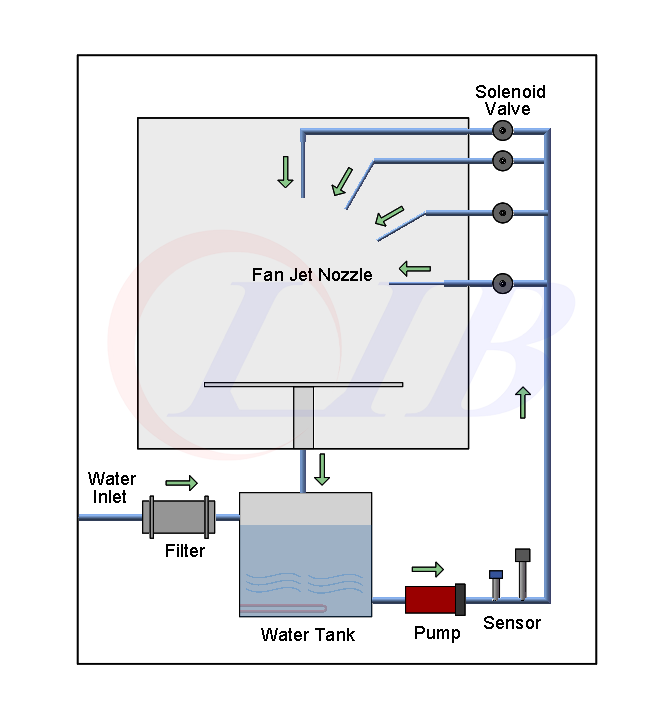
Closed-loop filtration and circulation |
Maintains pressure/flow consistency, reduces consumption |
|
Platform System |
Synchronized 5±1 rpm rotation |
Ensures complete spray coverage, prevents testing invalidation |
Beyond IPX9K: Complete IP Waterproof Testing Solutions from LIB Industry
|
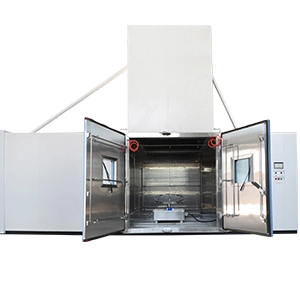
IPX1 IPX2 IPX3 IPX4 Rain Spray Test Chamber Covers dripping, spraying, and splashing water protection tests. Integrated solution for multiple IP waterproof ratings. Supports product development, quality control, and certification testing. |
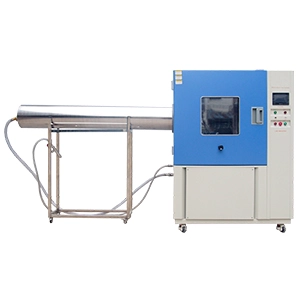
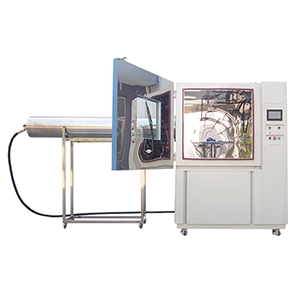
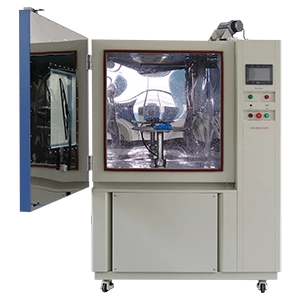
IPX5 IPX6 Rain Jet Test Chamber Generates powerful water jets according to IEC 60529. Validates protection against water projected from all directions. Suitable for outdoor equipment, lighting, and telecommunications products. |
Performs high-temperature, high-pressure water jet testing. Complies with ISO 20653 and IEC 60529 IPX9K standards. Perfect for automotive, mining, agricultural, and construction equipment. |
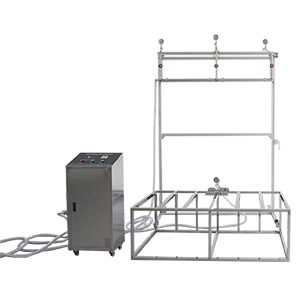
IEC60529 IPX3 IPX4 Lab Equipment Simulates oscillating tube and spray nozzle testing. Meets IEC 60529 IPX3 and IPX4 requirements. Ideal for consumer electronics and electrical devices. |
|
MIL STD 810 G Rain Test Chamber Simulates wind-driven rain conditions for military and defense equipment. Complies with MIL-STD-810G Method 506.6 rain testing requirements. Suitable for outdoor electronics, communication devices, and military systems. |
Evaluates enclosure protection according to UL 50E requirements. Simulates rain, hose-down, and outdoor exposure conditions. Widely used for electrical cabinets and industrial enclosures. |
JIS D 0203 R1 R2 Rain Test Equipment Designed for Japanese automotive waterproof testing standards. Supports R1 and R2 rainfall simulation conditions. Ideal for automotive components, sensors, and electrical assemblies. |
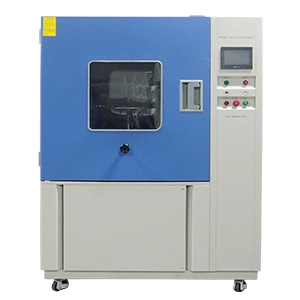
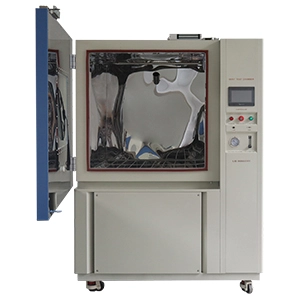
Simulates dust ingress and blowing dust environments. Meets IEC 60529 dust protection requirements. Suitable for electronics, automotive parts, and outdoor equipment. |
 |
|||
Conclusion
Chemical processing valve manufacturers operating in today's competitive global marketplace cannot rely on assumptions regarding waterproofing capability. IEC 60529 IPX9K testing equipment provides definitive validation that valve designs withstand the high-pressure, high-temperature conditions encountered across industrial applications. By subjecting prototypes to rigorously controlled environments replicating real-world exposure patterns, engineers identify vulnerability points, optimize material selections, and enhance seal designs before field deployment. LIB Industry's precision testing equipment, combined with customization expertise and comprehensive support, enables manufacturers to achieve certification standards while maintaining competitive differentiation through proven reliability and durability.
FAQ
Can IEC 60529 IPX9K equipment accommodate oversized valve assemblies exceeding standard chamber dimensions?
LIB Industry specializes in custom modifications enabling testing of non-standard components. Chamber dimensions can be expanded, specialized fixtures fabricated, and alternative spray nozzle arrangements implemented. Contact our engineering team to discuss your specific requirements - we provide tailored solutions ensuring your components receive appropriate validation regardless of size or geometry complexity.
How does water temperature affect valve seal material performance during IPX9K testing?
Elevated temperatures (88°C) accelerate elastomer degradation, reducing seal elasticity and increasing compression-set values. Materials performing adequately at ambient temperature may fail at elevated temperatures due to polymer chain breakdown. IEC 60529 IPX9K equipment's temperature control capability reveals these degradation mechanisms, enabling informed material selection for applications encountering heated cleaning systems.
What post-test analysis methods identify incipient valve seal failures that visual inspection cannot detect?
Dye-penetrant analysis and helium leak detection reveal micro-cracks invisible to direct observation. These advanced diagnostics, applied immediately following IPX9K exposure, identify degradation patterns correlating to subsequent field failures. Progressive testing combining IPX9K exposure with secondary analytical methods provides the empirical foundation for predicting long-term component reliability with statistical confidence.
Discover how LIB Industry's advanced IEC 60529 IPX9K testing equipment can validate your chemical processing valves with precision and reliability. As a leading environmental testing chambers manufacturer and supplier, we provide turn-key solutions including research, design, production, commissioning, and comprehensive training. Whether you require standard testing protocols or custom configurations for specialized applications, our global team delivers tailored solutions matching your exact requirements. Contact our technical specialists at ellen@lib-industry.com to discuss how we can support your valve validation and certification initiatives.


